
Vincenzo Bellini
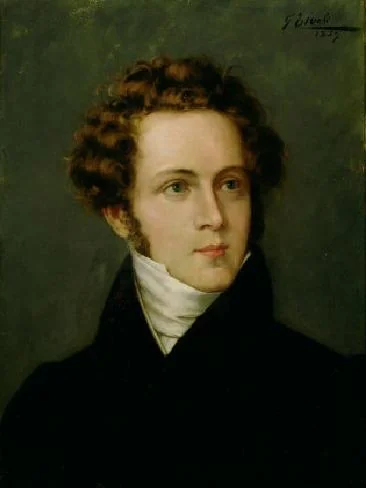
Image from Wikipedia
Image from Wikipedia
Vincenzo Bellini
The Poet of Belcanto: Vincenzo Bellini – Melody, Drama, and Timeless Opera Magic
Vincenzo Salvatore Carmelo Francesco Bellini, born on November 3, 1801, in Catania and died on September 23, 1835, near Paris, is regarded as one of the most brilliant opera composers of the 19th century. His music career, marked by an extraordinary artistic development, took the Sicilian prodigy from early studies in Naples to triumphs on the grand opera stages of Europe. In an era where Belcanto shaped opera as an ideal of sound, Bellini wrote vocal lines characterized by lyrical breadth, intense expression, and unmistakable elegance. His presence as a composer is manifested in scores that challenge singers, sensitively accompany the orchestra, and delicately renew the Italian melodrama.
Bellini's short lifespan stands in contrast to the profound cultural impact of his work. From early successes in Naples to his breakthrough at La Scala in Milan and his final years in Paris, he developed an unmistakable tonal language. His operas are dramatically structured, rich in singable ariosi and ensembles, showcasing a masterful sensitivity to vocal colors, phrasing, and text interpretation. Not least, his Belcanto ideal shaped the sound aesthetics of subsequent generations and inspired composers far beyond the realm of opera.
Biographical Beginnings: Education, Environment, and Early Works
Bellini grew up in a family of musicians and received early instruction in composition, piano, and singing. This family background and his education at the Conservatorio di Napoli shaped his craft in accordance with the Italian opera tradition. As a young composer, he already demonstrated a sense for melodic developments and harmonic clarity, which become evident in his early stage works. In the musical culture of Naples, where Belcanto, vocal rhetoric, and stage effect were closely intertwined, he refined his technique of vocal direction.
His first notable stage work emerged in an academic context, leading to contacts in the Milanese opera world. The compositions of this phase are significant milestones in his artistic development: they sharpen Bellini's sensitivity to form dramaturgy, cantilena, and the balance between vocal virtuosity and faithful declamation of the text. The early reception drew the audience's attention to a new, singable, and sensitive melodic style that soon set Bellini apart from the competition.
The Breakthrough and the Milan Years
With his breakthrough at La Scala in Milan, Bellini established himself as a leading voice of Belcanto. His musical language combines broad, breathing melodic arcs with transparent orchestral textures that support rather than dominate the singing. Dramatically, he emphasizes clear conflicts, psychological precision, and moments of silence where the melody propels the action forward. During this creative period, his unmistakable style matured, characterized by the music press as poetic, noble, and conducive to singing.
Bellini's presence as a composer is particularly evident in the grand finales and carefully crafted cabalettas. These numbers combine formal economy with emotional intensity, illustrating how Bellini transformed the art of "beautiful singing" into dramatic truth. Success at renowned theaters encouraged him to take risks in choosing subjects and arrangements, without overloading the vocal line.
Paris and the Final Creative Phase
Moving to Paris in the 1830s brought Bellini into a cultural morphological power field where Italian, French, and international influences converged. Here, he refined his orchestral palette without giving up the primacy of the voice. Friendships and professional networks with leading artistic personalities reinforced his authority in European musical culture. At the same time, the Parisian opera scene sharpened his awareness of dramatic economy.
At the end of his short life, works emerged that consolidate his mastery in composition, arrangement, and affective timing once again. The scores of this period combine colorful harmony with natural singing quality. Bellini's early death led to the creation of a legend: the "Swan of Catania" as the epitome of the lyrical dramatist who transformed Belcanto into a psychologically nuanced music theater.
Style and Musical Development: Belcanto as Dramaturgy
Bellini's compositional style is based on the art of legato, long melodic phrases, and subtle breath arcs that give emotional emphasis to the text. His arias, songs, and duets are crafted to unleash the vocal personality of the performers. In instrumentation, he prefers smooth woodwind colors, gentle string textures, and precise accents that profile the vocal line.
From a music-historical perspective, Bellini stands between Rossini and Donizetti and leads into Verdi. In singing technique, he promotes a blend of lyrical emphasis and technical discipline. Characteristic is the shift between extended cantilenas, recitative-like transitions, and expressive cabalettas. His artistic development culminates in works that understand Belcanto aesthetics as a dramatic principle: singing as action.
Discography and Overview of Works: From "Il pirata" to "I puritani"
Bellini's discography focuses on a few, canonical operas whose interpretative history significantly contributed to the Belcanto renaissance. Key titles include early works and masterpieces of his middle phase that continue to be present in new recordings, critical editions, and staged reinterpretations. The repertoire presence of his operas demonstrates how future-oriented his melodic concept remains.
Milestone achievements include the breakthrough with a heroically lyrical subject, the elegiac colors of the middle period, and the mature synthesis of melody, text interpretation, and scene in the later scores. Critical editions have secured the source material, revealed variations, and strengthened performance practice and stylistic fidelity. Thus, modern Bellini scholarship reflects a synthesis of historical informedness and vibrant stage culture.
Critical Reception and Cultural Influence
The music press of the 19th century praised Bellini's "melodic invention" and the nobility of his line. Later generations have viewed his operas as a touchstone for the Belcanto technique: free from sonic self-satisfaction, yet focused on a sound discourse oriented towards text and affect. His works influenced not only Italian opera but also radiated into romantic piano music and symphonic poetry.
The cultural influence is still evident today in international programming, rediscoveries of rare titles, and a lively culture of editions. Bellini's position in music history remains that of a lyricist of drama: he writes vocal lines that demand great voices and scenes that create strong theatrical impact. Thus, he becomes a reference point for Belcanto interpretation, vocal culture, and opera aesthetics.
Contemporary Reception: Editions, Performances, Rediscoveries
Today, critical textual editions ensure fidelity and provide a foundation for historically informed practice. Opera houses and festivals regularly draw on Bellini's core repertoire, while media platforms make recordings and archival treasures accessible. The international opera scene thus affirms the relevance of a body of work that thrives on both the ideals of singing and the nuances of drama.
New productions, concert performances, and audiovisual formats expand the reception. The combination of research, editions, and stage practice builds trust in the source material, enhances interpretative diversity, and introduces new generations of music lovers to Bellini's musical language.
Technical Perspectives: Composition, Form, and Voice
Bellini's composition technique is based on clearly structured forms, motivic economy, and harmonic twists that provide space for the singing. Recitatives are often functionally streamlined to focus more strongly on the affects of the arias. Ensemble scenes utilize responsorial structures, where vocal groups respond to one another and mark dramatic focal points.
The arrangement pays attention to a fine internal balance between orchestra and vocal lines. In the production of modern performances, the choice of versions, embellishments, and cadences determines stylistic fidelity. Thus, musicological precision interacts with practical stage work—a dynamic that translates the Belcanto aesthetic into the present.
Sites of Remembrance: Catania and the Trace of the "Swan"
In Catania, the museum, opera house, and urban space commemorate Bellini's life and work. These memorial sites illustrate how music history shapes cultural memory: exhibitions, archival collections, and performance schedules ensure continuity. The local grounding simultaneously strengthens international recognition by bringing together scholarship, interpretation, and the audience.
The connection between urban identity and opera culture creates a vibrant platform for Bellini's legacy. His name is not only preserved but continues to thrive in concert seasons, festivals, and educational formats—as a resounding legacy of an era that sought ideal balance between song and drama.
Conclusion: Why Bellini Resonates Today
Bellini's music touches hearts because it combines voice, text, and affect into a living whole. His Belcanto is not mere beautiful sound, but a dramaturgical method that gives depth to characters and tension to scenes. Those who listen to his operas experience music history in the present: cantilenas of suggestive beauty, ensembles of architectural clarity, and a theater of feelings that avoids sensationalism.
For those who see opera as a living musical theater, Bellini is an author of enduring greatness. His works demand the best voices, inspire conductors and production teams, and grant the audience moments of quiet intensity. Recommendation: Experience Bellini live—where singing becomes action and time stands still in the legato of a single, long melody.
Official Channels of Vincenzo Bellini:
- Instagram: No official profile found
- Facebook: No official profile found
- YouTube: No official profile found
- Spotify: No official profile found
- TikTok: No official profile found
Sources:
- Encyclopaedia Britannica – Vincenzo Bellini
- Teatro Massimo Bellini – Official Website
- Museo Vincenzo Bellini – Official Website
- Casa Ricordi – Critical Edition of the Works of Vincenzo Bellini
- STAGE+ – Bellini Biography and Repertoire
- Operabase – Vincenzo Bellini (Composition)
- Wikipedia: Image and Text Source