
Thomas von Aquin
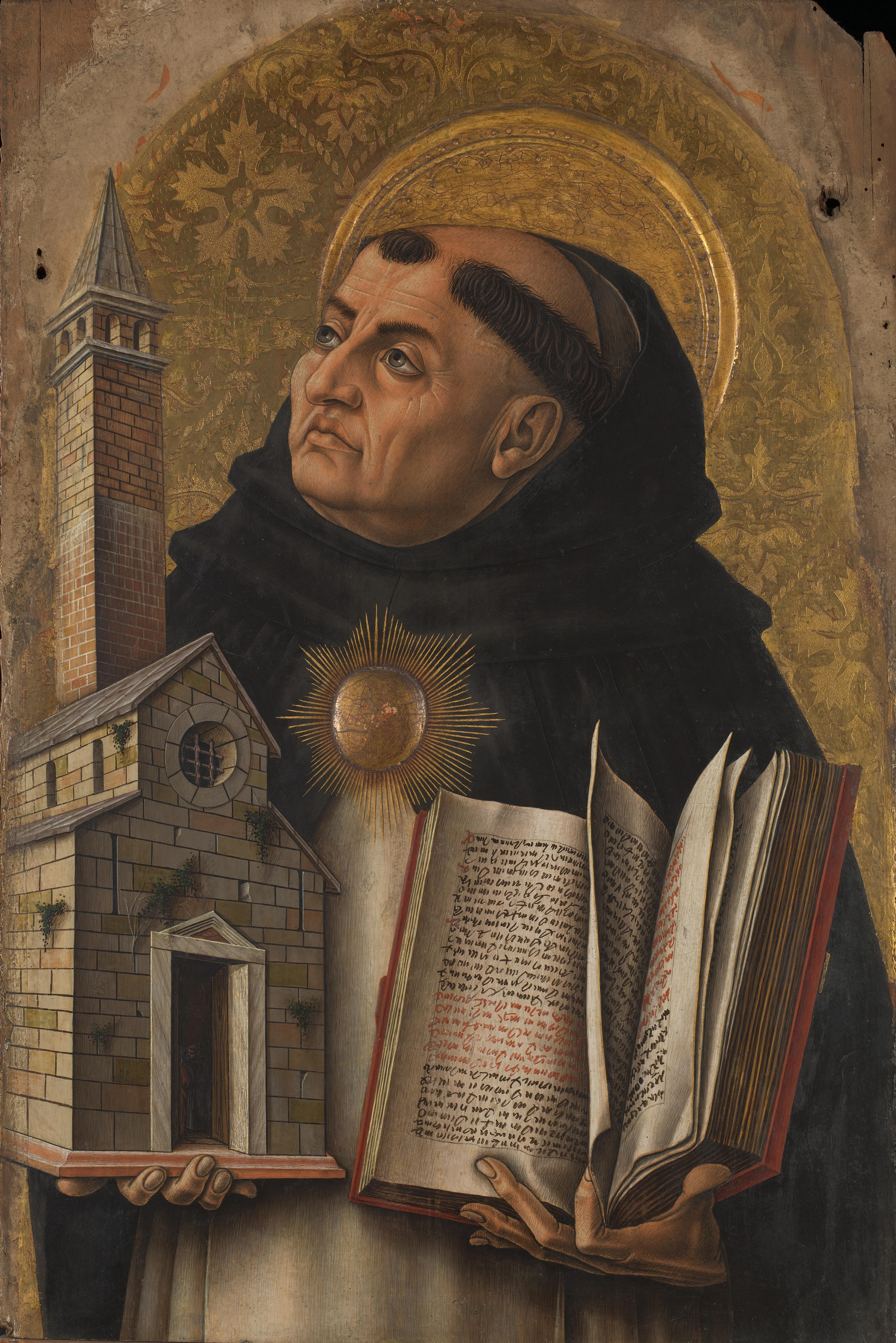
Image from Wikipedia
Image from Wikipedia
Thomas Aquinas – Doctor Angelicus, Thinker of International Renown and Timeless Compass for Reason and Faith
A Monument of Intellectual History: Why Thomas Aquinas Continues to Shape Our Culture Today
Thomas Aquinas, born around 1225 in present-day Roccasecca and died on March 7, 1274 in Fossanova, is one of the most influential figures in European intellectual history. As a Dominican, priest, and one of the most significant church teachers, he combined an unwavering love of God with radical intellectual honesty. His works – from the Summa Theologiae to the Summa Contra Gentiles and precise commentaries on Aristotle – shaped scholasticism and continue to resonate through neo-scholasticism and neo-thomism to this day. Reading Thomas is an artistic development of thought: rigorously composed, clearly arranged, with a presence of arguments that continues to fascinate.
Less biography, more substance: Thomas’ musical career does not exist – however, his intellectual journey follows a dramatic arc from years of learning and debates to a maturity phase of radical clarity. He was canonized in 1323, declared a Doctor of the Church in 1567, and is liturgically celebrated on January 28. In our time, for his 800th birthday in 2025, symposia, publications, and a newly awakened interest demonstrate how much his voice continues to hold weight in debates about ethics, natural law, reason, and revelation.
Early Years and Influences: From Montecassino to the Intellectual Stage of Europe
The Aquinas family charted the path early on: As an oblate at the monastery of Montecassino, Thomas learned the spiritual discipline that would later shape his composition of theological and philosophical arguments. Studies in Naples opened him up to Aristotle, whose logic, metaphysics, and ethics Thomas translated into a linguistically precise, intellectually melodic theology. His encounter with the Dominican Order redirected his artistic development of thought from the courtly ideal towards the preacher ideal – research in service of proclamation.
In Paris and Cologne, under the influence of Albertus Magnus, his style matured: systematic questioning, rigorous argumentation, clear structuring. This periodization of his intellectual musical career – apprenticeship, experimentation, mastery – culminated in that rich oeuvre which unmistakably tuned the discourse of scholasticism: transparent in form, differentiated in arrangement, rich in thematic processing of ancient, patristic, and contemporary sources.
Bursting Forth and Maturity: The Summae as Symphonic Architecture of Thought
The Summa Theologiae is Thomas’ significant signature – a large-scale design built like a well-proportioned symphony: theme exposition, thematic development, counterpoint objections, resolution in precise answers. The Summa contra gentiles resembles a concert for reason, unfolding its inner logic in dialogue with the best counterarguments. Both works display composition in the true sense: theology as the art of order, philosophy as an arrangement of reasons, dogmatics as a varied reprise of biblical and traditional themes.
This artistic development was not merely style but method: Thomas classifies sources, precisely differentiates between natural and revealed knowledge, differentiates between potentia and actus, substance and accident, form and matter. Thus, a harmonious unity of metaphysics, ethics, and sacramental theology emerges in which every voice – reason, scripture, tradition – finds its place.
Chair, Order, Public Life: Stage Presence in Controversy and Consensus
Thomas’ stage presence lay in his sovereignty in scholarly debate. In Paris, he defended the legitimate use of Aristotelian philosophy for theology – no mere fashion effect, but an elaborately crafted production. His lectures and Quaestiones show the dramaturgy of a live act of thought: objections are fairly articulated, counterarguments are taken seriously, the solution emerges with unperturbed clarity. This attitude created trust and authority, which soon gave his work the status of a reference production.
The canonization in 1323 confirmed not only holiness but the cultural influence of his teaching. In 1567, the Church declared him Doctor Angelicus. Since then, his Summa has often been regarded as a standard for education – a kind of canonical LP of theology history that has shaped generations, remastered by neo-thomism and modern editions.
Discography (List of Works) and Reception: The “Hits” of Doctor Angelicus
Even though Thomas was not a musician, his work has a discographic profile: the Summa Theologiae as a “hit album,” the Summa contra gentiles as a dialogical concept work, De ente et essentia as a concise EP about being and essence, and numerous Aristotelian commentaries as exquisitely produced live recordings of scholastic lessons. This discography of thought has found enthusiastic reception in the “music press” of intellectual history – universities, orders, academies.
Critical voices have praised the clear sonic aesthetics of his argumentation: no baroque ornamentation, but concentrated thematics; no noisy rhetoric, but articulated reason. His natural law track has influenced political philosophy and legal ethics; his sacramental theology has shaped liturgy and Eucharistic theology. From canon law to virtue ethics, he left chart-topping themes that still resonate today – in textbooks, seminars, interdisciplinary debates.
Genre, Style, and Technique: Thomistic Sound Colors Between Aristotle and Revelation
Thomas’ genre is scholasticism, his subgenre is theological-philosophical realism. The production technique combines exegesis, metaphysics, and systematic theology. His arrangements follow the form question: quaestio – sed contra – respondeo – ad primum etc. Just like in a studio workflow, tracks (authorities, arguments, experience) are recorded separately, mixed, and highlighted in mastering: a “clean mix” aesthetic, free from the overload of polemical emotions.
Stylistically, he favors conceptual transparency. His vocabulary – actus, potentia, forma, materia, habitus, finis – is precisely tuned. He avoids noise, seeking signal. The sound body of his Summae is polyphonic, yet never cacophonous: objections enhance the dramaturgy, leading to the catharsis of the answer. This art of enhancing form explains why his work has remained broadcastable for centuries.
Cultural Influence and Reinterpretations: From Neo-Scholasticism to the Present Day
In the 19th and 20th centuries, Thomas experienced a renaissance: neo-scholasticism and neo-thomism curated new editions, commentaries, and study programs. This did not mean a museal veneration, but productive re-reading: debates on natural law, personalism, virtue ethics, and discussions about faith and reason. Thus, a lasting maintenance of an archive emerged, transitioning his work into new listening habits.
For the 750th anniversary of his death in 2024 and the 800th birthday in 2025, academies, religious orders, and media acknowledge his relevance. Conferences, themed journals, and educational programs align into a festival year of ideas. These activities show how applicable his motifs remain for contemporary issues: human dignity, justice, responsibility, forms of knowledge. Thomas’ ethos of intellectual discipline acts like a mastering for discussions that otherwise fade into slogans.
Specific Career Milestones: Studies, Teaching Positions, Major Works
– Montecassino (Childhood): Contemplative foundation, initial liturgical and intellectual experiences.
– Naples (Studies): Reception of Aristotle, logical and metaphysical grounding.
– Paris/Cologne (Teaching): Profiling as a theologian; commentaries and Quaestiones; collaboration with Albertus Magnus.
– Late Works: Summa Theologiae (unfinished), condensation of central doctrines; continued exegetical work and systematic synthesis.
Among the most important “tracks” are the Summa Theologiae and the Summa Contra Gentiles, flanked by De ente et essentia and commentaries on De anima and Nicomachean Ethics. Their reception in universities and orders has provided them with unprecedented longevity on the “playlists” of theological curricula – a sustained chart presence of the idea.
Awards and Recognition: Canonization, Teaching Authority, Liturgical Veneration
1323 Canonization: Acknowledgment of holiness and the ecclesiastical relevance of his work. 1567 Declaration as Doctor of the Church: an official nod to his authority. The memorial day on January 28 reinforces the liturgical anchoring of his theology. In anniversary years, orders and dioceses invite to festal acts, lectures, and spiritual offerings – signs of a vibrant, non-museal maintenance of tradition.
This authority is not for its own sake: it commits to vigilance in dealing with sources, to the readiness to take objections seriously, and to the joy of conceptual refinement. This is precisely why Thomas remains a trusted reference point in a time that demands resilient categories and a rational grammar of reality.
Current Projects and Rediscoveries: Anniversary 2024/2025 and New Approaches
In light of the anniversaries of the year of death in 2024 and the 800th birthday in 2025, thematic issues, translation competitions, conferences, and educational series have emerged. These projects open his “repertoire” for new listeners: academically, journalistically, pastorally. Institutions publish studies, teaching materials, and reading guides; media houses portray the contemporaneity of his thinking. Thus, Thomas’ catalog is not only preserved but creatively curated – like a carefully remastered collection that reaches today’s ears.
As a result, the public gains a resilient orientation on questions of ethics, anthropology, and the nature of God. Thomas’ invitation remains the same: to formulate precisely, think reasonably, scrutinize traditions, and love the truth. This experience of intellectual humility and methodological rigor is his lasting contribution to cultural ecology.
Conclusion: Why Listen to, Read – and Experience Thomas Aquinas "Live" Today?
Thomas Aquinas fascinates because he brings the great themes – being and essence, freedom and grace, reason and revelation – into a clear, singular form. His discography of thought possesses hooks that remain memorable: virtue ethics as the art of living, natural law as rational grammar, Eucharist as the center. Those who read him today experience artistic development in real-time: the score of his arguments both challenges and liberates.
To experience live means to participate in lectures, seminars, reading groups, and anniversary events, to hear his “pieces” together, to object, to examine, to continue. Thus, Thomas is not an icon on the shelf, but a vibrant voice in the concert of the present. The call is: Tune in, read up, bring your own questions – Thomas responds with a clarity that never goes out of style.
Official Channels of Thomas Aquinas:
- Instagram: No official profile found
- Facebook: No official profile found
- YouTube: No official profile found
- Spotify: No official profile found
- TikTok: No official profile found
Sources:
- Encyclopaedia Britannica – Saint Thomas Aquinas: Biography, Works, Natural Law
- Wikipedia – Thomas Aquinas
- Wikipedia – Summa Theologiae
- Wikipedia – Summa contra Gentiles
- Deutsche Welle – Ideas for a New Global Understanding (03/07/2024)
- Thomas Institute Cologne – Translation Competition for the Dual Anniversary 2024/2025
- Catholic News Agency (DE) – Plenary Indulgence for the Aquinas Jubilee (2025)
- University of Vienna – Thematic Issue on Thomas Aquinas (Communio, 2025)
- Wikipedia – Feast of Saint Thomas Aquinas
- Wikipedia: Image and Text Source