
Rudi Zapf
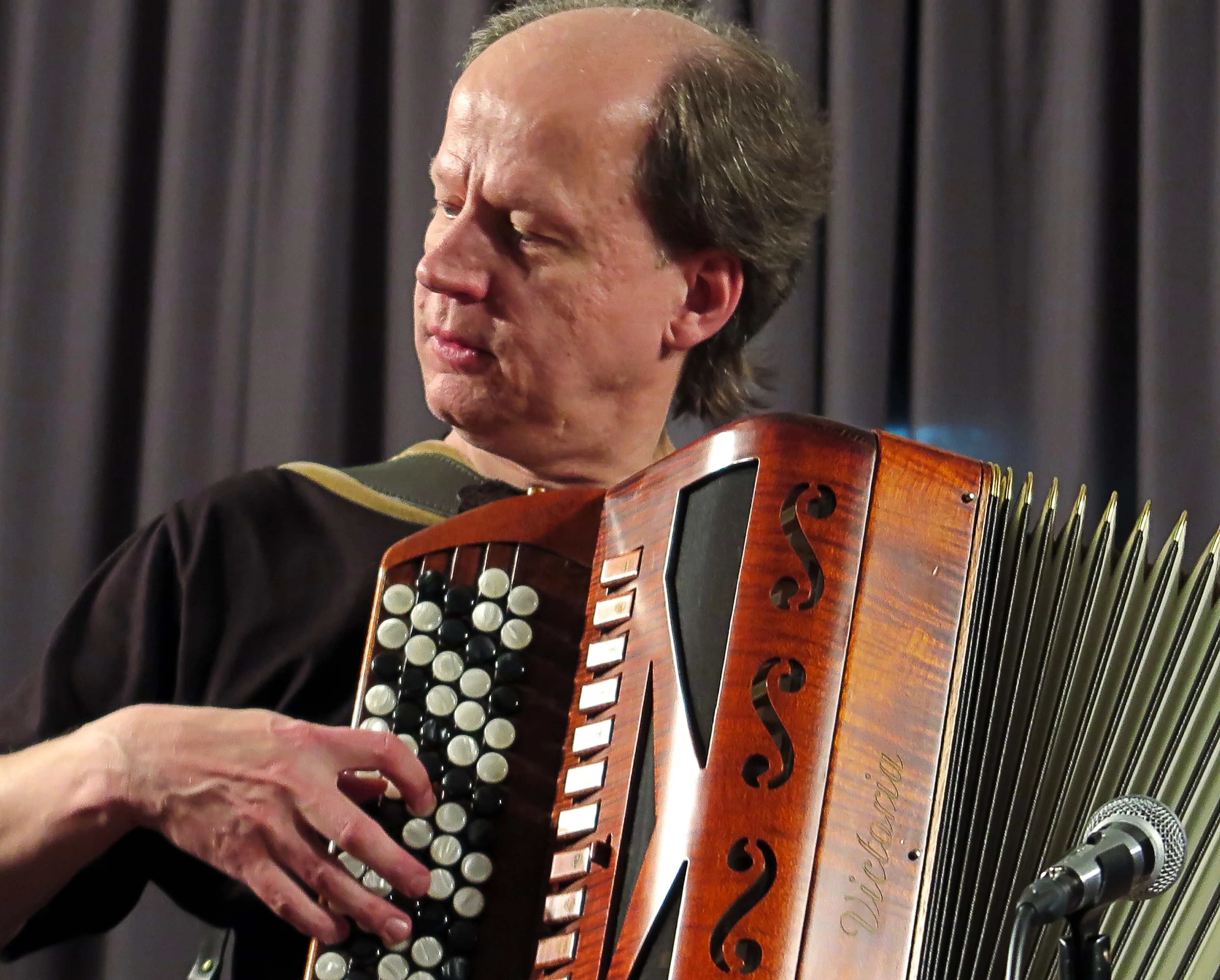
Image from Wikipedia
Image from Wikipedia
Rudi Zapf: The Hammered Dulcimer Virtuoso Between Bavarian Soul, World Music, and Cabaret
A Musician Who Transforms Traditions into Sound Adventures
Rudi Zapf, born on December 25, 1959, in Munich, is one of those artists who not only master an instrument but also redefine its character. As a German musician and cabaret performer, he has distilled the hammered dulcimer, button accordion, and other tonal colors into a unique musical language. His career intertwines Bavarian roots with international openness, virtuosic playing technique, and a stage presence that thrives on both musicality and wit. ([de.wikipedia.org](https://de.wikipedia.org/wiki/Rudi_Zapf))
Early Influences and Musical Training
The biography of Rudi Zapf does not begin with a simple starting point, but rather with a legend that vividly describes his closeness to music: he is said to have received his first dulcimer strikes nine months before his birth. In reality, his musical path can be clearly traced, as he studied hammered dulcimer, button accordion, and horn at the Richard Strauss Conservatory in Munich from 1977 to 1983. His first solo recordings were made in 1977 with Bavarian Radio, an early indication that an extraordinary instrumentalist was emerging. ([zapf-musik.de](https://www.zapf-musik.de/biografie/biografie.htm?utm_source=openai))
This training significantly shaped his style: Zapf does not think in narrow genre boundaries, but in tonal transitions. Early on, he combined folk music tradition with concert ambition, cabaret, chamber music precision, and improvisational curiosity. The artist developed into a musician who not only plays but also curates, interprets, and reorganizes. ([de.wikipedia.org](https://de.wikipedia.org/wiki/Rudi_Zapf))
Breakthrough on the Stages of Bavaria
Rudi Zapf became known through performances in the Bavarian cabaret and small arts scene, as well as concerts on stages like Schlachthof, Tollwood, and Gasteig. These venues not only mark his regional presence but also establish an artistic profile that balances entertainment and seriousness with ease. The stage became Zapf's laboratory: there, he allowed the hammered dulcimer to evolve from a folkloristic instrument into a dynamic, expressive one. ([de.wikipedia.org](https://de.wikipedia.org/wiki/Rudi_Zapf))
The Süddeutsche Zeitung described him as a virtuoso who plays some pieces with enormous speed, highlighting the unique calmness and intensity of his concerts. A later concert review emphasized that Zapf mixes music from Western and Eastern worlds with his trio, blending folk-like elements, jazz components, Irish folk, Balkan, Valse Musette, tango, and klezmer with his own compositions. His breakthrough lies precisely in this ability to set musical origins in motion. ([sueddeutsche.de](https://www.sueddeutsche.de/muenchen/dachau/mit-dem-pedalhackbrett-kino-fuer-die-ohren-1.4245855?utm_source=openai))
Ensembles, Projects, and Artistic Development
Rudi Zapf has worked in numerous formations, including Guglhupfa, Die Meiers, Trio Bavario, Never Been There, the Augsburg Chamber Orchestra, Rudi Zapf & Zapf’nstreich, the Rudi Zapf Trio, the duo with Ingrid Westermeier, the duo with Wolfgang Neumann, and Rudi Zapf & Friends. This breadth shows an artist who understands collaboration not as a side path but as the core of his musical career. Each formation opened new stylistic spaces for him, from cabaret approaches to finely tuned world music. ([de.wikipedia.org](https://de.wikipedia.org/wiki/Rudi_Zapf))
His role as the organizer of the international hammered dulcimer festival in Munich from 1989 to 2014 was particularly formative. For decades, he demonstrated that the hammered dulcimer is much more than a regional traditional instrument: it functions in dialogue with classical music, raga, jazz, and contemporary sound forms. This mediation work makes him an authoritative figure in the German folk music and world music scene. ([de.wikipedia.org](https://de.wikipedia.org/wiki/Rudi_Zapf))
Discography: About 30 Productions and a Broad Repertoire
Rudi Zapf's discography is unusually broad and reflects his aesthetic openness. The Wikipedia list includes early releases such as "Guglhupf-Musikanten" and "Virtuose Hackbrettmusik," along with pivotal albums like "Musikalische Weltreise," "Irish & Klezmer," "Grenzenlos," "From Ireland to Spain," "Von Europa nach Südamerika," "Weltweihnachtskonzert," and "Weltwärts." Officially, his biography cites more than 30 CD productions in classical music, world music, and cabaret. ([de.wikipedia.org](https://de.wikipedia.org/wiki/Rudi_Zapf))
These recordings are not just a collection but a dramatic line: from virtuosic hammered dulcimer work to chamber music arrangements to cross-border world music programs. Especially the later releases show an increasing openness to international rhythms, colorful harmonies, and improvisational freedom. Zapf's repertoire thus functions like a sonorous atlas: rooted regionally, yet cosmopolitan in perspective. ([de.wikipedia.org](https://de.wikipedia.org/wiki/Rudi_Zapf))
Style: Between Folk Music, Jazz, Classical, and Improvisation
Rudi Zapf represents a musical development that consciously leaves traditional categories behind. In his official biography, he is described as a virtuoso who has brought out what the hammered dulcimer can be from the academic ivory tower: an instrument for classical music, world music, cabaret, and small arts all at once. The official ensemble description of "Zapf’nstreich" speaks of a whirlwind of world music where alpine melodies blend with Latin rhythms, Balkan beats, flamenco arabesques, klezmer, and jazz improvisations. ([miz.org](https://miz.org/de/nachrichten/musiker-und-komponist-rudi-zapf-wird-mit-dem-deutschen-weltmusikpreis-ruth-ausgezeichnet-n16971?utm_source=openai))
Even in the trio context, Zapf works with maximum stylistic flexibility. Critics emphasize the blend of Irish folk, klezmer, tango, milonga, Valse Musette, and original compositions, with the pieces often told with surprising rhythmic twists and instrumental intricacy. His artistic signature lies precisely in this: music at Zapf is not presented decoratively, but as a living process where form, sound, and origin are constantly renegotiated. ([sueddeutsche.de](https://www.sueddeutsche.de/muenchen/ebersberg/poing-konzert-rudi-zapf-trio-li.3228940?utm_source=openai))
Awards, Recognition, and Cultural Authority
The recognition of Rudi Zapf is well-documented. His awards include the sponsorship award from the city of Munich, the German Record Critic's Award, the Garchinger Kleinkunstmaske, Der Grüne Wanninger, the Bavarian Poetentaler, and in 2019, the Ruth at the Rudolstadt Festival. The official announcement from the Music Information Center explicitly states that Zapf represents a new folk music that integrates sounds from all over the world. ([de.wikipedia.org](https://de.wikipedia.org/wiki/Rudi_Zapf))
These awards are not merely decorative stations but mark his status as a mediator between scenes. Zapf connects regional music culture with an international perspective, creating a space where dulcimer music appears neither museum-like nor arbitrary. His authority is based on decades of practice, on documented performances in Germany and far beyond, as well as a discography that attests to his stylistic versatility. ([de.wikipedia.org](https://de.wikipedia.org/wiki/Rudi_Zapf))
Current Projects and Stage Presence
Rudi Zapf remains actively present on stage today. The official website announces new CDs and programs, including works with Ingrid Westermeier, "Weltweihnachtskonzert" with "Rudi Zapf & Friends," as well as "Weltwärts" with Zapf’nstreich. Program notes for 2024 and 2025 also show regular concert activity in Bavaria, including performances with trio settings and Christmas world music formats. ([zapf-musik.de](https://www.zapf-musik.de/?utm_source=openai))
The press describes these concerts as a journey through the music of the Western and Eastern worlds, a mix of virtuosity, improvisation, and narrative ease. This continuity is particularly remarkable: Zapf does not linger in the reflection on past successes but keeps his music career alive with new formations, programs, and sound ideas. His work demonstrates how much power lies in a consistently developed artistic identity. ([sueddeutsche.de](https://www.sueddeutsche.de/muenchen/ebersberg/poing-konzert-rudi-zapf-trio-li.3228940?utm_source=openai))
Cultural Influence: The Hammered Dulcimer as an Open Instrument
Rudi Zapf has significantly enhanced the status of the hammered dulcimer in the German-speaking music landscape. Instead of limiting the instrument to customs and regionality, he made it a bearer of world music, nuanced chamber music, and cabaret stage art. His work with festival formats, ensembles, and genre-crossing programs has broadened the perception of the instrument and opened an inclusive perspective for younger musicians. ([de.wikipedia.org](https://de.wikipedia.org/wiki/Rudi_Zapf))
His career exemplifies how cultural influence emerges: not through loud self-promotion but through continuous musical practice, through a recognizable signature, and through the ability to productively transform tradition. Those who listen to Rudi Zapf do not just experience a concert but a condensed narrative about origin, movement, and sonic curiosity. This is precisely what makes his music enduringly intriguing. ([sueddeutsche.de](https://www.sueddeutsche.de/muenchen/dachau/mit-dem-pedalhackbrett-kino-fuer-die-ohren-1.4245855?utm_source=openai))
Conclusion: An Artist Who Does Not Accept Boundaries
Rudi Zapf is an artist for listeners who appreciate musical depth, virtuosity, and stylistic openness. His biography connects Munich with the world, the hammered dulcimer with jazz, folk music with classical music, and cabaret with serious concert art. Those who follow his music career discover an exceptional instrumentalist who draws energy from tradition and shapes a unique language from diversity. ([de.wikipedia.org](https://de.wikipedia.org/wiki/Rudi_Zapf))
Especially live, this art unfolds most impressively: then, arrangement becomes movement, improvisation becomes tension, and a concert becomes an evening full of stories. Thus, Rudi Zapf is worth more than just a name in the discography; he is a stage experience with character, charm, and great musical breadth. Experiencing him live means entering the sound space between Bavaria and the world with open ears. ([sueddeutsche.de](https://www.sueddeutsche.de/muenchen/dachau/mit-dem-pedalhackbrett-kino-fuer-die-ohren-1.4245855?utm_source=openai))
Official Channels of Rudi Zapf:
- Instagram: no official profile found
- Facebook: no official profile found
- YouTube: no official profile found
- Spotify: no official profile found
- TikTok: no official profile found
Sources:
- Wikipedia – Rudi Zapf
- Zapf-Musik – Biography
- Zapf-Musik – Official Website
- Zapf-Musik – Rudi Zapf & Zapf’nstreich
- Zapf-Musik – CDs
- Zapf-Musik – Videos
- Zapf-Musik – International Hammered Dulcimer Festival Review
- miz.org – German World Music Prize RUTH for Rudi Zapf
- Süddeutsche Zeitung – With the Pedal Hammered Dulcimer: Cinema for the Ears
- Süddeutsche Zeitung – Dulcimer Virtuoso Rudi Zapf Plays with His Trio in Poing
- Süddeutsche Zeitung – Hallelujah, Harp, and Hammered Dulcimer: Easter Concerts in the Munich District
- Süddeutsche Zeitung – Concert Tip: Dulcimer Virtuoso Rudi Zapf in the Ottersberger Kulturstadl
- Süddeutsche Zeitung – Rudi Zapf in Gilching: Taboo-Free Versatility
Upcoming Events
Rudi Zapf comes to Herrsching
RUDI ZAPF & INGRID WESTERMEIER
Spring at Schloss Seehof: WELTWÄRTS with Rudi Zapf & Zapf'nstreich