
Rainbow (Band)
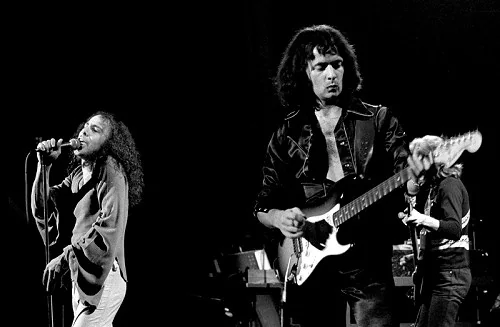
Image from Wikipedia
Image from Wikipedia
Rainbow – The Hard Rock Legend Around Ritchie Blackmore
From the Mystic "Castle Rock" to Stadium Anthems: How Rainbow Shaped Hard Rock
Rainbow was formed in 1975 from the artistic reorientation of guitar virtuoso Ritchie Blackmore after his departure from Deep Purple. What began with sessions featuring Ronnie James Dio and musicians from Elf grew in just a few years into a hard rock institution, combining epic compositions, baroque guitar motifs, and powerful stage presence. Between neoclassical riffs, dramatic arrangements, and catchy AOR hooks, a discography developed that influenced generations of guitarists, singers, and producers – from "Ritchie Blackmore’s Rainbow" (1975) to "Stranger in Us All" (1995) and the live reunions from 2016–2019. This artist biography illuminates the biography, music career, and artistic development of Rainbow with journalistic diligence and cultural-historical context.
Beginnings: Blackmore’s Artistic Reorientation and the Birth of Rainbow
In early 1975, Ritchie Blackmore was searching for new forms of expression beyond the Deep Purple architecture. In Munich, a formation was created under the working title "Ritchie Blackmore’s Rainbow," with the core idea of merging hard rock with classical influences, modal scales, and dramatic harmonic progressions. The sessions with Ronnie James Dio produced songs that blended fantastical worlds, medieval imagery, and electric virtuosity. The debut already showcased Blackmore’s compositional handwriting: arpeggiated intros, striking riffs, and dynamic arcs of tension – all carried by Dio’s sonorous, narrative voice, which connected melody and myth into a distinctive aesthetic.
The musical development in the early phase was characterized by clear roles: Blackmore as the architect of riff-based compositions and Dio as the lyrical storyteller, who translated themes like magic, departure, and tragedy into anthemic choruses. The production of the debut phase relied on organic band dynamics, analog saturation, and a drum sound that emphasized rhythmic monumentalism. Already here, the sound was formed that critics later described as "Castle Rock" – epic, imagery-rich hard rock with classicist influences.
The Rise: "Rising" (1976), Cozy Powell's Drive, and the Cinema in One's Head
With "Rising," the band perfected its dramatic storytelling through music. The opener "Tarot Woman" unfolded with its synthesizer intro a colorful sound palette before Blackmore’s guitar figure grounded the narrative. In "Stargazer," the concept culminated: orchestral colors, driving drums by Cozy Powell, modal harmonic shifts, and Dio’s heroic lines merged into a rock symphony. The arrangements featured dynamic climaxes, interludes, and thematic reprises – techniques more common in symphonic music. For many musicians, "Stargazer" became the blueprint for ambitious heavy compositions that were both melodically accessible and formally challenging.
Live, Rainbow developed an impressive stage presence during this phase. The performances were characterized by extended solos, dialogical moments between guitar and vocals, and precisely placed arcs of tension. The audience experienced not just a sequence of songs but a self-contained dramatic hard rock narrative – a trademark that continues to shape Rainbow's reception to this day.
From Epic Hard Rock to AOR: "Down to Earth" (1979) and the Single Era
With the change to singer Graham Bonnet, production increasingly shifted toward radio format from 1979 onwards. "Since You’ve Been Gone" established itself as the band’s global signature track and the spearhead of the melodic phase. The production now emphasized hooklines, more compact forms, and a shining guitar presence that bridged power chords and singable licks. At the same time, Blackmore’s compositional approach remained recognizable: harmonic twists that surprise the ear and breaks that make the chorus seem even bigger.
The single successes influenced the live dramaturgy. Setlists continued to combine the monumental pieces of the Dio years with radio-friendly anthems. This created a tension field in which Rainbow catered to the progressive rock socialization of part of the audience while also reaching new listeners through AOR compositions. This balancing act increased their cultural reach and made Rainbow a fixture on large festival and arena stages.
Joe Lynn Turner, "Difficult to Cure," and the Perfection of Radio Sound (1981–1983)
With Joe Lynn Turner, the band refined its AOR orientation. "Difficult to Cure" (1981) offered a clearly focused production: powerful rhythm section, multi-part choruses, guitar lines that balanced melody and virtuosity. "I Surrender" became the chart peak of the band's single history and demonstrated how Rainbow connects hook design, arrangement economy, and guitar craftsmanship. "Straight Between the Eyes" (1982) and "Bent Out of Shape" (1983) further sharpened the sound character: more high-end shine in the mix, more compressed structures, and tighter guitar-keyboard dialogues – a production aesthetic that reflected the state of the art of the early 1980s.
Music historians position this phase as an important bridge between hard rock and mainstream rock. Rainbow's single successes opened doors for the hard rock vocabulary in radio playlists without diluting the instrumental excellence. Thus, the band exemplified a development in which virtuosity and pop sensibility formed a productive alliance.
"Stranger in Us All" (1995), Hiatus, and the Return as a Live Phenomenon (2016–2019)
After a period of silence, Ritchie Blackmore returned in the mid-1990s with a late studio statement. "Stranger in Us All" incorporated elements of the classic Rainbow DNA: driving riffs, melodic choruses, pointed solos. The album is regarded in reception as a conscious bridging effort – preserving traditions with contemporary production. Later, Blackmore shifted his focus primarily to the Renaissance folk project Blackmore’s Night before selected Rainbow live shows from 2016 onward updated the band's iconography once again on large stages. Festivals and arenas experienced a curated retrospective: "Man on the Silver Mountain," "Stargazer," "Since You’ve Been Gone" – a setlist that represented the stylistic range from epic hard rock to anthemic radio ballads.
The return confirmed Rainbow as a live brand with historical weight. The band demonstrated that their repertoire not only functioned nostalgically but continued to generate musical tension, buoyed by Blackmore’s tonal formation, phrasing, and timing. At the same time, the shows underscored the influence that Rainbow’s compositions exerted on the DNA of successive metal and hard rock generations.
Discography Overview: Studio Albums, Live Milestones, Compilations
Rainbow’s discography encompasses nine studio albums: "Ritchie Blackmore’s Rainbow" (1975), "Rising" (1976), "Long Live Rock ’n’ Roll" (1978), "Down to Earth" (1979), "Difficult to Cure" (1981), "Straight Between the Eyes" (1982), "Bent Out of Shape" (1983), and "Stranger in Us All" (1995). Additionally, significant live documents such as "On Stage" (1977) and acclaimed concert recordings capture the improvisational energy and tight interplay of the various lineups. Compilations and remasters kept the catalog alive, making alternative mixes and live takes accessible to new generations of listeners and contextualizing the band’s stylistic development.
In critical reception, "Rising" and "Long Live Rock ’n’ Roll" are regarded as pinnacles of the Dio era, while "Down to Earth" and "Difficult to Cure" mark the AOR peaks. Chart-wise, singles like "Since You’ve Been Gone" and "I Surrender" stand out. At the same time, deeper catalog titles – "Catch the Rainbow," "Gates of Babylon," "A Light in the Black" – serve as reference points for compositional craftsmanship and sound dramaturgy in hard rock.
Songwriting, Production, and Guitar Aesthetics: Rainbow’s Sound Language
Blackmore’s guitar work combines classical motif development with blues-based tonality. Characteristic features include sequencings, modal color shifts, and the dramatic placement of solos. Ronnie James Dio shaped the narrative tone of the early era with his visual lyrical world and plastic syllable guidance. Later phases emphasized hook design, vocal layering, and a rhythmic tightness ideal that defined productions of the early 1980s. Producers like Martin Birch anchored the Rainbow sound in a tonal ideal that combined transparency, power, and spatial depth – audible in differentiated guitar reverbs, powerful kick-snare balance, and organically sounding overheads.
Compositionally, the band frequently worked with ostinato bass motifs that served as a pulse over which guitar riffs and vocal melodies build tension. Harmonically, dorian and phrygian hints support the epic, slightly mystical character of many pieces. This language explains the lasting influence on power metal, prog metal, and melodic hard rock.
Cultural Influence and Legacy: From "Stargazer" to AOR School
Rainbow inspired a number of prominent artists. Particularly, "Stargazer" has been named by musicians as a key moment in 1970s hard rock. The combination of orchestral gestures, dramatic narration, and guitar virtuosity set standards for how heavy compositions can sound monumental yet melodic accessible. At the same time, the AOR phase was stylistically influential for the transition from hard, riff-driven rock to radio-friendly structures with high vocal ranges, glittering choruses, and pointed hooklines.
Rainbow also set standards in the live context: light dramaturgy, solo architecture, the interplay of improvised passages and strictly composed sections – all of these shaped the later self-understanding of arena rock. The band’s history further demonstrates how personnel changes can act as a driving force for stylistic evolution without losing artistic identity.
Current Situation (2024–2026): Legendary Status, Catalog Maintenance, and Outlook
In recent years, curated live retrospectives, reissues, and remasters have been at the forefront. After the concert phase of 2016–2019, involved musicians indicated that new Rainbow studio activities or tours are not foreseeable. The maintenance of the extensive back catalog, presence in streaming curations, and ongoing references by younger rock and metal acts preserve relevancy. For fans, this means: the discography remains a vibrant resonance space that is constantly rediscovered in playlists, podcast analyses, and guitar masterclasses.
For the music world, Rainbow remains a lighthouse project that shows how artistic development occurs in phases: from the experimental-epic hard rock of the Dio years to radio-oriented perfection to the mature retrospective on stage. This legacy explains why the band serves as a significant reference point for historians, musicians, and producers alike.
Conclusion: Why Rainbow Still Electrifies Today
Rainbow fascinates because the band merges great emotions with compositional finesse: monumental riffs meet melodic elegance, dramatic arcs of tension meet sovereign production. Anyone wanting to understand the artistic development of hard rock and early heavy metal should listen to "Rising" as the blueprint of the epic and "Down to Earth" as the school of great refrains. Live, the repertoire remains an experience that bundles craftsmanship, attitude, and history. Recommendation: Listen to the albums in chronological order – and when the opportunity arises, experience the music loudly, grandly, and together at tribute concerts or curated festival programs.
Official Channels of Rainbow:
- Instagram: No official profile found
- Facebook: No official profile found
- YouTube: No official profile found
- Spotify: No official profile found
- TikTok: No official profile found
Sources:
- Wikipedia – Rainbow (rock band)
- Wikipedia – Ritchie Blackmore’s Rainbow (Album, Background)
- MusicRadar – Ritchie Blackmore & Ronnie James Dio on the early Rainbow era
- MusicRadar – The Creation of "Stargazer" (Analysis, 2025)
- Louder – Rainbow Rising: How Rainbow Became Chart Makers
- Official Charts Company – Chart Progress of "Since You’ve Been Gone"
- Wikipedia – "I Surrender" (Chart Facts, Song History)
- Wikipedia – "Difficult to Cure" (Album, Chart Peaks)
- Blackmore’s Night – Official Section on Rainbow (History/Context)
- CGCM Rock Radio – Sweden Rock 2019 (Photo Gallery/Live Return)
- Wikipedia – Rainbow Discography
- Wikipedia – "Man on the Silver Mountain" (Song Data)
- Metal Wani – Ronnie Romero on Current Status (2025)
- Wikipedia: Image and Text Source