
Philip Glass
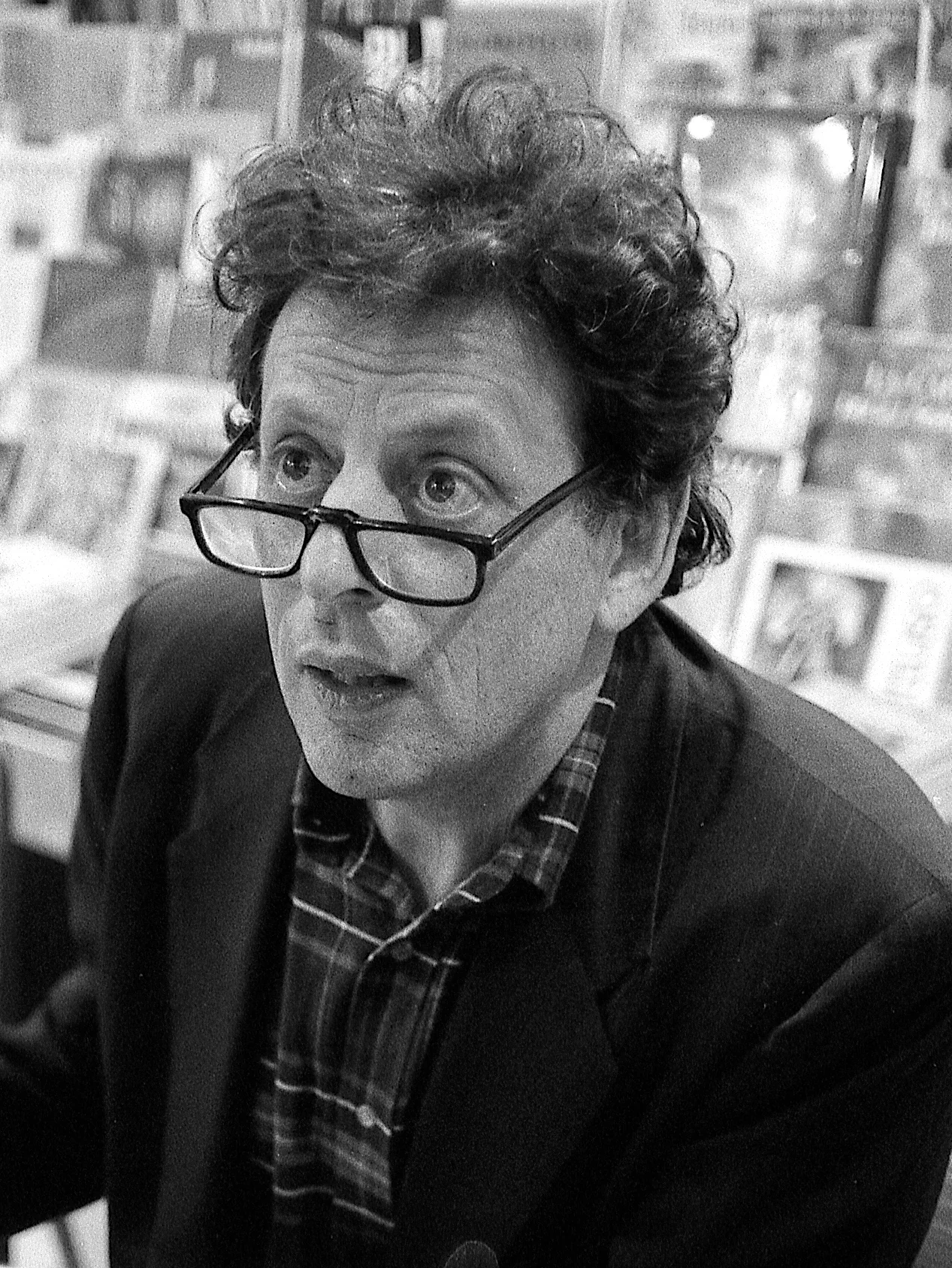
Image from Wikipedia
Image from Wikipedia
Philip Glass – Architect of Sound and Icon of Minimal Music
From New York Ensemble Founder to Globally Celebrated Composer – the Fascinating Life Journey of Philip Glass
Philip Glass, born on January 31, 1937, in Baltimore, has shaped musical modernism since the late 1960s. As a pioneer of Minimal Music, he developed a distinctive sound language characterized by repetitive patterns, pulsating rhythms, and gradual harmonic shifts. His music career spans opera, film scores, symphonic works, chamber music, and crossover projects with dance, theater, and visual arts. With a stage presence that is both focused and modest, Glass embodies the artistic evolution of a composer who consistently pushes boundaries – enchanting listeners around the globe.
Few contemporary composers have reached such a broad audience. Glass’s discography includes central operas, symphonies, string quartets, piano etudes, and acclaimed soundtracks. Three of his film scores were nominated for an Oscar, and numerous other awards underscore his authority in contemporary music. At the same time, he has always shown openness to collaborations, from choreographers and directors to pop and world music artists – an experiential horizon that makes his oeuvre unmistakable.
Early Years and Education: From Baltimore to New York and Paris
Growing up in Baltimore, Philip Glass was exposed to records of new music at an early age – a formative experience that sharpened his analytical view of composition. His studies took him to Chicago, New York, and Paris, where he further refined his compositional craft as a scholarship student. Encounters with European avant-garde, Indian and North African musical cultures, as well as engagement with classical form and modern sound aesthetics led to the distinctive blend of rigor and sensuality that defines his work to this day.
In New York, he struggled for several years with jobs – the anecdote of driving a taxi and working as a plumber became famous – while concurrently composing tirelessly. This biographical condensation of artistic drive and everyday work experience is reflected in the energetic pulse of his music and the determination of his career development. The founding of the Philip Glass Ensemble became a crucial step in making his sound ideas audible beyond traditional concert formats.
The Breakthrough: Minimal Music, New York Scene, and “Glassworks”
With the New York downtown scene of the 1960s and 1970s, Glass associated an aesthetic spirit of innovation: reduction, repetition, and the courage to stretch classical listening habits. In this atmosphere, early key works for the Philip Glass Ensemble were created. By the early 1980s, Glass found a wider audience with the album “Glassworks”: The work encapsulated the essence of his style in chamber music and electrified instrumentation, opening Minimal Music to listeners beyond the avant-garde milieu.
The breakthrough not only brought public attention but also professionalized the production and distribution of his music. The clearly structured patterns, driving ostinati, and organically flowing modulations became his trademarks – an aesthetic vocabulary that attracted international opera houses, concert halls, and film studios.
Opera and Music Theater: “Einstein on the Beach,” “Satyagraha,” “Akhnaten”
Glass has shaped contemporary music theater like few others. “Einstein on the Beach” (1976) – a radical, full-length cycle – created a new operatic aesthetic in collaboration with director Robert Wilson and choreographer Lucinda Childs. The structural consistency of the composition, repetitive choreographies, and Wilson's imagery merged into a Gesamtkunstwerk that continues to influence today.
“Satyagraha” (1980) and “Akhnaten” (1983) expanded the spectrum: Sanskrit texts and ancient Egyptian historical content are woven into a musical language that intertwines spirituality and political themes, ritual and reflection. New productions and revivals of these operas at major venues document their ongoing relevance and highlight how Glass’s compositional style redefines dramaturgy and perception of time in music theater.
Film Music and International Success: From “Koyaanisqatsi” to “The Hours”
With “Koyaanisqatsi” (1982), Glass created an audiovisual icon of modernity: The collaboration with director Godfrey Reggio fused documentary image collages with a hypnotic, structurally precise score. The film set standards for the connection between music and moving images, influencing generations of filmmakers.
Glass also left a lasting impact on narrative feature films. His music for “Kundun” (1997), “The Hours” (2002), and “Notes on a Scandal” (2006) was each nominated for an Oscar. Characteristic is a tonal, clearly outlined motif that generates psychological depth without overburdening the visuals. As an architect of dramatic tension arcs, Glass employs rhythmic patterns, layered arrangements, and subtle harmonic shifts – a signature style that is unmistakable in film music.
Ensemble, Chamber Music, and Symphony: Etudes, String Quartets, and the 15th Symphony
The Philip Glass Ensemble has served for decades as a laboratory and resonance space for his sound ideas. With the “Etudes” for piano, Glass created a cycle that combines pianistic technique, sound architecture, and meditative depth. Interpreters worldwide – from young talents to established virtuosos – have included the etudes in the concert canon of contemporary piano music.
In chamber music, the string quartets mark significant milestones in his compositional development: They transfer the repetitive, modular construction to a classically influenced genre, unlocking new colors through bowing techniques, register shifts, and subtle phrasing nuances. Symphonically, Glass has further expanded his spectrum in recent years: With the 15th Symphony (“Lincoln”), he turns to the words and values of Abraham Lincoln – a work that combines artistic stance and historical reflection.
Style and Aesthetics: Repetition, Pulse, Color – and the Art of Listening Space
Glass’s music unfolds a magnetic effect from a few precisely composed elements. Repetition is not merely repetition here but a compositional technique: micro-modulations, phase shifts, and the controlled addition and subtraction of voices create inner movement. This “listening architecture” generates an acoustic space that stretches time and sharpens perception.
In arrangements, timbre plays a central role: woodwinds densify harmonic fields, keyboards and strings introduce glassy overtones, while the rhythm stabilizes the musical sense of time. From a production perspective, Glass combines acoustic and electronic sound sources; his scores allow for flexible instrumentation – from solo piano to large orchestral palettes – demonstrating a deep understanding of performance practice.
Cultural Influence and Critical Reception
Glass has significantly influenced the aesthetics of theater, dance, and film: Choreographies by Twyla Tharp, productions by Robert Wilson, as well as film essays and documentaries carry his musical signature. In pop and rock culture, his style is regarded as a blueprint for repetitive-hypnotic textures that combine emotional immediacy with conceptual rigor. This permeability between “art” and “popular” music sharpened the discourse about what “classical” means in the 21st century.
Music journalism regularly praises Glass as a renewal figure who reaches listeners with clear forms, suggestive patterns, and melodic economy. Awards and honors – including the Kennedy Center Honors – reinforce his authority. Controversies are part of the narrative: precisely because Minimal Music challenges listening habits, the discussion remains vibrant – a sign of cultural relevance.
Current Projects and Performances 2024–2026
Recent projects and releases underscore Glass’s enduring productivity. The album “Philip Glass Solo” consolidates central piano works in a reduced, intimate perspective. Additionally, international festivals, orchestras, and soloists dedicate themselves to his works – from complete cycles of the piano etudes to opera productions like “Satyagraha.”
The recent 15th Symphony (“Lincoln”) sparks both debate and curiosity: The work centers around Lincoln’s texts, opening up an artistic engagement with history and the present. Planned performances at major venues and festivals show how Glass’s symphonic work continues to be impactful and programmatic. Concert events focusing on “Koyaanisqatsi” or large-scale etude evenings further affirm the live impact of his oeuvre in current musical life.
Voices of the Fans
The reactions from fans clearly show: Philip Glass captivates people worldwide. On Instagram, a listener raves: “This music makes time stand still.” On YouTube, comments like: “Hypnotic and moving – every time gives me goosebumps.” On Facebook, a listener writes: “Glass's new recordings sound timeless and fresh at the same time.” Short clips on TikTok celebrate the pulsating patterns of his etudes, while curated playlists on Spotify showcase how present his works are in the everyday lives of many listeners.
Conclusion
Philip Glass is more than a composer: He is a sound architect who has created a musical language using repetition, rhythm, and color that appeals to both intellect and intuition. His artistic development – from the early days in New York to global recognition – stands for perseverance, innovative spirit, and dialogical openness between the arts. Experiencing his operas, symphonies, etudes, and film scores live reveals how seemingly simple patterns transform into vast emotional arcs. The invitation is clear: Listening to Glass’s music in the concert hall means experiencing time anew – intensely, concentrated, profoundly human.
Official Channels of Philip Glass:
- Instagram: https://instagram.com/philipglass
- Facebook: https://www.facebook.com/philipglassmusic
- YouTube: https://www.youtube.com/channel/UCO3bNCq4DwEsaUReJ9Ro3zw
- Spotify: https://open.spotify.com/artist/69lxxQvsfAIoQbB20bEPFC
- TikTok: https://www.tiktok.com/@philipglassmusic
Sources:
- Philip Glass – Official Website: Biography
- Philip Glass – Symphony No. 15 "Lincoln" (Glass Notes)
- Encyclopaedia Britannica – Philip Glass: Biography, Music & Facts
- Elbphilharmonie Hamburg – Philip Glass: Koyaanisqatsi
- Berliner Philharmoniker – The Complete Piano Etudes by Philip Glass (16.06.2025)
- Associated Press – Philip Glass cancels Kennedy Center symphony premiere (2026)
- Wikipedia (DE) – Philip Glass
- YouTube – Philip Glass (Official Channel)
- Spotify – Philip Glass (Artist Profile)
- Facebook – Philip Glass (Official Page)
- Wikipedia: Image and Text Source
Upcoming Events
Beauty and the Beast (La Belle et la Bête)
Beauty and the Beast (Die Schöne und das Biest)
Beauty and the Beast - With Childcare
Everything keeps repeating, yet constantly changing | Concert for two pianos | Philip Glass, John Adams, David Lang