
Michel Doneda
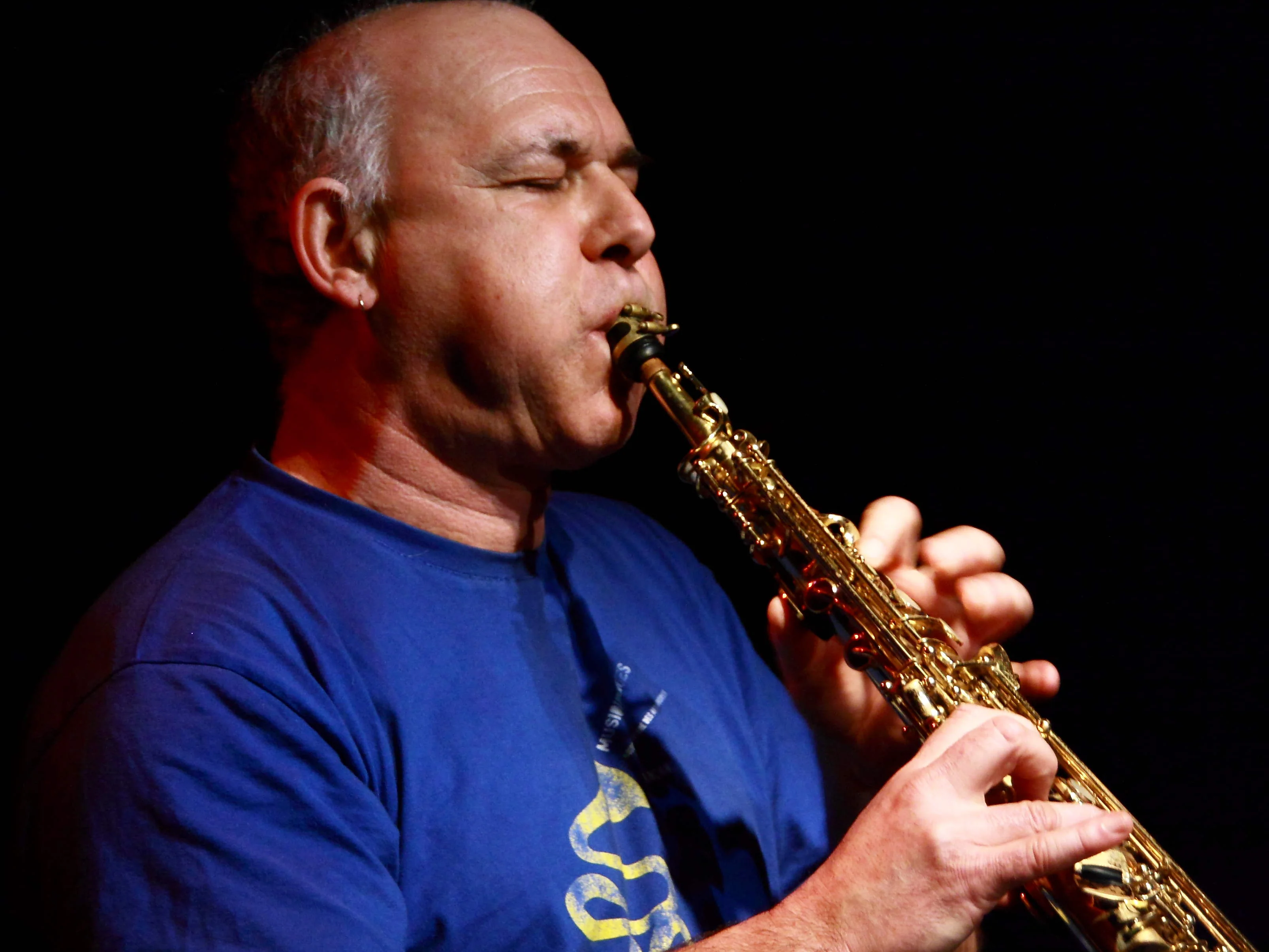
Image from Wikipedia
Image from Wikipedia
Michel Doneda – The Art of Free Improvisation on Soprano Saxophone and Sopranino
A French Avant-Garde Musician with a Distinctive Sound Language
Michel Doneda, born on November 21, 1954, in Brive-la-Gaillarde, is one of the most unique voices in European Free Jazz and improvised music. His career is characterized by a consistent search for sound, space, and spontaneous form, leading him from local band contexts to international collaborations with key figures in the free scene. Early on, he developed a musical identity that prioritizes physical presence, sonic precision, and radical openness over genre boundaries. (de.wikipedia.org)
From Young Musician to Seeker in the Sound Space
Doneda began his musical career at the age of 15 in local bands before gradually breaking away from conventional forms of jazz and developing his own language on the soprano saxophone. This early phase introduced him to an environment where free improvisation, experimental music, and collective listening became more important than fixed arrangements. The biography illustrates an artist who did not merely adopt a style but found his own approach to the instrument and the form. (de.wikipedia.org)
It is particularly characteristic that Doneda exclusively plays the soprano saxophone and sopranino saxophone. This specialization is no coincidence but part of his artistic rigor: he works with a high sonic concentration, employing bright, cutting, fleeting, and at the same time lyrical colors. In improvised music, this choice of instruments gives him a distinctive position between Free Jazz, radical minimalism, and experimental texture work. (de.wikipedia.org)
The Pivotal Years: Trios, Encounters, and International Networking
A significant turning point was in 1986 when Doneda became a member of a trio with Daunik Lazro and Lê Quan Ninh and recorded his first albums under his own name. In the late 1980s, he experienced further formative encounters, including with Alain Joule, Barre Phillips, Dominique Regef, Elvin Jones, and Beñat Achiary. These stages mark the transition from a regionally rooted musician to an internationally networked improviser, whose playing was tested and expanded in ever-new formations. (de.wikipedia.org)
Doneda also collaborated with an impressive number of stylistically diverse musicians, including Fred Van Hove, John Zorn, Lol Coxhill, Raymond Boni, Phil Wachsmann, and Ravi Prasad. His openness to collaboration became a core aspect of his music career: he was never bound to a fixed school but developed his artistic journey in dialogue with other voices, sound languages, and improvisational cultures. This is a fundamental reason why he is regarded in the scene as a reliable yet adventurous personality. (de.wikipedia.org)
A Defining Auditory Adventure: Africa, Theater, Literature, and the Free Scene
In 1993, Doneda traveled to Gabon to explore African music. This journey highlights an artist who did not confine his musical development to the European jazz tradition but sought listening practices, rhythmic concepts, and cultural contexts in a broader field. Furthermore, French and international sources show that his personal style is also shaped by intersections with theater, cinema, literature, and poetry. (de.wikipedia.org)
This interdisciplinarity gives his work depth. Doneda does not represent a decorative jazz vocabulary but instead a music where silence, breath, microtonality, and acoustic space act as compositional elements. His improvisations generate tension not solely through virtuosic gestures but through concentration, awareness of form, and a keen sensitivity to the acoustic situation. (offeneohren.org)
Discography: From Early Albums to Recent Releases
Key stations in his discography include Terra (1985), General Gramophon (1988), Aranoa (1988), L’Élémentaire Sonore (1991), Egyptian Fantasy (1992), Open Paper Tree (1994), and Anatomie Des Clefs (1998). These releases document the evolution from a free-jazz energy toward an increasingly nuanced, reduced, and space-oriented improvisational practice. Solo Las Planques has also been described in the press as a noteworthy solo step. (de.wikipedia.org)
Later works demonstrate the musician’s ongoing productivity. Among the selected albums in the Wikipedia discography are Murmuration with Alexander Frangenheim from 2023, as well as two albums released in 2025: El retorn de l'escolta: A la memòria de Marianne Brull with Lê Quan Ninh and Núria Andorrà, and Points of Convergences with Frédéric Blondy. These recordings confirm that Doneda’s artistic development remains dynamic after decades, continually focusing on new listening experiences and new configurations. (de.wikipedia.org)
Current Projects and Recent Resonances
Of particular note is Points of Convergences, a double album that was released on September 26, 2025, by Relative Pitch Records and was recorded back in 2014 at the Église Saint-Merri in Paris. The release underscores how deeply Doneda engages with space acoustics, resonance, and dialogical improvisation. The label describes the recording as deeply rooted in the church's distinctive sound environment, highlighting Doneda’s interest in spatial perception and subtle sound progression. (relativepitchrecords.bandcamp.com)
The reception points to a central quality of his music: the conscious work with antiphony, states of suspension, and the self-resonance of space. The review of Points of Convergences emphasizes how Doneda shifts between continuous reed lines and the sopranino to create higher, more fragmented colors. This is not merely effect music but a finely balanced form of improvisation where composition arises in the moment. (de.wikipedia.org)
Style, Technique, and Musical Signature
Michel Doneda’s style is described in sources as one of the most multifaceted contributions to the Free Improvisation scene. His playing oscillates between lyrical lines, buoyant lightness, eruptive sharpness, and controlled fragmentation. Thus, he belongs to those musicians who fuse the expressive tradition of jazz with highly reflective, almost laboratory-like sound exploration. (offeneohren.org)
Particularly in the texts from the scene, it is emphasized how strongly Doneda reacts to attention, silence, and the acoustic context. The music is often not oriented towards thematic hooks or grooves but focuses on uncovering subtle transitions, microtonal tensions, and the relationship between breath sounds, tonal cores, and room reverberation. This results in an aesthetic approach that allows for both intimate solo music and intense collective improvisation. (paristransatlantic.com)
Cultural Influence and Significance in Improvised Music
Doneda is considered an important representative of the European improvisation scene and has built a repertoire of encounters over decades that ranges from jazz to free improvisation and experimentational and intermedial formats. His collaborations with musicians like John Russell, Roger Turner, Lê Quan Ninh, and Barre Phillips demonstrate how deeply embedded he is in the central networks of freely improvised music. In this scene, he stands out not only as a soloist but also as a sensitive collective musician with a keen analytical ear. (offeneohren.org)
His cultural influence lies less in chart-topping hits and more in the lasting impact of a radically autonomous approach. Doneda exemplifies how creative improvisation asserts itself as a serious art form: open, risk-taking, historically aware, and simultaneously present. For lovers of avant-garde, creative jazz, and sound exploration, he remains a reference name whose discography and stage presence promise future discoveries. (de.wikipedia.org)
Conclusion: A Master of Open Listening
Michel Doneda captivates because he perceives the soprano and sopranino saxophones not merely as solo instruments but as tools of uncompromising sound exploration. His career intertwines early Free Jazz experiences, international collaborations, distinctive solo works, and recent releases into a body of work that holds a unique, unmistakable place in improvised music. Those who wish to experience music as a living form of listening will find an extraordinary invitation in Doneda’s recordings and concerts. (de.wikipedia.org)
This art unfolds most powerfully in live performances: in direct exchange with space, audience, and fellow musicians. It is here that one can hear why Michel Doneda is one of the most exciting figures in European free improvisation. Experiencing him on stage means not just hearing music but following its emergence. (offeneohren.org)
Official Channels of Michel Doneda:
- Instagram: No official profile found
- Facebook: No official profile found
- YouTube: No official profile found
- Spotify: No official profile found
- TikTok: No official profile found
Sources:
- Wikipedia – Michel Doneda
- Wikipedia – Points of Convergences
- Relative Pitch Records – Points of Convergences
- Offene Ohren e. V. – Improvised Music in Munich, Archive
- Paris Transatlantic – February 2006
- Agosto Foundation – Dying from One Breath to Another
- Jazzword – Michel Doneda
- All About Jazz – Michel Doneda