
Markus Schleinzer
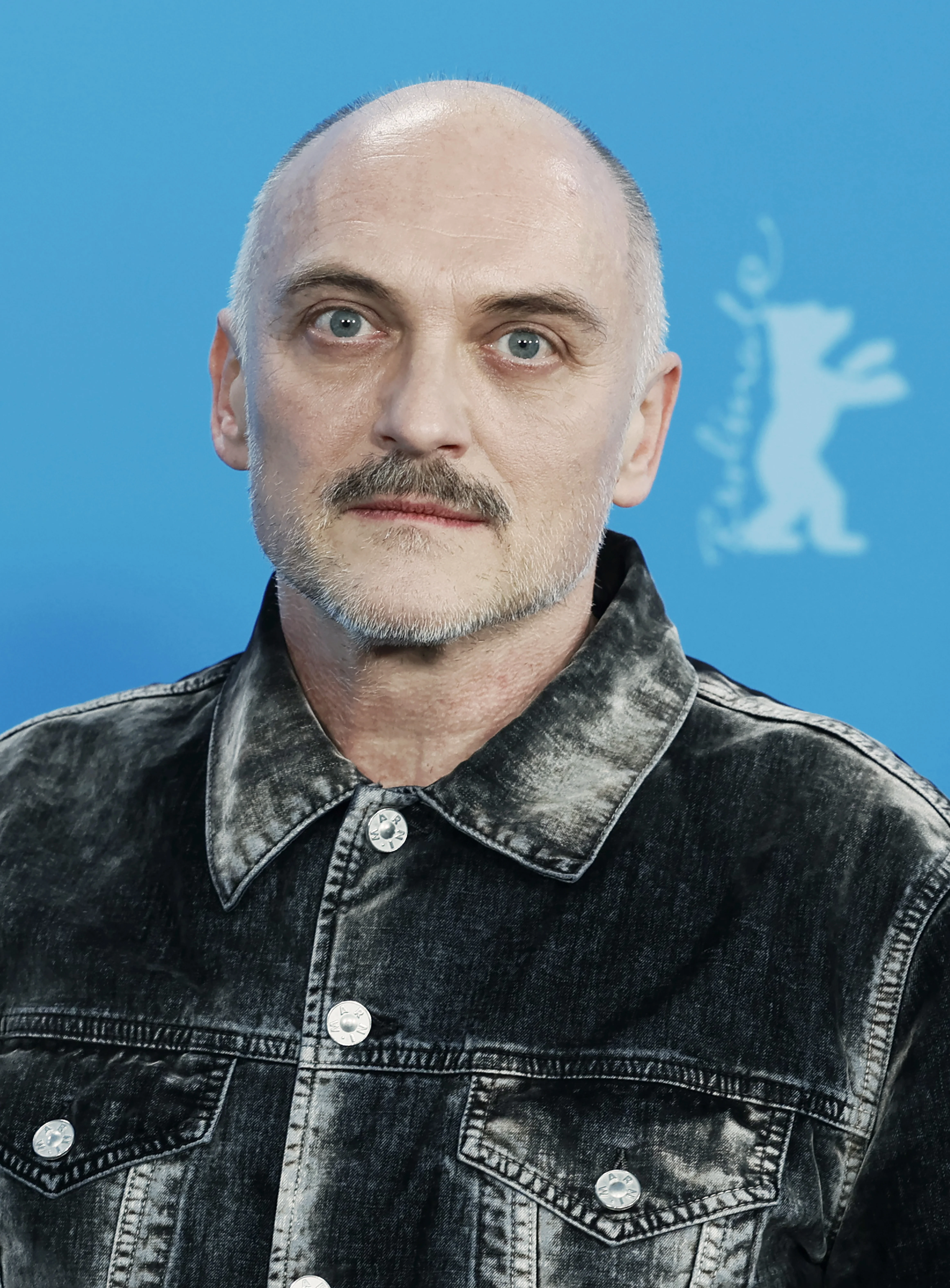
Image from Wikipedia
Image from Wikipedia
Markus Schleinzer – Precision, Tension, and the Art of Controlled Observation
An Austrian filmmaker straddling acting, casting, and author cinema
Markus Schleinzer, born on November 8, 1971, in Vienna, is one of the most distinct voices in Austrian cinema. He works as an actor, casting director, writer, and director, and has earned a reputation as a precise observer of characters, power dynamics, and psychological boundary conditions over many years. His career combines stage and camera experience with an exceptionally deep understanding of casting and the cinematic construction of roles. ([de.wikipedia.org](https://de.wikipedia.org/wiki/Markus_Schleinzer))
Biography: Viennese Roots and Early Artistic Influence
Schleinzer spent a significant part of his school years at BG Amerlingstraße in the 6th district of Vienna. From an early age, he moved between acting, theater, and film, developing a professional breadth that would later become his trademark. Since the mid-1990s, he has appeared in Austrian and German film and television productions as an actor. ([viennale.at](https://www.viennale.at/en/guest/markus-schleinzer))
He made his acting debut in 1995 in Wolfgang Murnberger's feature film Ich gelobe. This was followed by further appearances in Slumming by Michael Glawogger and Immer nie am Meer by Antonin Svoboda. These early roles already show that Schleinzer did not restrict himself to decorative supporting roles but instead appeared in productions with a strong authorial profile. ([viennale.at](https://www.viennale.at/en/guest/markus-schleinzer))
From Performer to Casting Director
His work as a casting director proved particularly influential. Since the late 1990s, Schleinzer has been responsible for over 60 predominantly Austrian film and television productions. In doing so, he not only shaped castings but also the tonal and atmospheric effects of numerous films. His ability to work with faces, postures, and coherent character configurations became the foundation of his later directing work. ([viennale.at](https://www.viennale.at/en/guest/markus-schleinzer))
Since 1999, he has also collaborated with Michael Haneke. For Das weiße Band – Eine deutsche Kindergeschichte, he cast around 7,000 children across Germany over a year and supervised the 48 selected children and adolescents during filming. This task demonstrates his extraordinary patience, accuracy, and understanding of the psychological resilience of young performers. ([de.wikipedia.org](https://de.wikipedia.org/wiki/Markus_Schleinzer))
Theater as an Additional Resonance Space
Alongside film, Schleinzer also worked on stage. His theater appearances are closely associated with the Graz-based author Constanze Dennig. In 2003, he played the inhumane host of a deadly television show in Deborah Epstein's production of Dennig's Extasy Rave in Graz, followed by the role of a slimy ÖVP politician in Demokratie in 2005. Already in 2004, he directed Dennig's play Valse Triste at the Literaturhaus Graz. ([de.wikipedia.org](https://de.wikipedia.org/wiki/Markus_Schleinzer))
Directorial Debut with Impact: Michael and Entry into Author Cinema
In 2011, Schleinzer gained international attention with his feature film debut Michael as a director. He also wrote the screenplay for this film, which centers on an unassuming man who holds a young boy captive. The ORF co-production was invited as the only German-language entry to the competition of the 64th Cannes Film Festival, immediately establishing Schleinzer as an uncompromising storyteller. ([de.wikipedia.org](https://de.wikipedia.org/wiki/Markus_Schleinzer))
The film's narrative perspective is noteworthy: Schleinzer intentionally depicts the story from the perpetrator's perspective to maintain distance and avoid simplistic victim reflexes. He simultaneously emphasized that he was not inspired by the kidnapping case of Natascha Kampusch, but rather by the many missing children that occupied the media. This clarity of approach reflects his demand for formal and moral control. ([de.wikipedia.org](https://de.wikipedia.org/wiki/Markus_Schleinzer))
The Artistic Signature: Control, Psychology, and Distance
Schleinzer works with a language of reduction. His films are interested in the moment when social order, intimate violence, and quiet threat intersect. This is not cinema of effects; rather, it is one of condensation: characters are under pressure, spaces are psychologically charged, and every gesture carries weight. In this sense, his directing is conceived from his casting experience: as a precise choreography of presence. ([de.wikipedia.org](https://de.wikipedia.org/wiki/Markus_Schleinzer))
Michael Haneke praised the project even before its premiere, which further brought Schleinzer into the circle of strictly observant Austrian author cinema. The fact that his work arises from a deep understanding of casting, text, and performance distinguishes him from many directors of his generation. He does not direct loudly but with a controlled, often disturbing calmness. ([de.wikipedia.org](https://de.wikipedia.org/wiki/Markus_Schleinzer))
Angelo: Colonial History, Identity, and Historical Perspective
In 2018, Schleinzer followed up with his second feature film, Angelo. The work is loosely based on the historical figure Angelo Soliman and addresses the biography of an African boy who is brought to Europe and raised within the Viennese aristocracy. The film was invited to the competition at the Toronto International Film Festival and the San Sebastián International Film Festival and deepens Schleinzer's interest in historical power structures. ([en.wikipedia.org](https://en.wikipedia.org/wiki/Markus_Schleinzer))
In discussions, Schleinzer emphasized that the film must be read against the backdrop of European colonial history, exoticism, racism, and representation. He posed the question of the perception of the Other not as an academic exercise but as existential cinema of visual relationships. In this way, he opened his work to a political and cultural-historical dimension that extends far beyond the classic period drama. ([en.wikipedia.org](https://en.wikipedia.org/wiki/Markus_Schleinzer))
Historical Materials as Contemporary Cinema
In Angelo, it becomes clear how Schleinzer translates historical themes into the present. His direction does not aim for museum-like reconstruction but for the visible tension between body, class, and assignment. For him, historical materials become experimental fields for questions of belonging, external determination, and social order. ([en.wikipedia.org](https://en.wikipedia.org/wiki/Markus_Schleinzer))
The production experience from his earlier work is also palpable: his precise work with actors, control over sound and rhythm, and trust in visual clarity define his signature. Thus, an author cinema emerges that can be read both intellectually and sensually. ([viennale.at](https://www.viennale.at/en/guest/markus-schleinzer))
Rose: A New High Point in Historical Cinema
With Rose, Schleinzer completed the work on his third feature film in 2025, which premiered in the main competition at the 76th Berlinale in 2026. The historical drama is set in the 17th century against the backdrop of the Thirty Years' War and tells the story of a mysterious figure who appears in a Protestant village and asserts hereditary claims. The film was co-written by Schleinzer and Alexander Brom and marks their second collaboration following Angelo. ([en.wikipedia.org](https://en.wikipedia.org/wiki/Markus_Schleinzer))
In interviews, Schleinzer explained that what interested him most about Rose was the feeling of limited freedom. He spoke of women who had various reasons for escaping the social order in the 17th century, as well as the productive tension between historical research and cinematic form. At the same time, he consciously chose black and white, as this aesthetic sharpens the focus on action and conflict. ([austrianfilms.com](https://www.austrianfilms.com/interview/markus_schleinzer/rose_DE))
Critical Reception and Festival Resonance
Rose received international attention and strong resonance in the critics' polls. The Frankfurter Allgemeine Zeitung highlighted the contemporary power of the film in its review, while Screen International awarded the work 3.3 out of 4 stars in the international critics' poll, placing it first among 17 competing films. For Schleinzer, this signifies a clear confirmation of his journey from a precise casting professional to an internationally recognized author-director. ([de.wikipedia.org](https://de.wikipedia.org/wiki/Rose_%282026%29))
Biographically, this concludes a circle: the engagement with historical narratives, body politics, and social codes runs through his entire body of work. Rose shows that Schleinzer not only masters the form of historical film but actively expands it. ([austrianfilms.com](https://www.austrianfilms.com/interview/markus_schleinzer/rose_DE))
Discography in a Broader Sense: Filmography Instead of Music Releases
Markus Schleinzer does not have a classical musical discography, as his artistic work is firmly rooted in film and theater. His significant film chronology includes Michael (2011) as his directorial and screenwriting debut, Casanova Variations (2014) as a screenwriting effort, Angelo (2018) as a directing and screenwriting project, and Rose (2026) as his latest directing and screenwriting work. This concentrated filmography, however, showcases authorship with a clear development line. ([en.wikipedia.org](https://en.wikipedia.org/wiki/Markus_Schleinzer))
Those searching for a "discography" in the narrower sense will find no albums or singles with Schleinzer but a cohesive, festival-tested author cinema. In an SEO-contextualized artist profile, this deviation is significant: it lends credibility to the page and keeps the distinction between music profile and film career clean. The result remains appealing to culture enthusiasts, as it portrays a distinctive artistic personality with a clear signature. ([viennale.at](https://www.viennale.at/en/guest/markus-schleinzer))
Cultural Influence and Aesthetic Significance
Schleinzer represents a cinema of condensation, in which casting, directing, and screenwriting merge. His experience as a casting director gives his films a special sensitivity to faces, bodies, and social roles. This background not only shapes the impact of his characters but also his authority in European arthouse cinema. ([viennale.at](https://www.viennale.at/en/guest/markus-schleinzer))
His works address violence, external determination, identity, and historical power structures with a consistency that has become rare in contemporary film culture. His cultural value lies precisely in this: Schleinzer creates images that do not aim to please but rather leave a lasting impact. He combines observational acuteness with formal rigor, thus remaining a director for audiences who understand cinema as a serious engagement with reality. ([de.wikipedia.org](https://de.wikipedia.org/wiki/Markus_Schleinzer))
Conclusion: Why Markus Schleinzer Remains Engaging
Markus Schleinzer is captivating because he fuses the discipline of casting, the precision of writing, and the rigor of directing into an unmistakable style. His career reveals an artist who does not just select characters but thinks through their deepest tensions. Those who appreciate strong author cinema, historical depth, and psychological tension will find a remarkably consistent body of work in his films. ([de.wikipedia.org](https://de.wikipedia.org/wiki/Markus_Schleinzer))
His festival successes and growing international attention highlight how relevant his work is for European cinema. Schleinzer remains a director to be experienced on the big screen, as his direction fully unfolds space, silence, and gaze only in cinema. His films invite viewers not only to watch but to look closely. ([de.wikipedia.org](https://de.wikipedia.org/wiki/Rose_%282026%29))
Official Channels of Markus Schleinzer:
- Instagram: no official profile found
- Facebook: no official profile found
- YouTube: no official profile found
- Spotify: no official profile found
- TikTok: no official profile found