
Markus (Evangelist)
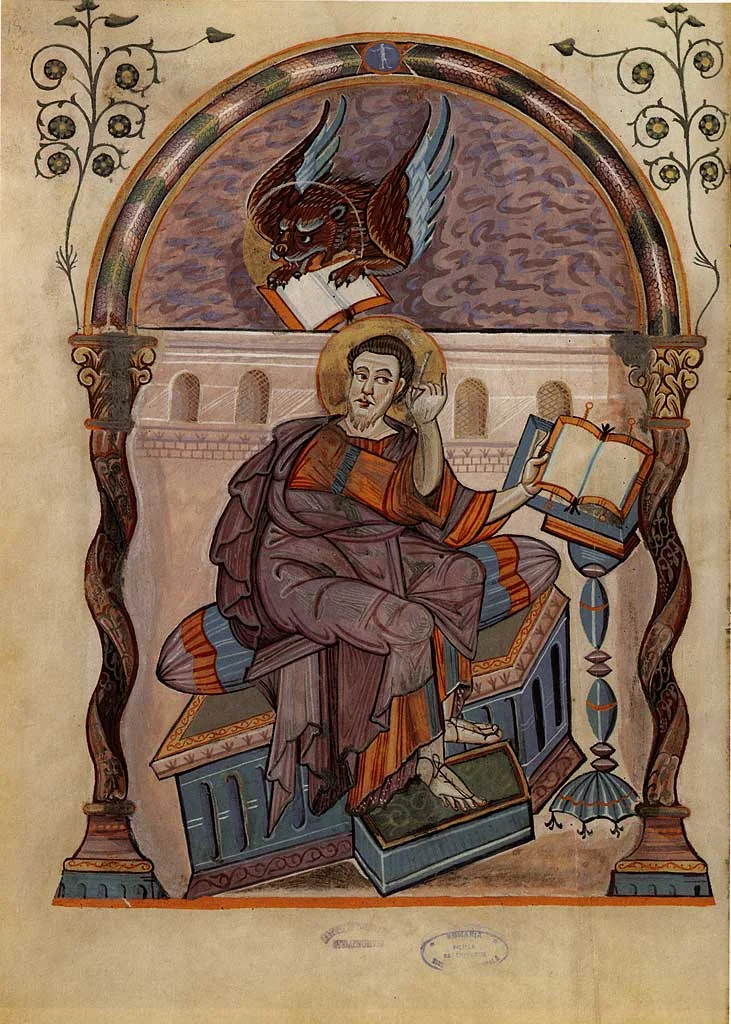
Image from Wikipedia
Image from Wikipedia
Markus (Evangelist) – the influential figure behind the oldest Gospel and the symbol of the Lion of Mark
A name that continues to shape Christian tradition to this day
Markus is not an artist figure in the modern sense, but one of the most significant personalities in early Christian tradition. According to ancient church tradition, he is regarded as the author of the probably oldest Gospel; at the same time, the Evangelist does not mention his name in the text itself, and the attribution "Markus" is a convention in scholarly literature. The name Markus or Marcus has Roman origins and points to the historical and cultural context in which later tradition places the Evangelist. ([domradio.de](https://www.domradio.de/person/markus-evangelist))
This very mix of historical uncertainty, ecclesiastical memory, and iconic impact makes Markus intriguing to this day. Tradition links him not only to the Gospel of Mark but also to a rich symbolic language, in which the Lion of Mark became one of the most recognized symbols of the Evangelist. As a religious, literary, and cultural figure, Markus is thus much more than a name in a canonical text: he represents the origin of a narrative form that has significantly influenced early Christianity. ([domradio.de](https://www.domradio.de/person/markus-evangelist))
Biographical tradition and historical context
Sources depict Markus as a companion of Paul and Barnabas on the first missionary journey, who, however, returned from Asia Minor to Jerusalem. Later, he is said to have accompanied Barnabas to Cyprus; during Paul's first imprisonment in Rome, around 61/63 AD, Markus is also located there, before he is said to have been in Ephesus again. These stages come from ecclesiastical tradition and are treated with caution by modern exegesis, as a distinction is made between the Paul companion Markus and the author of the Gospel of Mark. ([domradio.de](https://www.domradio.de/person/markus-evangelist))
Later legends have expanded this image: tradition attributes the founding of the Church of Alexandria to Markus and tells of his martyrdom there, but these details are considered uncertain. Additionally, there are reports about his work in Aquileia and Lorch, as well as about the transfer of his relics from Alexandria to Venice and to Reichenau. This creates a multi-layered memory image in which historical fragments, hagiography, and regional piety intertwine. ([domradio.de](https://www.domradio.de/person/markus-evangelist))
The Gospel of Mark as a literary origin
Ancient church tradition unanimously attributes the second Gospel to Markus, and this is precisely where his enduring significance for theology and cultural history lies. The Gospel of Mark is not simply a biographical account, but a concise, concentrated narrative text that unfolds the figure of Jesus in its own dramaturgy. The fact that the author does not name himself intensifies the literary tension and makes the attribution a question of tradition, not of signed authorship in the modern sense. ([domradio.de](https://www.domradio.de/person/markus-evangelist))
In this sense, Markus possesses a special authority: it is not personal self-presentation, but the impact of the text that is central. The Gospel shapes early Christian memory, condenses the message into brief scenes, and has thus unleashed a narrative power that has significantly influenced later Gospels and interpretations. For this reason, Markus is considered a key figure in the development of a concise, immediate, and theologically focused narrative style in religious literature. ([domradio.de](https://www.domradio.de/person/markus-evangelist))
Iconography, symbolic language, and cultural presence
The visual representation of the Evangelist has been clearly codified over the centuries: Markus is depicted sitting before a book, with a pen in hand and accompanied by a lion. This motif is not only decorative but part of a well-established iconographic tradition that marks the Evangelist as a bearer of scripture and an authority of tradition. Thus, the Lion of Mark is one of the most enduring Christian symbols and firmly establishes the name Markus deep in the collective memory. ([domradio.de](https://www.domradio.de/person/markus-evangelist))
His patronages also underscore the cultural reach of the figure. Markus is considered the patron of construction workers, glaziers, glassmakers, basket makers, masons, notaries, and scribes; moreover, he is invoked against thunderstorms, lightning, hail, scab, and for good harvests. This broad protective function shows how strongly his name has inscribed itself beyond the liturgical and ecclesiastical sphere into the everyday religious practice. ([domradio.de](https://www.domradio.de/person/markus-evangelist))
Musical and artistic reception in a broader sense
Although Markus himself was not a musician, his figure continues to resonate in art, liturgy, and music history. Particularly, the Passion tradition and spiritual compositions draw on the Gospel tradition associated with him, as the Gospel of Mark offers its own, condensed perspective on the Passion narrative. Thus, Markus remains a constant reference point for church performance practice, religious narrative art, and sacred imagery. ([domradio.de](https://www.domradio.de/person/markus-evangelist))
The modern reception also shows that Markus remains a topic in theological publishing, church portals, and popular religious publications. A non-fiction book published in 2023 explicitly addresses him as "Evangelist, Apostle, and Martyr" and demonstrates how alive the interest in his interpretative history is. Thus, the figure is not only the subject of exegesis but also part of an ongoing cultural mediation between scholarship, faith, and readership. ([shop.falter.at](https://shop.falter.at/detail/9783985900497/markus))
Discography, charts, and current projects
In the narrower sense, Markus certainly has no discography, chart hits, or current music releases. The available sources rather document a religious-historical figure whose impact is communicated through texts, legends, and iconographic traditions. There are also no current projects in the sense of new albums, singles, or tours; instead, Markus remains a subject of ongoing theological and cultural historical reception. ([domradio.de](https://www.domradio.de/person/markus-evangelist))
Voices of the fans
An official social media account of Markus as an Evangelist is not verifiable, and there are no reliable social media profiles available. Therefore, this section is entirely omitted, as without clearly official channels, there is no serious basis for fan quotes or platform reactions. ([de.ra.co](https://de.ra.co/dj/markus-us/biography?utm_source=openai))
Conclusion: Why Markus continues to fascinate
Markus fascinates because the great lines of Christian memory converge in his figure: an early-historical author, an unclearly outlined biography, a powerful Gospel, and a symbol of remarkable durability. The figure lives precisely from its mix of historical distance and cultural presence, from legend and text, from faith and interpretation. Anyone who wants to understand Markus encounters not only a figure from antiquity but a cornerstone of religious narrative culture. ([domradio.de](https://www.domradio.de/person/markus-evangelist))
For this reason, it is worth rediscovering Markus in the context of the Bible, art, and liturgy. His tradition shows how strongly texts and symbols can shape entire epochs, and how a single name can open spiritual and cultural spaces over centuries. Those interested in the origins of Christian narrative art should not only read Markus but also experience him as a key figure in European culture. ([domradio.de](https://www.domradio.de/person/markus-evangelist))
Official channels of Markus (Evangelist):
- Instagram: no official profile found
- Facebook: no official profile found
- YouTube: no official profile found
- Spotify: no official profile found
- TikTok: no official profile found