
Kurt Tucholsky
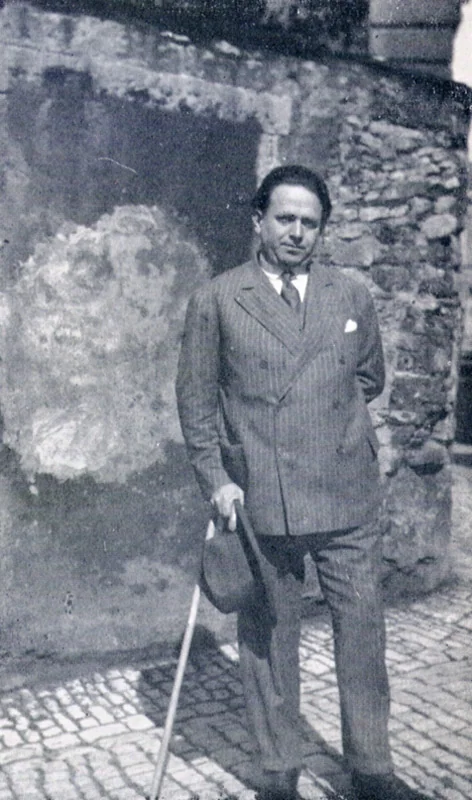
Image from Wikipedia
Image from Wikipedia
Kurt Tucholsky – the astute chronicler of the Weimar Republic between satire, chanson, and political journalism
An author who understood language as a weapon, stage, and shield all at once
Kurt Tucholsky was one of the most influential German journalists of the 20th century: born on January 9, 1890, in Berlin, and died on December 21, 1935, in Gothenburg, he became a voice that extended far beyond literature. His work combined journalistic precision, satirical sharpness, musical word rhythms, and uncompromising social criticism. Under pseudonyms such as Kaspar Hauser, Peter Panter, Theobald Tiger, and Ignaz Wrobel, he developed a literary polyphony that made him unique in the Weimar Republic. (de.wikipedia.org)
Early Years: Berlin, Law, and the First Literary Breakthrough
Tucholsky grew up in Berlin in a Jewish bourgeois environment and began studying law after finishing high school, which led him first to the University of Berlin and later to Geneva. However, it soon became apparent that his true calling was not in the courtroom but in language: even as a student, he worked journalistically and wrote for social democratic publications. With the story "Rheinsberg – A Picture Book for Lovers" from 1912, he achieved his first major breakthrough; the cheerful, fresh tone made him known to a broader audience. (tucholsky-gesellschaft.de)
This early phase is crucial for Tucholsky's entire artistic development, as it already condensed his most important means: pointed observation, ironic distance, and a keen sense for social role models. The "Picture Book for Lovers" was not merely a summer story but a literary overture that combined entertainment with enlightenment. It was from this very connection that Tucholsky later developed the profile that made him famous as a satirist, critic, and political author. (de.wikipedia.org)
The Weimar Years: Journalism as an Intervention in the Present
After World War I, Tucholsky returned to Berlin and worked for various newspapers, including "Weltbühne" and other publications and cabaret contexts. German biographies and the Tucholsky Society emphasize his closeness to political journalism, his role as co-editor of "Weltbühne," and his sharply worded contributions against militarism, nationalism, and authoritarian structures. He wrote under various names because he wanted to operate in multiple tonalities at the same time: sometimes elegant and observational, sometimes biting, sometimes lyrical, sometimes polemical. (deutsche-biographie.de)
It is precisely this polyphony that grants him extraordinary authority as an author. Tucholsky did not understand literature as a retreat, but as an intervention. His texts attacked politics, society, the military, the judiciary, and even cultural environments, always with the claim to protect language from trivialization and self-deception. The fact that he also wrote chansons and cabaret texts shows how much he appreciated the closeness to the stage: His texts possess rhythm, tempo, and a clear musical architecture. (deutsche-biographie.de)
Chansons, Cabaret, and Literary Stage
Tucholsky wrote poems and chansons for cabaret, among other things for well-known stage and entertainment figures of his time. In doing so, he moved at the intersection of literature, music, and performance. His texts were often constructed for recitation, dramatization, and staged sharpness, making them suited for an art form where rhythm, punchlines, and vocal delivery play central roles. The musical character of his language is still one of the reasons his texts remain so vibrant in readings, audio productions, and stage programs. (deutsche-biographie.de)
The cultural significance of this work extends far beyond Weimar's entertainment culture. Tucholsky's chansons and satirical miniatures show mastery in condensing, compressing, and transforming social observations into form. His style is strict, elegant, and often exposingly friendly before tipping into sharp irony. This is exactly where his lasting fascination lies: he not only wrote against grievances but also shaped an art out of the contradiction itself. (tucholsky-gesellschaft.de)
Political Stance and Conflicts with the Era
Tucholsky saw himself as a left-wing democrat, socialist, pacifist, and anti-militarist. He warned early on about the strengthening of the political right, the threat posed by National Socialism, and the moral erosion of state institutions. His texts sparked controversy because they did not seek to balance what he saw as already askew. In this stubbornness, a form of authorship emerges that aims not for consensus, but for awareness. (de.wikipedia.org)
After 1930, Tucholsky lived in Sweden, as the political situation in Germany continued to worsen. The later development of National Socialism tragically confirmed many of his warnings. In the reception after 1945, he was therefore reread as a prescient observer, who not only commented but precisely outlined developments. His authority still rests today on this rare combination of literary power and political foresight. (de.wikipedia.org)
Work and Discography: Texts, Audio Versions, and Ongoing Reception
Although Kurt Tucholsky was not a musician in the classical sense, his work has a remarkable history of recordings and audiobooks. On streaming platforms and in audio editions, numerous recordings of his prose texts, poems, and satires can be found, including "Schloss Gripsholm," "Rheinsberg," "Advice for a Bad Speaker," or collections of his notes and prose pieces. These publications demonstrate how strongly Tucholsky's language is crafted for recitation, reading, and acoustic presentation. (open.spotify.com)
The digital presence of his work also documents its ongoing cultural reach. Modern audiobook and reading editions, some from the years 2024 and 2025, keep his text corpus in the public consciousness. The fact that Tucholsky is continuously rediscovered, read, and published in recordings speaks to the vitality of his language: it does not remain museum-like but continues to function as precise, articulate, and performative literature. (open.spotify.com)
Cultural Influence: Why Tucholsky Remains Relevant Today
Tucholsky's cultural influence lies in his ability to merge political analysis, literary form, and satirical condensation. The Tucholsky Society emphasizes that his texts are still relevant today and can provoke political debate. That is precisely what makes him an outstanding figure in German cultural history: he did not merely write about the time but rubbed against it and forced readers to take a stand. (tucholsky-gesellschaft.de)
His work continues in the tradition of cabaret and chanson literature. Anyone who reads or listens to Tucholsky encounters a form of language that is precisely composed: with abrupt cuts, ironic turns, rhythmic intensifications, and a keen ear for the social temperature of a sentence. This quality makes him an author firmly rooted in literary studies, political history, and stage art alike. (deutsche-biographie.de)
Conclusion: The Uncompromising Master of Subtle and Sharp Tones
Kurt Tucholsky remains intriguing because he combines literary elegance with political unrest. He was a chronicler, satirist, lyricist, critic, and tireless warning against intellectual self-surrender. His texts sound modern even today because they do not live off historical distance but from a clear stance, precise language, and immense formal discipline. Whoever discovers Tucholsky uncovers an author whose work simultaneously entertains, disturbs, and enlightens. His texts are worth every renewed encounter – on the pages of a book, as a reading, and as vibrant stage literature. (de.wikipedia.org)
Official Channels of Kurt Tucholsky:
- Instagram: No official profile found
- Facebook: No official profile found
- YouTube: No official profile found
- Spotify: No official profile found
- TikTok: No official profile found
Sources:
Upcoming Events
Literary Matinee on Kurt Tucholsky
The Versatile Kurt Tucholsky