
Ingeborg Bachmann
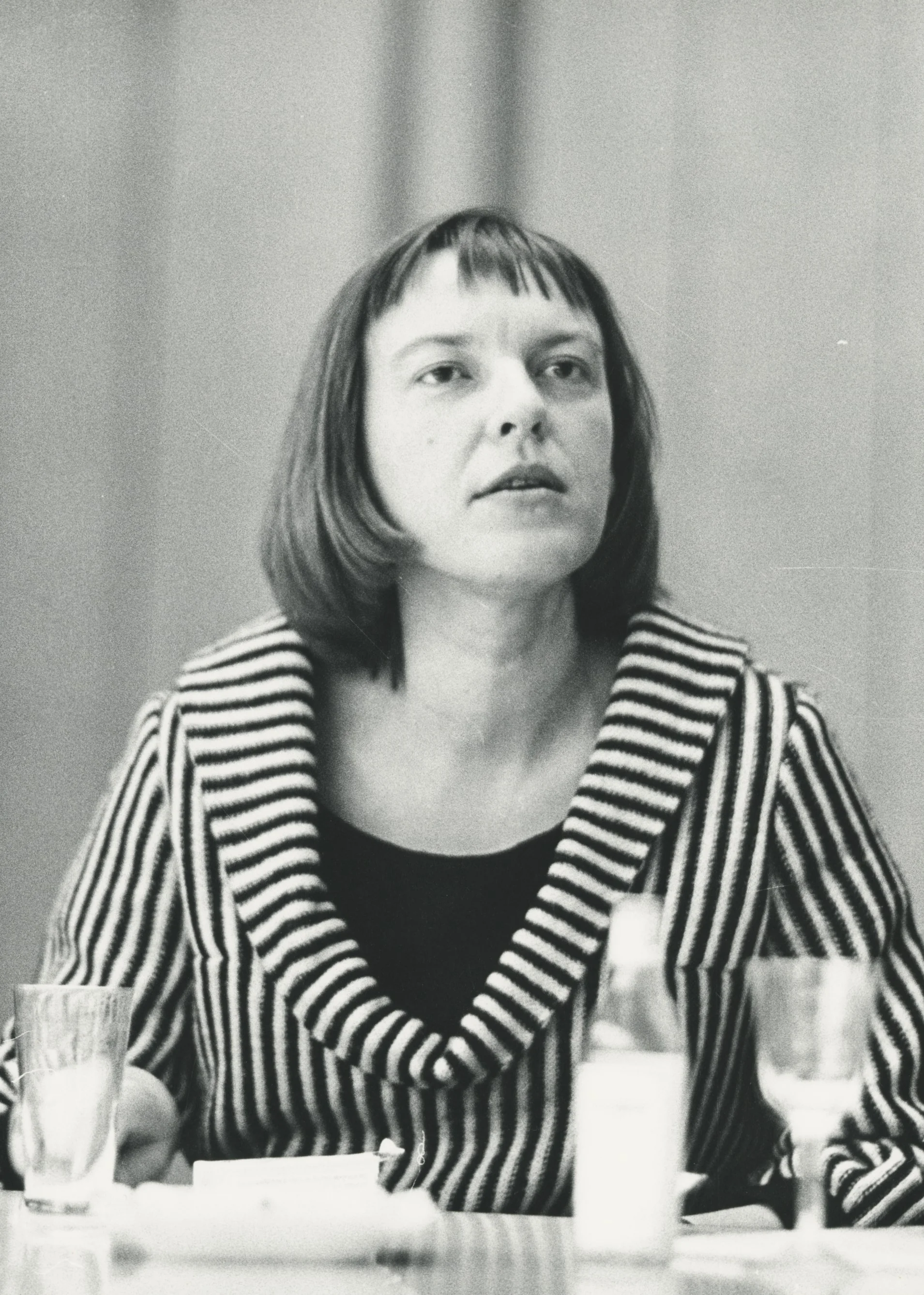
Image from Wikipedia
Image from Wikipedia
Ingeborg Bachmann – Pioneer of German-language Modernism, Whose Words Became Music
Between Poetry, Radio Art, and Opera Libretti: A Voice that Shapes Generations
Ingeborg Bachmann (June 25, 1926, Klagenfurt – October 17, 1973, Rome) is regarded as one of the most significant authors of the 20th century. Her music career in the strictest sense did not exist; nevertheless, she shaped soundscapes of language through her artistic development that continues to inspire composers to this day for compositions, arrangements, and musical adaptations. From her early poetry collections to experimental radio plays and opera libretti, Bachmann created a body of work that made literary history while simultaneously touching the music scene. The annual Ingeborg Bachmann Prize attests to her enduring cultural influence.
Biographical Beginnings: From Studies to the "Group 47"
Growing up in Carinthia, Bachmann studied philosophy, German studies, and psychology, and received her doctorate in 1950 with a thesis on Heidegger. Her artistic development took shape early on when she performed with the "Group 47" in 1952 and received the group's prize in 1953. The readings, her precise sense of language, and the stage presence of an author who performed her texts sharply garnered her a breakthrough in literary public life. Her move to Italy in the mid-1950s further enhanced the European perspective of her writing and shaped her tone between existential experience, political diagnosis, and poetic innovation.
Breakthrough with Poetry: The Stopped Time and Invocation of the Great Bear
Bachmann's discography in a musical sense is replaced by her poetry – texts that acted as compositions in language and were often later set to music. With "Die gestundete Zeit" (The Stopped Time, 1953) and "Anrufung des Großen Bären" (Invocation of the Great Bear, 1956), she defined a new poetic density: vivid metaphors, strict composition, and a sound-conscious arrangement of verses. These poetry collections established her reputation as the most significant German-language lyricist of the post-war period and created a poetics where rhythm, breath, and semantic fine-tuning merge into a kind of "language music."
Radio Art and Audio Drama: The Good God of Manhattan
In parallel with her poetry, Bachmann explored the possibilities of radio play as an acoustic medium. "Der gute Gott von Manhattan" (The Good God of Manhattan, 1958) is considered exemplary for the connection of text, voice, sound direction, and spatial effect. Her radio plays work with musical sensitivity: recurring motifs, pauses, and tonal ranges unfold a dramaturgy reminiscent of composition. Thus, Bachmann developed a media presence that impacted literature into cultural radio and made the boundaries between literature and auditory stage permeable.
Libretto Art: Collaboration with Hans Werner Henze
Bachmann's artistic development reached a special music-historical dimension in her libretti for Hans Werner Henze. With "Der Prinz von Homburg" (The Prince of Homburg, premiered in the 1960s), she transformed the Kleist drama into an opera libretto that combines psychological depth with clear dramaturgical lines. "Der junge Lord" (The Young Lord, premiered on April 7, 1965, Deutsche Oper Berlin) was created based on a work by Wilhelm Hauff; Bachmann's libretto impresses with precise character portrayals, a fine sense of rhythm, and dramatic impact. Both works are now mainstays of the modern opera repertoire and document how Bachmann's literary authority has also shaped music – from thematic conception to the texture of the vocal lines.
Prose and Poetics: Malina and the Thinking of Form
With the novel "Malina" (1971), Bachmann condensed her writing into a radically modern prose. Formally advanced and psychologically nuanced, the book works with voices, breaks, and inner monologues that are constructed like a composition – themes are exposed, varied, and broken. "Malina" became a key text of German-language literature after 1945 and continues to influence writing styles that understand language as a body of sound and meaning. In lectures and essays, Bachmann also articulated a poetics that intertwines aesthetics, ethics, and criticism of the times.
Overview of Works: Editions, Archives, and Continuous Reception
The preservation of works is carefully edited and secured in archives. Central are the early poetry collections, the radio plays, the libretti, and the prose – accompanied by letters, essays, and lectures. Literary archives and publishers document the wealth of material: manuscripts, typescripts, proof pages, and correspondences trace Bachmann's working methods. A dynamic landscape of editions and exhibitions keeps the discussion of her texts alive and ensures that reception is not musealized but continues productively.
Current Resonances: Settings, Festivals, and Exhibitions (2024–2026)
Decades after her death, Bachmann's voice remains present. New orchestral and vocal works draw on her poems and place them in the concert hall of the present. A festival and concert scene sets texts like "Die gestundete Zeit" in new musical contexts, while major events in Vienna and Cologne curate thematic evenings based on Bachmann's literature. At the same time, exhibitions that present her key works – from early stories through poetry to "Malina" – are traveling through Europe in concentrated chapters. Literary competitions, foremost the award established in 1977, intensify the engagement with language, form, and the present each year – in direct line with the performative energy of the "Group 47."
Style, Genre, and Technique: A Poetics as Sound Architecture
Bachmann's writing combines poetic precision with compositional rigor. Her poetry follows clear architectural principles: thematic recurrence, semantic counterpoints, finely dosed pauses. In the libretti, she showcases dramaturgical craftsmanship that organizes voice management, scene transitions, and text rhythm in the sense of a musical score. The radio plays turn the ear into a stage: sound scores, speaking tempos, and sonic motifs condense the narrative. Thus, expertise in literary composition merges with a sensibility for musical dramaturgy – a rare synthesis of literature and music.
Cultural Influence: Authority Across Genre Boundaries
Bachmann's authority is derived from her works, their impact, and the institutions surrounding them: awards, festival formats, editions, and academic research. Her name stands for literary quality and social awareness – and for openness to neighboring arts. Opera houses continue to stage Henze's operas with her libretti; theaters, concert halls, and radio studios engage with Bachmann's texts and reflect them into the 21st century. This intermediality explains why Bachmann's texts inspire musicians: language becomes material for composition, the poetic voice resonates as a song text, and the prose score acts as scenic music.
Reception and Criticism: Between Canon and Present
Specialist journals, cultural pages, and music media acknowledge Bachmann's contributions from various perspectives. Literary critiques highlight the radical modernity of her texts; opera reviews emphasize the stage effectiveness and linguistic energy of her libretti. Editions, collected works, and archive revelations expand the text corpus and provide a reliable basis for research, productions, and adaptations. Thus, the reception of Bachmann meets central criteria of reliability and authority: verifiable sources, traceable work connections, and a vibrant performance practice.
Conclusion: Why Ingeborg Bachmann is Indispensable Today
Ingeborg Bachmann remains an indispensable voice because she understands literature as an event of language – precisely composed, sound-conscious arranged, and ethically attuned. Her poems, radio plays, libretti, and her novel "Malina" demonstrate how literature influences music, stage, and cultural practice. Those who read Bachmann or experience her texts in concerts and operas encounter an artistic development that spans from verse to stage, from radio studio to opera. Her work challenges us – and sparks the desire to hear this language live: in recitation halls, concerts, and theaters. Experience Bachmann's texts where words become sound.
Official Channels of Ingeborg Bachmann:
- Instagram: No official profile found
- Facebook: No official profile found
- YouTube: No official profile found
- Spotify: No official profile found
- TikTok: No official profile found
Sources:
- Wikipedia – Ingeborg Bachmann
- Encyclopaedia Britannica – Ingeborg Bachmann
- Austrian National Library – Travelling Exhibition: Ingeborg Bachmann
- Suhrkamp – Author Page Ingeborg Bachmann
- ORF – Ingeborg-Bachmann-Prize 2025: Participants and Focus Areas
- Hans-Werner-Henze-Stiftung – Der junge Lord (Libretto by Ingeborg Bachmann)
- Wikipedia – Der Prinz von Homburg (Opera) – Libretto by Ingeborg Bachmann
- Neue Musikzeitung – Settings and Current References to Bachmann's Poetry (January 2025)
- Wien Modern – Program Reference to Ingeborg Bachmann (2024/2025)
- Austrian National Library – Archive of Ingeborg Bachmann (Overview)
Upcoming Events
23. LeseLust: Matinee to Ingeborg Bachmann
23. Reading Pleasure: Matinee on Ingeborg Bachmann with Prof. Dr. Gunnar Och and Dr. Christoph Grube
Ingeborg Bachmann - Someone I Once Was
Ingeborg Bachmann's Reckoning with Fascism
Ingeborg Bachmann - Someone Who Once Was Me
Ingeborg Bachmann - Someone I Once Was
100th Birthday Ingeborg Bachmann – A Life for Poetry
Brechthaus: 100th Birthday of Ingeborg Bachmann – A Life for Poetry
Ulmer Lyriksommer: Ingeborg Bachmann Evening