
Hans Söllner
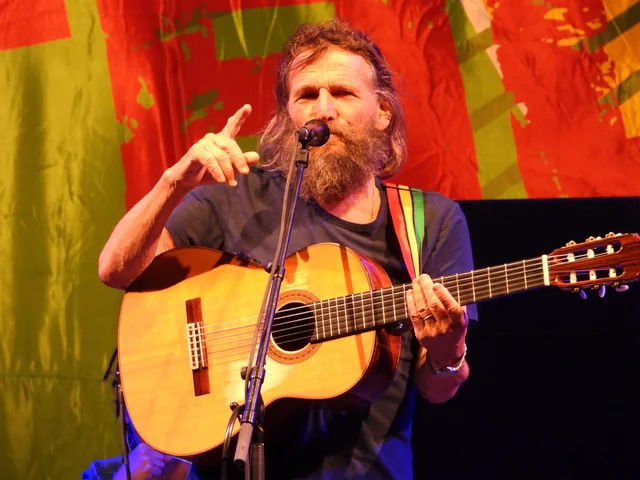
Image from Wikipedia
Image from Wikipedia
Hans Söllner – Bavarian Singer-Songwriter, Reggae Rebel, and Uncomfortable Voice
An Artist Portrait on Music Career, Artistic Development, and Cultural Influence
Hans Söllner, born on December 24, 1955, in Bad Reichenhall, is regarded as one of the most notable German singer-songwriters of recent decades. With his guitar and harmonica, later accompanied by bands in a "Bavarian reggae" style, he early on combined narrative compositions with uncompromising social criticism in the Bavarian dialect. His music career embodies lived independence, clear stances, and a stage presence that has polarized and captivated audiences since the late 1970s.
Söllner's artistic development is rooted in the tension between folk, reggae, and singer-songwriter art. Already in his early works, political positions, biographical fractures, and the desire to merge musical form and content unavoidably emerge. He became a voice of dissent – with songs where arrangements, groove, and language-rhythmic punchlines reveal a strong narrative power.
Biography: From Working-Class Child to "Bavarian Rebel"
Growing up in Upper Bavaria, Söllner found an expressive medium in music and lyrics against narrow-mindedness, dogma, and hypocrisy. Since 1979, he has been on stage, initially as a solo artist with an acoustic guitar and quickly gaining a growing fan base in Bavaria, Austria, and beyond. His songs document biographical experiences and social observations – from the daily lives of ordinary people to conflicts with authorities. The energy and credibility of his production lie within this biographically grounded artist biography.
Söllner clashed with the state early on due to provocations, drug policy statements, and assertive stage announcements. This defiance shaped his public image – not as a calculated pose, but as a result of a consistently lived stance. His later advocacy for the legalization of marijuana and recurring legal battles are constants in his biography, which both solidified and challenged his authority as a combative singer-songwriter.
Career Breakthrough and Controversies: "Hey Staat!" to "Der Charlie"
The musical breakthrough is connected with albums and songs that brilliantly combine reggae pulse, folk grounding, and sharp lyrics. "Hey Staat!" became a trademark – a cipher for Söllner's unmistakable blend of mockery, indictment, and poetic emphasis. In 1992, "Der Charlie" followed, a work that is still considered one of his strongest and most controversial albums. Reception has fluctuated between enthusiastic agreement and sharp rejection – an indicator of the range within which his art operates.
From a label perspective, the Munich independent label Trikont shaped the release and visibility of key works. There, Söllner is located as a singer-songwriter with a distinctive voice – a nod to his musical kinship with folk singers and Gstanzl traditions as well as to his independence in the German-speaking reggae cosmos. The interlinking of artistic development and label environment made his production independent of mainstream cycles – a competitive advantage for a clear style but also a risk in relation to radio platforms and chart mechanics.
Musical Development: Dialect, Reggae Groove, and Narrative Textures
Söllner's genre mix thrives on contrasts: The warmth and syncopated calm of reggae meet the biting laconicism of Bavarian texts; folk guitar and harmonica encapsulate everyday dramas in condensed song miniatures. His compositions utilize simple, concise motifs that are often sparsely arranged in production – favoring linguistic precision and emphasis. This economy lends a heavy impact to the singer-songwriter art: The focus is on the line, the chorus, the punchline.
In a band context, such as with Bayaman’ Sissdem, the sound palette expands: Bass lines, offbeat guitars, and percussive accents frame the voice without overpowering it. This creates an organic reggae-folk hybrid that has a special impact live. This artistic development is not stylistically arbitrary but follows a clear production aesthetic: Text first – then groove, then color.
Discography (Selected) and Live Documents
Key studio works and live releases include albums that depict his discography as a career biography: "Hey Staat!" as an early signature, "Der Charlie" (1992) as a controversial reference work, and extensive concert recordings that document his stage presence. Live releases such as "Im Regen (Live)" show how strongly Söllner's songs breathe in interaction with the audience. Additionally, individual pieces – including "A Jeda" or "Mei Voda hod an Marihuana-Baam" – shape his repertoire and reception history.
In the catalog of specialized providers and the independent scene, his oeuvre remains present and accessible – in high-resolution formats, in the label's catalog, and on platforms that list his work more broadly. This continuously maintains the discography and makes it traceable for new generations without relying on contemporary hype.
Stage Presence: Between Solo Guitar, Band Energy, and Audience Dialogue
The live dimension is one of Söllner's strongest forms of expression. His performances thrive on improvisation, spontaneous announcements, and friction with current events. Setlists document how he mixes new and old material, varies tempos, and creates dramaturgical moments of calm. The music career here reveals itself as an ongoing negotiation process: between artistic freedom, audience expectations, and societal debates.
In the years 2024 and 2025, Söllner remained a prominent live force. Festival and hall dates highlight how consistently he performs in German-speaking regions. This continuity is mirrored in the archives of relevant reggae portals and setlist databases – a "touring as stance," which stands apart from chart-driven careers and attests to authenticity.
Reception and Critique: A Polarizing Author with Strong Authority
Critical reception places Söllner between singer-songwriter tradition and reggae social critique. Scholarly articles and biographical dossiers attribute him a prominent role as a "Bavarian rebel" – not least because of the consistency with which he addresses political and social conditions. Musically historically, he marks a connecting line: from folk singers and political chansonniers to a modern, dialect-based protest song aesthetic.
At the same time, he remains controversial: lawsuits, convictions, and verbal escalations in public discourse have resonated in the press. Labels and music media have taken positions on this, leading to a second layer of reception: the debate about the limits of artistic freedom, responsibility on stage, and the power of words. This ambivalence does not diminish his authority as an artist – rather, it locates it within the real tensions of today's cultural struggles.
Lyrics and Themes: Freedom, Self-Determination, Everyday Realism
Söllner's lyrics – often in narrative stanzas and recurring refrains – revolve around freedom, self-determination, and social justice. The dialect serves as an aesthetic tool: it grounds the tone, creates closeness, and rhythmizes language. Humor, coarseness, tenderness, and melancholy coexist – making his songs relatable to very different listener biographies. Compositorily, this leads to a distinctive signature that has held up over decades without becoming mere gimmickry.
The production often remains minimalist: guitar, harmonica, voice. In band settings, bass and offbeat emerge distinctly; arrangements remain lean to allow space for textual clarity. This production style explains why his songs work particularly well live – the semantic core is always audible.
Cultural Influence: Dialect Pop, Reggae in the Alpine Region, and Independent Structures
With his combination of Bavarian dialect and reggae aesthetics, Söllner has profoundly influenced the musical discourse in the Alpine region. He exemplifies a counterculture that functions beyond major label mechanics while still achieving reach – through independent labels, regional organizers, and a loyal live community. His influence extends from dialect pop to songwriters merging social commentary with folk and reggae grooves.
As an author, he also makes appearances: books and biographical narratives expand his career biography beyond just albums. His artistic universe – songs, texts, images – can thus be read as a cohesive narrative: a cultural counter-proposal that resonates broadly and triggers debates.
Current Activities (2024–2025): Concerts, Catalog Maintenance, and Ongoing Debates
In the years 2024 and 2025, Söllner remained active live; setlist archives and concert lists record performances and confirm his ongoing presence on stages in the German-speaking area. Meanwhile, key catalog titles remain accessible through label and audio platforms – an essential building block for new listener demographics. In the public sphere, individual social media posts sparked discussions, bringing media attention back to his work, stance, and impact.
The sum of these activities shows a mature music career in motion: artistic development without stylistic breaches, perpetual performance practice, and a discography that is maintained in the independent context and kept digitally present.
Conclusion: Why Hans Söllner Remains Relevant Today
Hans Söllner remains intriguing because he masterfully combines musical simplicity with incisive content. His compositions are direct, his arrangements clear, and his lyrics uncomfortable. This combination makes him a defining figure in the German-speaking singer-songwriter and reggae scene – with cultural weight far beyond Bavaria. Anyone wishing to understand his art should experience it live: There, groove, language, and stance unfold their greatest impact.
Official Channels of Hans Söllner:
- Instagram: No official profile found
- Facebook: No official profile found
- YouTube: No official profile found
- Spotify: https://open.spotify.com/intl-de/artist/4RjmmSn4Or7MLCgq4k3SOl
- TikTok: No official profile found
Sources:
- Wikipedia (DE) – Hans Söllner
- Wikipedia (EN) – Hans Söllner
- Trikont – Artist Profile Hans Söllner (Label)
- Munzinger – Hans Söllner (Biography)
- Penguin Random House – Hans Söllner (Author Page)
- setlist.fm – Hans Söllner Concert Setlists
- Reggaeville – Hans Söllner (Dates/Archive)
- Apple Music – Im Regen (Live)
- Qobuz – Hans Söllner Discography
- Official Website – soellner-hans.de
- Wikipedia: Image and Text Source
Upcoming Events
Hans Söllner -solo-
Hans Söllner – solo in Onoldiasaal
Hans Söllner – Solo
Hans Söllner Concert in Ansbach
Hans Söllner – Solo (Onoldiasaal)
Hans Söllner Live – Bavarian Song Art
Hans Söllner Concert in Ansbach
Concert with Hans Söllner
Hans Söllner Live in Ansbach