
Cavetown (Musiker)
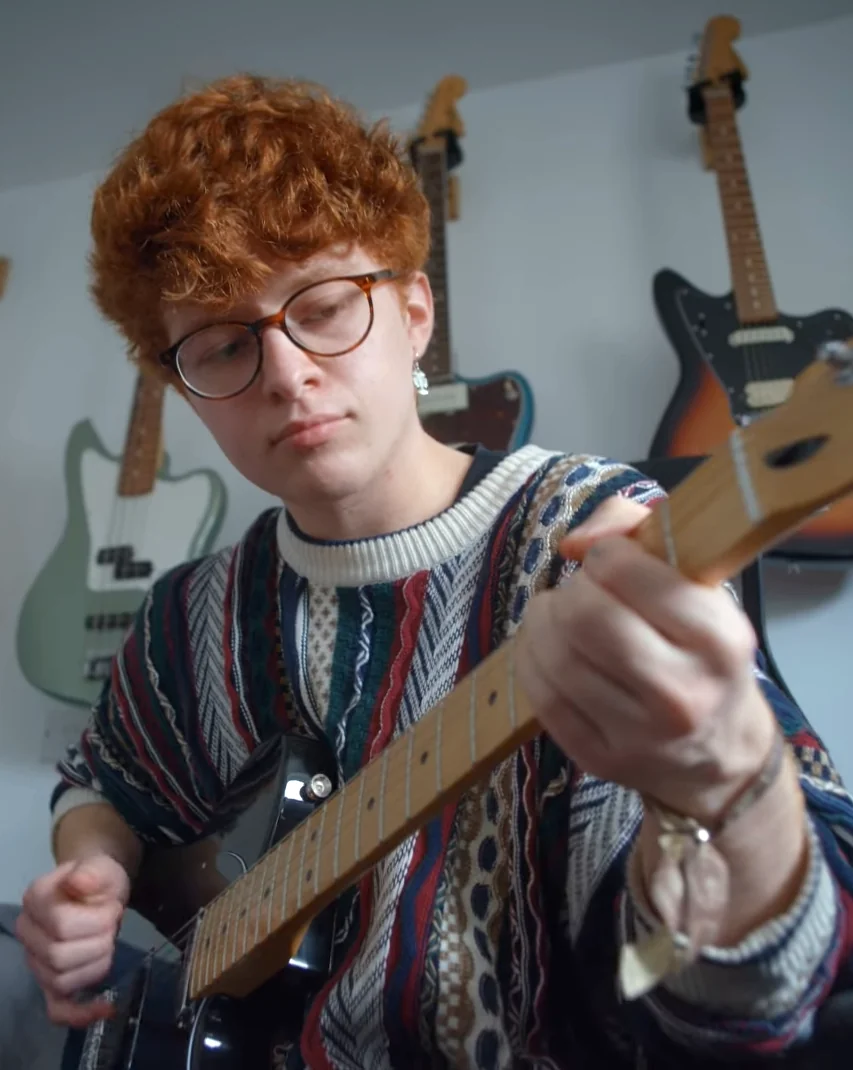
Image from Wikipedia
Image from Wikipedia
Cavetown – Biography, Discography, Style, and Influence
From Bedroom to World Stage: How Cavetown Reaches an Entire Generation with Subtle Intimacy
Robin Daniel Skinner, known as Cavetown, was born on December 15, 1998, in Oxford and grew up in Cambridge. The British singer-songwriter, producer, and YouTuber blends indie pop, bedroom pop, indie rock, lo-fi, and indie folk into a distinctive sound that combines intimacy, approachability, and sensitive songwriting. As a teenager, he began releasing his own compositions and built a loyal community through his YouTube channel, accompanying him from early living room recordings to major festival and arena stages. His music career shows a consistent artistic evolution: from DIY sound to polished studio productions—without losing the warm core of his aesthetic.
Biography and Early Years: Musical Influences, First Songs, First Albums
Cavetown comes from a musical family and learned to play guitar early on. He started his YouTube channel in 2012, and in 2013, he released an early original titled “Haunted Lullaby.” Simultaneously, he published several early projects and albums on Bandcamp while refining his signature between ukulele ballads, intimate vocals, and gently shimmering guitar lines. The crucial step towards greater public recognition came in 2015: with the single “This Is Home,” he reached a growing online fanbase and released his self-titled debut album in November of the same year—a mosaic of acoustic and electronic textures that highlighted his fondness for melodies and melodic lo-fi production.
In 2016, he followed with “16/04/16,” a touching album dedicated to the memory of a friend, which underscored his narrative depth and empathy. His stage presence evolved alongside his recordings: small clubs soon turned into larger venues and festivals, as the audience came to appreciate the closeness and directness of his performances. Even at this early stage, Cavetown combined songwriter tradition with a community culture that was equally fostered online and live.
Breakthrough Years 2018–2021: Lemon Boy, Sleepyhead, and the EP Man’s Best Friend
With “Lemon Boy” (2018), Cavetown expanded his sound: indie folk storytelling met bedroom pop production, catchy hooks met melancholic warmth. Alongside the EP format “Dear” (2018), he solidified his reputation as the voice of a young, online-formed generation. In 2020, “Sleepyhead,” his major debut, was released—a work that transferred the delicate sensibility of earlier recordings into a richer production environment. Although touring plans were partially postponed that year, Cavetown deepened his artistic development through collaborations and a label mindset. The 2021 EP “Man’s Best Friend” marked a sharp condensation of his songwriting: introspective lyrics, airy arrangements, and detail-oriented production—music as a safe space.
This phase shaped his profile as a producer and arranger as well as a live performer. Whether in the studio or on stage: his artistic development followed a line that prioritizes authenticity over spectacle, timbre over volume, and inner truth over short-term effects.
2022–2023: Worm Food and the Maturity of a Signature Sound
With “Worm Food” (2022), Cavetown reached new artistic maturity. Critics praised the “raw honesty,” “new depths,” and themes of self-empowerment—an album that sharpened and simultaneously opened up his signature. Guest contributions from fellow indie artists deepened the textures, while the production became clearer, more dynamic, and bolder. The response in the music press strengthened his authority as a songwriter, bridging vulnerable introspection with catchy melody.
Simultaneously, Cavetown positioned himself as a reliable voice for a community that finds closeness, comfort, and belonging in his songs. He increasingly understood his work as a social practice: music as a place of self-acceptance, exchange, and care culture—on and off the stage.
2024: Little Vice, New Singles, and Co-Headline Tour
In February 2024, the EP “Little Vice” was released—a subtly condensed set, whose track-by-track analyses highlighted the love for detail in composition, arrangement, and production. The sound of the EP spans bridges between gentle introspection and finely calibrated pressure, between analog warmth and digital precision. In the summer of 2024, a large-scale co-headline tour with Mother Mother across North America followed. Sold-out venues, strong live dynamics, and an intergenerational audience documented how much Cavetown's stage presence has grown: quiet tones, big impact.
At the same time, Cavetown maintained his DIY roots: Bandcamp releases, collaborations such as “magic 8 ball,” and lo-fi versions of his own pieces showcased his versatility—demonstrating how organically he switches between studio aesthetics, acoustic intimacies, and pop affinities.
2025–2026: “Songs I Like in 2025” and the Studio Album “Running with Scissors”
In March 2025, Cavetown released the cover EP “Songs I Like in 2025”—a tribute to influences, favorite tracks, and the joy of reinterpretation. This step served as a brief pause before the next chapter: in August, September, October, and November 2025, the singles “Baby Spoon,” “Rainbow Gal,” “Tarmac,” and “NPC” were released, paving the way for “Running with Scissors.”
On January 16, 2026, the sixth studio album “Running with Scissors” was released, marking his first full-length release with Futures Music Group (a joint venture including Neon Gold and Avenue A). The album expands Cavetown's sonic world towards hyperpop aesthetics, dream-pop shimmer, and pop-punk energy—without compromising its emotional core. The production emphasizes collaborative studio work, distinctive synth layers, precise drums, and a plastic vocal staging; thematically, the songs revolve around self-discovery, transitional phases, identity, and closeness. Following this, a world tour began in early 2026, impressively bringing the new live set dramaturgy—between gentle acoustic moments and powerful, maximalist peaks—to the stage.
Discography Overview: Albums, EPs, Key Tracks
Studio albums: “Cavetown” (2015), “16/04/16” (2016), “Lemon Boy” (2018), “Sleepyhead” (2020), “Worm Food” (2022), “Running with Scissors” (2026). EPs and projects: “Dear” (2018), “Man’s Best Friend” (2021), “Little Vice” (2024), lo-fi EP (2024), “Songs I Like in 2025” (2025). Key tracks span early fan favorites (“This Is Home,” “Boys Will Be Bugs”) through the 2022 phase (“1994”) to the 2025/2026 singles (“Baby Spoon,” “Rainbow Gal,” “NPC,” “Sailboat”). The discography documents a continuous artistic evolution: from bedroom closeness to detailed studio architecture.
Critical Reception: The music press has repeatedly praised Cavetown's songwriting, sensitive vocal performance, and ability to translate intimate themes into melodic, accessible pop forms. “Worm Food” received strong reviews; “Running with Scissors” was described as a bold, playful, and lyrically evolved continuation of his aesthetic.
Style, Production, and Songwriting: Between Intimacy and Maximalist Pop
Cavetown's sound thrives on contrasts. Compositional elements mix reduced harmonies, expressively led melodies, and finely nuanced dynamics. Arrangements involve acoustic guitars, ukuleles, warm basses, unobtrusive synth pads, and precisely placed percussion accents. In production, he balances lo-fi patina and high-fidelity clarity: subtle saturation, light grain, and organic spaces meet crisp drums, clever vocal layering techniques, and modern effects to the point of hyperpop-tinged texturing.
Lyrically, he addresses identity, mental health, belonging, and tender everyday observations. The voice remains the center and guide: understated, close to the ear, yet present enough to shine even in denser produced passages. This dramaturgy—telling softly, feeling grand—makes his songs especially impactful live.
Cultural Influence and Community: Visibility, Safe Spaces, and Fan Connection
As an artist who has built his community online from the start, Cavetown sees digital spaces as an extension of the stage. His songs have become anchor points for many listeners during phases of coming of age, self-exploration, and acceptance. Projects benefiting young LGBTQ+ initiatives and a respectful approach in live settings underscore the values that shape his work: empathy, care, and accessibility. He thus combines artistic authority and trustworthiness: authentic communication, resilient sources, transparent narratives.
In the music history of the 2010s/2020s, Cavetown positions himself between DIY tradition and contemporary indie pop productions that think elastically across genre boundaries. His discography demonstrates how thoughtful artistic development and consistent quality work create cultural relevance over the years—beyond fleeting trends.
Voices of the Fans
Fans' reactions clearly show: Cavetown captivates people worldwide. On YouTube, one can read comments under new singles like: “This voice feels like a safe place.” On Spotify, playlists describe him as: “Cavetown provides the soundtrack for late nights and early hopes.” And after concerts, visitors write in social feeds: “Quiet, honest, overwhelming—live even more intense than on record.”
Conclusion: Why Listen to Cavetown Now – and Experience Him Live
Cavetown embodies a rare balance: musical finesse, lyrical sincerity, modern production—and a community that supports these qualities. “Running with Scissors” (released on January 16, 2026) marks a step into a new sonic breadth without diluting his identity. For those who want to understand how today’s indie pop operates between bedroom aesthetics and studio precision, this work is exemplary. Recommendation: start the journey chronologically, then listen to “Little Vice” and “Running with Scissors”—and definitely catch the next tour. Cavetown's stage presence places a big exclamation mark on the quiet things.
Official Channels of Cavetown:
- Instagram: No official profile found
- Facebook: No official profile found
- YouTube: https://www.youtube.com/@Cavetown
- Spotify: https://open.spotify.com/artist/2hR4h1Cao2ueuI7Cx9c7V8
- TikTok: No official profile found
Sources:
- Wikipedia – Cavetown (English)
- Wikipedia – Running with Scissors (Album) (English)
- FLOOD Magazine – Cavetown Breaks Down His Subtle New “little vice” EP Track by Track, February 23, 2024
- The Line of Best Fit – Cavetown signs to Futures Music Group and shares “Baby Spoon”, 2025
- Bandcamp – Cavetown: Songs I Like in 2025
- Exclaim! – Mother Mother / Cavetown (Concert Listing), 2025
- Prime Entertainment – Cavetown (Portrait, German), 2026
- Futures Music Group – Label Page
- Spotify – Cavetown Artist Profile
- YouTube – Cavetown Channel
- Wikipedia: Image and text source