
Beyoncé
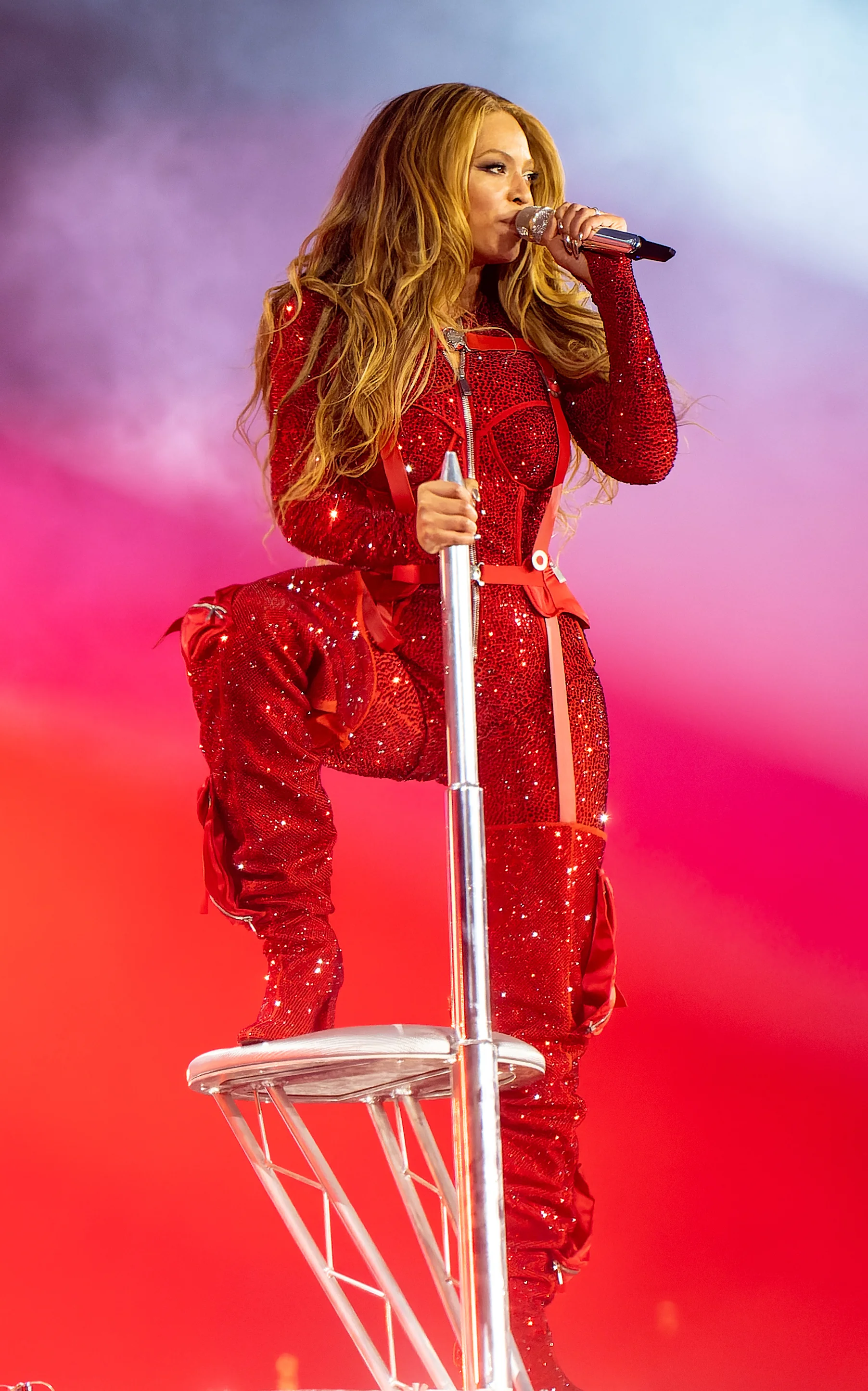
Image from Wikipedia
Image from Wikipedia
Beyoncé – Icon of Pop Culture, Innovator of the Present
From R&B Phenomenon to Genre-Defining Visionary: The Extraordinary Music Career of Beyoncé
Beyoncé Giselle Knowles-Carter, born on September 4, 1981, in Houston, Texas, is regarded as one of the most influential artists in modern music history. As the frontwoman of Destiny’s Child, she shaped the late 1990s and early 2000s before setting global standards with a spectacular solo career starting in 2003. Her discography combines R&B, pop, hip-hop, soul, dance, house, and most recently, country, always with precise production, multilayered arrangements, and a stage presence that weaves together pop and high culture. With 35 GRAMMY Awards and multiple records, Beyoncé has redefined the standards for artistic development, audio-visual art, and chart success.
Biography: From Houston to the World's Biggest Stages
Growing up in a music-loving family, Beyoncé received early singing and dance lessons and formed with childhood friends the predecessor group to Destiny’s Child. The formation quickly became one of the most successful R&B girl groups ever, with harmonically layered vocals, catchy hooks, and tight production defining hits like “Say My Name” and “Survivor.” From the outset, Beyoncé displayed a distinctly recognizable artistic fingerprint: precise timing, dynamic vocal delivery, dramatically structured bridges, and a knack for creating hooklines with lasting impact.
In 2003, she launched her solo career with “Dangerously in Love.” The album combined contemporary R&B with soul elements, orchestral textures, and a modern club aesthetic. With this success, she laid the foundation for a career in which she gradually took artistic control—through the founding of Parkwood Entertainment to self-directed visual albums, global tours, and innovative release strategies.
Career Highlights: Catalyst of a Pop Era
With “B’Day” (2006) and “I Am… Sasha Fierce” (2008), Beyoncé refined her stylistic duality: high-energy, beat-driven R&B meets balladic, emotionally charged compositions. “Single Ladies (Put a Ring on It)” became a pop-culture signature moment. “4” (2011) emphasized analog warmth, horn arrangements, and old-school soul references, while “Beyoncé” (2013) redefined the marketing and perception of the “visual album” as an art form with its surprise release. “Lemonade” (2016) interwove conceptual art, Afro-diasporic music history, and political storytelling—a reference work of the 2010s with significant cultural critical radiance.
With “Homecoming” (2019), she documented her legendary Coachella performance, a meticulously arranged celebration of black college band traditions, combining choreography, big-band sound, marching precision, and narrative artistry. In 2022, she released “Renaissance,” a club-, house-, and disco-focused manifesto that paid tribute to ballroom, house, and queer cultures while recalibrating the history of dance music with luxurious production and intricate sound architecture.
Current Phase: Cowboy Carter, Chart History, and New Horizons
In 2024, Beyoncé released “Cowboy Carter” (Act II)—a stylistically broad Americana and country project that emphasizes the African American roots of the genre and recontextualizes country through arrangement, instrumentation, and phrasing. The single “Texas Hold ’Em” made chart history, marking a rare moment where pop, R&B, and country sensibility merged into a coherent narrative. Alongside tracks like “16 Carriages,” collaborations, and an idiosyncratic cover and reference culture (including “Jolene”), the album showcased Beyoncé as an archivist, author, and producer in one.
Simultaneously, she professionalized her entrepreneurial agenda: With Cécred (2024), she launched a haircare brand positioned at the intersection of science, ritual, and textural diversity. Forbes documented the economic dimension of her music career, tours, catalog revenue, and brand partnerships in 2025/2026—further evidence of her authority as an artist and entrepreneur.
Discography: Albums that Shape Pop and Zeitgeist
Beyoncé’s studio albums form a cohesive narrative series, with each release establishing new production and storytelling principles. “Dangerously in Love” (2003) established her as a solo artist; “B’Day” (2006) pushed high-energy R&B with funky guitar licks and striking horns; “I Am… Sasha Fierce” (2008) contrasted minimalism, ballad, and club dynamics; “4” (2011) celebrated vintage soul and harmonic density. “Beyoncé” (2013) pioneered the surprise drop, defining the visual album as a holistic work, while “Lemonade” (2016) connected concept, political lyrics, and multimedia storytelling; “Renaissance” (2022) curated house/disco aesthetics as a moving cultural history, and “Cowboy Carter” (2024) opened a dialogue between country, Americana, blues, gospel, and pop modernities.
Chart-wise, these albums repeatedly topped the US Billboard charts; singles like “Crazy in Love,” “Irreplaceable,” “Single Ladies (Put a Ring on It),” “Drunk in Love,” “Break My Soul,” and “Texas Hold ’Em” demonstrate a rare combination of radio-friendliness, streaming potential, and lasting impact. Critiques from renowned media outlets attest to the works’ high artistic coherence, innovation in arrangement, and production depth that enables both headphone refinement and stadium power.
Musical Development: Voice, Production, Arrangement
Beyoncé’s vocal technique combines flexibility, register shifts with clear intonation, breath economy, and microrhythmic precision. In production, she employs dense layering strategies, polyrhythmic patterns, stacked backing vocals as a harmonic framework, and finely balanced dynamic curves. Her albums utilize sonic codings—from analog saturation to club peaks—and integrate historical references (blues, gospel, funk, disco) into contemporary sound designs. This hybrid compositional logic makes each long player a unique sound world, with arrangements often orchestrated to be live-ready.
As a performer, she dominates the stage with architecturally thought-out shows: dramatic acts, thematic costumes, iconic choreography, and live arrangements that translate studio complexity into energy. This interplay of composition, production, and performance creates a signature aesthetic that is instantly recognizable, even without obvious branding codes.
Cultural Influence: Feminism, Representation, Genre History
Beyoncé shapes discussions on feminism, Black excellence, body politics, and self-empowerment. “Lemonade” and “Homecoming” expanded the pop stage to include spaces for Afro-diasporic memory culture; “Renaissance” memorialized ballroom communities, house, and club histories; “Cowboy Carter” unveiled the cultural roots of country and opened the genre to previously marginalized narratives. This artistic evolution impacts well beyond the music industry: it influences fashion, dance, moving image aesthetics, and brand communication.
Economically, she also exemplifies a role model. Parkwood Entertainment consolidates management, production, tour, and film projects; with Cécred, she connects product innovation and community support (including scholarships for stylists). The intertwining of music career and entrepreneurship strengthens her authority in the global entertainment ecosystem.
Awards and Records: Metrics of an Extraordinary Artist
With 35 GRAMMY Awards, Beyoncé holds the record for the most awards in the history of the Recording Academy. Her works regularly top international album and single charts; “Renaissance” (2022) debuted at number one in the US, while “Cowboy Carter” (2024) set multiple records in the country and pop segments. In addition to industry awards and critic lists, economic metrics—from tour grosses to brand valuations—document her status as a cultural and economic trendsetter.
Crucial is the consistency: since the early 2000s, she has delivered releases that are simultaneously mass-appealing and artistically conscious, with production depth that takes pop forms seriously and reconfigures the boundaries of the album, concert film, or world tour in each cycle.
Voices of the Fans
Fan reactions make it clear: Beyoncé captivates people worldwide. On Instagram, a listener raves: “This voice, this energy—every project is a new chapter in music history.” A YouTube comment sums it up: “No other act unites performance, arrangement, and concept so uncompromisingly.” On Facebook, one reads: “Cowboy Carter changed my perception of country music—thank you for this perspective.”
Conclusion: Why Experience Beyoncé Live Now?
Beyoncé combines artistic development with strategy, musical curiosity with perfectionist execution. Her discography is a journey through R&B, pop, dance, and country—always focusing on composition, production, and performance. Those who listen to her music experience sound design as narrative; those who see her live encounter the power of a show that unites craftsmanship, aesthetics, and emotion. For music lovers, producers, dancers, songwriters, and culture enthusiasts, it holds true: Beyoncé is not just state of the art—she defines it.
Official Channels of Beyoncé:
- Instagram: https://www.instagram.com/beyonce
- Facebook: https://www.facebook.com/beyonce
- YouTube: https://www.youtube.com/@beyonce
- Spotify: https://open.spotify.com/artist/6vWDO969PvNqNYHIOW5v0m
- TikTok: https://www.tiktok.com/@beyonce
Sources:
- Beyoncé – Official Website
- Wikipedia – Beyoncé (de)
- GRAMMY.com – Top GRAMMY Winners (Update Feb. 3, 2025)
- Associated Press – Cowboy Carter: Chart History (2024)
- The Guardian – Cowboy Carter Review (Apr 6, 2024)
- Encyclopaedia Britannica – Beyoncé Biography
- Wikipedia – Cowboy Carter (en)
- Wikipedia – Homecoming: A Film by Beyoncé
- Pitchfork – Homecoming on Netflix
- Forbes – Beyoncé Is Now A Billionaire (Dec 23, 2025)
- Forbes – The World’s Black Billionaires (Mar 13, 2026)
- Spotify – Beyoncé Artist Page
- YouTube – Beyoncé Official Channel
- Instagram – @beyonce
- Washington Post – Cowboy Carter Review (Mar 30, 2024)
- Wikipedia: Image and Text Source
Upcoming Events
Don’t Worry Be Yoncé – Tutorial-Show between Theater and Pop
Don’t Worry Be Yoncé – Kammerspiele Bochum