
Benjamin Britten
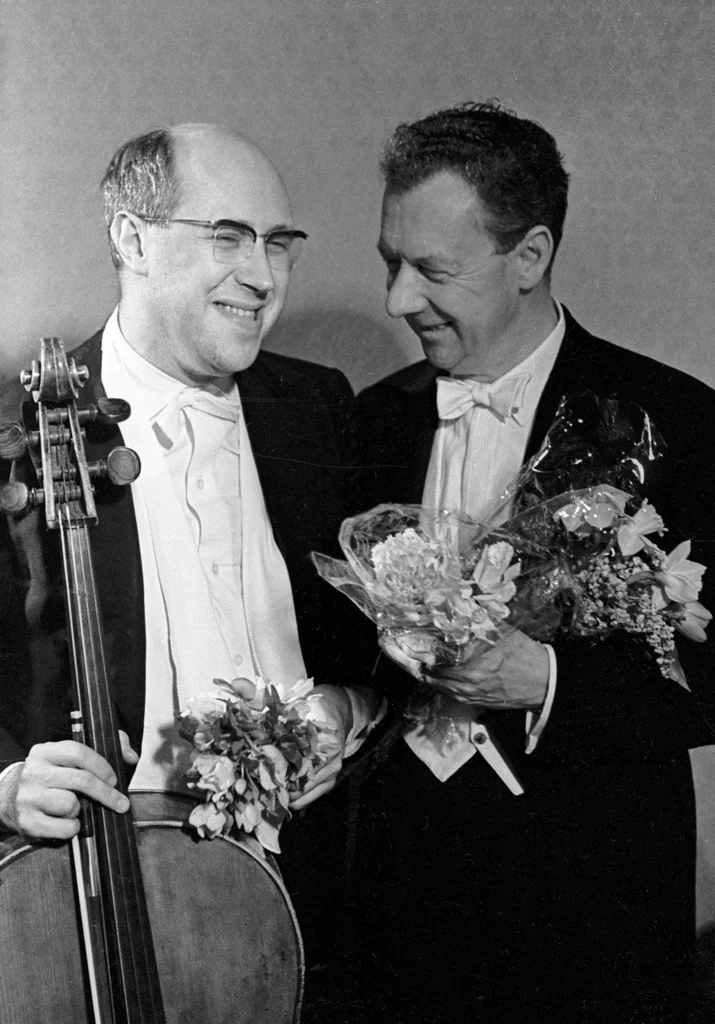
Image from Wikipedia
Image from Wikipedia
Benjamin Britten
Benjamin Britten: Visionary Opera Innovator, Defining Voice of British Modernity, and Sound Poet Between Sea, Theatre, and Conscience
Edward Benjamin Britten, Baron Britten of Aldeburgh (November 22, 1913 – December 4, 1976), is considered one of the most influential composers of the 20th century. As a conductor, pianist, and producer, he shaped a musical culture that redefined opera, choral tradition, and chamber music in England. His musical career linked artistic development with social conscience: Britten stood for humanity, pacifism, and a distinctive sonic language inspired as much by the sea, landscapes, and the language of his native Suffolk as by literature, history, and theatre. His oeuvre ranges from epoch-defining operas like “Peter Grimes” to choral frescos such as the “War Requiem” – and it remains vibrant in the international concert scene.
Biography: Early Maturity, Apprenticeship, and Artistic Emancipation
Britten was born in Lowestoft, Suffolk, and showed exceptional talent for composition, piano, and orchestration from a young age. Early works like the seeds of the later “Simple Symphony” reveal a fine sense of transparent textures and melodic contour. His years of study and early engagements as a composer for stage, film, and radio honed his craft: He learned to think dramaturgically, to use motifs economically, and to orchestrate colors precisely. This professional approach to arrangement laid the foundation for his later stage presence as conductor of his own works and for his commanding production aesthetic in the studio.
In the 1930s and 1940s, Britten's artistic identity took shape. Together with tenor Peter Pears – his artistic partner and life companion – he developed a vocal ideal: text-oriented, sonically lean, expressive through nuance rather than strain. This partnership became the engine of a career reflected equally in song cycles and chamber music as in operas and oratorios. After the war, Britten returned to Aldeburgh, founded the Aldeburgh Festival with Pears, and established a venue where new music, old masters, and nurturing young talents could organically come together.
Breakthrough and Influence: “Peter Grimes” and the Renaissance of English Opera
The international breakthrough came in 1945 with the opera “Peter Grimes.” The musical language of the work encapsulates Britten's dramaturgical signature: leitmotifs as psychological markers, cutting choral scenes, orchestral interludes – foremost the “Four Sea Interludes” – as symphonic reflections of inner and outer landscapes. “Peter Grimes” became a beacon of English-language opera following Purcell and paved the way for Britten's series of musical theatre works that continue to influence the repertoire today.
With “Albert Herring,” “Billy Budd,” “The Turn of the Screw,” “A Midsummer Night’s Dream,” “Gloriana,” and later “Death in Venice,” Britten developed a distinctive theatrical poetics: literarily grounded, form-conscious, and psychologically precise regarding voice. His operas explore societal mechanisms of exclusion, morality, and power – often reflected in outsider characters whose fragility is musically illuminated with sophistication.
Choral Works, Orchestra, Chamber Music: The Breadth of a Versatile Discography
Britten's discography documents an impressive range of styles. In the choral and orchestral realm, notable works include the “War Requiem” (1962), the “Sinfonia da Requiem,” “The Young Person’s Guide to the Orchestra,” and the “Ceremony of Carols.” These works combine striking thematic development with color-saturated orchestration and precise sound dramaturgy. In chamber music, the string quartets, cello works – inspired by collaboration with Mstislav Rostropovich – and cycles like “Les Illuminations” or the “Serenade for Tenor, Horn and Strings” represent highlights of a vocal and ensemble art that intricately intertwines language, breath, and musical architecture.
As a pianist and conductor, Britten left benchmark reference recordings of his own compositions. These document an interpretation that prioritizes clarity over pathos, sharpens articulation and structure, and masterfully balances line and color. This resulted in a catalog that records artistic development and aesthetic programming – and continues to shape interpretation practices today.
Style and Technique: Sound Dramaturgy, Text Intelligence, and the “English Sound”
Britten's compositional style combines modal shifts, bitonal tensions, and neoclassical clarity of form with a melodic line that originates from the words. His instrumentation balances chamber music transparency with orchestral brilliance. Characteristic is the vividly narrative use of motifs as dramaturgical anchors: they outline character profiles, mark locations, and open psychological depths. The harmony remains fluid – sharp where conflict demands; luminous where comfort emerges. This blend of intellect, empathy, and theatrical instinct gives Britten's music a distinctive signature.
In the vocal realm, Britten favored bright, flexible timbres that convey text and contour. In his orchestral treatment, he loves pronounced register colors: oboe and horn as character voices, tightly controlled strings, and pointed percussion accents. His formal mastery is evident in closed cycles as well as in large dramatic arcs, whose tension management – ranging from recitative closeness to symphonic condensation – is dramatically compelling.
Cultural Influence: Pacifist Stance, Festival Work, and Education
Britten’s artistic development is inseparably linked to a clear ethical stance. From a pacifist foundation, he composed music that takes human vulnerability seriously and reflects on violence and exclusion. This is particularly evident in the “War Requiem,” where liturgical text collides with modern poetry – a musical monument against war and for reconciliation.
With the Aldeburgh Festival, Britten created a cultural resonance space where new composition, historically informed practice, and nurturing young talents interact. This work continues to resonate today: Institutions in Aldeburgh and beyond carry on his educational and artistic legacy, promoting young talents, connecting ensembles, and curating programs that vividly intertwine the past, present, and future of music.
Reception and Authority: Critiques, Awards, and Canon Formation
Contemporaries already recognized in Britten’s operatic works the most significant English renewal since Purcell. International critiques emphasized his ability to combine psychological truth with formal discipline and sonic suggestion. Award-winning recordings and continuous repertoire schedules of leading opera houses, festivals, and orchestras secured his place in the canon of modernity. Works like “Peter Grimes,” “The Turn of the Screw,” or the “War Requiem” are among the most performed compositions of the post-war period – in both opera and concert hall.
Beyond the confines of classical music, Britten's compositions radiate outwards. They inspire choirs, educational projects, and contemporary composers. His clear tonal language, which maintains word-tone integrity, and his ethical foundation make him a reference figure for artistic integrity and dramaturgical intelligence.
Current Projects (2024–2026): Performances, Programs, and Rediscoveries
Although Britten passed away in 1976, his work remains highly present in the repertoire. In the 2024/25 and 2025/26 seasons, his compositions will feature prominently in renowned programs: “The Young Person’s Guide to the Orchestra” has toured with top youth ensembles, “Peter Grimes” returned to major stages in new productions, and chamber and vocal music like the “Canticles” will be the focus of special evenings. Festival and season announcements further document ongoing curations centered on Britten, while the Aldeburgh environment interweaves new music in the tradition of the house with repertoire works.
In parallel, new recordings, editions, and editorial publications of recordings and historical documents are emerging. Labels, orchestras, and media archives continue to maintain Britten's discography in contemporary sound images. Thus, the history of reception remains alive: through new interpretations, historically informed readings, and the incorporation into thematic programs on memory culture, connection to nature, and literature.
Work Highlights: Orientation for Listeners
Opera: “Peter Grimes,” “Billy Budd,” “The Turn of the Screw,” “A Midsummer Night’s Dream,” “Gloriana,” “Albert Herring,” “Death in Venice.” Choir/Orchestra: “War Requiem,” “Cantata misericordium,” “Ceremony of Carols,” “St Nicolas.” Orchestra/Concert: “The Young Person’s Guide to the Orchestra,” “Sinfonia da Requiem,” “Four Sea Interludes,” “Nocturne.” Chamber/Song: “Les Illuminations,” “Serenade for Tenor, Horn and Strings,” the cello suites, and string quartets. This selection offers an entry point into Britten's sound cosmos – between lyrical intimacy, dramatic tension, and vibrant orchestration.
For newcomers, a dramaturgy across genres is recommended: First, “Young Person’s Guide” as an orchestral calling card, then the “Serenade” as a vocal lighthouse, followed by the “Sea Interludes” as a symphonic excerpt from opera. Those who wish to explore music theatre should start with “Peter Grimes” or “A Midsummer Night’s Dream” before delving into the subtle psychological chamber opera “The Turn of the Screw.”
Collaboration and Interpretation History
Britten’s artistic development is closely linked to formative partnerships. Peter Pears shaped central roles in the operas and song cycles as tenor; Mstislav Rostropovich inspired the cello compositions; friendly conductors, producers, and ensembles sharpened the performance practice of his works. Publishing and label structures contributed to the worldwide dissemination of scores and reference recordings – a network of production, edition, and distribution that solidified Britten’s authority.
Today, festivals, orchestras, and universities continue this legacy: masterclasses, editing projects, thematic cycles, and interdisciplinary formats secure the transfer of interpretative experience. Thus, Britten's music remains in motion – open to new contexts, sensitive to language and stage.
Conclusion: Why Benjamin Britten Remains Indispensable Today
Britten combines aesthetic clarity with human depth. His operas tell stories of empathy, solitude, and responsibility; his choral and orchestral works transform collective memory into sound. The artistic journey from precocious talent to style-defining innovator makes him a leading figure of European modernity. Those who want to experience the power of music theatre in a condensed, timeless language will find in Britten a composer who challenges and rewards the heart, mind, and ear alike.
Experience Britten's music live: in the opera house, in the concert hall, or at a chamber music evening. Each encounter reveals anew how modern these works sound – precisely composed, dramatically compelling, emotionally true.
Official Channels of Benjamin Britten:
- Instagram: No official profile found
- Facebook: No official profile found
- YouTube: No official profile found
- Spotify: No official profile found
- TikTok: No official profile found
Sources:
- Wikipedia – Benjamin Britten
- Encyclopaedia Britannica – Benjamin Britten
- Britten Pears Arts – Benjamin Britten
- English National Opera – The story behind Britten’s War Requiem
- The Guardian – Premiere of War Requiem (Archive)
- Metropolitan Opera – Peter Grimes: Program Notes
- Oper Frankfurt – Season Highlights 2025 (including Britten productions)
- German Music Council – Federal Youth Orchestra UK Tour 2025 (including Britten)
- Aldeburgh Festival 2025 – Program Information
- Boosey & Hawkes – Publishing History (Britten under contract)
- Wikipedia: Image and text source
Upcoming Events
Workshop Part 2: The Turn of the Screw
The Turn of the Screw