
Arend Agthe
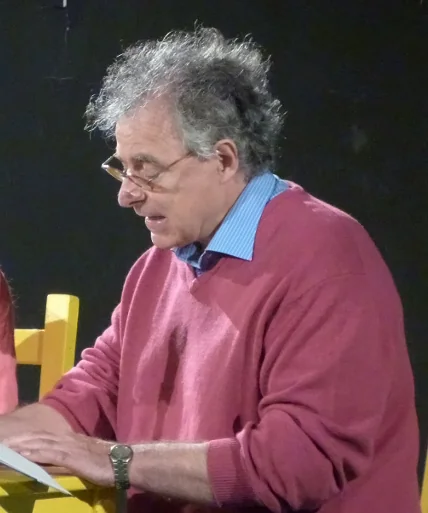
Image from Wikipedia
Image from Wikipedia
Arend Agthe – Director, Screenwriter, and Teller of Great Adventures for Young Viewers
From the New Frankfurt School to a Defining Name in German Children's and Youth Cinema
Arend Agthe, born on February 19, 1949, in Rastede, has been shaping German children's and youth cinema since the early 1980s. As a director, screenwriter, and producer, he combines a sense of adventure with narrative clarity and a respectful, child-friendly perspective. His music career may remain absent, but his stage presence behind the camera unfolds in artistic development and craftsmanship: Agthe's films display precise composition, decisive arrangement, and a production that expertly balances narrative rhythm and visual economy. With classics like “Flußfahrt mit Huhn”, “Der Sommer des Falken”, “Karakum – Ein Abenteuer in der Wüste”, and “Rettet Raffi!”, he positions himself as one of the key narrators of cinematic childhood adventures in Germany.
Biography: From Satire and Literature to Film Production
Before gaining fame as a filmmaker, Arend Agthe wrote for satirical magazines like Titanic and Pardon and was associated with the New Frankfurt School, including F. W. Bernstein, Robert Gernhardt, and F. K. Waechter. This affinity for language and keen observation sharpens his sense of tone, timing, and situational comedy – qualities that later shape his screenplays and directorial decisions. Early in his career, he works in television, on formats such as Sesamstraße, and experiments with his distinctive style in short, succinct forms. This path leads him organically to longer formats and independent production, where he brings together dramaturgy, character development, and visual storytelling economy.
Career Progression: Breakthrough with “Flußfahrt mit Huhn”
With “Flußfahrt mit Huhn”, Agthe achieves his breakthrough in cinema in the early to mid-1980s. The adventure of a group of children embarking downstream towards the sea becomes a long-term classic of West German children’s cinema. Recognitions from the film culture highlight the fresh, non-pedagogical tone that takes children's autonomy seriously while also providing compelling audiovisual stimuli. Decades later, Agthe revisits his work: a streamlined version brings the film into a digital format with a new sound mix that aligns with today’s viewing habits – an example of the thoughtful care for his own oeuvre and a clear indication of his production consciousness.
Between Cinema and Television: High Frequency, Clear Style
Agthe's filmography in the 1980s and 1990s showcases a remarkable frequency and stylistic continuity. Following “Flußfahrt mit Huhn” are “Küken für Kairo” and “Der Sommer des Falken” – works that continue his affinity for the classic adventure school with precise character guidance. Simultaneously, he creates high-quality television content, from Löwenzahn to Adelheid und ihre Mörder, sharpening his directorial practice: exact blocking, sharp dialogue delivery, clean spatial orientation, and editing that takes children's perception seriously. Altogether, an artistic development emerges that plausibly represents the experiential world of young protagonists while declaring cinematic storytelling as a craft.
“Karakum – Ein Abenteuer in der Wüste”: Production as a Boundary Experience
“Karakum” marks a peak in Agthe's adventure poetics in the early to mid-1990s. The film is shot in the deserts of Turkmenistan – a shoot that presents logistical, climatic, and political challenges. This production experience sharpens Agthe's role as a director-producer, who bears both directorial and economic responsibilities. “Karakum” gains international recognition, is shown at festivals, and secures its place in the canon of sophisticated yet accessible children’s adventure films. The cinematic language remains unembellished: clear axis guidance, functional lighting, focused mise-en-scène – all in the service of the story and the young main characters.
Renaissance in Family Cinema: “Rettet Raffi!”
With “Rettet Raffi!”, Agthe makes a powerful return to family cinema in the mid-2010s. The story of a boy searching for his kidnapped hamster in Hamburg blends urban topography, childish detective work, and sensitive character development. Reviews highlight the consistently childlike perspective that neither sacrifices reason nor emotionality, praising the nearly continuous analog depiction of the animal scenes. The film is well-received by audiences, awarded at festivals, and confirms that Agthe's dramatic intuition – narrative arcs, sharp set pieces, and clear score usage – remains accessible to contemporary family audiences as well as to generations who grew up with “Flußfahrt mit Huhn.”
Discography? Filmography! Works, Awards, Reception
Even though the term discography comes from music criticism, Agthe's filmography can be read with similar precision: “Flußfahrt mit Huhn” establishes his signature; “Der Sommer des Falken” expands the panorama with adolescent conflicts and air sports metaphors; “Karakum” heightens adventure choreography in harsh environments; “Rettet Raffi!” updates the urban child perspective within a contemporary dramaturgy. Reviews from professional press and the ongoing program presence in arthouse and family segments indicate a stable reception. Awards – including festival prizes and audience feedback – point to the dual value of his work: pedagogically reflective, aesthetically robust, and emotionally engaging.
Style and Signature: Composition, Arrangement, Production
Agthe's style aims for clarity and kinetic logic. The camera stays close to the children's action axis, the composition opens orientation points, and the arrangement of locations – riverbanks, mountain landscapes, deserts, cities – structures the adventure as real geography. In production, this approach benefits from precise logistics and a sound design that opens atmospheric spaces without overshadowing the dialogues. Music serves as support; thematic motifs remain subtle and allow the narration to take precedence. In this way, films are created that balance tempo and tranquility, with their tension arcs reminiscent of classic adventure cinema without falling into nostalgia.
Cultural Influence: Taking Adventure Seriously
Agthe's work historically contributes to the rehabilitation of adventure in German-speaking children’s cinema. “Taking adventure seriously” for him means taking the agency of young characters seriously, not trivializing their decisions, and staging risks as learning spaces. Consequently, his films continue to serve as reference points in schools, cinemas, and families for a narrative ethic that intertwines empathy and autonomy. The regular appearance of central titles in curated series, festivals, and educational programs underscores this influence: Agthe's films are seen as tools for film education – vivid, accessible, and open for discussion.
Institutional Recognition and Authority: Academy, Agency, Distribution
The authority of his work can be captured institutionally: Agthe is a member of the German Film Academy and is represented by renowned agencies and distributors. Relevant industry partners receive his films in catalogs, ensuring long-term availability and facilitating restored versions. This professional infrastructure reflects the continuing relevance of his oeuvre and his position as a reliable voice in children's and youth cinema. Trade and audience press outlets accompany his new releases and rereleases with film analyses that clearly locate his handwriting: childlike perspective, adventurous topography, narrative discipline.
Experience and Expertise: Craft Beyond Fashionable Effects
Agthe's music career does not exist – his artistic development unfolds on the cinematic stage. It is here that his experience shines: complex exterior shoots, working with animals, ensembles of child actors, precise coordination between screenplay, production, and post-production. His expertise is evident in the dramaturgy: building search movements, cartography of spaces, escalation in clear set pieces, relaxation through humorous or tender moments. This craftsmanship makes his films resilient against stylistic fads and secures their longevity.
Relevance and Timeliness Today
Even years after the initial theatrical release, Agthe's films remain present – in new editions, curated series, educational programs, and streaming offerings. The restored or streamlined versions of individual works update presentation standards without altering the core of the narratives. At the same time, distributors ensure outreach to families and schools, while reviews and dossiers contextualize his work for new generations. In a present marked by visual overstimulation, Agthe's storytelling asserts its value: clarity, rhythm, empathy.
Conclusion: Why Watch Arend Agthe Today?
Arend Agthe remains compelling because his films grasp adventure as a school of worldly experience. Children and adolescents discover rivers, mountains, deserts, and cities – and above all, themselves. The cinematic composition remains transparent, the arrangement of locations meaningful, and the production respects the audience's scale. Anyone wanting to understand German children's and youth cinema cannot overlook Agthe. Recommendation: Experience these films in theaters or at special screenings – there, they reveal their tempo, humor, and tender precision most effectively.
Official Channels of Arend Agthe:
- Instagram: No official profile found
- Facebook: No official profile found
- YouTube: No official profile found
- Spotify: No official profile found
- TikTok: No official profile found
Sources:
- Wikipedia – Arend Agthe
- Verlag der Autoren – Portrait Arend Agthe
- epd Film – Geht doch! A Meeting with Director Arend Agthe
- Filmdienst – Review of “Rettet Raffi!”
- MFA+ FilmDistribution – Rettet Raffi!
- fernsehserien.de – Filmography of Arend Agthe
- International Film Festival Mannheim-Heidelberg – Flussfahrt mit Huhn
- German Film Academy – Membership Entry for Arend Agthe
- Wikipedia: Image and text source