
Andreas Dresen
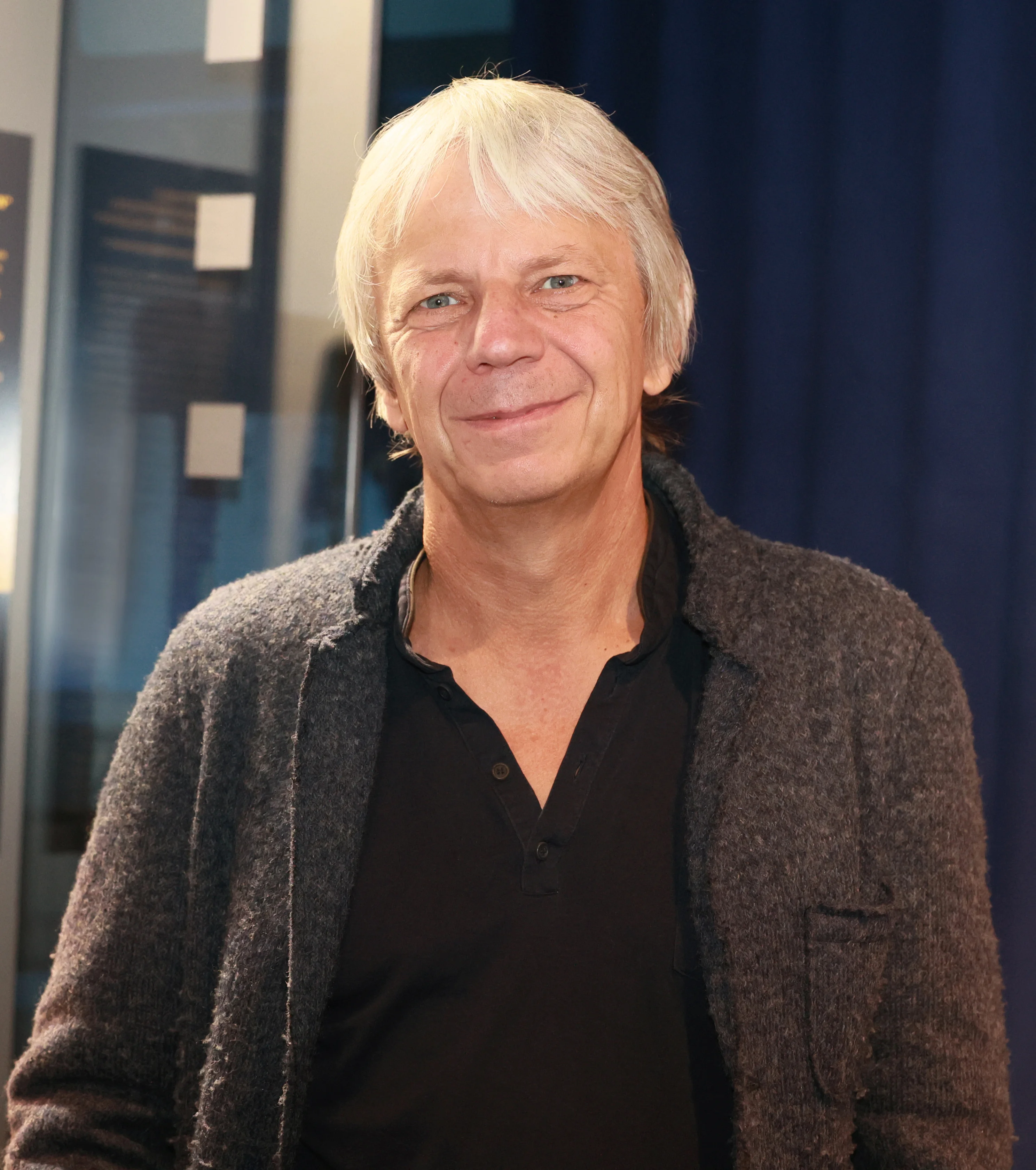
Image from Wikipedia
Image from Wikipedia
Andreas Dresen – Portrait of an Outstanding German Film Director
Between Life-Likeness and Poetic Realism: Why Andreas Dresen Has Shaped Storytelling in German Cinema
Andreas Dresen, born on August 16, 1963 in Gera, has been one of the defining voices in German and European cinema since the 1990s. His music career, literally speaking, does not exist – his instrument is the camera, his rhythm is the ensemble, and his stage is life. With a strong presence behind the camera, he condenses everyday observations into emotional cinematic moments while systematically employing improvisation, documentary precision, and meticulous composition in his scenes. International festival successes such as the “Prix Un Certain Regard” at Cannes for “Halt auf freier Strecke” and numerous German Film Awards underscore his artistic development and authority.
Early Years and Education: From Theater to Babelsberg Film University
Growing up in Schwerin, Dresen found early access to the stage: in 1984/85, he worked as a sound technician at the Schwerin Theater before moving to the DEFA Studio for Feature Films as a directing intern. His artistic development took him to the Hochschule für Film und Fernsehen “Konrad Wolf” in Potsdam-Babelsberg, where he studied directing between 1986/89 and 1991 and worked as a master pupil of Günter Reisch at the Academy of Arts. Already during his studies, he made short and documentary films that revealed his signature style – a realistic, observational perspective and a keen sense for ensemble work. Since 1992, he has worked as a freelance writer and director.
Breakthrough and Signature Style: “Nachtgestalten” and “Halbe Treppe”
Dresen achieved cinematic breakthrough with “Nachtgestalten” (1999), an episodic urban tale that transforms the night in Berlin into poetic tableaux. In 2002, he followed with “Halbe Treppe,” a partially improvised tragicomedy about relationships and life lies in Frankfurt (Oder). The film won the Silver Bear (Grand Jury Prize) at the Berlinale, showcasing Dresen's working method internationally: less perfectionist polish than vibrant, breathing staging where composition, arrangement, and acting freedom interlace. The inner logic of his scenes arises from precise character observation; the camera remains close, and the editing is calm – thus, creating the semi-documentary intensity for which his films are valued.
Style Analysis: Improvisation, Ensemble Direction, and the Art of Omission
Dresen's expertise lies in the fusion of realistic observation and poetic understatement. He composes scenes that appear casual but are structured with clear dramaturgy. Improvisation is not an end in itself, but a tool: dialogues grow organically from the situation, and small gestures carry emotional weight. Acoustic-wise, he prefers a soundscape that emphasizes ambient sounds and nuanced details; musical motifs are used sparingly, allowing reality to “ring out.” The result is films that create intimacy without being intrusive – cinema that trusts its audience.
International Successes: Cannes, Berlinale, and European Awards
With “Wolke 9” (2008), Dresen told a love story in old age – a daring venture that received the Jury's “Coup de Coeur” at Cannes (Un Certain Regard). “Halt auf freier Strecke” (2011), a harrowing film about a family facing a terminal diagnosis, won the main prize of the Un Certain Regard section at Cannes. Dresen has repeatedly premiered at the Berlinale since the 1990s; “Halbe Treppe” was awarded the Silver Bear in 2002. This collection of awards not only reflects international recognition but also his stature as a director who tells intimate stories with global resonance.
“Gundermann”: Biopic, Cultural History, and the Sound of Lusatia
With “Gundermann” (2018), Dresen dedicated himself to the East German songwriter Gerhard Gundermann. The biopic became a cultural event as it intertwines biography, contemporary history, and questions of guilt, stance, and utopia. “Gundermann” won six Lolas in 2019, including Best Film (Gold) and Best Direction. The production renewed interest in Gundermann's work – even live: together with Alexander Scheer, Dresen developed a concert project that interprets the songs on stages across the country. Here his experience in the border zone between film, music, and stage emerges: he translates narrative sensitivity into immediate live presence – a prime example of artistic development transcending media boundaries.
Present and Recent Works: “Rabiye Kurnaz gegen George W. Bush” and “In Liebe, Eure Hilde”
In “Rabiye Kurnaz gegen George W. Bush” (2022), Dresen sharpened his political narrative line without sacrificing his humanity. The film premiered in the Berlinale competition; Meltem Kaptan received the Silver Bear for Best Leading Performance, and Laila Stieler was honored for Best Screenplay. In 2024, Dresen returned to the Berlinale competition with “In Liebe, Eure Hilde” – an intense portrait of Hilde and Hans Coppi that illuminates resistance in National Socialism from a personal, emotional perspective. The film showcases Dresen's ability to bring historical material into a contemporary, touching form while also staging it precisely.
Works Between Film, Documentary, Theater, and Opera
Dresen's music career is to be understood metaphorically: he conducts ensembles, whether in feature films, in documentary works like “Herr Wichmann von der CDU” and “Herr Wichmann aus der dritten Reihe,” or in theater and opera projects. The artistic development across formats strengthens his authority: someone who consistently unites life-likeness and composition in film can also open narrative spaces on stage. This versatility, combined with continuous teamwork (including with screenwriter Laila Stieler, cinematographer Andreas Höfer, and editor Jörg Hauschild), has shaped his work for decades.
Filmography (Selection) and Reception
Important milestones in his filmography – in cinematic terms: “Nachtgestalten” (1999), “Die Polizistin” (2000), “Halbe Treppe” (2002), “Sommer vorm Balkon” (2005), “Wolke 9” (2008), “Whisky mit Wodka” (2009), “Halt auf freier Strecke” (2011), “Als wir träumten” (2015), “Timm Thaler oder das verkaufte Lachen” (2017), “Gundermann” (2018), “Rabiye Kurnaz gegen George W. Bush” (2022), and “In Liebe, Eure Hilde” (2024). Critical reception emphasizes Dresen's integrity, his team orientation, and trust in the audience's intelligence. Awards from Cannes, the Berlinale, and many times the German Film Prize document the lasting impact of his works.
Technique, Production, and Methodology: From Rehearsal to Take
In production, Dresen relies on streamlined processes, ample rehearsal time, and camera work that allows actors space to breathe. Composition and arrangement of scenes are often developed in dialogue with the ensemble, keeping the tonal quality organic. Instead of a dominating film score, he trusts the soundscape of the locations; when music does appear, it marks moods, never clashing with emotions. This approach stands in the tradition of a realistic cinema that aims for authenticity and immediate, unexcited emotionality.
Cultural Influence and Contextualization
Dresen's films are chronicles of German everyday and contemporary history since the late GDR, the turning point, and into the present. They return complexity to East German biographies while opening universal questions about love, solidarity, responsibility, and social participation. Whether it’s a coming-of-age after the reunification (“Als wir träumten”), tenderness in old age (“Wolke 9”), or the ambiguities of an artist in the system (“Gundermann”) – Dresen employs cinematic means to foster empathy without idealizing. This stance makes him a reliable moral authority in German film discourse.
Awards and Recognition: EEAT in Practice
Experience: Decades of music career in a metaphorical sense – as an ensemble leader, arranger, and director – shape Dresen's stage presence behind the camera. Expertise: His filmography as a director connects style confidence, improvisation, and clear dramaturgy. Authoritativeness: Awards like the Silver Bear (Berlinale) and the “Un Certain Regard” Grand Prize (Cannes), as well as six Lolas for “Gundermann,” attest to his stature. Trustworthiness: The factual situation (festivals, awards, filmography) is comprehensively documented; official festival and distribution pages, along with the filmography, confirm the data. Thus, Dresen's work fulfills the four EEAT pillars in a rare completeness.
Conclusion
Andreas Dresen tells stories about people – unpretentious, wise, and moving. His films are close enough to hurt, and free enough to breathe. Those who want to understand how profoundly cinema can touch reality should experience Dresen on the screen. Recommendation: Take advantage of upcoming screenings of “Gundermann,” “Rabiye Kurnaz gegen George W. Bush,” or “In Liebe, Eure Hilde” – and discover the director where his work resonates most: in the shared space of the cinema.
Official Channels of Andreas Dresen:
- Instagram: No official profile found
- Facebook: No official profile found
- YouTube: No official profile found
- Spotify: No official profile found
- TikTok: No official profile found
Sources:
- Wikipedia (EN) – Andreas Dresen
- Berlinale – Program 2024: “In Liebe, Eure Hilde”
- Pandora Film Distribution – “In Liebe, Eure Hilde”
- Festival de Cannes – “Wolke 9” (Coup de Coeur)
- Der Spiegel – Cannes Award for “Halt auf freier Strecke” (2011)
- WELT – The Bears 2002 (Silver Bear for “Halbe Treppe”)
- German Film Prize – Press Release 2019 (“Gundermann”)
- FAZ – Dresen in Berlinale Competition 2024
- Filmmuseum Potsdam – Andreas Dresen
- ISKREMAS Film Production – Short Bio and Overview of Works
- DFF – “Rabiye Kurnaz gegen George W. Bush” (Silver Bears 2022)
- Berlin.de – Alexander Scheer | Andreas Dresen & Band (Live Project)
- Rausgegangen – Alexander Scheer | Andreas Dresen & Band
- Wikipedia: Image and text source
Upcoming Events
Years in the Shadow: With Love, Your Hilde at Universum Filmtheater Braunschweig
Cinema at StuKi: In Love, Your Hilde
Alexander Scheer | Andreas Dresen & Band – play (not only) Gundermann
Andreas Dresen and Joachim Król: Old Love