Citizens' Assemblies in Ansbach: Experience City Politics Up Close
Experience Citizens' Assemblies & City Politics in Ansbach: How to Effectively Participate in the Future
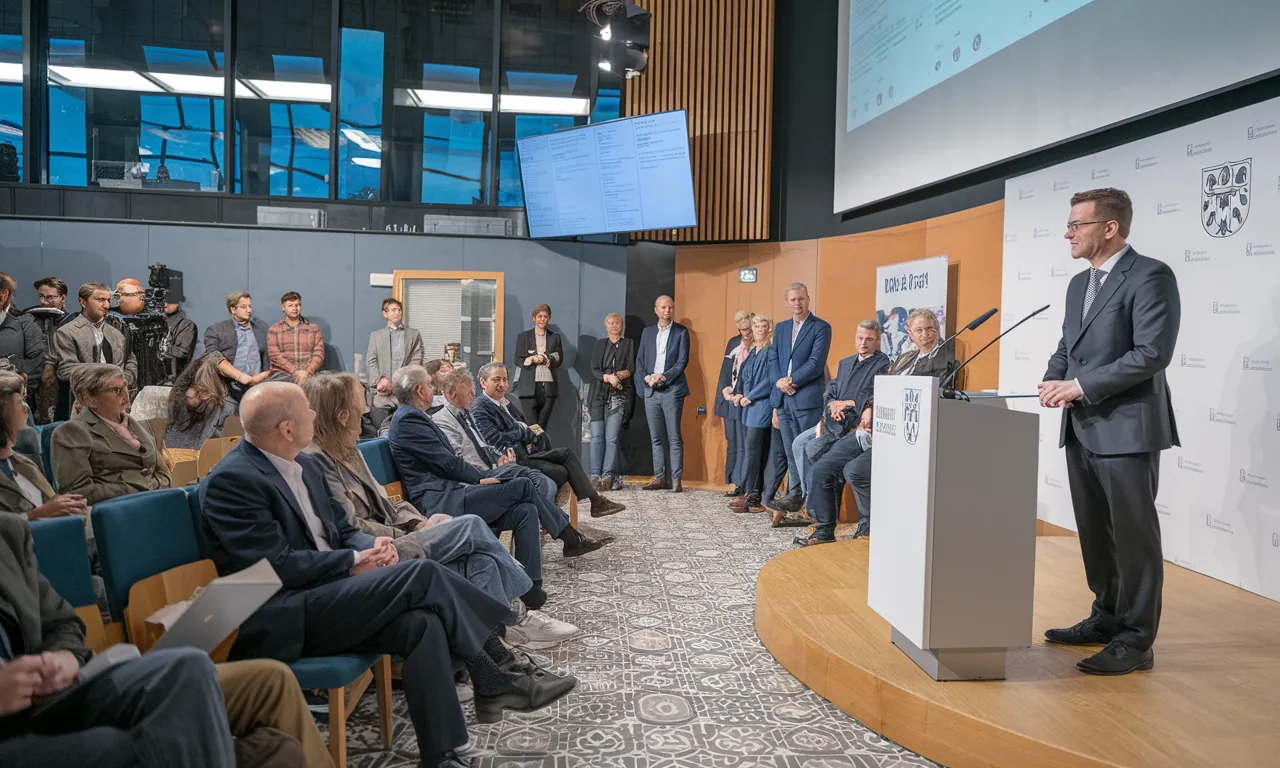
Anyone who wants not only to visit Ansbach but also to understand it will find a particularly direct access to local democracy in citizens' assemblies. In this format, citizens, administration, and local politicians come together to explain upcoming projects, clarify questions, and set motions for further discussion in motion.
Procedure: From Information Block to Voting
The procedure of a citizens' assembly usually follows a well-structured format that provides orientation:
- Opening and Report: The city leadership (or an appointed representative) opens the assembly. This is followed by an overview of current and upcoming developments, such as construction and traffic measures, district topics, or municipal facilities.
- Questions and Comments: Participants ask questions, describe situations, and make suggestions. Often, comments are made (orally or via structured speaker lists) to ensure as many contributions as possible are heard.
- Citizen Motions: Concerns can be formulated as motions so that the assembly can decide on them with "Yes" or "No." It is important that the motion concerns a municipal matter (i.e., within the city's jurisdiction).
- Voting: Citizen motions are voted on in the assembly (often openly, e.g., by show of hands or voting card). The result carries political weight and triggers further steps for consideration.
If your municipality offers supplementary consultation hours, table talks, or expert stands in advance, this is often the best way to clarify responsibilities and refine a concern so that it becomes a viable question or a motion suitable for voting.
Rights, Duties, and Legal Basis (Bavaria)
In Bavaria, the Municipal Code (GO) regulates the citizens' assembly, especially Art. 18 GO. It ensures that citizens' assemblies are held regularly and that motions from the citizenry do not remain without consequence.
Participation, Right to Speak and Submit Motions
In general, residents can participate. The rights to speak and submit motions depend on the municipal legal requirements and the specific implementation on site. Crucial in practice: citizens' assemblies are deliberately designed to be low-threshold so that concerns can be presented and answered in an understandable way without specialist knowledge.
Voting Rights on Motions
When voting on citizen motions, rules typically apply that limit voting to the designated group of people (e.g., eligible voters). Therefore, there may be organizational measures, such as identity checks and the issuance of voting cards. The local instructions in the invitation and the management of the assembly are decisive.
What Topics are Suitable for a Citizen Motion?
Good motions relate to tasks that the city can actually control. These typically include:
- Traffic within the city (safety, crossings, cycling and pedestrian traffic, signage, parking),
- Public facilities and spaces (playgrounds, green spaces, sports and cultural offerings),
- Urban development (uses, quality of stay, accessibility in public spaces),
- Municipal services (e.g., citizen information, appointment and application processes, participation formats).
Concerns that are outside municipal jurisdiction or relate to purely private disputes are not suitable. Clearly defining your topic increases the chance of a clear answer or proper referral.
What Happens After the Assembly? Three-Month Deadline & Transparency
A key point for effectiveness: Citizen motions passed by majority must, according to the Bavarian Municipal Code, be dealt with by a responsible municipal committee within a set period (in practice, this period is often implemented as a three-month deadline).
This prevents concerns from "fizzling out." For interested citizens (and also for visitors who want to understand municipal processes), the typical follow-up path is:
- View the minutes/result document of the citizens' assembly,
- Follow further consideration in the city council or committees (agendas and resolutions),
- Track whether a motion was adopted, amended, or rejected for specific reasons.
Many municipalities publish such information via official city websites and/or council or citizen information systems. Pay attention to original documents (invitations, minutes, draft resolutions), as they are the most reliable source for content, responsibilities, and deadlines.
Practical Tips for Ansbach: Preparation, Accessibility, Digital Elements
If you would like to attend a citizens' assembly in Ansbach in the future, a brief preparation will help make your contribution understandable and effective:
- Formulate your concern in one sentence: What exactly should change? Where exactly? For whom?
- Check responsibility: Is it a municipal task? (If unsure: first formulate as a question.)
- Bring evidence: Location, time, photos (if data protection compliant), concrete examples. This makes classification easier.
- Make the motion suitable for voting: A good motion is clear, realistic, and can be decided with "Yes/No."
- Read documents after the assembly: This allows you to follow the further process in the committees objectively and comprehensibly.
Accessibility
Many municipalities are developing their assembly formats further to enable more people to participate (e.g., barrier-free access, suitable room acoustics, if necessary, assistance offers). Rely on the information in the official invitation, as this is where specific conditions (location, access, assistance) are communicated in a binding manner.
Digital Additions
Some cities supplement in-person events with digital elements, such as publishing presentations or additional online information. For the actual discussion and especially for formal steps such as submitting motions and voting, personal attendance is often still decisive in practice. Therefore, check the participation conditions as soon as the invitation is published.
How Citizens' Assemblies Help Shape Ansbach's Future
Citizens' assemblies are a realistic indicator of which topics will be prioritized in Ansbach in the future: traffic safety, quality of stay, climate-resilient urban development, social infrastructure, or cultural offerings. The format shows in direct exchange where consensus arises, where there are goal conflicts, and which compromises might be viable.
For Ansbach, this means: Those who bring concrete observations and actionable suggestions early on can help ensure that plans are better explained, more realistically prioritized, and more practical in implementation. At the same time, participants learn how municipal decisions are prepared, justified, and documented.
This is how city politics becomes tangible: not as an abstract process, but as a recurring opportunity to help shape your own city's development—transparently, on site, and with a clear path into the committees.
Sources
- Municipal Code for the Free State of Bavaria (GO), Art. 18 – Citizens' Assembly — legal basis for conducting and handling citizen motions (accessed 2026-04-08)
- City of Ansbach (official website) — Announcements, organizational information, and if applicable, links to meeting/information systems (accessed 2026-04-08)