
Raw Materials Market Under Pressure
Wood Prices at Record Levels: Forest Owners Benefit – Sawmills Come Under Pressure
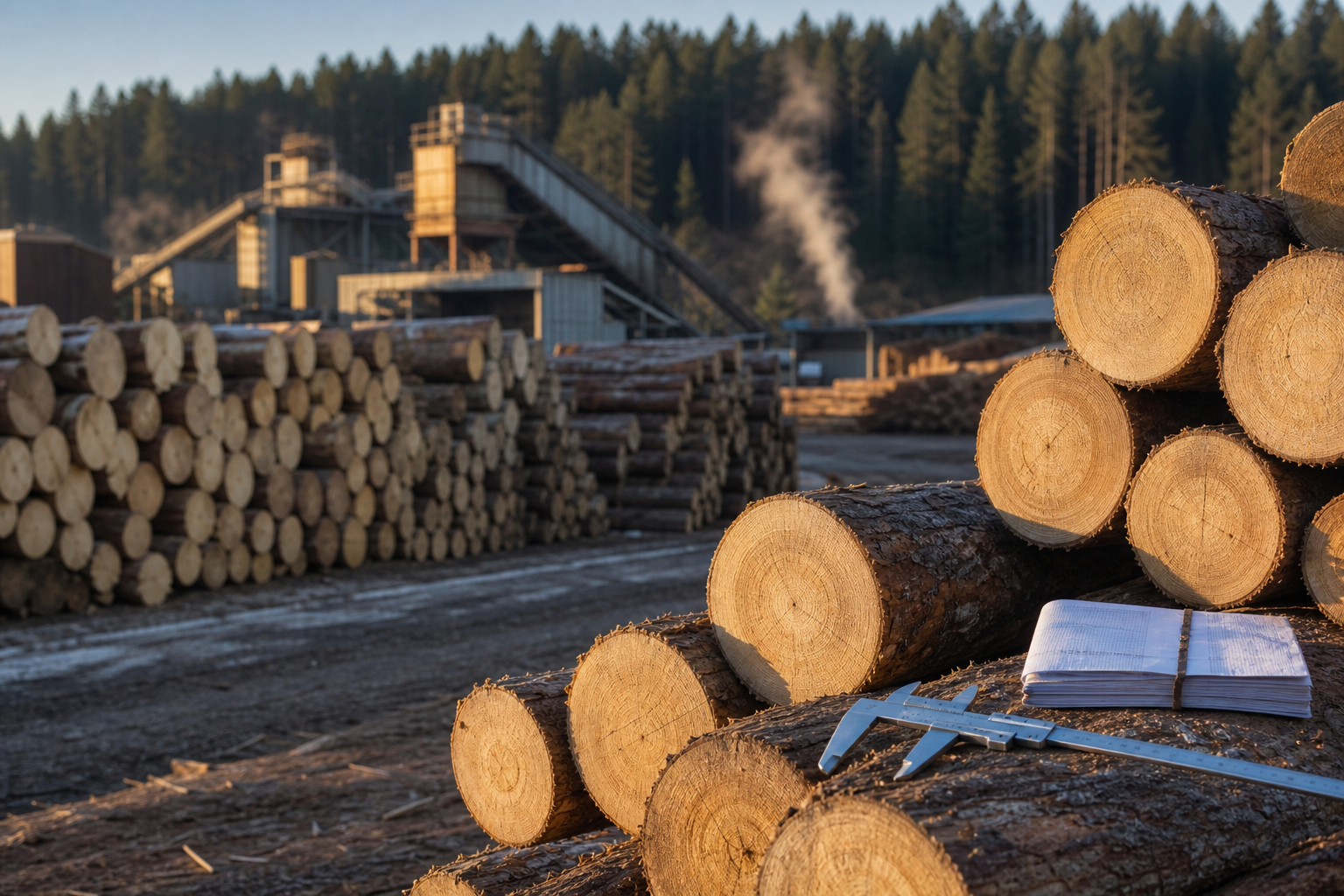
The raw wood prices for pine and spruce are higher than they have been for a long time. This brings forest owners noticeably higher short-term revenues, but shifts the burden within the value chain: processors such as sawmills have to buy at higher prices, while sales and the construction industry in many places are not keeping pace at the same rate.
Regional Dynamics in Buch am Wald, Middle Franconia
In Buch am Wald, Middle Franconia (Ansbach district), the dynamics are tangible. Timber merchant Thomas Göttel reports that he is currently harvesting significantly more wood than in a normal year – according to him, about twice as much. Such decisions are obvious in times of high prices: those with marketable stocks can take advantage of the market as long as the price window is open.
Statistical Confirmation of the Price Level
Broad data supports the impression of an overall high price level. The Federal Statistical Office (Destatis) reports 127.3 points for March 2026 in the index of producer prices for logging products (base 2015 = 100) – that is 12.9 percent more than in the same month of the previous year. Price increases are also reported for spruce and pine. The upward trend is therefore not just a local phenomenon, but is visible in official market indicators.
Pressure on Sawmills and Further Processing Companies
When raw wood is expensive, things quickly become tight for sawmills and further processing companies. They must initially bear the higher purchase prices in order to keep their plants running and fulfill delivery contracts. According to the company, Rettenmeier GmbH in Wilburgstetten (Ansbach district) faces additional cost drivers: energy and diesel have become more expensive, and freight companies are also passing on their increased costs to industry. All in all, this increases pressure from several directions at once – from raw materials to operations to logistics.
Imbalance in Sales Prices
The crucial question for processors is whether they can pass on the additional costs to their customers. This is exactly where there is currently an imbalance: high prices for the raw material wood do not automatically mean that prices for wood products rise to the same extent. For sawmills, this is the worst case – buying expensively, but having only limited leeway in sales.
Uncertainty in Sales Markets and Construction Industry
There is also uncertainty in important sales markets. According to the industry, the US market is weakening, among other things due to high construction and mortgage interest rates. An IHK analysis of the construction industry in the USA describes that mortgage rates for 30-year loans averaged around 6.8 percent at the beginning of May 2025 (after 6.1 percent at the end of 2024) – a level that makes financing more expensive and slows down new construction decisions. At the same time, the construction industry in Germany also remains a risk factor: despite some positive signals – Destatis reported a real increase in incoming orders in the main construction industry of 8.5 percent in November 2025 compared to the previous month – the situation in the industry is still described as fragile. This is central for the timber industry, as a significant part of demand is directly linked to construction.
Recommendations for Private Forest Owners
For private forest owners, the record level acts as a tailwind – but only if the additional revenue is used strategically. Professor Hubert Röder, who researches and teaches sustainable forestry at the Weihenstephan-Triesdorf University of Applied Sciences, recommends taking advantage of the high prices, but investing the money back into the forest as much as possible. The crucial point is not "more harvesting at any cost," but precaution: forest restructuring, rejuvenation of mixed forests, and greater diversity in tree species increase the stability of the stands – and thus the chance of remaining able to deliver even in future crises.
Forest Damage and Regional Risks
The pressure to act is real, because forest damage can shift the raw material base regionally. Bavaria has largely been spared the worst bark beetle consequences in recent years, but the risks are getting closer. The LWF Monitoring 2024 still shows high amounts of damaged wood throughout Bavaria, which stabilized over the course of the year but still reached a considerable level at around 3.6 million cubic meters (as of 30.09.2024). The main areas were again in northern Lower and Upper Franconia as well as in the Bavarian Forest; at the same time, a high starting population is expected for the next season. The Franconian Forest is considered an example of how quickly healthy stocks can come under pressure when weather extremes, drought stress, and beetle infestation coincide. In more northern and eastern regions of Germany, healthy stocks and corresponding wood are already lacking in many places according to industry assessments – an indication of how strongly regional damage situations can influence supply and price formation.
Conclusion
All in all, the record prices on the raw wood market are not a clear signal for a "strong industry." They benefit forest owners in the short term, while sawmills and processors are caught in a cost squeeze – especially since sales markets and the construction industry are not reliably keeping pace. What will be decisive is whether demand for wood products broadens again and whether the current additional revenues are used to make forests more resilient. Without these investments, the advantage of high prices for many forest owners remains a snapshot – and the risk for the entire value chain increases.
Frequently Asked Questions
Sources
- https://www.br.de/nachrichten/bayern/hohe-holzpreise-fluch-oder-segen-fuer-die-holzwirtschaft,VK3EjEN, 25.05.262026
- https://www.destatis.de/DE/Themen/Wirtschaft/Preise/Landwirtschaftspreisindex-Forstwirtschaftspreisindex/erzeugerpreise-produkte-holzeinschlag.html
- https://www.lwf.bayern.de/waldschutz/monitoring/371320/index.php