
Ansbach
ST. GUMBERTUS 91522 ANSBACH, Johann-Sebastian-Bach-Platz 3, 91522 Ansbach, Deutschland
St. Gumbertus Ansbach | Christmas Carol Evening & Parking
St. Gumbertus is not just a church in Ansbach, but a place where city history, sacred architecture, and musical tradition are closely intertwined. The church is located at Johann-Sebastian-Bach-Platz in the city center, right in the pedestrian zone, and has long been one of the defining landmarks of the city. Official pages describe it as a central city church, a historical sight, and a fixed concert venue, particularly associated with Bach Week, church music, and Advent events. Therefore, those searching for St. Gumbertus Ansbach often mean not just a building, but a vibrant cultural venue with a special atmosphere, historical spaces, and a clear connection to musical highlights throughout the year. Especially around the Christmas Carol Evening, but also at concerts throughout the rest of the year, the church shows its particular strength as a space for focused listening and atmospheric experiences. At the same time, it is very accessible for visitors and is nestled in the historic old town of Ansbach. ([markgrafenkirchen-ansbach.de](https://www.markgrafenkirchen-ansbach.de/ansbach-kirche-st-gumbertus))
Christmas Carol Evening and Advent Concerts at St. Gumbertus
Those looking for a Christmas Carol Evening in Ansbach often end up at St. Gumbertus, as the church is regularly used as a venue for Advent and Christmas concerts. An example is the Christmas Carol Evening of the Windsbach Boys' Choir on December 4, 2025, recorded in the concert scene at St. Gumbertus. The city of Ansbach also announced a Christmas concert by the city and youth wind orchestra at St. Gumbertus Church for December 2025. Earlier entries show that the church is a popular setting for pre-Christmas music, such as the Christmas concert by VIVA VOCE in 2023. This makes it clear why the search query for Christmas Carol Evening Ansbach is so strongly associated with this place: St. Gumbertus is not an incidental event space, but an established sound space for choral music, spiritual programs, and festive concerts during Advent. ([concerti.ch](https://www.concerti.ch/termine/windsbacher-knabenchor-rascher-saxophone-quartet-ludwig-boehme-leitung-797851/?utm_source=openai))
Especially during the Christmas season, the character of the church fits very well with such programs. The historic interior, the sacred aura, and the special acoustics create that quiet tension that makes Advent concerts so impressive. Official and cultural program pages show that both large choral concerts and smaller, focused formats can take place at St. Gumbertus. This makes the church attractive for visitors who are looking for not just a concert date in Ansbach, but an experience with atmosphere. The term Christmas Carol Evening therefore stands not only for a single concert but for an entire expectation of visit: festive music, historical ambiance, and a place where the Advent season becomes audible. Those interested in church music, a cappella programs, or works related to Bach will find one of the most exciting addresses in the city at St. Gumbertus. ([tourismus-ansbach.de](https://www.tourismus-ansbach.de/ansbach-erleben/sehenswuerdigkeiten/sankt-gumbertus-1))
Access, Parking, and Location in the Pedestrian Zone
St. Gumbertus is centrally located in Ansbach and is very easily accessible on foot. The official church and tourism information lists the address as Johann-Sebastian-Bach-Platz 3, or also mentions the Johann-Sebastian-Bach-Platz as a location reference. Particularly important for visitors is the note that the church is located right in the city center and in the pedestrian zone. Those arriving by car will find parking options according to the official church information in the riding arena of the Ansbach Residence or on the Rezat meadows. For classic church visits, this is a practical solution, as the church can be reached without long walks and is still located in the heart of the old town. Thus, the location combines the tranquility of a sacred place with the urbanity of a historic city center. ([markgrafenkirchen-ansbach.de](https://www.markgrafenkirchen-ansbach.de/ansbach-kirche-st-gumbertus))
For concert visitors, the Bach Week parking plan is also important. Relevant parking areas for St. Gumbertus are marked on the plan, including P1 Altstadt West, P2 Altstadt Ost, P3 Reitbahn, and P5 Parkhaus Altstadt; additionally, the plan indicates that the parking spaces marked with the Bach Week logo can be used free of charge during concerts. Those who stay longer after the concert will pay the usual parking fees. Additionally, the Bach Week offers a parking card that costs a maximum of 20 euros for the entire Bach Week and allows parking in public parking lots in Ansbach, excluding resident parking and parking garages. This makes access and parking for visitors very clearly organized, especially at events with high attendance. ([bachwoche.de](https://www.bachwoche.de/fileadmin/assets/pdf/Bachwoche-Ansbach-2025_web.pdf))
The location in the old town makes the visit particularly pleasant, as St. Gumbertus can be easily combined with a city walk. From there, further sights, gastronomy, and the margravial city center can be explored. Those using a navigation system or map function will find the church at Johann-Sebastian-Bach-Platz 3; the parish office is located at Johann-Sebastian-Bach-Platz 5. For a stress-free journey, it is advisable, especially for evening concerts, to arrive in the city center early, as parking spaces around the old town can be in high demand during concert times. This combination of central location, short walking distance, and historic surroundings is one of the reasons why St. Gumbertus is so popular as a concert and visitor location. ([markgrafenkirchen-ansbach.de](https://www.markgrafenkirchen-ansbach.de/ansbach-kirche-st-gumbertus))
History from Monastery Foundation to Court Church
The history of St. Gumbertus dates back to the early days of Ansbach. The Protestant Lutheran city church page traces its origins to the Franconian noble Gumbertus, who around 748 had a Marian monastery built at the confluence of the Rezat and Onoldsbach. In the 11th century, this became a collegiate church, and later the site developed into one of the central spiritual places of the margravial residence. The tourism page of the city of Ansbach adds that the first stone church was built as early as around 1040 and that the Romanesque crypt beneath the current church has been preserved to this day. This explains why St. Gumbertus is not just a church but a historical cornerstone of the city's development. ([innenstadtkirchen-ansbach.de](https://innenstadtkirchen-ansbach.de/))
The later construction history is also exceptionally dense. The Bach Week page describes St. Gumbertus as a former collegiate church with Gothic extensions and three towers. The western part of the three-tower front received its octagonal flank towers at the end of the 15th century, the middle tower was added in 1594, and the late Gothic construction phase from 1501 to 1523 left the choir intact. The Baroque hall building was created from 1736 to 1738 by Leopoldo Retty, the margravial court building director. Thus, the church unites architectural elements from several centuries: Romanesque crypt, late Gothic choir, Baroque hall space, and striking tower facade. It is precisely this layering that makes the building appealing, as visitors experience very different epochs of Franconian architectural history in one place. ([bachwoche.de](https://www.bachwoche.de/en/venues/st-gumbertus-church.html))
Also part of its historical significance are the Swan Knight Chapel and the Prince's Crypt. The Bach Week refers to the royal or princely crypt with 25 artistically crafted sarcophagi of the Ansbach margraves from the 17th and 18th centuries. The tourism page additionally mentions the connection to Kaspar Hauser, who was confirmed in the Swan Knight Chapel on May 20, 1833. Such details show that St. Gumbertus holds a special position not only architecturally but also culturally historically. The church is thus both a place of remembrance, a house of God, and a stage for city history. Anyone wanting to understand Ansbach cannot overlook St. Gumbertus. ([tourismus-ansbach.de](https://www.tourismus-ansbach.de/ansbach-erleben/sehenswuerdigkeiten/sankt-gumbertus-1))
The Wiegleb Organ, Swan Knight Chapel, and Prince's Crypt
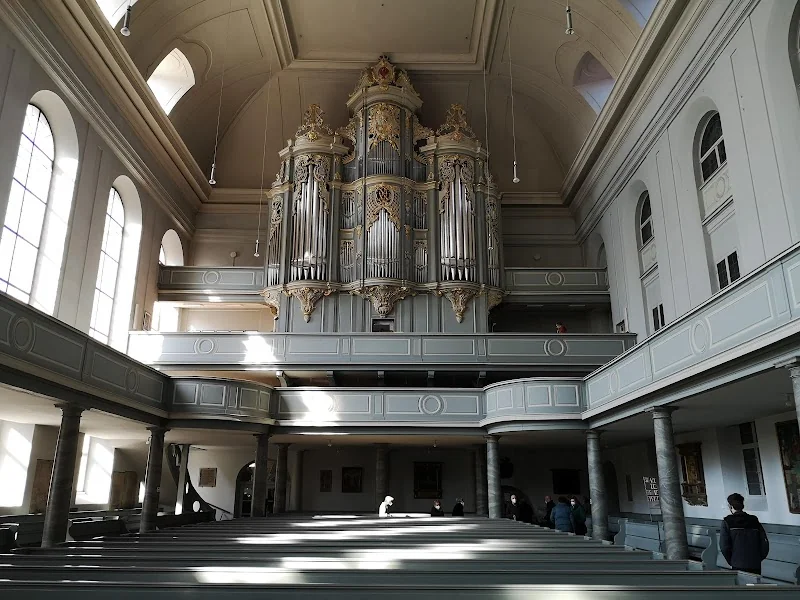
A central highlight of St. Gumbertus is the historically reconstructed Wiegleb organ. The Bach Week describes that the original Baroque instrument was designed by Johann Christoph Wiegleb and was considered the largest and most significant organ work in the Franconian region at the time, with 47 sound colors. Particularly noteworthy is that it was one of the first organs in Germany to feature an expression pedal. The case was designed by Leopoldo Retty and is among the most magnificent creations of the late Baroque. For music lovers, this is a decisive reason why St. Gumbertus is so valued as a concert venue: The organ combines historical substance with a sound aesthetic that is ideal for Baroque and spiritual programs. ([bachwoche.de](https://www.bachwoche.de/en/venues/st-gumbertus-church.html))
The current organ history is also interesting. After a renovation in 1884, the instrument was changed again in 1961, before the church council decided in 2004 to restore the historic Wiegleb organ. The restoration by the Dutch company Reil was completed in 2007; the costs of around 1.5 million euros were mainly financed through donations, more than half of which came from the Friends of the Bach Week Ansbach. Since the festive re-dedication on June 17, 2007, the organ has been available particularly for the Bach Week. Thus, it is not just a monument but an actively used instrument that continues to shape the concert culture of the city today. ([bachwoche.de](https://www.bachwoche.de/en/venues/st-gumbertus-church.html))
Also contributing to the musical and historical aura of the place are the Swan Knight Chapel and the Prince's Crypt. The tourism description highlights the Swan Knight Chapel as a special place within the church, and the Bach Week refers to the richly furnished burial chamber with 25 sarcophagi. Together with the late Gothic choir and the Baroque hall church, a space is created that is much more than an ordinary event venue. Visitors experience architecture, memorialization, courtly history, and music in a rare density here. Precisely for this reason, St. Gumbertus is suitable not only for visits but also for concerts where the historical aura becomes part of the experience. ([tourismus-ansbach.de](https://www.tourismus-ansbach.de/ansbach-erleben/sehenswuerdigkeiten/sankt-gumbertus-1))
Bach Week, Tickets, and Seating Plan
St. Gumbertus is one of the most important concert venues of the Bach Week Ansbach. The official Bach Week page describes the church as one of the landmarks of the city and emphasizes that it is closely associated with the historically reconstructed Wiegleb organ. The 2025 program featured several evenings there, including cantata programs, an organ request concert, the event Ansbach sings, and the B minor mass. Thus, St. Gumbertus is not only a sacred space but a central part of the musical festival operations in Ansbach. Those interested in the program, tickets, and seating arrangement should therefore always consider St. Gumbertus in connection with the Bach Week. ([bachwoche.de](https://www.bachwoche.de/en/venues/st-gumbertus-church.html))
For ticket purchases, two things are particularly important: First, the Bach Week points out that tickets can be booked online via Reservix. Second, visitors can select their seats directly on the seating plan. The published hall plan for St. Gumbertus shows the stage as well as categories A, B, C, and D and additionally marks wheelchair spaces. This is practical for visitors because they can not only buy a seat but consciously choose their sight and hearing position in the room. Especially for concerts with high demand, such as Bach evenings or large choral programs, booking on the seating plan is a real advantage. ([bachwoche.de](https://www.bachwoche.de/fileadmin/assets/pdf/Bachwoche-Ansbach-2025_web.pdf))
The Bach Week also shows transparency in prices and categories. The program booklet lists price categories for the respective concerts, and there are separate tariff models for subscriptions. For visitors, it is especially important that St. Gumbertus is organized as a space with a clearly structured seating plan and that mobility-impaired guests are also taken into account. So, those looking for the seating plan for St. Gumbertus are usually searching for the booking overview of the Bach Week or for an organizer that directly displays the seating plan. This combination of tradition and modern bookability makes the place attractive for music lovers. ([bachwoche.de](https://www.bachwoche.de/fileadmin/assets/pdf/Bachwoche-Ansbach-2025_web.pdf))
Opening Hours, Visitor Tips, and Tour of Ansbach
For a classic visit without a concert, there are clear and uncomplicated opening hours. The official page of the city churches states that the churches are open daily from 09 to 17/18 hours, depending on the onset of twilight, for prayer, reflection, meditation, resting, and art-historical contemplation. This means: St. Gumbertus can also be experienced as a quiet place for visits during the day, not just in the evenings during events. The location in the pedestrian zone additionally facilitates access, as the church can be conveniently incorporated into a tour of the Ansbach city center. For visitors who want to combine architecture and culture, this is ideal. ([innenstadtkirchen-ansbach.de](https://innenstadtkirchen-ansbach.de/))
A tour of Ansbach can be very well started or ended at St. Gumbertus. The city tourism page mentions the church together with St. Johannis, the residence, the orangery, and other buildings as part of the historic city center. Walking through the old town, one experiences the margravial past particularly closely. St. Gumbertus is a key location here, as the church impresses both from the outside with its three-tower front and inside with its choir, crypt, chapel, and organ. Visitors are advised to plan enough time, especially if the tour is combined with a concert visit. Because the church unfolds its effect not only as a photographic motif but primarily as a space where history and present come together. ([tourismus-ansbach.de](https://www.tourismus-ansbach.de/ansbach-erleben/sehenswuerdigkeiten/sankt-gumbertus-1))
Especially for search queries related to St. Gumbertus Ansbach, opening hours, parking, Christmas Carol Evening, and seating plan, it is important: This place is not an anonymous event building but a church with centuries-old history and clear visitor information. The official communication makes it clear that there is good orientation for both everyday visits and for concerts and festivals. So, anyone looking for a festive Advent experience, a Bach Week event, or simply a quiet historical place in Ansbach will find one of the most reliable and atmospherically strong points of contact in the city at St. Gumbertus. ([markgrafenkirchen-ansbach.de](https://www.markgrafenkirchen-ansbach.de/ansbach-kirche-st-gumbertus))
Sources:
Mehr anzeigenWeniger anzeigen
St. Gumbertus Ansbach | Christmas Carol Evening & Parking
St. Gumbertus is not just a church in Ansbach, but a place where city history, sacred architecture, and musical tradition are closely intertwined. The church is located at Johann-Sebastian-Bach-Platz in the city center, right in the pedestrian zone, and has long been one of the defining landmarks of the city. Official pages describe it as a central city church, a historical sight, and a fixed concert venue, particularly associated with Bach Week, church music, and Advent events. Therefore, those searching for St. Gumbertus Ansbach often mean not just a building, but a vibrant cultural venue with a special atmosphere, historical spaces, and a clear connection to musical highlights throughout the year. Especially around the Christmas Carol Evening, but also at concerts throughout the rest of the year, the church shows its particular strength as a space for focused listening and atmospheric experiences. At the same time, it is very accessible for visitors and is nestled in the historic old town of Ansbach. ([markgrafenkirchen-ansbach.de](https://www.markgrafenkirchen-ansbach.de/ansbach-kirche-st-gumbertus))
Christmas Carol Evening and Advent Concerts at St. Gumbertus
Those looking for a Christmas Carol Evening in Ansbach often end up at St. Gumbertus, as the church is regularly used as a venue for Advent and Christmas concerts. An example is the Christmas Carol Evening of the Windsbach Boys' Choir on December 4, 2025, recorded in the concert scene at St. Gumbertus. The city of Ansbach also announced a Christmas concert by the city and youth wind orchestra at St. Gumbertus Church for December 2025. Earlier entries show that the church is a popular setting for pre-Christmas music, such as the Christmas concert by VIVA VOCE in 2023. This makes it clear why the search query for Christmas Carol Evening Ansbach is so strongly associated with this place: St. Gumbertus is not an incidental event space, but an established sound space for choral music, spiritual programs, and festive concerts during Advent. ([concerti.ch](https://www.concerti.ch/termine/windsbacher-knabenchor-rascher-saxophone-quartet-ludwig-boehme-leitung-797851/?utm_source=openai))
Especially during the Christmas season, the character of the church fits very well with such programs. The historic interior, the sacred aura, and the special acoustics create that quiet tension that makes Advent concerts so impressive. Official and cultural program pages show that both large choral concerts and smaller, focused formats can take place at St. Gumbertus. This makes the church attractive for visitors who are looking for not just a concert date in Ansbach, but an experience with atmosphere. The term Christmas Carol Evening therefore stands not only for a single concert but for an entire expectation of visit: festive music, historical ambiance, and a place where the Advent season becomes audible. Those interested in church music, a cappella programs, or works related to Bach will find one of the most exciting addresses in the city at St. Gumbertus. ([tourismus-ansbach.de](https://www.tourismus-ansbach.de/ansbach-erleben/sehenswuerdigkeiten/sankt-gumbertus-1))
Access, Parking, and Location in the Pedestrian Zone
St. Gumbertus is centrally located in Ansbach and is very easily accessible on foot. The official church and tourism information lists the address as Johann-Sebastian-Bach-Platz 3, or also mentions the Johann-Sebastian-Bach-Platz as a location reference. Particularly important for visitors is the note that the church is located right in the city center and in the pedestrian zone. Those arriving by car will find parking options according to the official church information in the riding arena of the Ansbach Residence or on the Rezat meadows. For classic church visits, this is a practical solution, as the church can be reached without long walks and is still located in the heart of the old town. Thus, the location combines the tranquility of a sacred place with the urbanity of a historic city center. ([markgrafenkirchen-ansbach.de](https://www.markgrafenkirchen-ansbach.de/ansbach-kirche-st-gumbertus))
For concert visitors, the Bach Week parking plan is also important. Relevant parking areas for St. Gumbertus are marked on the plan, including P1 Altstadt West, P2 Altstadt Ost, P3 Reitbahn, and P5 Parkhaus Altstadt; additionally, the plan indicates that the parking spaces marked with the Bach Week logo can be used free of charge during concerts. Those who stay longer after the concert will pay the usual parking fees. Additionally, the Bach Week offers a parking card that costs a maximum of 20 euros for the entire Bach Week and allows parking in public parking lots in Ansbach, excluding resident parking and parking garages. This makes access and parking for visitors very clearly organized, especially at events with high attendance. ([bachwoche.de](https://www.bachwoche.de/fileadmin/assets/pdf/Bachwoche-Ansbach-2025_web.pdf))
The location in the old town makes the visit particularly pleasant, as St. Gumbertus can be easily combined with a city walk. From there, further sights, gastronomy, and the margravial city center can be explored. Those using a navigation system or map function will find the church at Johann-Sebastian-Bach-Platz 3; the parish office is located at Johann-Sebastian-Bach-Platz 5. For a stress-free journey, it is advisable, especially for evening concerts, to arrive in the city center early, as parking spaces around the old town can be in high demand during concert times. This combination of central location, short walking distance, and historic surroundings is one of the reasons why St. Gumbertus is so popular as a concert and visitor location. ([markgrafenkirchen-ansbach.de](https://www.markgrafenkirchen-ansbach.de/ansbach-kirche-st-gumbertus))
History from Monastery Foundation to Court Church
The history of St. Gumbertus dates back to the early days of Ansbach. The Protestant Lutheran city church page traces its origins to the Franconian noble Gumbertus, who around 748 had a Marian monastery built at the confluence of the Rezat and Onoldsbach. In the 11th century, this became a collegiate church, and later the site developed into one of the central spiritual places of the margravial residence. The tourism page of the city of Ansbach adds that the first stone church was built as early as around 1040 and that the Romanesque crypt beneath the current church has been preserved to this day. This explains why St. Gumbertus is not just a church but a historical cornerstone of the city's development. ([innenstadtkirchen-ansbach.de](https://innenstadtkirchen-ansbach.de/))
The later construction history is also exceptionally dense. The Bach Week page describes St. Gumbertus as a former collegiate church with Gothic extensions and three towers. The western part of the three-tower front received its octagonal flank towers at the end of the 15th century, the middle tower was added in 1594, and the late Gothic construction phase from 1501 to 1523 left the choir intact. The Baroque hall building was created from 1736 to 1738 by Leopoldo Retty, the margravial court building director. Thus, the church unites architectural elements from several centuries: Romanesque crypt, late Gothic choir, Baroque hall space, and striking tower facade. It is precisely this layering that makes the building appealing, as visitors experience very different epochs of Franconian architectural history in one place. ([bachwoche.de](https://www.bachwoche.de/en/venues/st-gumbertus-church.html))
Also part of its historical significance are the Swan Knight Chapel and the Prince's Crypt. The Bach Week refers to the royal or princely crypt with 25 artistically crafted sarcophagi of the Ansbach margraves from the 17th and 18th centuries. The tourism page additionally mentions the connection to Kaspar Hauser, who was confirmed in the Swan Knight Chapel on May 20, 1833. Such details show that St. Gumbertus holds a special position not only architecturally but also culturally historically. The church is thus both a place of remembrance, a house of God, and a stage for city history. Anyone wanting to understand Ansbach cannot overlook St. Gumbertus. ([tourismus-ansbach.de](https://www.tourismus-ansbach.de/ansbach-erleben/sehenswuerdigkeiten/sankt-gumbertus-1))
The Wiegleb Organ, Swan Knight Chapel, and Prince's Crypt
A central highlight of St. Gumbertus is the historically reconstructed Wiegleb organ. The Bach Week describes that the original Baroque instrument was designed by Johann Christoph Wiegleb and was considered the largest and most significant organ work in the Franconian region at the time, with 47 sound colors. Particularly noteworthy is that it was one of the first organs in Germany to feature an expression pedal. The case was designed by Leopoldo Retty and is among the most magnificent creations of the late Baroque. For music lovers, this is a decisive reason why St. Gumbertus is so valued as a concert venue: The organ combines historical substance with a sound aesthetic that is ideal for Baroque and spiritual programs. ([bachwoche.de](https://www.bachwoche.de/en/venues/st-gumbertus-church.html))
The current organ history is also interesting. After a renovation in 1884, the instrument was changed again in 1961, before the church council decided in 2004 to restore the historic Wiegleb organ. The restoration by the Dutch company Reil was completed in 2007; the costs of around 1.5 million euros were mainly financed through donations, more than half of which came from the Friends of the Bach Week Ansbach. Since the festive re-dedication on June 17, 2007, the organ has been available particularly for the Bach Week. Thus, it is not just a monument but an actively used instrument that continues to shape the concert culture of the city today. ([bachwoche.de](https://www.bachwoche.de/en/venues/st-gumbertus-church.html))
Also contributing to the musical and historical aura of the place are the Swan Knight Chapel and the Prince's Crypt. The tourism description highlights the Swan Knight Chapel as a special place within the church, and the Bach Week refers to the richly furnished burial chamber with 25 sarcophagi. Together with the late Gothic choir and the Baroque hall church, a space is created that is much more than an ordinary event venue. Visitors experience architecture, memorialization, courtly history, and music in a rare density here. Precisely for this reason, St. Gumbertus is suitable not only for visits but also for concerts where the historical aura becomes part of the experience. ([tourismus-ansbach.de](https://www.tourismus-ansbach.de/ansbach-erleben/sehenswuerdigkeiten/sankt-gumbertus-1))
Bach Week, Tickets, and Seating Plan
St. Gumbertus is one of the most important concert venues of the Bach Week Ansbach. The official Bach Week page describes the church as one of the landmarks of the city and emphasizes that it is closely associated with the historically reconstructed Wiegleb organ. The 2025 program featured several evenings there, including cantata programs, an organ request concert, the event Ansbach sings, and the B minor mass. Thus, St. Gumbertus is not only a sacred space but a central part of the musical festival operations in Ansbach. Those interested in the program, tickets, and seating arrangement should therefore always consider St. Gumbertus in connection with the Bach Week. ([bachwoche.de](https://www.bachwoche.de/en/venues/st-gumbertus-church.html))
For ticket purchases, two things are particularly important: First, the Bach Week points out that tickets can be booked online via Reservix. Second, visitors can select their seats directly on the seating plan. The published hall plan for St. Gumbertus shows the stage as well as categories A, B, C, and D and additionally marks wheelchair spaces. This is practical for visitors because they can not only buy a seat but consciously choose their sight and hearing position in the room. Especially for concerts with high demand, such as Bach evenings or large choral programs, booking on the seating plan is a real advantage. ([bachwoche.de](https://www.bachwoche.de/fileadmin/assets/pdf/Bachwoche-Ansbach-2025_web.pdf))
The Bach Week also shows transparency in prices and categories. The program booklet lists price categories for the respective concerts, and there are separate tariff models for subscriptions. For visitors, it is especially important that St. Gumbertus is organized as a space with a clearly structured seating plan and that mobility-impaired guests are also taken into account. So, those looking for the seating plan for St. Gumbertus are usually searching for the booking overview of the Bach Week or for an organizer that directly displays the seating plan. This combination of tradition and modern bookability makes the place attractive for music lovers. ([bachwoche.de](https://www.bachwoche.de/fileadmin/assets/pdf/Bachwoche-Ansbach-2025_web.pdf))
Opening Hours, Visitor Tips, and Tour of Ansbach
For a classic visit without a concert, there are clear and uncomplicated opening hours. The official page of the city churches states that the churches are open daily from 09 to 17/18 hours, depending on the onset of twilight, for prayer, reflection, meditation, resting, and art-historical contemplation. This means: St. Gumbertus can also be experienced as a quiet place for visits during the day, not just in the evenings during events. The location in the pedestrian zone additionally facilitates access, as the church can be conveniently incorporated into a tour of the Ansbach city center. For visitors who want to combine architecture and culture, this is ideal. ([innenstadtkirchen-ansbach.de](https://innenstadtkirchen-ansbach.de/))
A tour of Ansbach can be very well started or ended at St. Gumbertus. The city tourism page mentions the church together with St. Johannis, the residence, the orangery, and other buildings as part of the historic city center. Walking through the old town, one experiences the margravial past particularly closely. St. Gumbertus is a key location here, as the church impresses both from the outside with its three-tower front and inside with its choir, crypt, chapel, and organ. Visitors are advised to plan enough time, especially if the tour is combined with a concert visit. Because the church unfolds its effect not only as a photographic motif but primarily as a space where history and present come together. ([tourismus-ansbach.de](https://www.tourismus-ansbach.de/ansbach-erleben/sehenswuerdigkeiten/sankt-gumbertus-1))
Especially for search queries related to St. Gumbertus Ansbach, opening hours, parking, Christmas Carol Evening, and seating plan, it is important: This place is not an anonymous event building but a church with centuries-old history and clear visitor information. The official communication makes it clear that there is good orientation for both everyday visits and for concerts and festivals. So, anyone looking for a festive Advent experience, a Bach Week event, or simply a quiet historical place in Ansbach will find one of the most reliable and atmospherically strong points of contact in the city at St. Gumbertus. ([markgrafenkirchen-ansbach.de](https://www.markgrafenkirchen-ansbach.de/ansbach-kirche-st-gumbertus))
Sources:
St. Gumbertus Ansbach | Christmas Carol Evening & Parking
St. Gumbertus is not just a church in Ansbach, but a place where city history, sacred architecture, and musical tradition are closely intertwined. The church is located at Johann-Sebastian-Bach-Platz in the city center, right in the pedestrian zone, and has long been one of the defining landmarks of the city. Official pages describe it as a central city church, a historical sight, and a fixed concert venue, particularly associated with Bach Week, church music, and Advent events. Therefore, those searching for St. Gumbertus Ansbach often mean not just a building, but a vibrant cultural venue with a special atmosphere, historical spaces, and a clear connection to musical highlights throughout the year. Especially around the Christmas Carol Evening, but also at concerts throughout the rest of the year, the church shows its particular strength as a space for focused listening and atmospheric experiences. At the same time, it is very accessible for visitors and is nestled in the historic old town of Ansbach. ([markgrafenkirchen-ansbach.de](https://www.markgrafenkirchen-ansbach.de/ansbach-kirche-st-gumbertus))
Christmas Carol Evening and Advent Concerts at St. Gumbertus
Those looking for a Christmas Carol Evening in Ansbach often end up at St. Gumbertus, as the church is regularly used as a venue for Advent and Christmas concerts. An example is the Christmas Carol Evening of the Windsbach Boys' Choir on December 4, 2025, recorded in the concert scene at St. Gumbertus. The city of Ansbach also announced a Christmas concert by the city and youth wind orchestra at St. Gumbertus Church for December 2025. Earlier entries show that the church is a popular setting for pre-Christmas music, such as the Christmas concert by VIVA VOCE in 2023. This makes it clear why the search query for Christmas Carol Evening Ansbach is so strongly associated with this place: St. Gumbertus is not an incidental event space, but an established sound space for choral music, spiritual programs, and festive concerts during Advent. ([concerti.ch](https://www.concerti.ch/termine/windsbacher-knabenchor-rascher-saxophone-quartet-ludwig-boehme-leitung-797851/?utm_source=openai))
Especially during the Christmas season, the character of the church fits very well with such programs. The historic interior, the sacred aura, and the special acoustics create that quiet tension that makes Advent concerts so impressive. Official and cultural program pages show that both large choral concerts and smaller, focused formats can take place at St. Gumbertus. This makes the church attractive for visitors who are looking for not just a concert date in Ansbach, but an experience with atmosphere. The term Christmas Carol Evening therefore stands not only for a single concert but for an entire expectation of visit: festive music, historical ambiance, and a place where the Advent season becomes audible. Those interested in church music, a cappella programs, or works related to Bach will find one of the most exciting addresses in the city at St. Gumbertus. ([tourismus-ansbach.de](https://www.tourismus-ansbach.de/ansbach-erleben/sehenswuerdigkeiten/sankt-gumbertus-1))
Access, Parking, and Location in the Pedestrian Zone
St. Gumbertus is centrally located in Ansbach and is very easily accessible on foot. The official church and tourism information lists the address as Johann-Sebastian-Bach-Platz 3, or also mentions the Johann-Sebastian-Bach-Platz as a location reference. Particularly important for visitors is the note that the church is located right in the city center and in the pedestrian zone. Those arriving by car will find parking options according to the official church information in the riding arena of the Ansbach Residence or on the Rezat meadows. For classic church visits, this is a practical solution, as the church can be reached without long walks and is still located in the heart of the old town. Thus, the location combines the tranquility of a sacred place with the urbanity of a historic city center. ([markgrafenkirchen-ansbach.de](https://www.markgrafenkirchen-ansbach.de/ansbach-kirche-st-gumbertus))
For concert visitors, the Bach Week parking plan is also important. Relevant parking areas for St. Gumbertus are marked on the plan, including P1 Altstadt West, P2 Altstadt Ost, P3 Reitbahn, and P5 Parkhaus Altstadt; additionally, the plan indicates that the parking spaces marked with the Bach Week logo can be used free of charge during concerts. Those who stay longer after the concert will pay the usual parking fees. Additionally, the Bach Week offers a parking card that costs a maximum of 20 euros for the entire Bach Week and allows parking in public parking lots in Ansbach, excluding resident parking and parking garages. This makes access and parking for visitors very clearly organized, especially at events with high attendance. ([bachwoche.de](https://www.bachwoche.de/fileadmin/assets/pdf/Bachwoche-Ansbach-2025_web.pdf))
The location in the old town makes the visit particularly pleasant, as St. Gumbertus can be easily combined with a city walk. From there, further sights, gastronomy, and the margravial city center can be explored. Those using a navigation system or map function will find the church at Johann-Sebastian-Bach-Platz 3; the parish office is located at Johann-Sebastian-Bach-Platz 5. For a stress-free journey, it is advisable, especially for evening concerts, to arrive in the city center early, as parking spaces around the old town can be in high demand during concert times. This combination of central location, short walking distance, and historic surroundings is one of the reasons why St. Gumbertus is so popular as a concert and visitor location. ([markgrafenkirchen-ansbach.de](https://www.markgrafenkirchen-ansbach.de/ansbach-kirche-st-gumbertus))
History from Monastery Foundation to Court Church
The history of St. Gumbertus dates back to the early days of Ansbach. The Protestant Lutheran city church page traces its origins to the Franconian noble Gumbertus, who around 748 had a Marian monastery built at the confluence of the Rezat and Onoldsbach. In the 11th century, this became a collegiate church, and later the site developed into one of the central spiritual places of the margravial residence. The tourism page of the city of Ansbach adds that the first stone church was built as early as around 1040 and that the Romanesque crypt beneath the current church has been preserved to this day. This explains why St. Gumbertus is not just a church but a historical cornerstone of the city's development. ([innenstadtkirchen-ansbach.de](https://innenstadtkirchen-ansbach.de/))
The later construction history is also exceptionally dense. The Bach Week page describes St. Gumbertus as a former collegiate church with Gothic extensions and three towers. The western part of the three-tower front received its octagonal flank towers at the end of the 15th century, the middle tower was added in 1594, and the late Gothic construction phase from 1501 to 1523 left the choir intact. The Baroque hall building was created from 1736 to 1738 by Leopoldo Retty, the margravial court building director. Thus, the church unites architectural elements from several centuries: Romanesque crypt, late Gothic choir, Baroque hall space, and striking tower facade. It is precisely this layering that makes the building appealing, as visitors experience very different epochs of Franconian architectural history in one place. ([bachwoche.de](https://www.bachwoche.de/en/venues/st-gumbertus-church.html))
Also part of its historical significance are the Swan Knight Chapel and the Prince's Crypt. The Bach Week refers to the royal or princely crypt with 25 artistically crafted sarcophagi of the Ansbach margraves from the 17th and 18th centuries. The tourism page additionally mentions the connection to Kaspar Hauser, who was confirmed in the Swan Knight Chapel on May 20, 1833. Such details show that St. Gumbertus holds a special position not only architecturally but also culturally historically. The church is thus both a place of remembrance, a house of God, and a stage for city history. Anyone wanting to understand Ansbach cannot overlook St. Gumbertus. ([tourismus-ansbach.de](https://www.tourismus-ansbach.de/ansbach-erleben/sehenswuerdigkeiten/sankt-gumbertus-1))
The Wiegleb Organ, Swan Knight Chapel, and Prince's Crypt
A central highlight of St. Gumbertus is the historically reconstructed Wiegleb organ. The Bach Week describes that the original Baroque instrument was designed by Johann Christoph Wiegleb and was considered the largest and most significant organ work in the Franconian region at the time, with 47 sound colors. Particularly noteworthy is that it was one of the first organs in Germany to feature an expression pedal. The case was designed by Leopoldo Retty and is among the most magnificent creations of the late Baroque. For music lovers, this is a decisive reason why St. Gumbertus is so valued as a concert venue: The organ combines historical substance with a sound aesthetic that is ideal for Baroque and spiritual programs. ([bachwoche.de](https://www.bachwoche.de/en/venues/st-gumbertus-church.html))
The current organ history is also interesting. After a renovation in 1884, the instrument was changed again in 1961, before the church council decided in 2004 to restore the historic Wiegleb organ. The restoration by the Dutch company Reil was completed in 2007; the costs of around 1.5 million euros were mainly financed through donations, more than half of which came from the Friends of the Bach Week Ansbach. Since the festive re-dedication on June 17, 2007, the organ has been available particularly for the Bach Week. Thus, it is not just a monument but an actively used instrument that continues to shape the concert culture of the city today. ([bachwoche.de](https://www.bachwoche.de/en/venues/st-gumbertus-church.html))
Also contributing to the musical and historical aura of the place are the Swan Knight Chapel and the Prince's Crypt. The tourism description highlights the Swan Knight Chapel as a special place within the church, and the Bach Week refers to the richly furnished burial chamber with 25 sarcophagi. Together with the late Gothic choir and the Baroque hall church, a space is created that is much more than an ordinary event venue. Visitors experience architecture, memorialization, courtly history, and music in a rare density here. Precisely for this reason, St. Gumbertus is suitable not only for visits but also for concerts where the historical aura becomes part of the experience. ([tourismus-ansbach.de](https://www.tourismus-ansbach.de/ansbach-erleben/sehenswuerdigkeiten/sankt-gumbertus-1))
Bach Week, Tickets, and Seating Plan
St. Gumbertus is one of the most important concert venues of the Bach Week Ansbach. The official Bach Week page describes the church as one of the landmarks of the city and emphasizes that it is closely associated with the historically reconstructed Wiegleb organ. The 2025 program featured several evenings there, including cantata programs, an organ request concert, the event Ansbach sings, and the B minor mass. Thus, St. Gumbertus is not only a sacred space but a central part of the musical festival operations in Ansbach. Those interested in the program, tickets, and seating arrangement should therefore always consider St. Gumbertus in connection with the Bach Week. ([bachwoche.de](https://www.bachwoche.de/en/venues/st-gumbertus-church.html))
For ticket purchases, two things are particularly important: First, the Bach Week points out that tickets can be booked online via Reservix. Second, visitors can select their seats directly on the seating plan. The published hall plan for St. Gumbertus shows the stage as well as categories A, B, C, and D and additionally marks wheelchair spaces. This is practical for visitors because they can not only buy a seat but consciously choose their sight and hearing position in the room. Especially for concerts with high demand, such as Bach evenings or large choral programs, booking on the seating plan is a real advantage. ([bachwoche.de](https://www.bachwoche.de/fileadmin/assets/pdf/Bachwoche-Ansbach-2025_web.pdf))
The Bach Week also shows transparency in prices and categories. The program booklet lists price categories for the respective concerts, and there are separate tariff models for subscriptions. For visitors, it is especially important that St. Gumbertus is organized as a space with a clearly structured seating plan and that mobility-impaired guests are also taken into account. So, those looking for the seating plan for St. Gumbertus are usually searching for the booking overview of the Bach Week or for an organizer that directly displays the seating plan. This combination of tradition and modern bookability makes the place attractive for music lovers. ([bachwoche.de](https://www.bachwoche.de/fileadmin/assets/pdf/Bachwoche-Ansbach-2025_web.pdf))
Opening Hours, Visitor Tips, and Tour of Ansbach
For a classic visit without a concert, there are clear and uncomplicated opening hours. The official page of the city churches states that the churches are open daily from 09 to 17/18 hours, depending on the onset of twilight, for prayer, reflection, meditation, resting, and art-historical contemplation. This means: St. Gumbertus can also be experienced as a quiet place for visits during the day, not just in the evenings during events. The location in the pedestrian zone additionally facilitates access, as the church can be conveniently incorporated into a tour of the Ansbach city center. For visitors who want to combine architecture and culture, this is ideal. ([innenstadtkirchen-ansbach.de](https://innenstadtkirchen-ansbach.de/))
A tour of Ansbach can be very well started or ended at St. Gumbertus. The city tourism page mentions the church together with St. Johannis, the residence, the orangery, and other buildings as part of the historic city center. Walking through the old town, one experiences the margravial past particularly closely. St. Gumbertus is a key location here, as the church impresses both from the outside with its three-tower front and inside with its choir, crypt, chapel, and organ. Visitors are advised to plan enough time, especially if the tour is combined with a concert visit. Because the church unfolds its effect not only as a photographic motif but primarily as a space where history and present come together. ([tourismus-ansbach.de](https://www.tourismus-ansbach.de/ansbach-erleben/sehenswuerdigkeiten/sankt-gumbertus-1))
Especially for search queries related to St. Gumbertus Ansbach, opening hours, parking, Christmas Carol Evening, and seating plan, it is important: This place is not an anonymous event building but a church with centuries-old history and clear visitor information. The official communication makes it clear that there is good orientation for both everyday visits and for concerts and festivals. So, anyone looking for a festive Advent experience, a Bach Week event, or simply a quiet historical place in Ansbach will find one of the most reliable and atmospherically strong points of contact in the city at St. Gumbertus. ([markgrafenkirchen-ansbach.de](https://www.markgrafenkirchen-ansbach.de/ansbach-kirche-st-gumbertus))
Sources:
Upcoming Events
No events found
Frequently Asked Questions
Reviews
No reviews found