
Ansbach
Platenstraße 4, 91522 Ansbach, Deutschland
mondo galerie | Art & Annelies Schindler
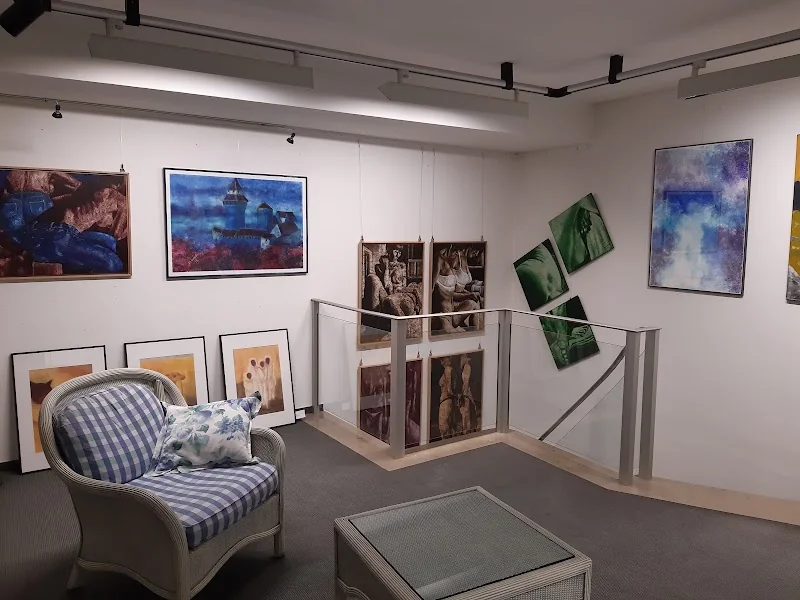
The mondo galerie in Ansbach is a place for painting, encounters, and changing art presentations. In the House for Art at Platenstraße 4, the work of the artist Annelies Schindler merges with the atmosphere of a historic old town house. Visitors discover here original works by the painter working under the name mondo, including figurative paintings, nature motifs, and expressive animal portraits. The program is complemented by exhibitions from guest artists, cultural events, and insights into the working world of a studio.
The gallery is not an anonymous exhibition space but part of an artist house with exhibition space, workshop, office, storage rooms, and a penthouse for temporary artist stays. This creates a framework in which art can not only be viewed but understood as a process. Platenstraße is located in the old town of Ansbach and makes visiting the mondo galerie a cultural stop during a tour of the city. Those searching for the mondo galerie, the mondo Atelier, Annelies Schindler as an artist, or paintings from the mondo galerie will find here a personal place with a clear focus on painting, animal representations, nature, and artistic exchange.
Mondo galerie Ansbach and Annelies Schindler as an Artist
The mondo galerie is closely linked to the artistic path of Annelies Schindler. The Swiss painter works under the artist name mondo and engages with figurative painting at different levels of abstraction. Her paintings often remain oriented towards recognizable motifs but open them up for emotional, formal, and personal interpretations. Animals, trees, mountains, and other themes from nature appear particularly frequently. The motifs are not merely decorative representations. They are meant to develop their own presence and draw the viewer's gaze.
A key component of Schindler's work is the drawing craft. Lines, proportions, contours, and precise observation form the foundation of many works. This observation plays a central role, especially in animal portraits. The artist is interested not only in the external form of an animal but also in its expression. Eyes, posture, and body language are used in such a way that a sense of relationship can arise. An animal thus appears not as a neutral motif but as a counterpart with its own effect.
Annelies Schindler has engaged with various artistic techniques through numerous courses and further education. Her stations include a part-time study of Fine Arts at the Faber-Castell Academy as well as further training in painting, portrait, nude, and oil painting. Her artistic development is characterized by a willingness to continually explore materials and processes. This is reflected in the combination of drawing, painting, pastel, oil crayon, charcoal, and mixed techniques.
The mondo galerie makes this personal approach to art visible. Visitors experience not only individual images but an artistic attitude shaped by nature observation, relationship, and emotion. The gallery is aimed at people who want to view original art in a concentrated atmosphere, as well as those interested in learning more about working methods and materials. Depending on the exhibition, personal contact with the artist, exhibiting guests, or the organizers can provide an additional access point to the works.
Images from mondo galerie Annelies Schindler: Animal Portraits, Nature, and Emotion
Those searching for images from mondo galerie Annelies Schindler will primarily encounter works in which animals play a special role. The artist paints animals from different habitats and combines precise observation with an emotional visual language. Dogs, cats, birds, and wild animals can become independent personalities in her works. It is not only crucial whether a painting depicts an animal anatomically convincingly. Equally important is the question of what mood, character, or relationship arises between the motif and the viewer.
The animal portraits of Annelies Schindler therefore thrive on the eyes and the expression. A direct gaze can create closeness but also distance or mystery. A sideways posture can convey calmness, caution, or attentiveness. This ambiguity is an important appeal of the works. The images do not always provide a clear answer but leave room for personal feelings. Viewers can recall their own pets, relive an encounter in nature, or reflect on the human relationship with animals.
In addition to animals, nature motifs are recurring themes for the artist. Mountains, trees, and landscapes appear as sources of strength, relaxation, and inspiration. Nature is not only understood as a background. It forms a space of experience where observation, silence, and movement come together. The various techniques support this effect. Pastel and oil crayon can create soft transitions and immediate traces, while acrylic and oil allow for different color intensity and depth. Charcoal and pencil emphasize line, contrast, and drawing precision.
A special position is held by the works in oil on OSB chipboard panels. Since 2018, Annelies Schindler has regularly worked with this surface, combining her self-developed oil wiping technique with the visible structure of the material. The irregular surface of the OSB panel is not completely hidden but becomes part of the image effect. Wood traces, color areas, and motifs merge into a texture that differs from classical canvas painting. The materiality directs the gaze to the creation process and makes each work a connection of image, surface, and craftsmanship.
In the mondo galerie, visitors can directly compare these different approaches. A finely drawn animal portrait, a colorful nature depiction, and an oil painting on OSB each have a different effect, even if thematically connected. This variety makes the presentation interesting for people who are enthusiastic about contemporary painting, animal art, nature representations, and individual techniques.
House for Art at Platenstraße 4 in Ansbach
The mondo galerie is located in the House for Art at Platenstraße 4, 91522 Ansbach. The building is over 460 years old and thus belongs to a historic environment that significantly shapes the character of the gallery visit. According to information about the house, the building was completely rebuilt almost 50 years ago; some beams of the half-timbered facade were preserved. Today, it is used as a House for Art and houses the mondo galerie as well as the artist's studio.
The combination of historic architecture and contemporary art creates a special contrast. On one side are the traces of an old Ansbach old town house; on the other side, current painting, changing exhibitions, and experimental formats. This contrast is not loud or spectacular but works through the atmosphere. Art is shown in a building that itself has a history. Rooms, materials, and surfaces remind us that places can be changed, further developed, and reused.
The house is more than a single exhibition space. The space offerings include an exhibition room, a spacious workshop, an office, dry storage rooms, and a penthouse suitable for temporary artist stays. This provides various opportunities for creative work and cultural collaboration. The workshop refers to the practical side of art production, while the exhibition space places the finished works in the spotlight. The combination creates a comprehensible connection between idea, material, processing, and presentation.
In the House for Art, not only Annelies Schindler's own exhibitions take place. The rooms are regularly made available to other artists as well. Thus, the program can take on different themes, techniques, and perspectives. In the past, watercolors, photographs, objects, textile works, and paintings by guest artists have been presented. This openness makes the mondo galerie a place where the work of its namesake is the focus but not the only artistic voice.
For visitors, the location in the old town of Ansbach is practical because the gallery visit can be combined with a walk through the historic center. Platenstraße is an inner-city street space with areas for pedestrians and traffic-calmed sections. Since opening hours and access can vary depending on the exhibition, it is advisable to check the gallery's current information before visiting. The published address and contact details provide reliable orientation.
Mondo Atelier and Artistic Working Method
The term mondo Atelier describes the working world behind the exhibited images. In the studio, drawings, paintings, and mixed techniques are created not in isolation from the gallery but in an environment where artistic production and presentation are closely linked. The studio in the House for Art offers space for concentrated work, material experiments, and preparation for exhibitions. Visitors primarily see finished works in the gallery but can also imagine that these works have emerged from many individual decisions.
At the beginning often stands observation. Annelies Schindler draws inspiration from nature and encounters with animals. The precise perception of form, posture, gaze, and movement is the foundation for her motifs. A drawing can emerge as an independent work or serve as preparation for a painting. The artist, according to the available information, forgoes technical aids and places value on the drawing craft. This keeps the direct relationship between eye, hand, and image carrier central.
The choice of material depends on the motif and the desired effect. Acrylic can be processed quickly and with intense color. Oil offers possibilities for deep color layers, transitions, and a richer surface effect. Pastel and oil crayon allow for immediate, often physical traces. Charcoal and pencil focus the design on line, tone, and contrast. In mixed techniques, these properties can be combined. This creates a working method that is not limited to a single technique.
Particularly characteristic is the work with OSB chipboard panels. The visible structure of the panel forms an active component of the image. When applying and wiping off the oil paint, the surface can shine through and give the motif its own depth. The structure is not just a background but also a partner in the image. It can evoke natural associations, create rhythmic lines, or form a conscious contrast to a finely worked animal head. The technique shows how a rather unusual image carrier can give rise to a distinctive artistic language.
The work in the mondo Atelier also includes the preparation of exhibitions and collaboration with other cultural creators. A gallery must select, hang, illuminate, label, and place works in a spatial context. Additional organizational and creative tasks arise during openings, readings, or concerts. The House for Art thus combines studio work, exhibition planning, and cultural events. For visitors, this creates an atmosphere in which art can be experienced as a living process and not just as a finished product on the wall.
Exhibitions, Guest Artists, and Events in the mondo galerie
The program of the mondo galerie consists of its own presentations by Annelies Schindler and changing exhibitions with guest artists. This regularly changes the impression of the house. An exhibition may focus on animal representations and nature, while another may focus on human images, photography, watercolors, glass, textile works, or more abstract forms. The changing orientation allows for different media and themes to be related to one another.
Documented exhibitions include presentations with Hubert Rieß, whose watercolors dealt with Venice, carnival masks, and city motifs. Joint projects with other artists have also been shown in the House for Art. The program can be complemented by artist talks, musical readings, and concerts. A musical reading with Hermann Lennert and Richard Weigel, as well as a concert with South American songs and original compositions by Alejandro Conza, were among the announced cultural events in 2025.
Events in the House for Art were also documented for 2026. For the Day of Open Monuments on September 13, 2026, short concerts with the group Die Sonatoren were planned, among other things. Such dates show that the mondo galerie does not work exclusively as a classic white cube exhibition space. The historic building, the artworks, and the music can together create an experience. The duration of individual events, participation conditions, and respective opening hours depend on the specific date.
For art enthusiasts, openings are particularly a good opportunity to get to know the gallery in its social and personal dimension. At an opening, artists, guests, neighbors, and culture enthusiasts come together. Works are often presented, musically accompanied, or explained in a short conversation. Visiting during regular opening hours can also be rewarding, as the images can then be viewed in peace. Depending on the exhibition, the exhibiting person may be present in person.
Since the exhibition program changes regularly, visitors should check the current information on the official website or through the provided contact details. Previous opening hours are not a reliable indication of every later date. For documented exhibitions, Wednesday from 2 to 5 PM and Saturday and Sunday afternoons have been mentioned, among others. For some events, registration may not be necessary, while other dates contain special notes. Therefore, those traveling from a distance should inquire in advance.
Visit, Address, and Orientation in Ansbach
The mondo galerie is located at Platenstraße 4, 91522 Ansbach, Germany. The House for Art is situated in the old town of Ansbach and is accessible from the central downtown area. Platenstraße has different characteristics depending on the section. Descriptions include traffic-calmed areas, pedestrian zones, and sections with cobblestones. For direct access by car, the current traffic situation should be considered, as inner-city streets are not equally drivable everywhere.
No specific visitor parking or an exclusive parking space for the gallery is indicated in the available information. Therefore, visitors should check public parking options in the vicinity of Ansbach's downtown for their arrival by car and plan the last stretch on foot. Accurate information on barrier-free access, parking options, bicycle parking, or special requirements can be best inquired directly at the gallery.
The address is particularly suitable for a cultural tour through Ansbach. Visiting the mondo galerie can be combined with other stops in the old town without having to plan the gallery visit as an isolated appointment. Those interested in historic buildings, regional art, and small exhibition houses will find in the House for Art a manageable, personal alternative to large museums. The atmosphere is more individual than institutional. This can facilitate access to the works, as questions and conversations are often more immediate.
Opening hours depend on the exhibitions. For various presentations, Wednesday, Saturday, and Sunday afternoons have been published; older entries sometimes mention different time slots. Additionally, a visit by appointment is possible. This is particularly relevant if someone wants to see a specific work, discuss an animal portrait, or visit an exhibition outside regular hours. Before traveling, it is advisable to check the current program, opening hours, and any changes.
The mondo galerie is thus a place for different visiting occasions. One can spontaneously view an exhibition during opening hours, specifically search for images by Annelies Schindler, attend an opening, or arrange a personal appointment. The combination of gallery, studio, and historic house makes the visit varied. Those who take their time discover not only individual motifs but also the relationship between space, material, artist personality, and exhibition concept.
Why a Visit to the mondo galerie is Worthwhile
The mondo galerie combines several qualities that work together during a visit. First, the independent work of Annelies Schindler is at the center. Her animal portraits and nature images are based on precise observation and an emotional engagement with the motif. Second, the variety of techniques allows for different visual experiences. Drawing, acrylic, oil, pastel, oil crayon, charcoal, and mixed techniques each possess their own characteristics. Third, the self-developed oil wiping technique on OSB chipboard panels brings a special material signature to the exhibition.
Additionally, the place itself matters. The House for Art is located in a historic old town house and combines monument-related atmosphere with current art. The rooms are not exclusively intended for finished images but also include a workshop, office, storage rooms, and a penthouse for temporary artist stays. This allows the house to accommodate different forms of cultural work. For visitors, this means a place where art production, presentation, and encounter are closer together than in many larger exhibition houses.
The changing exhibitions also make the mondo galerie interesting for returning guests. Those who have seen a presentation by Annelies Schindler once can discover new works, other guest artists, or a changed exhibition theme during a later visit. The connection of own works and guest presentations prevents a rigid program structure. Instead, the house remains open to different perspectives and interdisciplinary events.
Particularly appealing is the gallery for people who seek art with a personal, narrative, and craft-oriented approach. The images invite reflection on animals, nature, memory, and relationships. At the same time, the works remain concrete enough to be viewed immediately. The animal portraits can touch without prescribing a single interpretation. The visible surfaces and different techniques invite closer inspection. Thus, a visit can be both emotionally and formally interesting.
Those looking for an art gallery, an artist studio, or a special exhibition venue in Ansbach will find in the mondo galerie an address with regional roots and a personal touch. The gallery stands for Annelies Schindler's artistic work, for images of animals and nature, for changing exhibitions, and for events in the House for Art. Before visiting, the current program should be checked. This way, it can be best decided whether a regular opening time, an opening, a musical event, or an individual appointment is appropriate.
Sources:
- mondo atelier galerie in Ansbach - Official Website
- Cultural Forum Ansbach - mondo Annelies Schindler
- Day of Open Monuments - House for Art at Platenstraße
- ART INTERNATIONAL - Annelies Schindler and Venezia Carnevale
- City of Weißenburg - Annelies Schindler
- M:ART Magazine - Exhibitions in the mondo galerie 2026
- fränkischer.de - Grand Opening of the mondo galerie in Ansbach
Mehr anzeigenWeniger anzeigen
mondo galerie | Art & Annelies Schindler
The mondo galerie in Ansbach is a place for painting, encounters, and changing art presentations. In the House for Art at Platenstraße 4, the work of the artist Annelies Schindler merges with the atmosphere of a historic old town house. Visitors discover here original works by the painter working under the name mondo, including figurative paintings, nature motifs, and expressive animal portraits. The program is complemented by exhibitions from guest artists, cultural events, and insights into the working world of a studio.
The gallery is not an anonymous exhibition space but part of an artist house with exhibition space, workshop, office, storage rooms, and a penthouse for temporary artist stays. This creates a framework in which art can not only be viewed but understood as a process. Platenstraße is located in the old town of Ansbach and makes visiting the mondo galerie a cultural stop during a tour of the city. Those searching for the mondo galerie, the mondo Atelier, Annelies Schindler as an artist, or paintings from the mondo galerie will find here a personal place with a clear focus on painting, animal representations, nature, and artistic exchange.
Mondo galerie Ansbach and Annelies Schindler as an Artist
The mondo galerie is closely linked to the artistic path of Annelies Schindler. The Swiss painter works under the artist name mondo and engages with figurative painting at different levels of abstraction. Her paintings often remain oriented towards recognizable motifs but open them up for emotional, formal, and personal interpretations. Animals, trees, mountains, and other themes from nature appear particularly frequently. The motifs are not merely decorative representations. They are meant to develop their own presence and draw the viewer's gaze.
A key component of Schindler's work is the drawing craft. Lines, proportions, contours, and precise observation form the foundation of many works. This observation plays a central role, especially in animal portraits. The artist is interested not only in the external form of an animal but also in its expression. Eyes, posture, and body language are used in such a way that a sense of relationship can arise. An animal thus appears not as a neutral motif but as a counterpart with its own effect.
Annelies Schindler has engaged with various artistic techniques through numerous courses and further education. Her stations include a part-time study of Fine Arts at the Faber-Castell Academy as well as further training in painting, portrait, nude, and oil painting. Her artistic development is characterized by a willingness to continually explore materials and processes. This is reflected in the combination of drawing, painting, pastel, oil crayon, charcoal, and mixed techniques.
The mondo galerie makes this personal approach to art visible. Visitors experience not only individual images but an artistic attitude shaped by nature observation, relationship, and emotion. The gallery is aimed at people who want to view original art in a concentrated atmosphere, as well as those interested in learning more about working methods and materials. Depending on the exhibition, personal contact with the artist, exhibiting guests, or the organizers can provide an additional access point to the works.
Images from mondo galerie Annelies Schindler: Animal Portraits, Nature, and Emotion
Those searching for images from mondo galerie Annelies Schindler will primarily encounter works in which animals play a special role. The artist paints animals from different habitats and combines precise observation with an emotional visual language. Dogs, cats, birds, and wild animals can become independent personalities in her works. It is not only crucial whether a painting depicts an animal anatomically convincingly. Equally important is the question of what mood, character, or relationship arises between the motif and the viewer.
The animal portraits of Annelies Schindler therefore thrive on the eyes and the expression. A direct gaze can create closeness but also distance or mystery. A sideways posture can convey calmness, caution, or attentiveness. This ambiguity is an important appeal of the works. The images do not always provide a clear answer but leave room for personal feelings. Viewers can recall their own pets, relive an encounter in nature, or reflect on the human relationship with animals.
In addition to animals, nature motifs are recurring themes for the artist. Mountains, trees, and landscapes appear as sources of strength, relaxation, and inspiration. Nature is not only understood as a background. It forms a space of experience where observation, silence, and movement come together. The various techniques support this effect. Pastel and oil crayon can create soft transitions and immediate traces, while acrylic and oil allow for different color intensity and depth. Charcoal and pencil emphasize line, contrast, and drawing precision.
A special position is held by the works in oil on OSB chipboard panels. Since 2018, Annelies Schindler has regularly worked with this surface, combining her self-developed oil wiping technique with the visible structure of the material. The irregular surface of the OSB panel is not completely hidden but becomes part of the image effect. Wood traces, color areas, and motifs merge into a texture that differs from classical canvas painting. The materiality directs the gaze to the creation process and makes each work a connection of image, surface, and craftsmanship.
In the mondo galerie, visitors can directly compare these different approaches. A finely drawn animal portrait, a colorful nature depiction, and an oil painting on OSB each have a different effect, even if thematically connected. This variety makes the presentation interesting for people who are enthusiastic about contemporary painting, animal art, nature representations, and individual techniques.
House for Art at Platenstraße 4 in Ansbach
The mondo galerie is located in the House for Art at Platenstraße 4, 91522 Ansbach. The building is over 460 years old and thus belongs to a historic environment that significantly shapes the character of the gallery visit. According to information about the house, the building was completely rebuilt almost 50 years ago; some beams of the half-timbered facade were preserved. Today, it is used as a House for Art and houses the mondo galerie as well as the artist's studio.
The combination of historic architecture and contemporary art creates a special contrast. On one side are the traces of an old Ansbach old town house; on the other side, current painting, changing exhibitions, and experimental formats. This contrast is not loud or spectacular but works through the atmosphere. Art is shown in a building that itself has a history. Rooms, materials, and surfaces remind us that places can be changed, further developed, and reused.
The house is more than a single exhibition space. The space offerings include an exhibition room, a spacious workshop, an office, dry storage rooms, and a penthouse suitable for temporary artist stays. This provides various opportunities for creative work and cultural collaboration. The workshop refers to the practical side of art production, while the exhibition space places the finished works in the spotlight. The combination creates a comprehensible connection between idea, material, processing, and presentation.
In the House for Art, not only Annelies Schindler's own exhibitions take place. The rooms are regularly made available to other artists as well. Thus, the program can take on different themes, techniques, and perspectives. In the past, watercolors, photographs, objects, textile works, and paintings by guest artists have been presented. This openness makes the mondo galerie a place where the work of its namesake is the focus but not the only artistic voice.
For visitors, the location in the old town of Ansbach is practical because the gallery visit can be combined with a walk through the historic center. Platenstraße is an inner-city street space with areas for pedestrians and traffic-calmed sections. Since opening hours and access can vary depending on the exhibition, it is advisable to check the gallery's current information before visiting. The published address and contact details provide reliable orientation.
Mondo Atelier and Artistic Working Method
The term mondo Atelier describes the working world behind the exhibited images. In the studio, drawings, paintings, and mixed techniques are created not in isolation from the gallery but in an environment where artistic production and presentation are closely linked. The studio in the House for Art offers space for concentrated work, material experiments, and preparation for exhibitions. Visitors primarily see finished works in the gallery but can also imagine that these works have emerged from many individual decisions.
At the beginning often stands observation. Annelies Schindler draws inspiration from nature and encounters with animals. The precise perception of form, posture, gaze, and movement is the foundation for her motifs. A drawing can emerge as an independent work or serve as preparation for a painting. The artist, according to the available information, forgoes technical aids and places value on the drawing craft. This keeps the direct relationship between eye, hand, and image carrier central.
The choice of material depends on the motif and the desired effect. Acrylic can be processed quickly and with intense color. Oil offers possibilities for deep color layers, transitions, and a richer surface effect. Pastel and oil crayon allow for immediate, often physical traces. Charcoal and pencil focus the design on line, tone, and contrast. In mixed techniques, these properties can be combined. This creates a working method that is not limited to a single technique.
Particularly characteristic is the work with OSB chipboard panels. The visible structure of the panel forms an active component of the image. When applying and wiping off the oil paint, the surface can shine through and give the motif its own depth. The structure is not just a background but also a partner in the image. It can evoke natural associations, create rhythmic lines, or form a conscious contrast to a finely worked animal head. The technique shows how a rather unusual image carrier can give rise to a distinctive artistic language.
The work in the mondo Atelier also includes the preparation of exhibitions and collaboration with other cultural creators. A gallery must select, hang, illuminate, label, and place works in a spatial context. Additional organizational and creative tasks arise during openings, readings, or concerts. The House for Art thus combines studio work, exhibition planning, and cultural events. For visitors, this creates an atmosphere in which art can be experienced as a living process and not just as a finished product on the wall.
Exhibitions, Guest Artists, and Events in the mondo galerie
The program of the mondo galerie consists of its own presentations by Annelies Schindler and changing exhibitions with guest artists. This regularly changes the impression of the house. An exhibition may focus on animal representations and nature, while another may focus on human images, photography, watercolors, glass, textile works, or more abstract forms. The changing orientation allows for different media and themes to be related to one another.
Documented exhibitions include presentations with Hubert Rieß, whose watercolors dealt with Venice, carnival masks, and city motifs. Joint projects with other artists have also been shown in the House for Art. The program can be complemented by artist talks, musical readings, and concerts. A musical reading with Hermann Lennert and Richard Weigel, as well as a concert with South American songs and original compositions by Alejandro Conza, were among the announced cultural events in 2025.
Events in the House for Art were also documented for 2026. For the Day of Open Monuments on September 13, 2026, short concerts with the group Die Sonatoren were planned, among other things. Such dates show that the mondo galerie does not work exclusively as a classic white cube exhibition space. The historic building, the artworks, and the music can together create an experience. The duration of individual events, participation conditions, and respective opening hours depend on the specific date.
For art enthusiasts, openings are particularly a good opportunity to get to know the gallery in its social and personal dimension. At an opening, artists, guests, neighbors, and culture enthusiasts come together. Works are often presented, musically accompanied, or explained in a short conversation. Visiting during regular opening hours can also be rewarding, as the images can then be viewed in peace. Depending on the exhibition, the exhibiting person may be present in person.
Since the exhibition program changes regularly, visitors should check the current information on the official website or through the provided contact details. Previous opening hours are not a reliable indication of every later date. For documented exhibitions, Wednesday from 2 to 5 PM and Saturday and Sunday afternoons have been mentioned, among others. For some events, registration may not be necessary, while other dates contain special notes. Therefore, those traveling from a distance should inquire in advance.
Visit, Address, and Orientation in Ansbach
The mondo galerie is located at Platenstraße 4, 91522 Ansbach, Germany. The House for Art is situated in the old town of Ansbach and is accessible from the central downtown area. Platenstraße has different characteristics depending on the section. Descriptions include traffic-calmed areas, pedestrian zones, and sections with cobblestones. For direct access by car, the current traffic situation should be considered, as inner-city streets are not equally drivable everywhere.
No specific visitor parking or an exclusive parking space for the gallery is indicated in the available information. Therefore, visitors should check public parking options in the vicinity of Ansbach's downtown for their arrival by car and plan the last stretch on foot. Accurate information on barrier-free access, parking options, bicycle parking, or special requirements can be best inquired directly at the gallery.
The address is particularly suitable for a cultural tour through Ansbach. Visiting the mondo galerie can be combined with other stops in the old town without having to plan the gallery visit as an isolated appointment. Those interested in historic buildings, regional art, and small exhibition houses will find in the House for Art a manageable, personal alternative to large museums. The atmosphere is more individual than institutional. This can facilitate access to the works, as questions and conversations are often more immediate.
Opening hours depend on the exhibitions. For various presentations, Wednesday, Saturday, and Sunday afternoons have been published; older entries sometimes mention different time slots. Additionally, a visit by appointment is possible. This is particularly relevant if someone wants to see a specific work, discuss an animal portrait, or visit an exhibition outside regular hours. Before traveling, it is advisable to check the current program, opening hours, and any changes.
The mondo galerie is thus a place for different visiting occasions. One can spontaneously view an exhibition during opening hours, specifically search for images by Annelies Schindler, attend an opening, or arrange a personal appointment. The combination of gallery, studio, and historic house makes the visit varied. Those who take their time discover not only individual motifs but also the relationship between space, material, artist personality, and exhibition concept.
Why a Visit to the mondo galerie is Worthwhile
The mondo galerie combines several qualities that work together during a visit. First, the independent work of Annelies Schindler is at the center. Her animal portraits and nature images are based on precise observation and an emotional engagement with the motif. Second, the variety of techniques allows for different visual experiences. Drawing, acrylic, oil, pastel, oil crayon, charcoal, and mixed techniques each possess their own characteristics. Third, the self-developed oil wiping technique on OSB chipboard panels brings a special material signature to the exhibition.
Additionally, the place itself matters. The House for Art is located in a historic old town house and combines monument-related atmosphere with current art. The rooms are not exclusively intended for finished images but also include a workshop, office, storage rooms, and a penthouse for temporary artist stays. This allows the house to accommodate different forms of cultural work. For visitors, this means a place where art production, presentation, and encounter are closer together than in many larger exhibition houses.
The changing exhibitions also make the mondo galerie interesting for returning guests. Those who have seen a presentation by Annelies Schindler once can discover new works, other guest artists, or a changed exhibition theme during a later visit. The connection of own works and guest presentations prevents a rigid program structure. Instead, the house remains open to different perspectives and interdisciplinary events.
Particularly appealing is the gallery for people who seek art with a personal, narrative, and craft-oriented approach. The images invite reflection on animals, nature, memory, and relationships. At the same time, the works remain concrete enough to be viewed immediately. The animal portraits can touch without prescribing a single interpretation. The visible surfaces and different techniques invite closer inspection. Thus, a visit can be both emotionally and formally interesting.
Those looking for an art gallery, an artist studio, or a special exhibition venue in Ansbach will find in the mondo galerie an address with regional roots and a personal touch. The gallery stands for Annelies Schindler's artistic work, for images of animals and nature, for changing exhibitions, and for events in the House for Art. Before visiting, the current program should be checked. This way, it can be best decided whether a regular opening time, an opening, a musical event, or an individual appointment is appropriate.
Sources:
- mondo atelier galerie in Ansbach - Official Website
- Cultural Forum Ansbach - mondo Annelies Schindler
- Day of Open Monuments - House for Art at Platenstraße
- ART INTERNATIONAL - Annelies Schindler and Venezia Carnevale
- City of Weißenburg - Annelies Schindler
- M:ART Magazine - Exhibitions in the mondo galerie 2026
- fränkischer.de - Grand Opening of the mondo galerie in Ansbach
Frequently Asked Questions
Reviews
No reviews found