
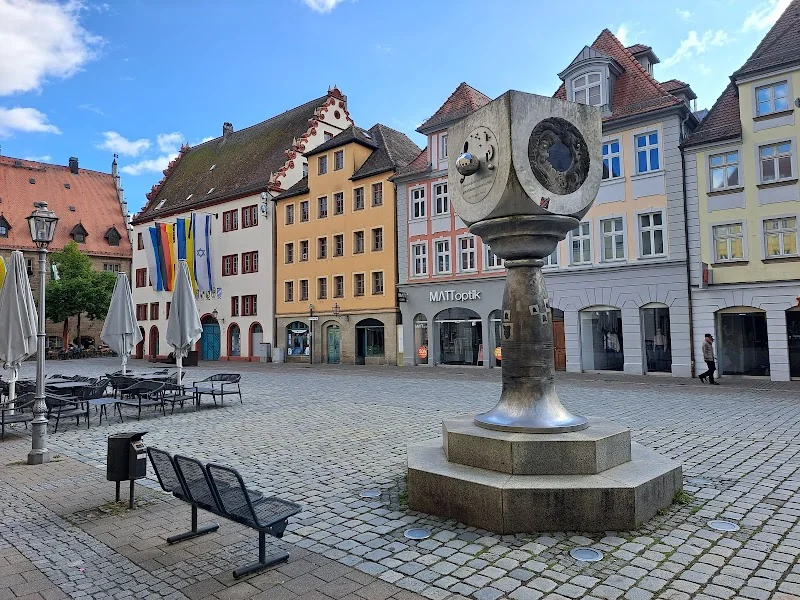
Ansbach
Martin-Luther-Platz, 91522 Ansbach, Deutschland
Martin Luther Square Ansbach | Weekly Market & Parking
The Martin Luther Square is one of the most defining places in the Ansbach old town: a square where market life, city history, baroque backdrop, and public everyday life naturally overlap. Located between St. Johannis and St. Gumbertus, it forms a space together with the town hall, city house, and the distinctive sculptures and fountains that make Ansbach's historical identity visible. Here, administration, church, trade, and city walks meet in close proximity, and it is precisely from this that the special effect of the square arises. Those who visit Martin Luther Square do not experience an isolated photo stop, but a vibrant center that shows very different faces on weekdays, market days, and during city festivals. The official tourism and city information describes the square as a central place with a weekly market, significant sights, and immediate proximity to important cultural points of the old town. This makes it an ideal starting point for a first or repeated visit to Ansbach. ([tourismus-ansbach.de](https://www.tourismus-ansbach.de/detail/id%3D64a7e1f73c62962022abf323))
Weekly Market, Regional Products, and Market Atmosphere at Martin Luther Square
The weekly market is the strongest everyday motif of Martin Luther Square and one of the most important reasons why the square appears so lively in the cityscape. According to the official tourism website, the market takes place twice a week, on Wednesdays and Saturdays from 7:00 AM to 1:00 PM. Around 30 vendors offer regional products there, including fruits and vegetables, meat and baked goods, fresh fish, eggs, pasta, spices, cheese specialties, and plants. This very mix makes the square more than just an address: it becomes a supply and meeting space for locals and guests. The tourist Ansbach experience for 2026 explicitly describes the square as a place with market atmosphere, where fresh fish, fragrant farmer's bread, and good cheese await visitors. This combination of a genuine weekly market and historical backdrop is particularly valuable for the positioning of the square because it connects a concrete benefit with atmosphere. Those who enter search queries like weekly market, Martin Luther Square, or Ansbach old town are usually looking for exactly this connection of offer, location, and experience. ([tourismus-ansbach.de](https://www.tourismus-ansbach.de/detail/id%3D665edb829fecce10e3ec1476?utm_source=openai))
Additionally, it is important that the market is not rigidly organized but adapts to urban processes. On holidays, it is moved forward, and during the pre-Christmas period, the city relocates it to the riding arena. This information is practically relevant because it shows that while Martin Luther Square is the classic location, its use remains flexible depending on city events. This is crucial for visitors: those who come specifically for the market should keep an eye on the current area occupancy. At the same time, the return to Martin Luther Square shows how significant this place is for public life. In recent years, the city has examined alternatives for safety and organizational reasons and later permanently returned the market to the square. This speaks to the symbolic and functional strength of the place as the center of the old town. In search and visiting behavior, the weekly market is therefore not just a component of the square, but its central everyday function. ([tourismus-ansbach.de](https://www.tourismus-ansbach.de/detail/id%3D665edb829fecce10e3ec1476?utm_source=openai))
Parking, Access, and Bicycle Parking Facilities around the Square
For visitors, access is a central point, and here Martin Luther Square has a clear advantage: it is located in the middle of the city center and is integrated into a dense parking and path network. The city of Ansbach provides more than 4,000 parking spaces for the city center, distributed across four different price categories. Martin Luther Square itself is located in parking zone 3, along with, among others, Johann Sebastian Bach Square, the riding arena, Karlsplatz, and parts of Maximilianstraße. A maximum parking duration of 3 hours applies to this zone. This is usually sufficient for a market visit, a stroll through the old town, or an appointment in the vicinity of the square. Those who wish to stay longer will find additional options in the city center, such as the Altstadt / Mühlbach parking garage, the Bahnhof parking garage, or the larger free areas at Aquella, the sports center, and the exhibition grounds. This makes the location very comfortable for short visits and also well-planned for longer stays in the city. ([ansbach.de](https://www.ansbach.de/B%C3%BCrger/%C3%96PNV-Verkehr/Parken?utm_source=openai))
Micro-local mobility around the square is also important. The city has created additional bicycle parking facilities, especially around Martin Luther Square and Johann Sebastian Bach Square, as part of the cycling concept. This is a strong signal for visitors who come to the old town by bike and want to reach their destination without searching for a parking space. Especially for a central square that combines market, trade, gastronomy, and events, such parking options are a real quality factor. Those arriving by car benefit from the clear zoning and the many parking spaces; those arriving by bike also find better infrastructure than in many classic old towns. Together, this shows: Martin Luther Square is not an inaccessible monument area, but a functional city center point with good accessibility and realistic paths for different visitor groups. For local search intentions regarding access, parking, and route, this is a decisive advantage. ([ansbach.de](https://www.ansbach.de/B%C3%BCrger/%C3%96PNV-Verkehr/Parken?utm_source=openai))
Town Hall, St. Johannis, and St. Gumbertus: The Most Important Addresses at the Square
The architectural and historical impact of Martin Luther Square arises mainly from the buildings that frame it. The town hall is located at Martin Luther Square 1. According to the tourism information, the coats of arms above the archway showcase highlights of Ansbach's history, and two sculptures by Thomas Röthel as well as a stele commemorating the Ansbach resistance stand in front of the building. Above all, the town hall is an anchor point of the square because here administration, culture of remembrance, and urban space come together directly. Directly opposite is the representative palace of Gabriel de Gabrieli, which further strengthens the baroque character of the surroundings. Also located in the square is the Markgraf-Georg Fountain, built in 1515 and renewed in the 19th century. Together with the Bach Column by Jürgen Goertz, it creates a strong visual axis between history, art, and public space. This very mix makes Martin Luther Square so interesting for visitors: one does not just move through a square, but through an ensemble of political, religious, and artistic signs. ([tourismus-ansbach.de](https://www.tourismus-ansbach.de/detail/id%3D64f9cd2a1bebef2ffcb2ff93?utm_source=openai))
Also directly adjacent are the two churches that shape the cityscape. St. Johannis at Martin Luther Square 16 is the civic parish church of Ansbach. The tourism site describes it as a three-nave pseudo-basilica that originated in the 15th century; visible are, among other things, the stained glass windows in the choir and the Güllbrünnlein related to Friedrich Wilhelm Güll. On the other side of the square structure lies St. Gumbertus, the Protestant-Lutheran parish church with its distinctive three-tower facade. It shapes the cityscape and further anchors the religious and historical dimension of the area. The location between these two churches makes Martin Luther Square a space suitable for city tours, cultural orientation, and photography alike. Those who want to understand the Ansbach old town cannot overlook this square, as the relationships between court, bourgeoisie, and church become particularly readable here. This is interesting not only for historians but also for visitors seeking a compact old town with clear sight lines and strong buildings. ([tourismus-ansbach.de](https://www.tourismus-ansbach.de/detail/id%3D64a7e1f73c62962022abf323))
The city house also contributes to spatial readability, which, according to the official site, was built in 1532 by Sixtus Kornburger and is considered the most significant building in the Gothic style in Ansbach. The ground floor is accessible from both Martin Luther Square and Johann Sebastian Bach Square; the city council meeting room is located on the second floor. Historically, the building was public property, later a court pharmacy, and finally municipal ownership. This mix of usage history and representative architecture explains why the square is not perceived as just a backdrop but as a functioning urban space with a long continuity. For an SEO-oriented location description, these details are important: they connect location, significance, and usability without artificial exaggeration. Martin Luther Square is not an abstract landmark but a genuinely used center of the city with understandable historical layers. ([tourismus-ansbach.de](https://www.tourismus-ansbach.de/ansbach-erleben/sehenswuerdigkeiten/stadthaus))
Christmas Market, Old Town Festival, and Ansbach Fair: Events with Tradition
Martin Luther Square is not only a weekly market location but also one of the most important event spaces in the Ansbach city center. This becomes particularly visible at the Christmas market: the official tourism site explicitly describes it as a market between St. Johannis and St. Gumbertus, with lovingly designed stalls, open fire pits, the scent of mulled wine and roasted almonds, as well as Franconian specialties. Thus, the square is not only lively during the Advent season but also atmospherically charged. For visitors searching for Christmas market Ansbach or Martin Luther Square, this is exactly the right combination of emotional experience and concrete location assignment. The square thus becomes a seasonal highlight without losing its everyday function. This is crucial for the perception of a historical city center: during the day, a market and everyday life, in Advent a festive backdrop, and in the evening a stage for light and enjoyment. ([tourismus-ansbach.de](https://www.tourismus-ansbach.de/detail/id%3D61c1e66f95d47663ef9cd435?utm_source=openai))
The old town festival and the Ansbach fair also show that the square is regularly integrated into larger city center events. For the old town festival 2026, the city has firmly scheduled an event window from June 3 to June 7; the regulation also names Martin Luther Square as an affected area. The Ansbach Fair - Food & Fine also takes place with the inclusion of the square, as does the weekly market in special situations. Additional formats such as the Long Shopping Night, where Martin Luther Square serves as a stage for a show program, are also included. Such uses are particularly valuable for the square because they confirm its role as a public meeting space. It is not just a passageway but a place where the city makes its great moments visibly concentrated. Therefore, those searching for events, festivals, or programs in Ansbach often indirectly end up back at Martin Luther Square. This is where its relevance lies for local visitors, day guests, and search engines alike. ([ansbach.de](https://www.ansbach.de/Wirtschaft/Innenstadtentwicklung-wirtschaftliche-Ma%25C3%259Fnahmen/Lange-Einkaufsnacht-am-7-M%25C3%25A4rz-2026/?utm_source=openai))
This festival culture is complemented by memorial and action events. The city explicitly names Martin Luther Square as a place for memorial hours for Robert Limpert, which take place at the resistance stele in front of the town hall. The International Week Against Racism has also been made visible there, as have various civic actions. This shows: the square is not only consumption- or market-driven but also a place of collective remembrance and democratic public life. For a high-quality location text, this is an important point because it describes the social depth of the place. A square that bundles so many uses has more than just tourist value; it is an active part of the urban self-understanding. This very multi-layeredness makes Martin Luther Square in Ansbach SEO-strong and simultaneously factually interesting. ([ansbach.de](https://www.ansbach.de/B%C3%BCrger/Wissen-Bildung/Stadtb%C3%BCcherei/Gedenken-an-den-Widerstandsk%C3%A4mpfer-Robert-Limpert.php?FID=2595.6303.1&La=1&ModID=11&NavID=2595.153&object=tx%2C2595.5.1&utm_source=openai))
History and Urban Planning Significance in the Heart of the Baroque Old Town
Martin Luther Square did not arise by chance in Ansbach but is part of a developed baroque and civic urban situation. The tourism page for the baroque old town explicitly describes the square as a place where the noble aura towards St. Gumbertus becomes palpable and where important buildings group between St. Gumbertus and St. Johannis. Here stand the nearly 500-year-old city house, now the office of the mayor, and the town hall, which previously served as a meeting place for city councils. This spatial constellation illustrates that the square has served for centuries as a hinge between political administration, ecclesiastical presence, and public life. This is urban planning relevant because it makes the square appear not as an isolated square edge but as a connecting center. For visitors, a clearly readable ensemble emerges that tells the history of the city through buildings, sight lines, and uses. ([tourismus-ansbach.de](https://www.tourismus-ansbach.de/detail/id%3D64a7e1f73c62962022abf323))
The city house itself provides a particularly good anchor point for this. It was built in 1532, is considered the most significant Gothic building in Ansbach, and was initially used differently after the city transitioned to Bavaria before being acquired by the city in 1925. The city council met there for the first time in 1926. Such dates are not just historical details but explain why Martin Luther Square is still perceived as an administrative and representation space. This significance is further complemented by the visible signs in the public space: the Markgraf-Georg Fountain with its early dating, the Bach Column as a cultural-historical reference to Johann Sebastian Bach, as well as the sculptures and the resistance stele in front of the town hall. Together, this results in a square image that focuses less on monumental size and more on the condensation of history. This very condensation is typical for Ansbach and particularly evident in Martin Luther Square. ([tourismus-ansbach.de](https://www.tourismus-ansbach.de/ansbach-erleben/sehenswuerdigkeiten/stadthaus))
The historical significance is also visible in that the square continues to function in everyday life. The weekly market, cultural events, political memorial sites, and the adjacent churches create a permanent overlay of uses. In other words: the square is not museum-frozen but continues to live in exactly the form that strengthens historical old towns. This enhances its local identity and makes it attractive for visitors seeking authenticity rather than staging. Those who want to understand Ansbach should not only read Martin Luther Square as an address but as a condensed urban space with administrative, market, memorial, and church functions. Its true value lies in this combination. ([tourismus-ansbach.de](https://www.tourismus-ansbach.de/detail/id%3D64a7e1f73c62962022abf323))
Practical Tips for the Visit: Route, Break, and Orientation on Site
For a successful visit, it is worthwhile to plan Martin Luther Square as a starting point for a short city center tour. The old town is compact, the most important sights are close together, and the tourist infrastructure is geared towards short distances. The Ansbach tourism materials also mention gastronomic options around the square, such as Café Krokant at Martin Luther Square and Simitci Cafe in the immediate vicinity. This is practical for a break after the market visit or before a city tour, as one does not have to search for long. In addition, there is the Tourist Information at Johann Sebastian Bach Square 1, also within direct reach. This makes Martin Luther Square a good meeting point, starting point for a tour, or place for an initial overview of the city. Those arriving in Ansbach also benefit from the fact that the old town is easily reachable on foot from the train station and that the city center functions as a compact urban core. ([tourismus-ansbach.de](https://www.tourismus-ansbach.de/fileadmin/user_upload/PDFs/Ansbach_Erleben_2026_web.pdf))
The square is also interesting for photos because it unites different motifs in a small space: market stalls, town hall facade, fountains, church lines, sculptures, and seasonal decorations. In the morning, the square appears more functional and market-oriented, while in the evening hours or during events, it seems more atmospheric. Those who want to experience the Christmas market will find here the classic Franconian mix of light, wooden stalls, and historical background; those who come in summer experience market, outdoor gastronomy, and city life. This very adaptability is one reason why the square remains so present in the perception of locals and guests. It is not a place that one looks at once and then checks off, but one that feels different with each visit. For the search intentions around route, parking, access, and events, this is ideal because the square offers real multiple uses. ([tourismus-ansbach.de](https://www.tourismus-ansbach.de/detail/id%3D61c1e66f95d47663ef9cd435?utm_source=openai))
In the end, Martin Luther Square in Ansbach can be described as one of those places where the city is not explained but becomes immediately experienceable. The weekly market shows everyday life, the town hall and churches show history, fountains and sculptures give the square a distinctive face, and events make it the public center. Therefore, those visiting Ansbach should not only pass through the square but consciously plan it. This is the best way to capture the city in its full mix of tradition, function, and atmosphere in a short time. ([tourismus-ansbach.de](https://www.tourismus-ansbach.de/detail/id%3D64a7e1f73c62962022abf323))
Sources:
- Ansbach Weekly Market - City of Ansbach Culture & Tourism
- Parking in Ansbach - City of Ansbach
- Town Hall - City of Ansbach Culture & Tourism
- St. Johannis in Ansbach - City of Ansbach Culture & Tourism
- St. Gumbertus in Ansbach - City of Ansbach Culture & Tourism
- Experience Ansbach 2026 - City of Ansbach Culture & Tourism
- Long Shopping Night on March 7, 2026 - City of Ansbach
- Traffic Disruptions During the Ansbach Fair - City of Ansbach
Show moreShow less
Martin Luther Square Ansbach | Weekly Market & Parking
The Martin Luther Square is one of the most defining places in the Ansbach old town: a square where market life, city history, baroque backdrop, and public everyday life naturally overlap. Located between St. Johannis and St. Gumbertus, it forms a space together with the town hall, city house, and the distinctive sculptures and fountains that make Ansbach's historical identity visible. Here, administration, church, trade, and city walks meet in close proximity, and it is precisely from this that the special effect of the square arises. Those who visit Martin Luther Square do not experience an isolated photo stop, but a vibrant center that shows very different faces on weekdays, market days, and during city festivals. The official tourism and city information describes the square as a central place with a weekly market, significant sights, and immediate proximity to important cultural points of the old town. This makes it an ideal starting point for a first or repeated visit to Ansbach. ([tourismus-ansbach.de](https://www.tourismus-ansbach.de/detail/id%3D64a7e1f73c62962022abf323))
Weekly Market, Regional Products, and Market Atmosphere at Martin Luther Square
The weekly market is the strongest everyday motif of Martin Luther Square and one of the most important reasons why the square appears so lively in the cityscape. According to the official tourism website, the market takes place twice a week, on Wednesdays and Saturdays from 7:00 AM to 1:00 PM. Around 30 vendors offer regional products there, including fruits and vegetables, meat and baked goods, fresh fish, eggs, pasta, spices, cheese specialties, and plants. This very mix makes the square more than just an address: it becomes a supply and meeting space for locals and guests. The tourist Ansbach experience for 2026 explicitly describes the square as a place with market atmosphere, where fresh fish, fragrant farmer's bread, and good cheese await visitors. This combination of a genuine weekly market and historical backdrop is particularly valuable for the positioning of the square because it connects a concrete benefit with atmosphere. Those who enter search queries like weekly market, Martin Luther Square, or Ansbach old town are usually looking for exactly this connection of offer, location, and experience. ([tourismus-ansbach.de](https://www.tourismus-ansbach.de/detail/id%3D665edb829fecce10e3ec1476?utm_source=openai))
Additionally, it is important that the market is not rigidly organized but adapts to urban processes. On holidays, it is moved forward, and during the pre-Christmas period, the city relocates it to the riding arena. This information is practically relevant because it shows that while Martin Luther Square is the classic location, its use remains flexible depending on city events. This is crucial for visitors: those who come specifically for the market should keep an eye on the current area occupancy. At the same time, the return to Martin Luther Square shows how significant this place is for public life. In recent years, the city has examined alternatives for safety and organizational reasons and later permanently returned the market to the square. This speaks to the symbolic and functional strength of the place as the center of the old town. In search and visiting behavior, the weekly market is therefore not just a component of the square, but its central everyday function. ([tourismus-ansbach.de](https://www.tourismus-ansbach.de/detail/id%3D665edb829fecce10e3ec1476?utm_source=openai))
Parking, Access, and Bicycle Parking Facilities around the Square
For visitors, access is a central point, and here Martin Luther Square has a clear advantage: it is located in the middle of the city center and is integrated into a dense parking and path network. The city of Ansbach provides more than 4,000 parking spaces for the city center, distributed across four different price categories. Martin Luther Square itself is located in parking zone 3, along with, among others, Johann Sebastian Bach Square, the riding arena, Karlsplatz, and parts of Maximilianstraße. A maximum parking duration of 3 hours applies to this zone. This is usually sufficient for a market visit, a stroll through the old town, or an appointment in the vicinity of the square. Those who wish to stay longer will find additional options in the city center, such as the Altstadt / Mühlbach parking garage, the Bahnhof parking garage, or the larger free areas at Aquella, the sports center, and the exhibition grounds. This makes the location very comfortable for short visits and also well-planned for longer stays in the city. ([ansbach.de](https://www.ansbach.de/B%C3%BCrger/%C3%96PNV-Verkehr/Parken?utm_source=openai))
Micro-local mobility around the square is also important. The city has created additional bicycle parking facilities, especially around Martin Luther Square and Johann Sebastian Bach Square, as part of the cycling concept. This is a strong signal for visitors who come to the old town by bike and want to reach their destination without searching for a parking space. Especially for a central square that combines market, trade, gastronomy, and events, such parking options are a real quality factor. Those arriving by car benefit from the clear zoning and the many parking spaces; those arriving by bike also find better infrastructure than in many classic old towns. Together, this shows: Martin Luther Square is not an inaccessible monument area, but a functional city center point with good accessibility and realistic paths for different visitor groups. For local search intentions regarding access, parking, and route, this is a decisive advantage. ([ansbach.de](https://www.ansbach.de/B%C3%BCrger/%C3%96PNV-Verkehr/Parken?utm_source=openai))
Town Hall, St. Johannis, and St. Gumbertus: The Most Important Addresses at the Square
The architectural and historical impact of Martin Luther Square arises mainly from the buildings that frame it. The town hall is located at Martin Luther Square 1. According to the tourism information, the coats of arms above the archway showcase highlights of Ansbach's history, and two sculptures by Thomas Röthel as well as a stele commemorating the Ansbach resistance stand in front of the building. Above all, the town hall is an anchor point of the square because here administration, culture of remembrance, and urban space come together directly. Directly opposite is the representative palace of Gabriel de Gabrieli, which further strengthens the baroque character of the surroundings. Also located in the square is the Markgraf-Georg Fountain, built in 1515 and renewed in the 19th century. Together with the Bach Column by Jürgen Goertz, it creates a strong visual axis between history, art, and public space. This very mix makes Martin Luther Square so interesting for visitors: one does not just move through a square, but through an ensemble of political, religious, and artistic signs. ([tourismus-ansbach.de](https://www.tourismus-ansbach.de/detail/id%3D64f9cd2a1bebef2ffcb2ff93?utm_source=openai))
Also directly adjacent are the two churches that shape the cityscape. St. Johannis at Martin Luther Square 16 is the civic parish church of Ansbach. The tourism site describes it as a three-nave pseudo-basilica that originated in the 15th century; visible are, among other things, the stained glass windows in the choir and the Güllbrünnlein related to Friedrich Wilhelm Güll. On the other side of the square structure lies St. Gumbertus, the Protestant-Lutheran parish church with its distinctive three-tower facade. It shapes the cityscape and further anchors the religious and historical dimension of the area. The location between these two churches makes Martin Luther Square a space suitable for city tours, cultural orientation, and photography alike. Those who want to understand the Ansbach old town cannot overlook this square, as the relationships between court, bourgeoisie, and church become particularly readable here. This is interesting not only for historians but also for visitors seeking a compact old town with clear sight lines and strong buildings. ([tourismus-ansbach.de](https://www.tourismus-ansbach.de/detail/id%3D64a7e1f73c62962022abf323))
The city house also contributes to spatial readability, which, according to the official site, was built in 1532 by Sixtus Kornburger and is considered the most significant building in the Gothic style in Ansbach. The ground floor is accessible from both Martin Luther Square and Johann Sebastian Bach Square; the city council meeting room is located on the second floor. Historically, the building was public property, later a court pharmacy, and finally municipal ownership. This mix of usage history and representative architecture explains why the square is not perceived as just a backdrop but as a functioning urban space with a long continuity. For an SEO-oriented location description, these details are important: they connect location, significance, and usability without artificial exaggeration. Martin Luther Square is not an abstract landmark but a genuinely used center of the city with understandable historical layers. ([tourismus-ansbach.de](https://www.tourismus-ansbach.de/ansbach-erleben/sehenswuerdigkeiten/stadthaus))
Christmas Market, Old Town Festival, and Ansbach Fair: Events with Tradition
Martin Luther Square is not only a weekly market location but also one of the most important event spaces in the Ansbach city center. This becomes particularly visible at the Christmas market: the official tourism site explicitly describes it as a market between St. Johannis and St. Gumbertus, with lovingly designed stalls, open fire pits, the scent of mulled wine and roasted almonds, as well as Franconian specialties. Thus, the square is not only lively during the Advent season but also atmospherically charged. For visitors searching for Christmas market Ansbach or Martin Luther Square, this is exactly the right combination of emotional experience and concrete location assignment. The square thus becomes a seasonal highlight without losing its everyday function. This is crucial for the perception of a historical city center: during the day, a market and everyday life, in Advent a festive backdrop, and in the evening a stage for light and enjoyment. ([tourismus-ansbach.de](https://www.tourismus-ansbach.de/detail/id%3D61c1e66f95d47663ef9cd435?utm_source=openai))
The old town festival and the Ansbach fair also show that the square is regularly integrated into larger city center events. For the old town festival 2026, the city has firmly scheduled an event window from June 3 to June 7; the regulation also names Martin Luther Square as an affected area. The Ansbach Fair - Food & Fine also takes place with the inclusion of the square, as does the weekly market in special situations. Additional formats such as the Long Shopping Night, where Martin Luther Square serves as a stage for a show program, are also included. Such uses are particularly valuable for the square because they confirm its role as a public meeting space. It is not just a passageway but a place where the city makes its great moments visibly concentrated. Therefore, those searching for events, festivals, or programs in Ansbach often indirectly end up back at Martin Luther Square. This is where its relevance lies for local visitors, day guests, and search engines alike. ([ansbach.de](https://www.ansbach.de/Wirtschaft/Innenstadtentwicklung-wirtschaftliche-Ma%25C3%259Fnahmen/Lange-Einkaufsnacht-am-7-M%25C3%25A4rz-2026/?utm_source=openai))
This festival culture is complemented by memorial and action events. The city explicitly names Martin Luther Square as a place for memorial hours for Robert Limpert, which take place at the resistance stele in front of the town hall. The International Week Against Racism has also been made visible there, as have various civic actions. This shows: the square is not only consumption- or market-driven but also a place of collective remembrance and democratic public life. For a high-quality location text, this is an important point because it describes the social depth of the place. A square that bundles so many uses has more than just tourist value; it is an active part of the urban self-understanding. This very multi-layeredness makes Martin Luther Square in Ansbach SEO-strong and simultaneously factually interesting. ([ansbach.de](https://www.ansbach.de/B%C3%BCrger/Wissen-Bildung/Stadtb%C3%BCcherei/Gedenken-an-den-Widerstandsk%C3%A4mpfer-Robert-Limpert.php?FID=2595.6303.1&La=1&ModID=11&NavID=2595.153&object=tx%2C2595.5.1&utm_source=openai))
History and Urban Planning Significance in the Heart of the Baroque Old Town
Martin Luther Square did not arise by chance in Ansbach but is part of a developed baroque and civic urban situation. The tourism page for the baroque old town explicitly describes the square as a place where the noble aura towards St. Gumbertus becomes palpable and where important buildings group between St. Gumbertus and St. Johannis. Here stand the nearly 500-year-old city house, now the office of the mayor, and the town hall, which previously served as a meeting place for city councils. This spatial constellation illustrates that the square has served for centuries as a hinge between political administration, ecclesiastical presence, and public life. This is urban planning relevant because it makes the square appear not as an isolated square edge but as a connecting center. For visitors, a clearly readable ensemble emerges that tells the history of the city through buildings, sight lines, and uses. ([tourismus-ansbach.de](https://www.tourismus-ansbach.de/detail/id%3D64a7e1f73c62962022abf323))
The city house itself provides a particularly good anchor point for this. It was built in 1532, is considered the most significant Gothic building in Ansbach, and was initially used differently after the city transitioned to Bavaria before being acquired by the city in 1925. The city council met there for the first time in 1926. Such dates are not just historical details but explain why Martin Luther Square is still perceived as an administrative and representation space. This significance is further complemented by the visible signs in the public space: the Markgraf-Georg Fountain with its early dating, the Bach Column as a cultural-historical reference to Johann Sebastian Bach, as well as the sculptures and the resistance stele in front of the town hall. Together, this results in a square image that focuses less on monumental size and more on the condensation of history. This very condensation is typical for Ansbach and particularly evident in Martin Luther Square. ([tourismus-ansbach.de](https://www.tourismus-ansbach.de/ansbach-erleben/sehenswuerdigkeiten/stadthaus))
The historical significance is also visible in that the square continues to function in everyday life. The weekly market, cultural events, political memorial sites, and the adjacent churches create a permanent overlay of uses. In other words: the square is not museum-frozen but continues to live in exactly the form that strengthens historical old towns. This enhances its local identity and makes it attractive for visitors seeking authenticity rather than staging. Those who want to understand Ansbach should not only read Martin Luther Square as an address but as a condensed urban space with administrative, market, memorial, and church functions. Its true value lies in this combination. ([tourismus-ansbach.de](https://www.tourismus-ansbach.de/detail/id%3D64a7e1f73c62962022abf323))
Practical Tips for the Visit: Route, Break, and Orientation on Site
For a successful visit, it is worthwhile to plan Martin Luther Square as a starting point for a short city center tour. The old town is compact, the most important sights are close together, and the tourist infrastructure is geared towards short distances. The Ansbach tourism materials also mention gastronomic options around the square, such as Café Krokant at Martin Luther Square and Simitci Cafe in the immediate vicinity. This is practical for a break after the market visit or before a city tour, as one does not have to search for long. In addition, there is the Tourist Information at Johann Sebastian Bach Square 1, also within direct reach. This makes Martin Luther Square a good meeting point, starting point for a tour, or place for an initial overview of the city. Those arriving in Ansbach also benefit from the fact that the old town is easily reachable on foot from the train station and that the city center functions as a compact urban core. ([tourismus-ansbach.de](https://www.tourismus-ansbach.de/fileadmin/user_upload/PDFs/Ansbach_Erleben_2026_web.pdf))
The square is also interesting for photos because it unites different motifs in a small space: market stalls, town hall facade, fountains, church lines, sculptures, and seasonal decorations. In the morning, the square appears more functional and market-oriented, while in the evening hours or during events, it seems more atmospheric. Those who want to experience the Christmas market will find here the classic Franconian mix of light, wooden stalls, and historical background; those who come in summer experience market, outdoor gastronomy, and city life. This very adaptability is one reason why the square remains so present in the perception of locals and guests. It is not a place that one looks at once and then checks off, but one that feels different with each visit. For the search intentions around route, parking, access, and events, this is ideal because the square offers real multiple uses. ([tourismus-ansbach.de](https://www.tourismus-ansbach.de/detail/id%3D61c1e66f95d47663ef9cd435?utm_source=openai))
In the end, Martin Luther Square in Ansbach can be described as one of those places where the city is not explained but becomes immediately experienceable. The weekly market shows everyday life, the town hall and churches show history, fountains and sculptures give the square a distinctive face, and events make it the public center. Therefore, those visiting Ansbach should not only pass through the square but consciously plan it. This is the best way to capture the city in its full mix of tradition, function, and atmosphere in a short time. ([tourismus-ansbach.de](https://www.tourismus-ansbach.de/detail/id%3D64a7e1f73c62962022abf323))
Sources:
- Ansbach Weekly Market - City of Ansbach Culture & Tourism
- Parking in Ansbach - City of Ansbach
- Town Hall - City of Ansbach Culture & Tourism
- St. Johannis in Ansbach - City of Ansbach Culture & Tourism
- St. Gumbertus in Ansbach - City of Ansbach Culture & Tourism
- Experience Ansbach 2026 - City of Ansbach Culture & Tourism
- Long Shopping Night on March 7, 2026 - City of Ansbach
- Traffic Disruptions During the Ansbach Fair - City of Ansbach
Martin Luther Square Ansbach | Weekly Market & Parking
The Martin Luther Square is one of the most defining places in the Ansbach old town: a square where market life, city history, baroque backdrop, and public everyday life naturally overlap. Located between St. Johannis and St. Gumbertus, it forms a space together with the town hall, city house, and the distinctive sculptures and fountains that make Ansbach's historical identity visible. Here, administration, church, trade, and city walks meet in close proximity, and it is precisely from this that the special effect of the square arises. Those who visit Martin Luther Square do not experience an isolated photo stop, but a vibrant center that shows very different faces on weekdays, market days, and during city festivals. The official tourism and city information describes the square as a central place with a weekly market, significant sights, and immediate proximity to important cultural points of the old town. This makes it an ideal starting point for a first or repeated visit to Ansbach. ([tourismus-ansbach.de](https://www.tourismus-ansbach.de/detail/id%3D64a7e1f73c62962022abf323))
Weekly Market, Regional Products, and Market Atmosphere at Martin Luther Square
The weekly market is the strongest everyday motif of Martin Luther Square and one of the most important reasons why the square appears so lively in the cityscape. According to the official tourism website, the market takes place twice a week, on Wednesdays and Saturdays from 7:00 AM to 1:00 PM. Around 30 vendors offer regional products there, including fruits and vegetables, meat and baked goods, fresh fish, eggs, pasta, spices, cheese specialties, and plants. This very mix makes the square more than just an address: it becomes a supply and meeting space for locals and guests. The tourist Ansbach experience for 2026 explicitly describes the square as a place with market atmosphere, where fresh fish, fragrant farmer's bread, and good cheese await visitors. This combination of a genuine weekly market and historical backdrop is particularly valuable for the positioning of the square because it connects a concrete benefit with atmosphere. Those who enter search queries like weekly market, Martin Luther Square, or Ansbach old town are usually looking for exactly this connection of offer, location, and experience. ([tourismus-ansbach.de](https://www.tourismus-ansbach.de/detail/id%3D665edb829fecce10e3ec1476?utm_source=openai))
Additionally, it is important that the market is not rigidly organized but adapts to urban processes. On holidays, it is moved forward, and during the pre-Christmas period, the city relocates it to the riding arena. This information is practically relevant because it shows that while Martin Luther Square is the classic location, its use remains flexible depending on city events. This is crucial for visitors: those who come specifically for the market should keep an eye on the current area occupancy. At the same time, the return to Martin Luther Square shows how significant this place is for public life. In recent years, the city has examined alternatives for safety and organizational reasons and later permanently returned the market to the square. This speaks to the symbolic and functional strength of the place as the center of the old town. In search and visiting behavior, the weekly market is therefore not just a component of the square, but its central everyday function. ([tourismus-ansbach.de](https://www.tourismus-ansbach.de/detail/id%3D665edb829fecce10e3ec1476?utm_source=openai))
Parking, Access, and Bicycle Parking Facilities around the Square
For visitors, access is a central point, and here Martin Luther Square has a clear advantage: it is located in the middle of the city center and is integrated into a dense parking and path network. The city of Ansbach provides more than 4,000 parking spaces for the city center, distributed across four different price categories. Martin Luther Square itself is located in parking zone 3, along with, among others, Johann Sebastian Bach Square, the riding arena, Karlsplatz, and parts of Maximilianstraße. A maximum parking duration of 3 hours applies to this zone. This is usually sufficient for a market visit, a stroll through the old town, or an appointment in the vicinity of the square. Those who wish to stay longer will find additional options in the city center, such as the Altstadt / Mühlbach parking garage, the Bahnhof parking garage, or the larger free areas at Aquella, the sports center, and the exhibition grounds. This makes the location very comfortable for short visits and also well-planned for longer stays in the city. ([ansbach.de](https://www.ansbach.de/B%C3%BCrger/%C3%96PNV-Verkehr/Parken?utm_source=openai))
Micro-local mobility around the square is also important. The city has created additional bicycle parking facilities, especially around Martin Luther Square and Johann Sebastian Bach Square, as part of the cycling concept. This is a strong signal for visitors who come to the old town by bike and want to reach their destination without searching for a parking space. Especially for a central square that combines market, trade, gastronomy, and events, such parking options are a real quality factor. Those arriving by car benefit from the clear zoning and the many parking spaces; those arriving by bike also find better infrastructure than in many classic old towns. Together, this shows: Martin Luther Square is not an inaccessible monument area, but a functional city center point with good accessibility and realistic paths for different visitor groups. For local search intentions regarding access, parking, and route, this is a decisive advantage. ([ansbach.de](https://www.ansbach.de/B%C3%BCrger/%C3%96PNV-Verkehr/Parken?utm_source=openai))
Town Hall, St. Johannis, and St. Gumbertus: The Most Important Addresses at the Square
The architectural and historical impact of Martin Luther Square arises mainly from the buildings that frame it. The town hall is located at Martin Luther Square 1. According to the tourism information, the coats of arms above the archway showcase highlights of Ansbach's history, and two sculptures by Thomas Röthel as well as a stele commemorating the Ansbach resistance stand in front of the building. Above all, the town hall is an anchor point of the square because here administration, culture of remembrance, and urban space come together directly. Directly opposite is the representative palace of Gabriel de Gabrieli, which further strengthens the baroque character of the surroundings. Also located in the square is the Markgraf-Georg Fountain, built in 1515 and renewed in the 19th century. Together with the Bach Column by Jürgen Goertz, it creates a strong visual axis between history, art, and public space. This very mix makes Martin Luther Square so interesting for visitors: one does not just move through a square, but through an ensemble of political, religious, and artistic signs. ([tourismus-ansbach.de](https://www.tourismus-ansbach.de/detail/id%3D64f9cd2a1bebef2ffcb2ff93?utm_source=openai))
Also directly adjacent are the two churches that shape the cityscape. St. Johannis at Martin Luther Square 16 is the civic parish church of Ansbach. The tourism site describes it as a three-nave pseudo-basilica that originated in the 15th century; visible are, among other things, the stained glass windows in the choir and the Güllbrünnlein related to Friedrich Wilhelm Güll. On the other side of the square structure lies St. Gumbertus, the Protestant-Lutheran parish church with its distinctive three-tower facade. It shapes the cityscape and further anchors the religious and historical dimension of the area. The location between these two churches makes Martin Luther Square a space suitable for city tours, cultural orientation, and photography alike. Those who want to understand the Ansbach old town cannot overlook this square, as the relationships between court, bourgeoisie, and church become particularly readable here. This is interesting not only for historians but also for visitors seeking a compact old town with clear sight lines and strong buildings. ([tourismus-ansbach.de](https://www.tourismus-ansbach.de/detail/id%3D64a7e1f73c62962022abf323))
The city house also contributes to spatial readability, which, according to the official site, was built in 1532 by Sixtus Kornburger and is considered the most significant building in the Gothic style in Ansbach. The ground floor is accessible from both Martin Luther Square and Johann Sebastian Bach Square; the city council meeting room is located on the second floor. Historically, the building was public property, later a court pharmacy, and finally municipal ownership. This mix of usage history and representative architecture explains why the square is not perceived as just a backdrop but as a functioning urban space with a long continuity. For an SEO-oriented location description, these details are important: they connect location, significance, and usability without artificial exaggeration. Martin Luther Square is not an abstract landmark but a genuinely used center of the city with understandable historical layers. ([tourismus-ansbach.de](https://www.tourismus-ansbach.de/ansbach-erleben/sehenswuerdigkeiten/stadthaus))
Christmas Market, Old Town Festival, and Ansbach Fair: Events with Tradition
Martin Luther Square is not only a weekly market location but also one of the most important event spaces in the Ansbach city center. This becomes particularly visible at the Christmas market: the official tourism site explicitly describes it as a market between St. Johannis and St. Gumbertus, with lovingly designed stalls, open fire pits, the scent of mulled wine and roasted almonds, as well as Franconian specialties. Thus, the square is not only lively during the Advent season but also atmospherically charged. For visitors searching for Christmas market Ansbach or Martin Luther Square, this is exactly the right combination of emotional experience and concrete location assignment. The square thus becomes a seasonal highlight without losing its everyday function. This is crucial for the perception of a historical city center: during the day, a market and everyday life, in Advent a festive backdrop, and in the evening a stage for light and enjoyment. ([tourismus-ansbach.de](https://www.tourismus-ansbach.de/detail/id%3D61c1e66f95d47663ef9cd435?utm_source=openai))
The old town festival and the Ansbach fair also show that the square is regularly integrated into larger city center events. For the old town festival 2026, the city has firmly scheduled an event window from June 3 to June 7; the regulation also names Martin Luther Square as an affected area. The Ansbach Fair - Food & Fine also takes place with the inclusion of the square, as does the weekly market in special situations. Additional formats such as the Long Shopping Night, where Martin Luther Square serves as a stage for a show program, are also included. Such uses are particularly valuable for the square because they confirm its role as a public meeting space. It is not just a passageway but a place where the city makes its great moments visibly concentrated. Therefore, those searching for events, festivals, or programs in Ansbach often indirectly end up back at Martin Luther Square. This is where its relevance lies for local visitors, day guests, and search engines alike. ([ansbach.de](https://www.ansbach.de/Wirtschaft/Innenstadtentwicklung-wirtschaftliche-Ma%25C3%259Fnahmen/Lange-Einkaufsnacht-am-7-M%25C3%25A4rz-2026/?utm_source=openai))
This festival culture is complemented by memorial and action events. The city explicitly names Martin Luther Square as a place for memorial hours for Robert Limpert, which take place at the resistance stele in front of the town hall. The International Week Against Racism has also been made visible there, as have various civic actions. This shows: the square is not only consumption- or market-driven but also a place of collective remembrance and democratic public life. For a high-quality location text, this is an important point because it describes the social depth of the place. A square that bundles so many uses has more than just tourist value; it is an active part of the urban self-understanding. This very multi-layeredness makes Martin Luther Square in Ansbach SEO-strong and simultaneously factually interesting. ([ansbach.de](https://www.ansbach.de/B%C3%BCrger/Wissen-Bildung/Stadtb%C3%BCcherei/Gedenken-an-den-Widerstandsk%C3%A4mpfer-Robert-Limpert.php?FID=2595.6303.1&La=1&ModID=11&NavID=2595.153&object=tx%2C2595.5.1&utm_source=openai))
History and Urban Planning Significance in the Heart of the Baroque Old Town
Martin Luther Square did not arise by chance in Ansbach but is part of a developed baroque and civic urban situation. The tourism page for the baroque old town explicitly describes the square as a place where the noble aura towards St. Gumbertus becomes palpable and where important buildings group between St. Gumbertus and St. Johannis. Here stand the nearly 500-year-old city house, now the office of the mayor, and the town hall, which previously served as a meeting place for city councils. This spatial constellation illustrates that the square has served for centuries as a hinge between political administration, ecclesiastical presence, and public life. This is urban planning relevant because it makes the square appear not as an isolated square edge but as a connecting center. For visitors, a clearly readable ensemble emerges that tells the history of the city through buildings, sight lines, and uses. ([tourismus-ansbach.de](https://www.tourismus-ansbach.de/detail/id%3D64a7e1f73c62962022abf323))
The city house itself provides a particularly good anchor point for this. It was built in 1532, is considered the most significant Gothic building in Ansbach, and was initially used differently after the city transitioned to Bavaria before being acquired by the city in 1925. The city council met there for the first time in 1926. Such dates are not just historical details but explain why Martin Luther Square is still perceived as an administrative and representation space. This significance is further complemented by the visible signs in the public space: the Markgraf-Georg Fountain with its early dating, the Bach Column as a cultural-historical reference to Johann Sebastian Bach, as well as the sculptures and the resistance stele in front of the town hall. Together, this results in a square image that focuses less on monumental size and more on the condensation of history. This very condensation is typical for Ansbach and particularly evident in Martin Luther Square. ([tourismus-ansbach.de](https://www.tourismus-ansbach.de/ansbach-erleben/sehenswuerdigkeiten/stadthaus))
The historical significance is also visible in that the square continues to function in everyday life. The weekly market, cultural events, political memorial sites, and the adjacent churches create a permanent overlay of uses. In other words: the square is not museum-frozen but continues to live in exactly the form that strengthens historical old towns. This enhances its local identity and makes it attractive for visitors seeking authenticity rather than staging. Those who want to understand Ansbach should not only read Martin Luther Square as an address but as a condensed urban space with administrative, market, memorial, and church functions. Its true value lies in this combination. ([tourismus-ansbach.de](https://www.tourismus-ansbach.de/detail/id%3D64a7e1f73c62962022abf323))
Practical Tips for the Visit: Route, Break, and Orientation on Site
For a successful visit, it is worthwhile to plan Martin Luther Square as a starting point for a short city center tour. The old town is compact, the most important sights are close together, and the tourist infrastructure is geared towards short distances. The Ansbach tourism materials also mention gastronomic options around the square, such as Café Krokant at Martin Luther Square and Simitci Cafe in the immediate vicinity. This is practical for a break after the market visit or before a city tour, as one does not have to search for long. In addition, there is the Tourist Information at Johann Sebastian Bach Square 1, also within direct reach. This makes Martin Luther Square a good meeting point, starting point for a tour, or place for an initial overview of the city. Those arriving in Ansbach also benefit from the fact that the old town is easily reachable on foot from the train station and that the city center functions as a compact urban core. ([tourismus-ansbach.de](https://www.tourismus-ansbach.de/fileadmin/user_upload/PDFs/Ansbach_Erleben_2026_web.pdf))
The square is also interesting for photos because it unites different motifs in a small space: market stalls, town hall facade, fountains, church lines, sculptures, and seasonal decorations. In the morning, the square appears more functional and market-oriented, while in the evening hours or during events, it seems more atmospheric. Those who want to experience the Christmas market will find here the classic Franconian mix of light, wooden stalls, and historical background; those who come in summer experience market, outdoor gastronomy, and city life. This very adaptability is one reason why the square remains so present in the perception of locals and guests. It is not a place that one looks at once and then checks off, but one that feels different with each visit. For the search intentions around route, parking, access, and events, this is ideal because the square offers real multiple uses. ([tourismus-ansbach.de](https://www.tourismus-ansbach.de/detail/id%3D61c1e66f95d47663ef9cd435?utm_source=openai))
In the end, Martin Luther Square in Ansbach can be described as one of those places where the city is not explained but becomes immediately experienceable. The weekly market shows everyday life, the town hall and churches show history, fountains and sculptures give the square a distinctive face, and events make it the public center. Therefore, those visiting Ansbach should not only pass through the square but consciously plan it. This is the best way to capture the city in its full mix of tradition, function, and atmosphere in a short time. ([tourismus-ansbach.de](https://www.tourismus-ansbach.de/detail/id%3D64a7e1f73c62962022abf323))
Sources:
- Ansbach Weekly Market - City of Ansbach Culture & Tourism
- Parking in Ansbach - City of Ansbach
- Town Hall - City of Ansbach Culture & Tourism
- St. Johannis in Ansbach - City of Ansbach Culture & Tourism
- St. Gumbertus in Ansbach - City of Ansbach Culture & Tourism
- Experience Ansbach 2026 - City of Ansbach Culture & Tourism
- Long Shopping Night on March 7, 2026 - City of Ansbach
- Traffic Disruptions During the Ansbach Fair - City of Ansbach
Upcoming Events
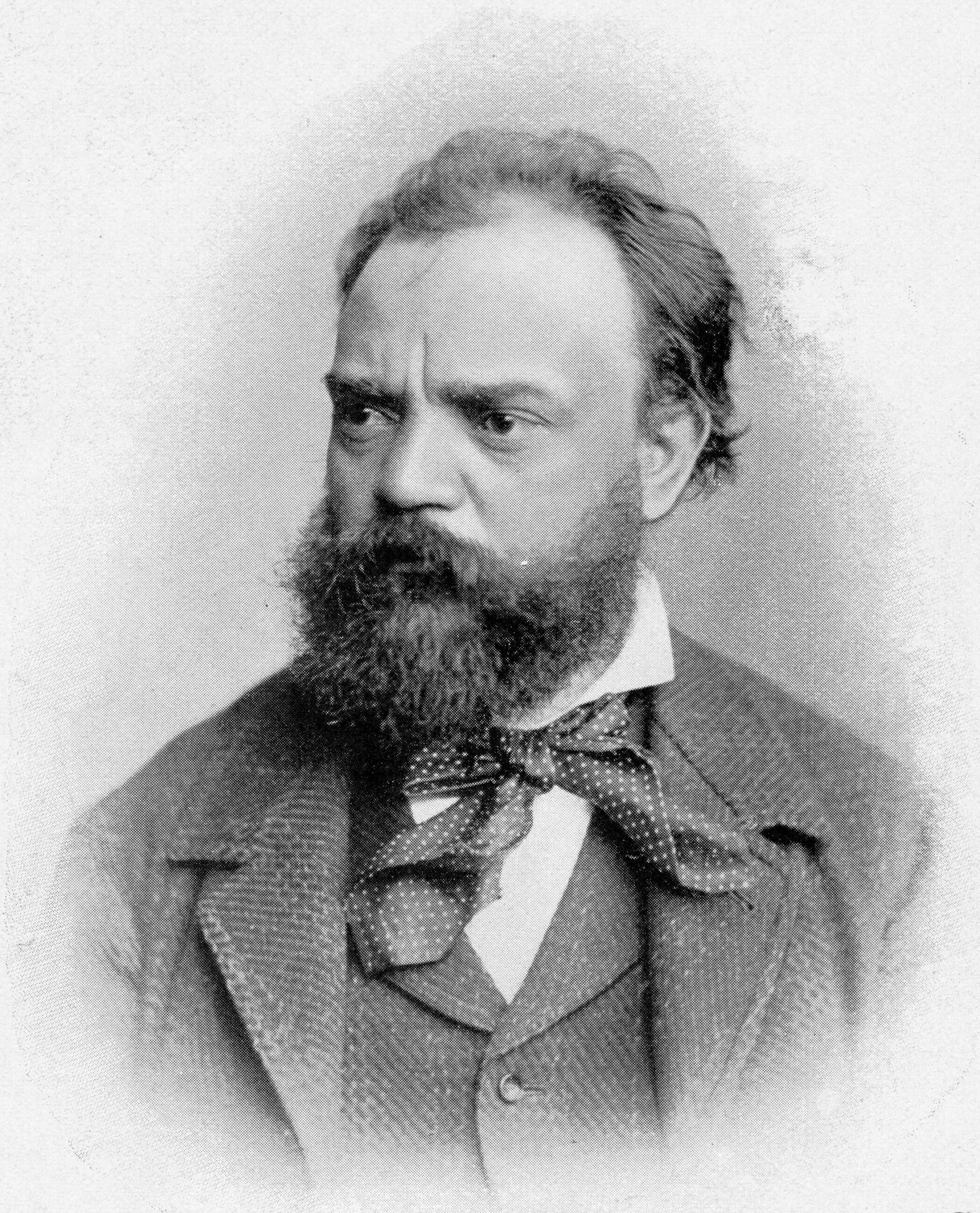
Antonín Dvořák – Mass in D Major for Solo, Choir, and Organ
An evening for choir lovers and church music fans: Dvořák's Mass in D Major sounds on July 5, 2026, in St. Johannis Ansbach. Free admission. #Ansbach #Concert
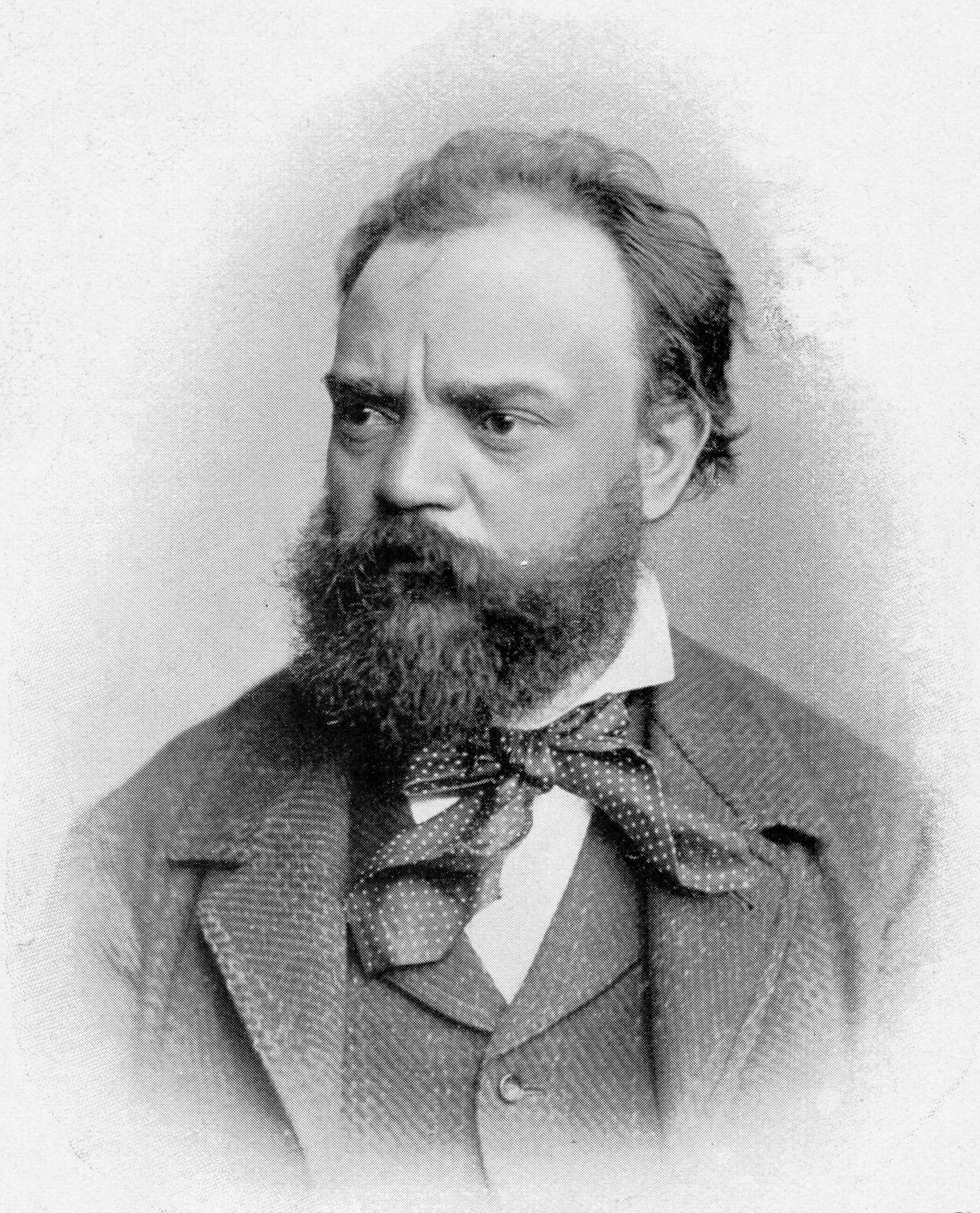
Antonin Dvorák: Mass in D Major in Ansbach
A festive summer evening at St. Johannis Ansbach: Dvořák's Mass in D Major with choir, soloists, and organ. 05.07.2026, free admission. #Concert
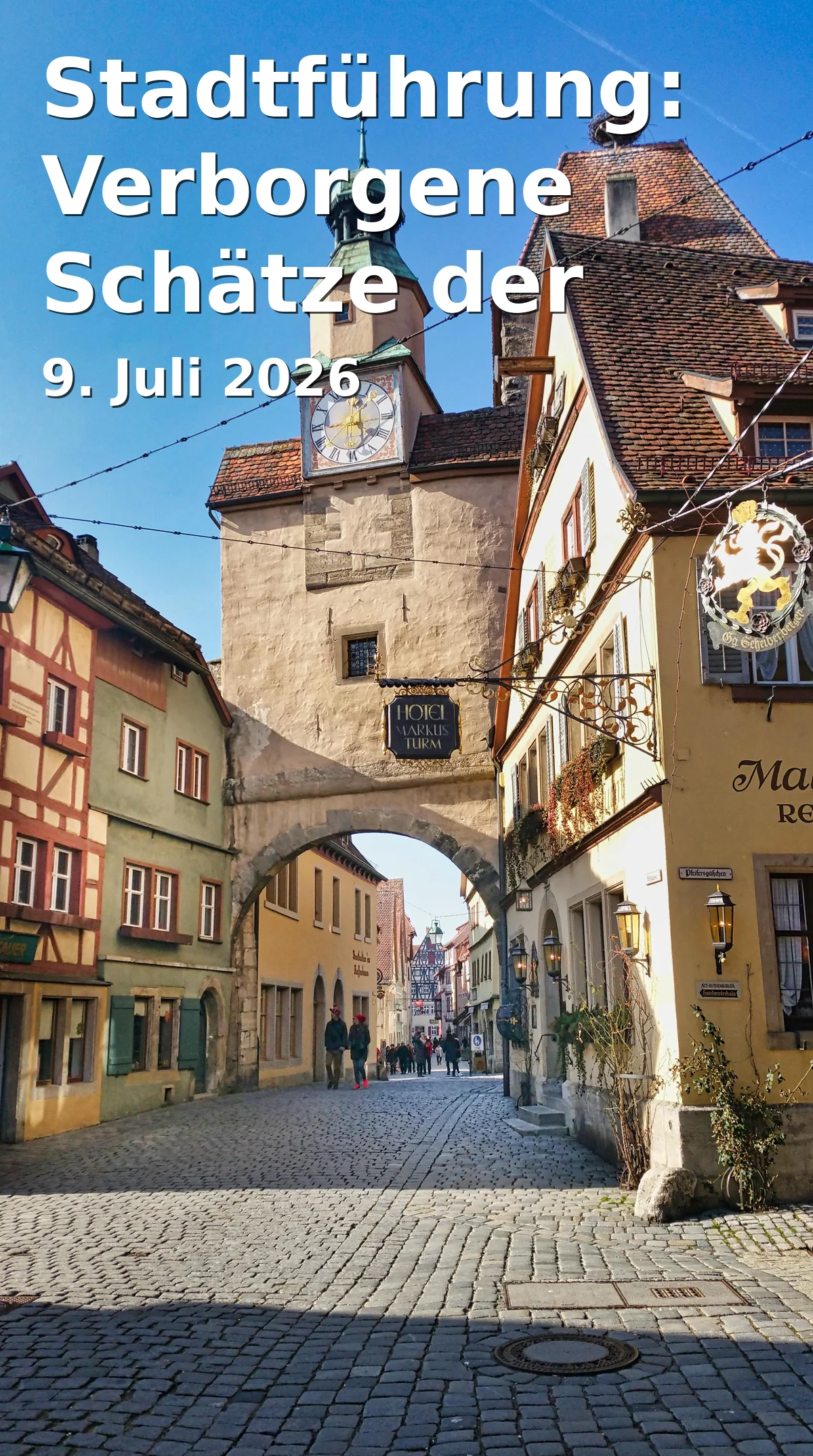
City Tour: Hidden Treasures of the Old Town
Experience Ansbach's hidden courtyards and discover their history on an exciting tour.

Classic Car Drive Altmühltal Classic
On July 12, 2026, historic classic cars will stop at Martin Luther Square in Ansbach. A celebration for the whole family.
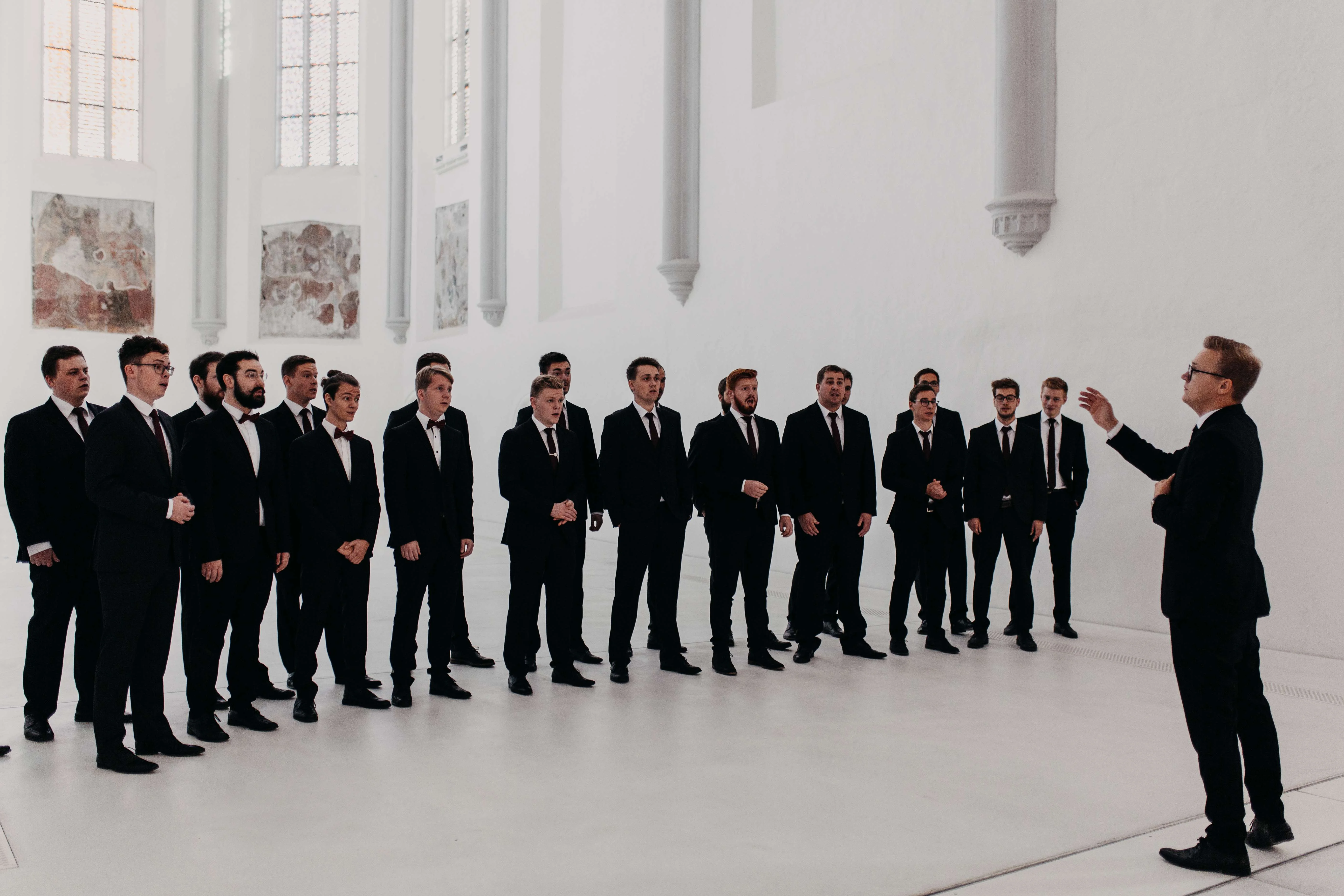
Sonat Vox & Ansbacher Kammerorchester Concert
Attend the festive concert at the St. Johannis Church in Ansbach and enjoy masterpieces by Mendelssohn and more.
Frequently Asked Questions
Reviews
david antoun
17. September 2024
the medieval old city square with two churches, memorials, fountains, today also shops and restaurants.
Russell Sanborn
3. February 2026
Great place to walk through and shop
Emilia Feyjoo
1. October 2019
Beautiful and quiet always a nice place to walk around (get ice cream) ect.
Travis Yazzie
5. December 2019
Very nice location for Events Platz. It is practically in the middle of Ansbach. The Mall, Chili's and other shops are within walking distance from this area.
Cristobal Nieto González
9. April 2018
Great place to go with family, friends, or alone, take in account that it is small so there are not many tables (chairs neither)