
Ansbach
Feuchtwanger Str. 38, 91522 Ansbach-Schalkhausen, Deutschland
District Hospital Ansbach | Psychiatry & Psychosomatics
The District Hospital Ansbach is a central care facility for people with mental and psychosomatic disorders in Middle Franconia. The Clinic for Psychiatry, Psychotherapy, and Psychosomatics at the Ansbach location operates inpatient, day hospital, and outpatient services, catering to both those affected and their relatives. The site combines medical treatment, structured therapy, aftercare, and practical orientation in a location that does not feel like an anonymous large facility but rather like a developed, self-contained hospital area with clear pathways, its own buildings, and a park-like environment. For many inquiries, this mix is crucial: Those looking for photos, directions, parking, day clinics, outpatient departments, or reviews want to quickly understand what is offered on-site and how to navigate it. This overview is precisely designed for that purpose. The official hospital website describes the services as holistic care for patients from the Middle Franconia region and emphasizes the combination of psychiatric, psychotherapeutic, and psychosomatic treatment with complementary specialties such as addiction medicine and geriatric psychiatry. The site itself is described in the location information as park-like and includes a café, a church, and other facilities that make the stay more manageable. ([bezirkskliniken-mfr.de](https://www.bezirkskliniken-mfr.de/standorte-und-kliniken/ansbach/klinik-fuer-psychiatrie-psychotherapie-und-psychosomatik/))
Location, Directions, and Parking at District Hospital Ansbach
The address of the clinic is Feuchtwanger Str. 38, 91522 Ansbach. This means the District Hospital is located at a clearly identifiable site that can be easily entered into navigation systems for visitors. For public transportation, the official information names Ansbach train station as the starting point. From there, either a taxi ride from the train station square is possible or the bus connection with line 756, which runs from Schlossplatz to the District Hospital stop. This clear public transport connection is particularly important for relatives visiting someone or for people undergoing admission or outpatient treatment, as it facilitates orientation and makes the location accessible even without a personal vehicle. Additionally, the site plan shows a bus stop H as well as the access to the area. ([bezirkskliniken-mfr.de](https://www.bezirkskliniken-mfr.de/fileadmin/user_upload/pdf/ansbach/gedenkorte-bezirksklinikum-ansbach.pdf))
For those arriving by car, there is a visitor parking lot in front of the gate on the premises. This is a practical advantage for a hospital site, as the first point of contact remains clearly visible, and visitors do not have to search long for parking spaces. The location information also notes the area as a spacious, well-maintained facility with a park-like character. This is relevant not only for the general ambiance but also for the layout: The site plan clearly marks the most important buildings and facilities, including the patient admission center, therapy center, Café Mosaik, the event hall, and several functional buildings of various departments. Therefore, those inquiring about directions and parking are often also looking for a quick overview of internal orientation. The official material helps here by not only providing the address but also making the pathways on the premises comprehensible. ([bezirkskliniken-mfr.de](https://www.bezirkskliniken-mfr.de/fileadmin/user_upload/standorte/ansbach/standortinfo-ansbach-1125.pdf))
In practice, this means: The District Hospital Ansbach is neither a hidden back-lot location nor a complicated campus without structure. The clinic is at a fixed address, the bus line 756 connects the area, and a visitor parking lot at the gate creates a comprehensible first contact point. Therefore, those looking for directions, parking, or route descriptions receive here a combination of clear postal location, public transport connection, and site overview. For a medical center, this is particularly relevant because arrival situations are often associated with time pressure, uncertainty, or emotional stress. A clearly readable location and a clear parking situation noticeably relieve pressure in such moments. ([bezirkskliniken-mfr.de](https://www.bezirkskliniken-mfr.de/fileadmin/user_upload/pdf/ansbach/gedenkorte-bezirksklinikum-ansbach.pdf))
Psychiatry, Psychotherapy, and Psychosomatics: Specialties and Treatments
The medical profile of the District Hospital Ansbach is broadly established. The official location page names the main areas as psychiatry, psychotherapy, and psychosomatics, as well as addiction, addiction rehabilitation, and geriatric psychiatry. Additionally, there is a psychiatric day clinic and a psychiatric outpatient department. This is particularly important for inquiries related to the clinic, as the location not only offers classic inpatient care but also enables transitions between inpatient, day hospital, and outpatient treatment. The clinic serves patients from the entire Middle Franconia region and explicitly describes its work as holistic. The page also mentions additional specialties such as general psychiatry, psychotherapy and psychosomatics, addiction medicine, addiction rehabilitation, and geriatric psychiatry. This allows the facility to cover a spectrum ranging from acute crises to long-term stabilization to specialized treatment pathways. ([bezirkskliniken-mfr.de](https://www.bezirkskliniken-mfr.de/standorte-und-kliniken/ansbach/klinik-fuer-psychiatrie-psychotherapie-und-psychosomatik/))
Particularly helpful is the official listing of therapeutic components. These include, among others, individual and group psychotherapy sessions, psychopharmacological treatment, metacognitive therapy for psychoses, trialogical work with trusted caregivers, social skills training, occupational therapy, sports therapy, fitness training, dance and music therapy, mindfulness groups, and social pedagogical counseling. In individual wards, additional methods are added, such as light therapy, wake therapy, biofeedback, relaxation techniques like progressive muscle relaxation or autogenic training, breathing therapy, creative therapy, cognitive training, occupational therapy, spinal gymnastics, and movement baths. This list shows that the clinic does not work with a single standard model but combines medical, psychotherapeutic, and activating offers. This is relevant from an SEO perspective because users often search for terms like psychosomatics, addiction medicine, therapy, day clinic, or outpatient department. From a professional perspective, it is relevant that treatment is oriented towards the respective clinical picture and individual stress levels. ([bezirkskliniken-mfr.de](https://www.bezirkskliniken-mfr.de/standorte-und-kliniken/ansbach/klinik-fuer-psychiatrie-psychotherapie-und-psychosomatik/))
For inquiries focused on addiction and detoxification, the clinic provides clear information. On the premises, there is an inpatient addiction rehabilitation center for adult alcoholics who have already completed detoxification. Additionally, there are wards for alcohol and medication detoxification as well as other specialized treatment areas. This makes it clear that the District Hospital Ansbach not only offers general psychiatric care but also plays an important part in the regional care mandate in the area of addiction disorders. Additionally, geriatric psychiatry plays a central role for older patients. This combination of general psychiatry, addiction medicine, psychosomatics, geriatric psychiatry, and outpatient follow-up treatment makes the location complex and unique for many inquiries. Therefore, those searching for District Hospital Ansbach, psychosomatics, day clinic, or outpatient department are often looking for a place that connects multiple levels of care under one roof. This is precisely what the clinic represents according to the official description. ([bezirkskliniken-mfr.de](https://www.bezirkskliniken-mfr.de/standorte-und-kliniken/ansbach/klinik-fuer-psychiatrie-psychotherapie-und-psychosomatik/))
Photos, Grounds, and Orientation on the Hospital Site
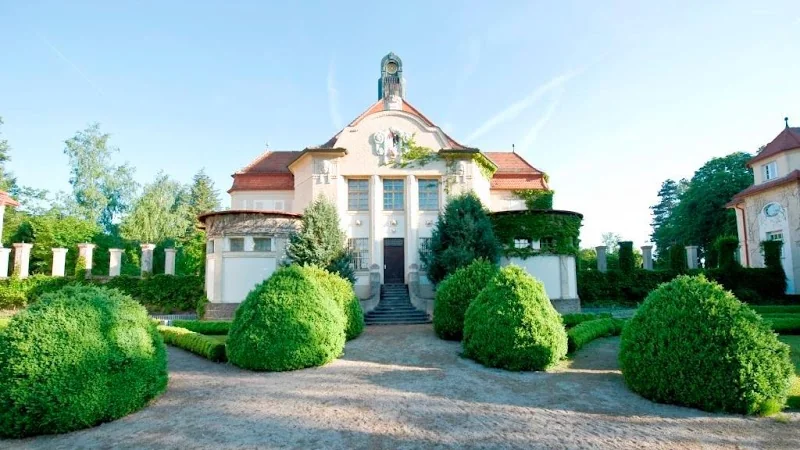
Inquiries about photos are usually less about pure aesthetics and more about orientation: What does the site look like, how large is it, and how does the location feel in everyday life? The District Hospital Ansbach answers these questions on several levels. The official location page features a header image and additional images that visually contextualize the building and its surroundings. Additionally, the location information of the hospital shows a detailed site profile with individual buildings, functional areas, and orientation points. Recognizable facilities include, among others, the patient admission center, therapy center, Café Mosaik, the event hall, the church, radiology, sports therapy, various wards, and the outpatient department. For users searching for photos, it is especially important that the clinic does not consist solely of an anonymous building block but rather of a developed area with multiple buildings and functional zones. ([bezirkskliniken-mfr.de](https://www.bezirkskliniken-mfr.de/standorte-und-kliniken/ansbach/klinik-fuer-psychiatrie-psychotherapie-und-psychosomatik/))
The location information explicitly describes the grounds as park-like. The well-maintained facility offers tranquility and relaxation and invites walks. This is particularly important for a psychiatric clinic because the environment can have a significant impact on the experience of stay, visits, and recovery. The site also features a café and a church, which expands the everyday infrastructure. Café Mosaik in the therapy center offers snacks, hot meals, drinks, daily necessities, an ATM, and free Wi-Fi. The church is open to all; regular services are held there on Sundays and holidays, and there are often art exhibitions or concerts. Therefore, those viewing pictures of the District Hospital Ansbach see not just a hospital but a functionally organized area with quality of stay and complementary offerings. This mix makes the location search interesting for many people, as photos are usually meant to convey a realistic impression, not just a representative motif. ([bezirkskliniken-mfr.de](https://www.bezirkskliniken-mfr.de/fileadmin/user_upload/standorte/ansbach/standortinfo-ansbach-1125.pdf))
The organization of the buildings also provides orientation. The current site plan sorts the most important areas by building numbers and functions. The Clinic for Psychiatry, Psychotherapy, and Psychosomatics is distributed across buildings 1 and 2 for General Psychiatry, building 7 for addiction rehabilitation, building 22 for psychosomatics, building 3 for alcohol and medication detoxification, building 15/0 for geriatric psychiatry, building 26 for the depression ward, building 19 for the day clinic, and building 30 for the outpatient department. Such information is enormously useful for visitors because it shortens the path on the premises and facilitates orientation in advance. Those searching for photos often also want to know whether the facility appears clear and organized. The official plans and images convey exactly that: a large but clearly structured hospital area with its own infrastructure, multiple specialties, and recognizable points of contact. ([bezirkskliniken-mfr.de](https://www.bezirkskliniken-mfr.de/fileadmin/user_upload/standorte/ansbach/standortinfo-ansbach-1125.pdf))
History and Background of the Ansbach Location
The history of the District Hospital Ansbach goes back a long way and is central to the identity of the location. The official history page of the District Hospitals Middle Franconia names June 28, 1902, as the opening of the then district insane asylum Ansbach. On May 1, 1902, the first thirty men were admitted, followed by the first thirty women the next day. The site was then located outside the city and offered self-sufficiency facilities such as a farm or a laundry. In 1911, the institution was renamed a healing and care institution. In 1948, a neurological department was added, and in the 1950s, psychopharmaceuticals improved care; in 1966, it was renamed District Hospital, and in the 1970s, psychiatrists and social workers intensified the development towards a specialized clinic. In 2002, the facility was named District Hospital Ansbach, and in 2005, it became part of the municipal enterprise District Hospitals Middle Franconia. This development shows how the location has transformed from a historical institution into a modern specialized hospital. ([bezirkskliniken-mfr.de](https://www.bezirkskliniken-mfr.de/ueber-uns/geschichte/geschichte-der-kliniken/?utm_source=openai))
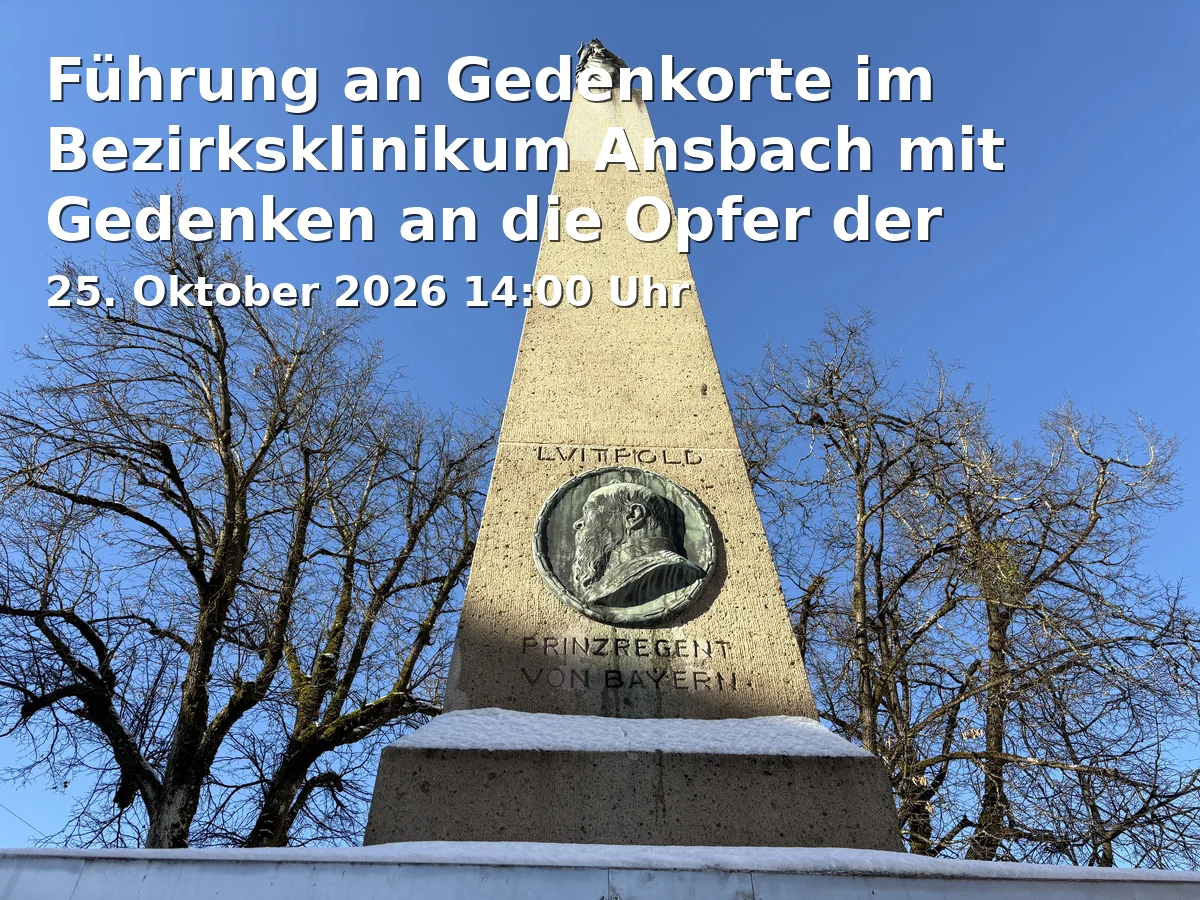
For today's classification, it is important to note that the history of the location consists not only of architectural development but also includes a difficult past. The official memorial brochure recalls the time of National Socialism, the T4 action, the children's specialty department, and the victims of malnutrition and violence. The brochure describes that between 1940 and 1941, almost 900 mentally ill and intellectually disabled people were deported to killing institutions. In 1941, a children's specialty department was opened in Ansbach, where half of the 306 children died. Additionally, between 1943 and mid-1945, over 1200 patients died as a result of inadequate nutrition. These facts are part of the historical identity of the place and explain why there are several memorial sites on the premises and an engagement with the past. For SEO inquiries related to history or background, this is relevant because visitors want to understand not only the current clinic but also the historical context. ([bezirkskliniken-mfr.de](https://www.bezirkskliniken-mfr.de/fileadmin/user_upload/pdf/ansbach/gedenkorte-bezirksklinikum-ansbach.pdf))
Today, the grounds appear very different in many areas than at the beginning of the 20th century. The location information describes park-like tranquility, a café, a church, modern room furnishings, and clearly structured wards. The history page makes it clear that the care has gradually developed into a specialized clinic landscape. The current facility, with its medical specialties, therapy center, day clinic, outpatient department, and complementary facilities, is thus the result of a long process of change. This is particularly important in public perception: The District Hospital Ansbach stands not only for treatment but also for memory, change, and institutional responsibility. Those discovering the location through photos, reviews, or general search terms should therefore know that this is a place with a complex past, modern care function, and clear societal significance. ([bezirkskliniken-mfr.de](https://www.bezirkskliniken-mfr.de/fileadmin/user_upload/standorte/ansbach/standortinfo-ansbach-1125.pdf))
Reviews, Contact, and Practical Information for Patients and Relatives
Inquiries about reviews often revolve around how the location is perceived in everyday life. The official hospital page provides a neutral but useful reference: The page displays a patient satisfaction rate of 86 percent. Such figures do not replace personal decisions but provide additional orientation alongside the usual reviews on platforms. For a serious classification, it is sensible to always connect reviews with official facts: What specialties are available, how is accessibility, what therapy forms are offered, and what does the site look like? This is more important than purely emotional individual comments, especially for a clinic. Those searching for reviews often also want to know how practically the location functions. The official information helps here because it provides concrete information rather than mere impressions. ([bezirkskliniken-mfr.de](https://www.bezirkskliniken-mfr.de/standorte-und-kliniken/ansbach/klinik-fuer-psychiatrie-psychotherapie-und-psychosomatik/))
Regarding the contact page, the clinic provides the central phone numbers and notes that the central office is reachable around the clock. For inpatient admissions, there is an admission center, and the general contact address of the clinic is also provided. Additionally, the page states that visits are possible daily, but one should inquire on the ward. This is an important detail for relatives because visiting hours may vary depending on the area. Furthermore, the location information shows the facilities on the premises, including patient management, therapy center, church, café, parking lots, and the essential wards. Therefore, those searching for reviews, contacts, or practical information receive not only an assessment but also reliable points of contact for the actual visit. ([bezirkskliniken-mfr.de](https://www.bezirkskliniken-mfr.de/standorte-und-kliniken/ansbach/klinik-fuer-psychiatrie-psychotherapie-und-psychosomatik/))
Practically speaking, the District Hospital Ansbach is well prepared for the typical questions that arise during a hospital search: How do I get there? Where do I park? Are there day clinic and outpatient services? What specialties are available on-site? How is the historical and spatial classification? Through the combination of inpatient treatment, day clinic, outpatient department, and specialized areas such as addiction medicine or geriatric psychiatry, the facility can cover different needs. The official page also emphasizes that the team keeps both those affected and their relatives in mind. Therefore, those finding the location through search terms like photos, reviews, directions, or psychosomatics should read the information not in isolation but as a whole: a traditional hospital location with modern care, clear site organization, and a consciously designed environment. ([bezirkskliniken-mfr.de](https://www.bezirkskliniken-mfr.de/standorte-und-kliniken/ansbach/klinik-fuer-psychiatrie-psychotherapie-und-psychosomatik/))
Sources:
- District Hospitals Middle Franconia - Clinic for Psychiatry, Psychotherapy, and Psychosomatics at District Hospital Ansbach
- District Hospitals Middle Franconia - General Information District Hospital Ansbach and Sociotherapeutic Residential Home Ansbach
- District Hospitals Middle Franconia - History of the Hospital Locations
- District Hospitals Middle Franconia - Memorial Sites District Hospital Ansbach
Mehr anzeigenWeniger anzeigen
District Hospital Ansbach | Psychiatry & Psychosomatics
The District Hospital Ansbach is a central care facility for people with mental and psychosomatic disorders in Middle Franconia. The Clinic for Psychiatry, Psychotherapy, and Psychosomatics at the Ansbach location operates inpatient, day hospital, and outpatient services, catering to both those affected and their relatives. The site combines medical treatment, structured therapy, aftercare, and practical orientation in a location that does not feel like an anonymous large facility but rather like a developed, self-contained hospital area with clear pathways, its own buildings, and a park-like environment. For many inquiries, this mix is crucial: Those looking for photos, directions, parking, day clinics, outpatient departments, or reviews want to quickly understand what is offered on-site and how to navigate it. This overview is precisely designed for that purpose. The official hospital website describes the services as holistic care for patients from the Middle Franconia region and emphasizes the combination of psychiatric, psychotherapeutic, and psychosomatic treatment with complementary specialties such as addiction medicine and geriatric psychiatry. The site itself is described in the location information as park-like and includes a café, a church, and other facilities that make the stay more manageable. ([bezirkskliniken-mfr.de](https://www.bezirkskliniken-mfr.de/standorte-und-kliniken/ansbach/klinik-fuer-psychiatrie-psychotherapie-und-psychosomatik/))
Location, Directions, and Parking at District Hospital Ansbach
The address of the clinic is Feuchtwanger Str. 38, 91522 Ansbach. This means the District Hospital is located at a clearly identifiable site that can be easily entered into navigation systems for visitors. For public transportation, the official information names Ansbach train station as the starting point. From there, either a taxi ride from the train station square is possible or the bus connection with line 756, which runs from Schlossplatz to the District Hospital stop. This clear public transport connection is particularly important for relatives visiting someone or for people undergoing admission or outpatient treatment, as it facilitates orientation and makes the location accessible even without a personal vehicle. Additionally, the site plan shows a bus stop H as well as the access to the area. ([bezirkskliniken-mfr.de](https://www.bezirkskliniken-mfr.de/fileadmin/user_upload/pdf/ansbach/gedenkorte-bezirksklinikum-ansbach.pdf))
For those arriving by car, there is a visitor parking lot in front of the gate on the premises. This is a practical advantage for a hospital site, as the first point of contact remains clearly visible, and visitors do not have to search long for parking spaces. The location information also notes the area as a spacious, well-maintained facility with a park-like character. This is relevant not only for the general ambiance but also for the layout: The site plan clearly marks the most important buildings and facilities, including the patient admission center, therapy center, Café Mosaik, the event hall, and several functional buildings of various departments. Therefore, those inquiring about directions and parking are often also looking for a quick overview of internal orientation. The official material helps here by not only providing the address but also making the pathways on the premises comprehensible. ([bezirkskliniken-mfr.de](https://www.bezirkskliniken-mfr.de/fileadmin/user_upload/standorte/ansbach/standortinfo-ansbach-1125.pdf))
In practice, this means: The District Hospital Ansbach is neither a hidden back-lot location nor a complicated campus without structure. The clinic is at a fixed address, the bus line 756 connects the area, and a visitor parking lot at the gate creates a comprehensible first contact point. Therefore, those looking for directions, parking, or route descriptions receive here a combination of clear postal location, public transport connection, and site overview. For a medical center, this is particularly relevant because arrival situations are often associated with time pressure, uncertainty, or emotional stress. A clearly readable location and a clear parking situation noticeably relieve pressure in such moments. ([bezirkskliniken-mfr.de](https://www.bezirkskliniken-mfr.de/fileadmin/user_upload/pdf/ansbach/gedenkorte-bezirksklinikum-ansbach.pdf))
Psychiatry, Psychotherapy, and Psychosomatics: Specialties and Treatments
The medical profile of the District Hospital Ansbach is broadly established. The official location page names the main areas as psychiatry, psychotherapy, and psychosomatics, as well as addiction, addiction rehabilitation, and geriatric psychiatry. Additionally, there is a psychiatric day clinic and a psychiatric outpatient department. This is particularly important for inquiries related to the clinic, as the location not only offers classic inpatient care but also enables transitions between inpatient, day hospital, and outpatient treatment. The clinic serves patients from the entire Middle Franconia region and explicitly describes its work as holistic. The page also mentions additional specialties such as general psychiatry, psychotherapy and psychosomatics, addiction medicine, addiction rehabilitation, and geriatric psychiatry. This allows the facility to cover a spectrum ranging from acute crises to long-term stabilization to specialized treatment pathways. ([bezirkskliniken-mfr.de](https://www.bezirkskliniken-mfr.de/standorte-und-kliniken/ansbach/klinik-fuer-psychiatrie-psychotherapie-und-psychosomatik/))
Particularly helpful is the official listing of therapeutic components. These include, among others, individual and group psychotherapy sessions, psychopharmacological treatment, metacognitive therapy for psychoses, trialogical work with trusted caregivers, social skills training, occupational therapy, sports therapy, fitness training, dance and music therapy, mindfulness groups, and social pedagogical counseling. In individual wards, additional methods are added, such as light therapy, wake therapy, biofeedback, relaxation techniques like progressive muscle relaxation or autogenic training, breathing therapy, creative therapy, cognitive training, occupational therapy, spinal gymnastics, and movement baths. This list shows that the clinic does not work with a single standard model but combines medical, psychotherapeutic, and activating offers. This is relevant from an SEO perspective because users often search for terms like psychosomatics, addiction medicine, therapy, day clinic, or outpatient department. From a professional perspective, it is relevant that treatment is oriented towards the respective clinical picture and individual stress levels. ([bezirkskliniken-mfr.de](https://www.bezirkskliniken-mfr.de/standorte-und-kliniken/ansbach/klinik-fuer-psychiatrie-psychotherapie-und-psychosomatik/))
For inquiries focused on addiction and detoxification, the clinic provides clear information. On the premises, there is an inpatient addiction rehabilitation center for adult alcoholics who have already completed detoxification. Additionally, there are wards for alcohol and medication detoxification as well as other specialized treatment areas. This makes it clear that the District Hospital Ansbach not only offers general psychiatric care but also plays an important part in the regional care mandate in the area of addiction disorders. Additionally, geriatric psychiatry plays a central role for older patients. This combination of general psychiatry, addiction medicine, psychosomatics, geriatric psychiatry, and outpatient follow-up treatment makes the location complex and unique for many inquiries. Therefore, those searching for District Hospital Ansbach, psychosomatics, day clinic, or outpatient department are often looking for a place that connects multiple levels of care under one roof. This is precisely what the clinic represents according to the official description. ([bezirkskliniken-mfr.de](https://www.bezirkskliniken-mfr.de/standorte-und-kliniken/ansbach/klinik-fuer-psychiatrie-psychotherapie-und-psychosomatik/))
Photos, Grounds, and Orientation on the Hospital Site
Inquiries about photos are usually less about pure aesthetics and more about orientation: What does the site look like, how large is it, and how does the location feel in everyday life? The District Hospital Ansbach answers these questions on several levels. The official location page features a header image and additional images that visually contextualize the building and its surroundings. Additionally, the location information of the hospital shows a detailed site profile with individual buildings, functional areas, and orientation points. Recognizable facilities include, among others, the patient admission center, therapy center, Café Mosaik, the event hall, the church, radiology, sports therapy, various wards, and the outpatient department. For users searching for photos, it is especially important that the clinic does not consist solely of an anonymous building block but rather of a developed area with multiple buildings and functional zones. ([bezirkskliniken-mfr.de](https://www.bezirkskliniken-mfr.de/standorte-und-kliniken/ansbach/klinik-fuer-psychiatrie-psychotherapie-und-psychosomatik/))
The location information explicitly describes the grounds as park-like. The well-maintained facility offers tranquility and relaxation and invites walks. This is particularly important for a psychiatric clinic because the environment can have a significant impact on the experience of stay, visits, and recovery. The site also features a café and a church, which expands the everyday infrastructure. Café Mosaik in the therapy center offers snacks, hot meals, drinks, daily necessities, an ATM, and free Wi-Fi. The church is open to all; regular services are held there on Sundays and holidays, and there are often art exhibitions or concerts. Therefore, those viewing pictures of the District Hospital Ansbach see not just a hospital but a functionally organized area with quality of stay and complementary offerings. This mix makes the location search interesting for many people, as photos are usually meant to convey a realistic impression, not just a representative motif. ([bezirkskliniken-mfr.de](https://www.bezirkskliniken-mfr.de/fileadmin/user_upload/standorte/ansbach/standortinfo-ansbach-1125.pdf))
The organization of the buildings also provides orientation. The current site plan sorts the most important areas by building numbers and functions. The Clinic for Psychiatry, Psychotherapy, and Psychosomatics is distributed across buildings 1 and 2 for General Psychiatry, building 7 for addiction rehabilitation, building 22 for psychosomatics, building 3 for alcohol and medication detoxification, building 15/0 for geriatric psychiatry, building 26 for the depression ward, building 19 for the day clinic, and building 30 for the outpatient department. Such information is enormously useful for visitors because it shortens the path on the premises and facilitates orientation in advance. Those searching for photos often also want to know whether the facility appears clear and organized. The official plans and images convey exactly that: a large but clearly structured hospital area with its own infrastructure, multiple specialties, and recognizable points of contact. ([bezirkskliniken-mfr.de](https://www.bezirkskliniken-mfr.de/fileadmin/user_upload/standorte/ansbach/standortinfo-ansbach-1125.pdf))
History and Background of the Ansbach Location
The history of the District Hospital Ansbach goes back a long way and is central to the identity of the location. The official history page of the District Hospitals Middle Franconia names June 28, 1902, as the opening of the then district insane asylum Ansbach. On May 1, 1902, the first thirty men were admitted, followed by the first thirty women the next day. The site was then located outside the city and offered self-sufficiency facilities such as a farm or a laundry. In 1911, the institution was renamed a healing and care institution. In 1948, a neurological department was added, and in the 1950s, psychopharmaceuticals improved care; in 1966, it was renamed District Hospital, and in the 1970s, psychiatrists and social workers intensified the development towards a specialized clinic. In 2002, the facility was named District Hospital Ansbach, and in 2005, it became part of the municipal enterprise District Hospitals Middle Franconia. This development shows how the location has transformed from a historical institution into a modern specialized hospital. ([bezirkskliniken-mfr.de](https://www.bezirkskliniken-mfr.de/ueber-uns/geschichte/geschichte-der-kliniken/?utm_source=openai))
For today's classification, it is important to note that the history of the location consists not only of architectural development but also includes a difficult past. The official memorial brochure recalls the time of National Socialism, the T4 action, the children's specialty department, and the victims of malnutrition and violence. The brochure describes that between 1940 and 1941, almost 900 mentally ill and intellectually disabled people were deported to killing institutions. In 1941, a children's specialty department was opened in Ansbach, where half of the 306 children died. Additionally, between 1943 and mid-1945, over 1200 patients died as a result of inadequate nutrition. These facts are part of the historical identity of the place and explain why there are several memorial sites on the premises and an engagement with the past. For SEO inquiries related to history or background, this is relevant because visitors want to understand not only the current clinic but also the historical context. ([bezirkskliniken-mfr.de](https://www.bezirkskliniken-mfr.de/fileadmin/user_upload/pdf/ansbach/gedenkorte-bezirksklinikum-ansbach.pdf))
Today, the grounds appear very different in many areas than at the beginning of the 20th century. The location information describes park-like tranquility, a café, a church, modern room furnishings, and clearly structured wards. The history page makes it clear that the care has gradually developed into a specialized clinic landscape. The current facility, with its medical specialties, therapy center, day clinic, outpatient department, and complementary facilities, is thus the result of a long process of change. This is particularly important in public perception: The District Hospital Ansbach stands not only for treatment but also for memory, change, and institutional responsibility. Those discovering the location through photos, reviews, or general search terms should therefore know that this is a place with a complex past, modern care function, and clear societal significance. ([bezirkskliniken-mfr.de](https://www.bezirkskliniken-mfr.de/fileadmin/user_upload/standorte/ansbach/standortinfo-ansbach-1125.pdf))
Reviews, Contact, and Practical Information for Patients and Relatives
Inquiries about reviews often revolve around how the location is perceived in everyday life. The official hospital page provides a neutral but useful reference: The page displays a patient satisfaction rate of 86 percent. Such figures do not replace personal decisions but provide additional orientation alongside the usual reviews on platforms. For a serious classification, it is sensible to always connect reviews with official facts: What specialties are available, how is accessibility, what therapy forms are offered, and what does the site look like? This is more important than purely emotional individual comments, especially for a clinic. Those searching for reviews often also want to know how practically the location functions. The official information helps here because it provides concrete information rather than mere impressions. ([bezirkskliniken-mfr.de](https://www.bezirkskliniken-mfr.de/standorte-und-kliniken/ansbach/klinik-fuer-psychiatrie-psychotherapie-und-psychosomatik/))
Regarding the contact page, the clinic provides the central phone numbers and notes that the central office is reachable around the clock. For inpatient admissions, there is an admission center, and the general contact address of the clinic is also provided. Additionally, the page states that visits are possible daily, but one should inquire on the ward. This is an important detail for relatives because visiting hours may vary depending on the area. Furthermore, the location information shows the facilities on the premises, including patient management, therapy center, church, café, parking lots, and the essential wards. Therefore, those searching for reviews, contacts, or practical information receive not only an assessment but also reliable points of contact for the actual visit. ([bezirkskliniken-mfr.de](https://www.bezirkskliniken-mfr.de/standorte-und-kliniken/ansbach/klinik-fuer-psychiatrie-psychotherapie-und-psychosomatik/))
Practically speaking, the District Hospital Ansbach is well prepared for the typical questions that arise during a hospital search: How do I get there? Where do I park? Are there day clinic and outpatient services? What specialties are available on-site? How is the historical and spatial classification? Through the combination of inpatient treatment, day clinic, outpatient department, and specialized areas such as addiction medicine or geriatric psychiatry, the facility can cover different needs. The official page also emphasizes that the team keeps both those affected and their relatives in mind. Therefore, those finding the location through search terms like photos, reviews, directions, or psychosomatics should read the information not in isolation but as a whole: a traditional hospital location with modern care, clear site organization, and a consciously designed environment. ([bezirkskliniken-mfr.de](https://www.bezirkskliniken-mfr.de/standorte-und-kliniken/ansbach/klinik-fuer-psychiatrie-psychotherapie-und-psychosomatik/))
Sources:
- District Hospitals Middle Franconia - Clinic for Psychiatry, Psychotherapy, and Psychosomatics at District Hospital Ansbach
- District Hospitals Middle Franconia - General Information District Hospital Ansbach and Sociotherapeutic Residential Home Ansbach
- District Hospitals Middle Franconia - History of the Hospital Locations
- District Hospitals Middle Franconia - Memorial Sites District Hospital Ansbach
District Hospital Ansbach | Psychiatry & Psychosomatics
The District Hospital Ansbach is a central care facility for people with mental and psychosomatic disorders in Middle Franconia. The Clinic for Psychiatry, Psychotherapy, and Psychosomatics at the Ansbach location operates inpatient, day hospital, and outpatient services, catering to both those affected and their relatives. The site combines medical treatment, structured therapy, aftercare, and practical orientation in a location that does not feel like an anonymous large facility but rather like a developed, self-contained hospital area with clear pathways, its own buildings, and a park-like environment. For many inquiries, this mix is crucial: Those looking for photos, directions, parking, day clinics, outpatient departments, or reviews want to quickly understand what is offered on-site and how to navigate it. This overview is precisely designed for that purpose. The official hospital website describes the services as holistic care for patients from the Middle Franconia region and emphasizes the combination of psychiatric, psychotherapeutic, and psychosomatic treatment with complementary specialties such as addiction medicine and geriatric psychiatry. The site itself is described in the location information as park-like and includes a café, a church, and other facilities that make the stay more manageable. ([bezirkskliniken-mfr.de](https://www.bezirkskliniken-mfr.de/standorte-und-kliniken/ansbach/klinik-fuer-psychiatrie-psychotherapie-und-psychosomatik/))
Location, Directions, and Parking at District Hospital Ansbach
The address of the clinic is Feuchtwanger Str. 38, 91522 Ansbach. This means the District Hospital is located at a clearly identifiable site that can be easily entered into navigation systems for visitors. For public transportation, the official information names Ansbach train station as the starting point. From there, either a taxi ride from the train station square is possible or the bus connection with line 756, which runs from Schlossplatz to the District Hospital stop. This clear public transport connection is particularly important for relatives visiting someone or for people undergoing admission or outpatient treatment, as it facilitates orientation and makes the location accessible even without a personal vehicle. Additionally, the site plan shows a bus stop H as well as the access to the area. ([bezirkskliniken-mfr.de](https://www.bezirkskliniken-mfr.de/fileadmin/user_upload/pdf/ansbach/gedenkorte-bezirksklinikum-ansbach.pdf))
For those arriving by car, there is a visitor parking lot in front of the gate on the premises. This is a practical advantage for a hospital site, as the first point of contact remains clearly visible, and visitors do not have to search long for parking spaces. The location information also notes the area as a spacious, well-maintained facility with a park-like character. This is relevant not only for the general ambiance but also for the layout: The site plan clearly marks the most important buildings and facilities, including the patient admission center, therapy center, Café Mosaik, the event hall, and several functional buildings of various departments. Therefore, those inquiring about directions and parking are often also looking for a quick overview of internal orientation. The official material helps here by not only providing the address but also making the pathways on the premises comprehensible. ([bezirkskliniken-mfr.de](https://www.bezirkskliniken-mfr.de/fileadmin/user_upload/standorte/ansbach/standortinfo-ansbach-1125.pdf))
In practice, this means: The District Hospital Ansbach is neither a hidden back-lot location nor a complicated campus without structure. The clinic is at a fixed address, the bus line 756 connects the area, and a visitor parking lot at the gate creates a comprehensible first contact point. Therefore, those looking for directions, parking, or route descriptions receive here a combination of clear postal location, public transport connection, and site overview. For a medical center, this is particularly relevant because arrival situations are often associated with time pressure, uncertainty, or emotional stress. A clearly readable location and a clear parking situation noticeably relieve pressure in such moments. ([bezirkskliniken-mfr.de](https://www.bezirkskliniken-mfr.de/fileadmin/user_upload/pdf/ansbach/gedenkorte-bezirksklinikum-ansbach.pdf))
Psychiatry, Psychotherapy, and Psychosomatics: Specialties and Treatments
The medical profile of the District Hospital Ansbach is broadly established. The official location page names the main areas as psychiatry, psychotherapy, and psychosomatics, as well as addiction, addiction rehabilitation, and geriatric psychiatry. Additionally, there is a psychiatric day clinic and a psychiatric outpatient department. This is particularly important for inquiries related to the clinic, as the location not only offers classic inpatient care but also enables transitions between inpatient, day hospital, and outpatient treatment. The clinic serves patients from the entire Middle Franconia region and explicitly describes its work as holistic. The page also mentions additional specialties such as general psychiatry, psychotherapy and psychosomatics, addiction medicine, addiction rehabilitation, and geriatric psychiatry. This allows the facility to cover a spectrum ranging from acute crises to long-term stabilization to specialized treatment pathways. ([bezirkskliniken-mfr.de](https://www.bezirkskliniken-mfr.de/standorte-und-kliniken/ansbach/klinik-fuer-psychiatrie-psychotherapie-und-psychosomatik/))
Particularly helpful is the official listing of therapeutic components. These include, among others, individual and group psychotherapy sessions, psychopharmacological treatment, metacognitive therapy for psychoses, trialogical work with trusted caregivers, social skills training, occupational therapy, sports therapy, fitness training, dance and music therapy, mindfulness groups, and social pedagogical counseling. In individual wards, additional methods are added, such as light therapy, wake therapy, biofeedback, relaxation techniques like progressive muscle relaxation or autogenic training, breathing therapy, creative therapy, cognitive training, occupational therapy, spinal gymnastics, and movement baths. This list shows that the clinic does not work with a single standard model but combines medical, psychotherapeutic, and activating offers. This is relevant from an SEO perspective because users often search for terms like psychosomatics, addiction medicine, therapy, day clinic, or outpatient department. From a professional perspective, it is relevant that treatment is oriented towards the respective clinical picture and individual stress levels. ([bezirkskliniken-mfr.de](https://www.bezirkskliniken-mfr.de/standorte-und-kliniken/ansbach/klinik-fuer-psychiatrie-psychotherapie-und-psychosomatik/))
For inquiries focused on addiction and detoxification, the clinic provides clear information. On the premises, there is an inpatient addiction rehabilitation center for adult alcoholics who have already completed detoxification. Additionally, there are wards for alcohol and medication detoxification as well as other specialized treatment areas. This makes it clear that the District Hospital Ansbach not only offers general psychiatric care but also plays an important part in the regional care mandate in the area of addiction disorders. Additionally, geriatric psychiatry plays a central role for older patients. This combination of general psychiatry, addiction medicine, psychosomatics, geriatric psychiatry, and outpatient follow-up treatment makes the location complex and unique for many inquiries. Therefore, those searching for District Hospital Ansbach, psychosomatics, day clinic, or outpatient department are often looking for a place that connects multiple levels of care under one roof. This is precisely what the clinic represents according to the official description. ([bezirkskliniken-mfr.de](https://www.bezirkskliniken-mfr.de/standorte-und-kliniken/ansbach/klinik-fuer-psychiatrie-psychotherapie-und-psychosomatik/))
Photos, Grounds, and Orientation on the Hospital Site
Inquiries about photos are usually less about pure aesthetics and more about orientation: What does the site look like, how large is it, and how does the location feel in everyday life? The District Hospital Ansbach answers these questions on several levels. The official location page features a header image and additional images that visually contextualize the building and its surroundings. Additionally, the location information of the hospital shows a detailed site profile with individual buildings, functional areas, and orientation points. Recognizable facilities include, among others, the patient admission center, therapy center, Café Mosaik, the event hall, the church, radiology, sports therapy, various wards, and the outpatient department. For users searching for photos, it is especially important that the clinic does not consist solely of an anonymous building block but rather of a developed area with multiple buildings and functional zones. ([bezirkskliniken-mfr.de](https://www.bezirkskliniken-mfr.de/standorte-und-kliniken/ansbach/klinik-fuer-psychiatrie-psychotherapie-und-psychosomatik/))
The location information explicitly describes the grounds as park-like. The well-maintained facility offers tranquility and relaxation and invites walks. This is particularly important for a psychiatric clinic because the environment can have a significant impact on the experience of stay, visits, and recovery. The site also features a café and a church, which expands the everyday infrastructure. Café Mosaik in the therapy center offers snacks, hot meals, drinks, daily necessities, an ATM, and free Wi-Fi. The church is open to all; regular services are held there on Sundays and holidays, and there are often art exhibitions or concerts. Therefore, those viewing pictures of the District Hospital Ansbach see not just a hospital but a functionally organized area with quality of stay and complementary offerings. This mix makes the location search interesting for many people, as photos are usually meant to convey a realistic impression, not just a representative motif. ([bezirkskliniken-mfr.de](https://www.bezirkskliniken-mfr.de/fileadmin/user_upload/standorte/ansbach/standortinfo-ansbach-1125.pdf))
The organization of the buildings also provides orientation. The current site plan sorts the most important areas by building numbers and functions. The Clinic for Psychiatry, Psychotherapy, and Psychosomatics is distributed across buildings 1 and 2 for General Psychiatry, building 7 for addiction rehabilitation, building 22 for psychosomatics, building 3 for alcohol and medication detoxification, building 15/0 for geriatric psychiatry, building 26 for the depression ward, building 19 for the day clinic, and building 30 for the outpatient department. Such information is enormously useful for visitors because it shortens the path on the premises and facilitates orientation in advance. Those searching for photos often also want to know whether the facility appears clear and organized. The official plans and images convey exactly that: a large but clearly structured hospital area with its own infrastructure, multiple specialties, and recognizable points of contact. ([bezirkskliniken-mfr.de](https://www.bezirkskliniken-mfr.de/fileadmin/user_upload/standorte/ansbach/standortinfo-ansbach-1125.pdf))
History and Background of the Ansbach Location
The history of the District Hospital Ansbach goes back a long way and is central to the identity of the location. The official history page of the District Hospitals Middle Franconia names June 28, 1902, as the opening of the then district insane asylum Ansbach. On May 1, 1902, the first thirty men were admitted, followed by the first thirty women the next day. The site was then located outside the city and offered self-sufficiency facilities such as a farm or a laundry. In 1911, the institution was renamed a healing and care institution. In 1948, a neurological department was added, and in the 1950s, psychopharmaceuticals improved care; in 1966, it was renamed District Hospital, and in the 1970s, psychiatrists and social workers intensified the development towards a specialized clinic. In 2002, the facility was named District Hospital Ansbach, and in 2005, it became part of the municipal enterprise District Hospitals Middle Franconia. This development shows how the location has transformed from a historical institution into a modern specialized hospital. ([bezirkskliniken-mfr.de](https://www.bezirkskliniken-mfr.de/ueber-uns/geschichte/geschichte-der-kliniken/?utm_source=openai))
For today's classification, it is important to note that the history of the location consists not only of architectural development but also includes a difficult past. The official memorial brochure recalls the time of National Socialism, the T4 action, the children's specialty department, and the victims of malnutrition and violence. The brochure describes that between 1940 and 1941, almost 900 mentally ill and intellectually disabled people were deported to killing institutions. In 1941, a children's specialty department was opened in Ansbach, where half of the 306 children died. Additionally, between 1943 and mid-1945, over 1200 patients died as a result of inadequate nutrition. These facts are part of the historical identity of the place and explain why there are several memorial sites on the premises and an engagement with the past. For SEO inquiries related to history or background, this is relevant because visitors want to understand not only the current clinic but also the historical context. ([bezirkskliniken-mfr.de](https://www.bezirkskliniken-mfr.de/fileadmin/user_upload/pdf/ansbach/gedenkorte-bezirksklinikum-ansbach.pdf))
Today, the grounds appear very different in many areas than at the beginning of the 20th century. The location information describes park-like tranquility, a café, a church, modern room furnishings, and clearly structured wards. The history page makes it clear that the care has gradually developed into a specialized clinic landscape. The current facility, with its medical specialties, therapy center, day clinic, outpatient department, and complementary facilities, is thus the result of a long process of change. This is particularly important in public perception: The District Hospital Ansbach stands not only for treatment but also for memory, change, and institutional responsibility. Those discovering the location through photos, reviews, or general search terms should therefore know that this is a place with a complex past, modern care function, and clear societal significance. ([bezirkskliniken-mfr.de](https://www.bezirkskliniken-mfr.de/fileadmin/user_upload/standorte/ansbach/standortinfo-ansbach-1125.pdf))
Reviews, Contact, and Practical Information for Patients and Relatives
Inquiries about reviews often revolve around how the location is perceived in everyday life. The official hospital page provides a neutral but useful reference: The page displays a patient satisfaction rate of 86 percent. Such figures do not replace personal decisions but provide additional orientation alongside the usual reviews on platforms. For a serious classification, it is sensible to always connect reviews with official facts: What specialties are available, how is accessibility, what therapy forms are offered, and what does the site look like? This is more important than purely emotional individual comments, especially for a clinic. Those searching for reviews often also want to know how practically the location functions. The official information helps here because it provides concrete information rather than mere impressions. ([bezirkskliniken-mfr.de](https://www.bezirkskliniken-mfr.de/standorte-und-kliniken/ansbach/klinik-fuer-psychiatrie-psychotherapie-und-psychosomatik/))
Regarding the contact page, the clinic provides the central phone numbers and notes that the central office is reachable around the clock. For inpatient admissions, there is an admission center, and the general contact address of the clinic is also provided. Additionally, the page states that visits are possible daily, but one should inquire on the ward. This is an important detail for relatives because visiting hours may vary depending on the area. Furthermore, the location information shows the facilities on the premises, including patient management, therapy center, church, café, parking lots, and the essential wards. Therefore, those searching for reviews, contacts, or practical information receive not only an assessment but also reliable points of contact for the actual visit. ([bezirkskliniken-mfr.de](https://www.bezirkskliniken-mfr.de/standorte-und-kliniken/ansbach/klinik-fuer-psychiatrie-psychotherapie-und-psychosomatik/))
Practically speaking, the District Hospital Ansbach is well prepared for the typical questions that arise during a hospital search: How do I get there? Where do I park? Are there day clinic and outpatient services? What specialties are available on-site? How is the historical and spatial classification? Through the combination of inpatient treatment, day clinic, outpatient department, and specialized areas such as addiction medicine or geriatric psychiatry, the facility can cover different needs. The official page also emphasizes that the team keeps both those affected and their relatives in mind. Therefore, those finding the location through search terms like photos, reviews, directions, or psychosomatics should read the information not in isolation but as a whole: a traditional hospital location with modern care, clear site organization, and a consciously designed environment. ([bezirkskliniken-mfr.de](https://www.bezirkskliniken-mfr.de/standorte-und-kliniken/ansbach/klinik-fuer-psychiatrie-psychotherapie-und-psychosomatik/))
Sources:
- District Hospitals Middle Franconia - Clinic for Psychiatry, Psychotherapy, and Psychosomatics at District Hospital Ansbach
- District Hospitals Middle Franconia - General Information District Hospital Ansbach and Sociotherapeutic Residential Home Ansbach
- District Hospitals Middle Franconia - History of the Hospital Locations
- District Hospitals Middle Franconia - Memorial Sites District Hospital Ansbach
Frequently Asked Questions
Reviews
No reviews found