
Ansbach
Johann-Sebastian-Bach-Platz, 91522 Ansbach, Deutschland
Johann-Sebastian-Bach-Platz Ansbach | Old Town & Parking
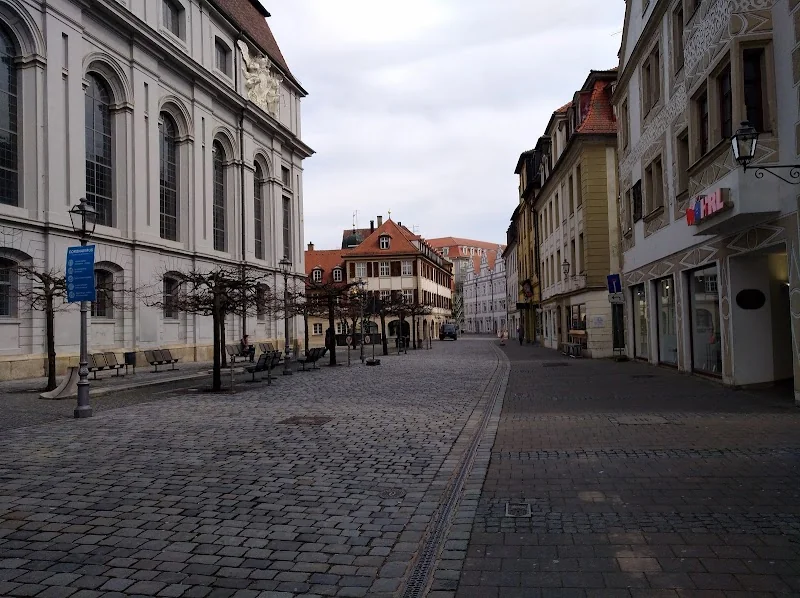
The Johann-Sebastian-Bach-Platz is one of the most significant landmarks in the Ansbach Old Town and much more than just an address in the center. Those who arrive here find themselves in an area where city history, administration, culture, gastronomy, and events are closely intertwined. The city of Ansbach describes the town hall at the square as located right in the heart of the Old Town, and this location makes the place so valuable for visitors: From here, the most important paths of the city center can be easily accessed on foot, without the need for long journeys or complicated detours. The square thus serves as a natural starting point for a city stroll, a visit to the Tourist Information, market days, and festivals that continually enliven the center. At the same time, the square is situated in a historical environment characterized by baroque and ecclesiastical buildings that visibly showcase the typical character of Ansbach. For inquiries related to Johann-Sebastian-Bach-Platz Ansbach, parking, town hall, Old Town Festival, or farmers' market, this place is therefore a central hub of the city. ([tourismus-ansbach.de](https://www.tourismus-ansbach.de/service/tourist-info))
Location and Orientation at Johann-Sebastian-Bach-Platz
The location of Johann-Sebastian-Bach-Platz is one of the most important reasons why the square is relevant in everyday life and for visitors alike. The official tourism information emphasizes that the town hall is located directly in the heart of the Old Town, and the Baroque Old Town side of the city explains that between St. Gumbertus and St. Johannis lie the important buildings for the city and the region. These include the nearly 500-year-old town hall and the opposite city hall. This classification shows that the square is not isolated but part of a historical urban structure where administrative functions, sacred architecture, and urban life have developed over centuries. Walking along here, one experiences not just a geographical point but an urban connection between past and present. This mixture makes Ansbach fundamentally interesting: The city is baroque in character but has remained lively and practical. The Johann-Sebastian-Bach-Platz thus functions as a hinge between the most important sights, market areas, and typical paths through the city center. This is a great advantage for anyone wanting to explore Ansbach on foot, as many destinations can be reached with short distances. ([tourismus-ansbach.de](https://www.tourismus-ansbach.de/service/tourist-info))
For orientation, it is also important to note that the square is located in an area that offers many immediately recognizable landmarks for visitors. The Baroque Old Town side names St. Gumbertus, St. Johannis, the Court Chancellery, the town hall, and the city hall as defining points of this historical city center. The Tourist Information at Johann-Sebastian-Bach-Platz 1 is also a clear anchor point: Those looking for the square find not only an address but also a functional access to the entire Old Town. In practice, this means that one arrives well here to orient oneself, start tours, or spontaneously dive into the Old Town. The square is thus particularly interesting for users searching for Johann Sebastian Bach Platz Ansbach, for the exact address, or for sights in the immediate vicinity. The real strength of this place lies in its density: In a small area, historical architecture, urban administration, tourist services, and cultural uses come together. This is precisely what creates the atmosphere that makes Ansbach's Old Town appear so compact and versatile. ([tourismus-ansbach.de](https://www.tourismus-ansbach.de/service/tourist-info))
Town Hall, Tourist Information, and Historical Significance
The town hall is the central building at Johann-Sebastian-Bach-Platz and a key to understanding the place. According to the official tourism site, it was built in 1532 by the master builder Sixtus Kornburger. The city refers to it as the most significant building in Gothic style in Ansbach. Particularly noteworthy is that the ground floor can be accessed from both Martin-Luther-Platz and Johann-Sebastian-Bach-Platz. This makes the building not only architecturally interesting but also functional: It connects two important sides of the city center. The AKuT is located on the ground floor, and the meeting room of the city council is on the second floor. Thus, the building exemplifies the connection between historical substance and current use. The fact that the town hall was acquired by the city in 1925 further underscores its significance as a public building with a long urban history. Those interested in the Old Town, history, and urban continuity will find one of Ansbach's most important anchor points here. Especially for visitors searching for Town Hall Ansbach or Johann-Sebastian-Bach-Platz 1, the building is a central part of the address and the identity of the square. ([tourismus-ansbach.de](https://www.tourismus-ansbach.de/ansbach-erleben/sehenswuerdigkeiten/stadthaus))
This town hall also houses the Tourist Information of the city of Ansbach. The official site explains that it provides information about the city's history and city tours and that the town hall offers a certified Tourist Information as well as a free toilet and a refill station for additional services. This is particularly practical for a visit, as one has not only an information point but also a very everyday accessible contact point right in the Old Town. This is especially valuable for day visitors, families, or culture enthusiasts who want to spend a few spontaneous hours in Ansbach. Those with questions about tours, sights, or the layout of the Old Town will find a direct contact person here. The location at Johann-Sebastian-Bach-Platz 1 also makes the Tourist Information easy to find and a natural starting point for anyone visiting Ansbach for the first time. Especially from an SEO perspective, this combination of address, historical building, and tourist function is particularly strong, as it covers many search intents simultaneously: for orientation, for history, for city tours, and for practical visitor information. ([tourismus-ansbach.de](https://www.tourismus-ansbach.de/service/tourist-info))
Parking, Access, and Short Distances in the City Center
For practical planning, the topic of parking at Johann-Sebastian-Bach-Platz is particularly important. The city of Ansbach lists the square in its parking overview as part of Zone 3. There, a maximum parking duration of 3 hours applies, and the city points out that parking fees must be paid Monday to Friday from 8 a.m. to 6 p.m. and Saturday from 8 a.m. to 2 p.m., while parking is free on Sundays and public holidays. Therefore, anyone wishing to visit the Old Town can generally plan the routes around the square well but should keep the limited parking duration in mind. This is ideal for short errands, market visits, or a city stroll, but for longer stays, the closer parking areas and garages are recommended. Options mentioned by the city include, among others, Rezatparkplatz East and Center, Reitbahn, Karlsplatz, Promenade, and other areas in the city center. Thus, Johann-Sebastian-Bach-Platz is very well integrated into the city's parking system without being a large, car-centric area itself. This is an advantage for visitors, as the Old Town retains its walkable quality. ([ansbach.de](https://www.ansbach.de/B%C3%BCrger/%C3%96PNV-Verkehr/Parken?utm_source=openai))
Particularly useful are the specific nearby parking options that the tourism site indicates. The Altstadt/Mühlbach parking garage, with 233 spaces, is located close to the center and offers a maximum parking duration of 3 days; the fees are clearly displayed there, including daily maximum fees and night tariffs. Also mentioned are, among others, the Bahnhof parking garage, the Brücken-Center parking garage, the Karlsplatz parking lot with 47 spaces, and the Hofwiese / Orangerie / Conference Center Onoldia parking lot. For visitors, this means: Those aiming for Johann-Sebastian-Bach-Platz have several options depending on their length of stay, destination, and personal preference. The city center is designed so that one can easily walk from these areas. Especially because the square is located in the middle of the Old Town, it is often more sensible to park a bit outside and use the short distances rather than driving directly into the tightest historical areas. This also fits the structure of the entire city center, which the tourism site describes as a compact, walkable environment with short distances. ([tourismus-ansbach.de](https://www.tourismus-ansbach.de/detail/id%3D6661800ccb871e135631ec36))
Farmers' Market, Old Town Festival, and Wine Festival at the Square
Johann-Sebastian-Bach-Platz is not only a historical place but also a lively market and event space. The city of Ansbach states that the farmers' market takes place on the Johann-Sebastian-Bach-Platz every first and third Saturday of the month. There, a total of 14 vendors offer their goods, including fruits and vegetables, meat and baked goods, cheese, honey, and eggs from their own agricultural production. On holidays, the market day is moved, and the city also emphasizes that the regional vendors at the square offer additional products such as baked goods, vegetables, wicker goods, wine, cheese, and honey. For visitors, this is a strong signal: The square thrives not only on its historical architecture but also on regular everyday use as a place for regional supply and interaction. Those searching for Farmers' Market Ansbach or Johann-Sebastian-Bach-Platz Market will find a clear, official answer here. This makes the square particularly attractive for those who want to combine city strolls with shopping experiences. ([ansbach.de](https://www.ansbach.de/B%25C3%25BCrger/Nachhaltigkeit-Zukunft/Faire-nachhaltige-Einkaufsm%25C3%25B6glichkeiten/Wochen-und-Bauernmarkt/?utm_source=openai))
Large festivals also take place at the square. For the Old Town Festival 2026, the tourism site names Johann-Sebastian-Bach-Platz as the venue and announces a diverse program with music, children's activities, street art, and culinary offerings from Franconia. The festival runs from June 3 to 7, 2026, and clearly shows how strongly the square is integrated into the city's event life. The official Old Town Festival site adds that the unique backdrop of historical buildings, picturesque alleys, and cozy courtyards serves as a venue and that the pedestrian zone will be only partially accessible during the festival. This illustrates the dual function of the square: In everyday life, a quiet, orderly Old Town location; during events, a lively meeting point with an audience, stages, and culinary diversity. Those interested in events at Johann-Sebastian-Bach-Platz will find one of the most important dates in the Ansbach year here. ([tourismus-ansbach.de](https://www.tourismus-ansbach.de/detail/id%3D662f4e674d908f7166fbee24))
Additionally, the Wine Festival, which was also held at Johann-Sebastian-Bach-Platz, is noteworthy. The city describes the 2nd Ansbach Wine Festival with 30 different Franconian wines from three Franconian winemakers, culinary delights, and daily live music from the wine festival stage. Although such events may vary in individual years, this example clearly shows the role the square can play for the gastronomic and social life of the city. For visitors, this is relevant because the square thus functions not only as an administrative and market space but also as an event area with regional identity. From an SEO perspective, terms like Wine Festival Ansbach, Old Town Festival Ansbach, and Johann-Sebastian-Bach-Platz Event are particularly relevant. The square is a place where Ansbach can be experienced directly as a city of short distances, regional products, and historical backdrops. ([ansbach.de](https://www.ansbach.de/index.php?FID=2595.6281.1&ModID=11&object=tx%2C2595.5&utm_source=openai))
Bach Week, Baroque Old Town, and Cultural Environment
The name of the square is closely linked to the cultural identity of Ansbach. The official city page for Bach Week describes the music festival as the most significant musical event in the city, filling concert venues and churches for ten days every two years and having a tradition since 1948. The central venues include the baroque halls of the city, the grand hall of the residence, the orangery, and the large churches of St. Gumbertus and St. Johannis. For Johann-Sebastian-Bach-Platz, this is particularly important because it lies in the urban space where these cultural and historical references converge. The square is thus not only named after Bach but also stands in a city whose musical profile is strongly shaped by Bach Week. Those wishing to understand Ansbach culturally cannot overlook this connection. Especially for visitors searching for Bach Week Ansbach, Bachplatz, or Culture in Ansbach, a very clear thematic connection arises between the place name, city history, and current use. ([ansbach.de](https://www.ansbach.de/Freizeit-G%C3%A4ste/Kunst-Kultur/Konzerte/Bachwoche?utm_source=openai))
Particularly revealing in this context is also the proximity to St. Gumbertus. The Bach Week website shows that Bach concerts regularly take place there and that the Wiegleb organ plays an outstanding role as part of this environment. The Baroque Old Town side of the city also emphasizes that the organ is indispensable during Bach Week and is considered the largest baroque organ in Franconia. Together with the town hall, the city hall, the court chancellery, and the surrounding alleys, a cultural-historical ensemble emerges that makes Ansbach's Old Town particularly dense and characterful. Johann-Sebastian-Bach-Platz is less an isolated square in this context and more a connecting element between the most important sights. This explains why search queries related to Bach Week, Baroque Old Town, Town Hall, and sights in Ansbach repeatedly refer to the same urban area. Those moving through here navigate an area of the city where music history, governmental architecture, and Old Town life belong together. ([bachwoche.de](https://www.bachwoche.de/en/venues/st-gumbertus-church.html))
Practical Tips for Visit, City Stroll, and Stay
For a successful visit to Johann-Sebastian-Bach-Platz, it is worthwhile to think of the place not just as a single address but as a starting point for a complete Old Town stay. The Tourist Information of the city provides information about the city's history and city tours, along with practical facilities such as a free toilet and refill station in the town hall. This is a real added value, especially for day visitors, as one has a reliable contact point right in the Old Town. Therefore, whether arriving by train, car, or on foot in Ansbach, the square can be very well used as the first stop to orient oneself and then proceed purposefully. Due to its proximity to historical buildings, market areas, and gastronomic offerings, the square is ideal for a mix of information, refreshment, and discovery. The tourism site for the baroque Old Town also emphasizes that one should let oneself drift and discover the hidden, picturesque corners. This works particularly well at Johann-Sebastian-Bach-Platz, as many paths converge here, and the Old Town unfolds very naturally. ([tourismus-ansbach.de](https://www.tourismus-ansbach.de/service/tourist-info))
Visitors to the square also benefit from the immediate proximity to cafés, restaurants, and other urban destinations. The tourism site shows, among other things, offers at the square itself and in the neighboring streets, making the stay uncomplicated and flexible. This is important for visitors who have little time but still seek an authentic Old Town experience. Johann-Sebastian-Bach-Platz is thus excellent for a short break, a market visit on Saturday, a stroll through the baroque Old Town, or as a meeting point before an event. Through its official inclusion in parking zone 3 and its proximity to several parking lots, access remains relatively easy despite the historical city center structure. This combination of good accessibility, cultural density, and urban service makes the square so valuable for Ansbach. Those looking for a place where Ansbach's history, present, and quality of life visibly converge will find exactly that point at Johann-Sebastian-Bach-Platz. ([tourismus-ansbach.de](https://www.tourismus-ansbach.de/detail/id%3D662f4e674d908f7166fbee24))
Sources:
Mehr anzeigenWeniger anzeigen
Johann-Sebastian-Bach-Platz Ansbach | Old Town & Parking
The Johann-Sebastian-Bach-Platz is one of the most significant landmarks in the Ansbach Old Town and much more than just an address in the center. Those who arrive here find themselves in an area where city history, administration, culture, gastronomy, and events are closely intertwined. The city of Ansbach describes the town hall at the square as located right in the heart of the Old Town, and this location makes the place so valuable for visitors: From here, the most important paths of the city center can be easily accessed on foot, without the need for long journeys or complicated detours. The square thus serves as a natural starting point for a city stroll, a visit to the Tourist Information, market days, and festivals that continually enliven the center. At the same time, the square is situated in a historical environment characterized by baroque and ecclesiastical buildings that visibly showcase the typical character of Ansbach. For inquiries related to Johann-Sebastian-Bach-Platz Ansbach, parking, town hall, Old Town Festival, or farmers' market, this place is therefore a central hub of the city. ([tourismus-ansbach.de](https://www.tourismus-ansbach.de/service/tourist-info))
Location and Orientation at Johann-Sebastian-Bach-Platz
The location of Johann-Sebastian-Bach-Platz is one of the most important reasons why the square is relevant in everyday life and for visitors alike. The official tourism information emphasizes that the town hall is located directly in the heart of the Old Town, and the Baroque Old Town side of the city explains that between St. Gumbertus and St. Johannis lie the important buildings for the city and the region. These include the nearly 500-year-old town hall and the opposite city hall. This classification shows that the square is not isolated but part of a historical urban structure where administrative functions, sacred architecture, and urban life have developed over centuries. Walking along here, one experiences not just a geographical point but an urban connection between past and present. This mixture makes Ansbach fundamentally interesting: The city is baroque in character but has remained lively and practical. The Johann-Sebastian-Bach-Platz thus functions as a hinge between the most important sights, market areas, and typical paths through the city center. This is a great advantage for anyone wanting to explore Ansbach on foot, as many destinations can be reached with short distances. ([tourismus-ansbach.de](https://www.tourismus-ansbach.de/service/tourist-info))
For orientation, it is also important to note that the square is located in an area that offers many immediately recognizable landmarks for visitors. The Baroque Old Town side names St. Gumbertus, St. Johannis, the Court Chancellery, the town hall, and the city hall as defining points of this historical city center. The Tourist Information at Johann-Sebastian-Bach-Platz 1 is also a clear anchor point: Those looking for the square find not only an address but also a functional access to the entire Old Town. In practice, this means that one arrives well here to orient oneself, start tours, or spontaneously dive into the Old Town. The square is thus particularly interesting for users searching for Johann Sebastian Bach Platz Ansbach, for the exact address, or for sights in the immediate vicinity. The real strength of this place lies in its density: In a small area, historical architecture, urban administration, tourist services, and cultural uses come together. This is precisely what creates the atmosphere that makes Ansbach's Old Town appear so compact and versatile. ([tourismus-ansbach.de](https://www.tourismus-ansbach.de/service/tourist-info))
Town Hall, Tourist Information, and Historical Significance
The town hall is the central building at Johann-Sebastian-Bach-Platz and a key to understanding the place. According to the official tourism site, it was built in 1532 by the master builder Sixtus Kornburger. The city refers to it as the most significant building in Gothic style in Ansbach. Particularly noteworthy is that the ground floor can be accessed from both Martin-Luther-Platz and Johann-Sebastian-Bach-Platz. This makes the building not only architecturally interesting but also functional: It connects two important sides of the city center. The AKuT is located on the ground floor, and the meeting room of the city council is on the second floor. Thus, the building exemplifies the connection between historical substance and current use. The fact that the town hall was acquired by the city in 1925 further underscores its significance as a public building with a long urban history. Those interested in the Old Town, history, and urban continuity will find one of Ansbach's most important anchor points here. Especially for visitors searching for Town Hall Ansbach or Johann-Sebastian-Bach-Platz 1, the building is a central part of the address and the identity of the square. ([tourismus-ansbach.de](https://www.tourismus-ansbach.de/ansbach-erleben/sehenswuerdigkeiten/stadthaus))
This town hall also houses the Tourist Information of the city of Ansbach. The official site explains that it provides information about the city's history and city tours and that the town hall offers a certified Tourist Information as well as a free toilet and a refill station for additional services. This is particularly practical for a visit, as one has not only an information point but also a very everyday accessible contact point right in the Old Town. This is especially valuable for day visitors, families, or culture enthusiasts who want to spend a few spontaneous hours in Ansbach. Those with questions about tours, sights, or the layout of the Old Town will find a direct contact person here. The location at Johann-Sebastian-Bach-Platz 1 also makes the Tourist Information easy to find and a natural starting point for anyone visiting Ansbach for the first time. Especially from an SEO perspective, this combination of address, historical building, and tourist function is particularly strong, as it covers many search intents simultaneously: for orientation, for history, for city tours, and for practical visitor information. ([tourismus-ansbach.de](https://www.tourismus-ansbach.de/service/tourist-info))
Parking, Access, and Short Distances in the City Center
For practical planning, the topic of parking at Johann-Sebastian-Bach-Platz is particularly important. The city of Ansbach lists the square in its parking overview as part of Zone 3. There, a maximum parking duration of 3 hours applies, and the city points out that parking fees must be paid Monday to Friday from 8 a.m. to 6 p.m. and Saturday from 8 a.m. to 2 p.m., while parking is free on Sundays and public holidays. Therefore, anyone wishing to visit the Old Town can generally plan the routes around the square well but should keep the limited parking duration in mind. This is ideal for short errands, market visits, or a city stroll, but for longer stays, the closer parking areas and garages are recommended. Options mentioned by the city include, among others, Rezatparkplatz East and Center, Reitbahn, Karlsplatz, Promenade, and other areas in the city center. Thus, Johann-Sebastian-Bach-Platz is very well integrated into the city's parking system without being a large, car-centric area itself. This is an advantage for visitors, as the Old Town retains its walkable quality. ([ansbach.de](https://www.ansbach.de/B%C3%BCrger/%C3%96PNV-Verkehr/Parken?utm_source=openai))
Particularly useful are the specific nearby parking options that the tourism site indicates. The Altstadt/Mühlbach parking garage, with 233 spaces, is located close to the center and offers a maximum parking duration of 3 days; the fees are clearly displayed there, including daily maximum fees and night tariffs. Also mentioned are, among others, the Bahnhof parking garage, the Brücken-Center parking garage, the Karlsplatz parking lot with 47 spaces, and the Hofwiese / Orangerie / Conference Center Onoldia parking lot. For visitors, this means: Those aiming for Johann-Sebastian-Bach-Platz have several options depending on their length of stay, destination, and personal preference. The city center is designed so that one can easily walk from these areas. Especially because the square is located in the middle of the Old Town, it is often more sensible to park a bit outside and use the short distances rather than driving directly into the tightest historical areas. This also fits the structure of the entire city center, which the tourism site describes as a compact, walkable environment with short distances. ([tourismus-ansbach.de](https://www.tourismus-ansbach.de/detail/id%3D6661800ccb871e135631ec36))
Farmers' Market, Old Town Festival, and Wine Festival at the Square
Johann-Sebastian-Bach-Platz is not only a historical place but also a lively market and event space. The city of Ansbach states that the farmers' market takes place on the Johann-Sebastian-Bach-Platz every first and third Saturday of the month. There, a total of 14 vendors offer their goods, including fruits and vegetables, meat and baked goods, cheese, honey, and eggs from their own agricultural production. On holidays, the market day is moved, and the city also emphasizes that the regional vendors at the square offer additional products such as baked goods, vegetables, wicker goods, wine, cheese, and honey. For visitors, this is a strong signal: The square thrives not only on its historical architecture but also on regular everyday use as a place for regional supply and interaction. Those searching for Farmers' Market Ansbach or Johann-Sebastian-Bach-Platz Market will find a clear, official answer here. This makes the square particularly attractive for those who want to combine city strolls with shopping experiences. ([ansbach.de](https://www.ansbach.de/B%25C3%25BCrger/Nachhaltigkeit-Zukunft/Faire-nachhaltige-Einkaufsm%25C3%25B6glichkeiten/Wochen-und-Bauernmarkt/?utm_source=openai))
Large festivals also take place at the square. For the Old Town Festival 2026, the tourism site names Johann-Sebastian-Bach-Platz as the venue and announces a diverse program with music, children's activities, street art, and culinary offerings from Franconia. The festival runs from June 3 to 7, 2026, and clearly shows how strongly the square is integrated into the city's event life. The official Old Town Festival site adds that the unique backdrop of historical buildings, picturesque alleys, and cozy courtyards serves as a venue and that the pedestrian zone will be only partially accessible during the festival. This illustrates the dual function of the square: In everyday life, a quiet, orderly Old Town location; during events, a lively meeting point with an audience, stages, and culinary diversity. Those interested in events at Johann-Sebastian-Bach-Platz will find one of the most important dates in the Ansbach year here. ([tourismus-ansbach.de](https://www.tourismus-ansbach.de/detail/id%3D662f4e674d908f7166fbee24))
Additionally, the Wine Festival, which was also held at Johann-Sebastian-Bach-Platz, is noteworthy. The city describes the 2nd Ansbach Wine Festival with 30 different Franconian wines from three Franconian winemakers, culinary delights, and daily live music from the wine festival stage. Although such events may vary in individual years, this example clearly shows the role the square can play for the gastronomic and social life of the city. For visitors, this is relevant because the square thus functions not only as an administrative and market space but also as an event area with regional identity. From an SEO perspective, terms like Wine Festival Ansbach, Old Town Festival Ansbach, and Johann-Sebastian-Bach-Platz Event are particularly relevant. The square is a place where Ansbach can be experienced directly as a city of short distances, regional products, and historical backdrops. ([ansbach.de](https://www.ansbach.de/index.php?FID=2595.6281.1&ModID=11&object=tx%2C2595.5&utm_source=openai))
Bach Week, Baroque Old Town, and Cultural Environment
The name of the square is closely linked to the cultural identity of Ansbach. The official city page for Bach Week describes the music festival as the most significant musical event in the city, filling concert venues and churches for ten days every two years and having a tradition since 1948. The central venues include the baroque halls of the city, the grand hall of the residence, the orangery, and the large churches of St. Gumbertus and St. Johannis. For Johann-Sebastian-Bach-Platz, this is particularly important because it lies in the urban space where these cultural and historical references converge. The square is thus not only named after Bach but also stands in a city whose musical profile is strongly shaped by Bach Week. Those wishing to understand Ansbach culturally cannot overlook this connection. Especially for visitors searching for Bach Week Ansbach, Bachplatz, or Culture in Ansbach, a very clear thematic connection arises between the place name, city history, and current use. ([ansbach.de](https://www.ansbach.de/Freizeit-G%C3%A4ste/Kunst-Kultur/Konzerte/Bachwoche?utm_source=openai))
Particularly revealing in this context is also the proximity to St. Gumbertus. The Bach Week website shows that Bach concerts regularly take place there and that the Wiegleb organ plays an outstanding role as part of this environment. The Baroque Old Town side of the city also emphasizes that the organ is indispensable during Bach Week and is considered the largest baroque organ in Franconia. Together with the town hall, the city hall, the court chancellery, and the surrounding alleys, a cultural-historical ensemble emerges that makes Ansbach's Old Town particularly dense and characterful. Johann-Sebastian-Bach-Platz is less an isolated square in this context and more a connecting element between the most important sights. This explains why search queries related to Bach Week, Baroque Old Town, Town Hall, and sights in Ansbach repeatedly refer to the same urban area. Those moving through here navigate an area of the city where music history, governmental architecture, and Old Town life belong together. ([bachwoche.de](https://www.bachwoche.de/en/venues/st-gumbertus-church.html))
Practical Tips for Visit, City Stroll, and Stay
For a successful visit to Johann-Sebastian-Bach-Platz, it is worthwhile to think of the place not just as a single address but as a starting point for a complete Old Town stay. The Tourist Information of the city provides information about the city's history and city tours, along with practical facilities such as a free toilet and refill station in the town hall. This is a real added value, especially for day visitors, as one has a reliable contact point right in the Old Town. Therefore, whether arriving by train, car, or on foot in Ansbach, the square can be very well used as the first stop to orient oneself and then proceed purposefully. Due to its proximity to historical buildings, market areas, and gastronomic offerings, the square is ideal for a mix of information, refreshment, and discovery. The tourism site for the baroque Old Town also emphasizes that one should let oneself drift and discover the hidden, picturesque corners. This works particularly well at Johann-Sebastian-Bach-Platz, as many paths converge here, and the Old Town unfolds very naturally. ([tourismus-ansbach.de](https://www.tourismus-ansbach.de/service/tourist-info))
Visitors to the square also benefit from the immediate proximity to cafés, restaurants, and other urban destinations. The tourism site shows, among other things, offers at the square itself and in the neighboring streets, making the stay uncomplicated and flexible. This is important for visitors who have little time but still seek an authentic Old Town experience. Johann-Sebastian-Bach-Platz is thus excellent for a short break, a market visit on Saturday, a stroll through the baroque Old Town, or as a meeting point before an event. Through its official inclusion in parking zone 3 and its proximity to several parking lots, access remains relatively easy despite the historical city center structure. This combination of good accessibility, cultural density, and urban service makes the square so valuable for Ansbach. Those looking for a place where Ansbach's history, present, and quality of life visibly converge will find exactly that point at Johann-Sebastian-Bach-Platz. ([tourismus-ansbach.de](https://www.tourismus-ansbach.de/detail/id%3D662f4e674d908f7166fbee24))
Sources:
Johann-Sebastian-Bach-Platz Ansbach | Old Town & Parking
The Johann-Sebastian-Bach-Platz is one of the most significant landmarks in the Ansbach Old Town and much more than just an address in the center. Those who arrive here find themselves in an area where city history, administration, culture, gastronomy, and events are closely intertwined. The city of Ansbach describes the town hall at the square as located right in the heart of the Old Town, and this location makes the place so valuable for visitors: From here, the most important paths of the city center can be easily accessed on foot, without the need for long journeys or complicated detours. The square thus serves as a natural starting point for a city stroll, a visit to the Tourist Information, market days, and festivals that continually enliven the center. At the same time, the square is situated in a historical environment characterized by baroque and ecclesiastical buildings that visibly showcase the typical character of Ansbach. For inquiries related to Johann-Sebastian-Bach-Platz Ansbach, parking, town hall, Old Town Festival, or farmers' market, this place is therefore a central hub of the city. ([tourismus-ansbach.de](https://www.tourismus-ansbach.de/service/tourist-info))
Location and Orientation at Johann-Sebastian-Bach-Platz
The location of Johann-Sebastian-Bach-Platz is one of the most important reasons why the square is relevant in everyday life and for visitors alike. The official tourism information emphasizes that the town hall is located directly in the heart of the Old Town, and the Baroque Old Town side of the city explains that between St. Gumbertus and St. Johannis lie the important buildings for the city and the region. These include the nearly 500-year-old town hall and the opposite city hall. This classification shows that the square is not isolated but part of a historical urban structure where administrative functions, sacred architecture, and urban life have developed over centuries. Walking along here, one experiences not just a geographical point but an urban connection between past and present. This mixture makes Ansbach fundamentally interesting: The city is baroque in character but has remained lively and practical. The Johann-Sebastian-Bach-Platz thus functions as a hinge between the most important sights, market areas, and typical paths through the city center. This is a great advantage for anyone wanting to explore Ansbach on foot, as many destinations can be reached with short distances. ([tourismus-ansbach.de](https://www.tourismus-ansbach.de/service/tourist-info))
For orientation, it is also important to note that the square is located in an area that offers many immediately recognizable landmarks for visitors. The Baroque Old Town side names St. Gumbertus, St. Johannis, the Court Chancellery, the town hall, and the city hall as defining points of this historical city center. The Tourist Information at Johann-Sebastian-Bach-Platz 1 is also a clear anchor point: Those looking for the square find not only an address but also a functional access to the entire Old Town. In practice, this means that one arrives well here to orient oneself, start tours, or spontaneously dive into the Old Town. The square is thus particularly interesting for users searching for Johann Sebastian Bach Platz Ansbach, for the exact address, or for sights in the immediate vicinity. The real strength of this place lies in its density: In a small area, historical architecture, urban administration, tourist services, and cultural uses come together. This is precisely what creates the atmosphere that makes Ansbach's Old Town appear so compact and versatile. ([tourismus-ansbach.de](https://www.tourismus-ansbach.de/service/tourist-info))
Town Hall, Tourist Information, and Historical Significance
The town hall is the central building at Johann-Sebastian-Bach-Platz and a key to understanding the place. According to the official tourism site, it was built in 1532 by the master builder Sixtus Kornburger. The city refers to it as the most significant building in Gothic style in Ansbach. Particularly noteworthy is that the ground floor can be accessed from both Martin-Luther-Platz and Johann-Sebastian-Bach-Platz. This makes the building not only architecturally interesting but also functional: It connects two important sides of the city center. The AKuT is located on the ground floor, and the meeting room of the city council is on the second floor. Thus, the building exemplifies the connection between historical substance and current use. The fact that the town hall was acquired by the city in 1925 further underscores its significance as a public building with a long urban history. Those interested in the Old Town, history, and urban continuity will find one of Ansbach's most important anchor points here. Especially for visitors searching for Town Hall Ansbach or Johann-Sebastian-Bach-Platz 1, the building is a central part of the address and the identity of the square. ([tourismus-ansbach.de](https://www.tourismus-ansbach.de/ansbach-erleben/sehenswuerdigkeiten/stadthaus))
This town hall also houses the Tourist Information of the city of Ansbach. The official site explains that it provides information about the city's history and city tours and that the town hall offers a certified Tourist Information as well as a free toilet and a refill station for additional services. This is particularly practical for a visit, as one has not only an information point but also a very everyday accessible contact point right in the Old Town. This is especially valuable for day visitors, families, or culture enthusiasts who want to spend a few spontaneous hours in Ansbach. Those with questions about tours, sights, or the layout of the Old Town will find a direct contact person here. The location at Johann-Sebastian-Bach-Platz 1 also makes the Tourist Information easy to find and a natural starting point for anyone visiting Ansbach for the first time. Especially from an SEO perspective, this combination of address, historical building, and tourist function is particularly strong, as it covers many search intents simultaneously: for orientation, for history, for city tours, and for practical visitor information. ([tourismus-ansbach.de](https://www.tourismus-ansbach.de/service/tourist-info))
Parking, Access, and Short Distances in the City Center
For practical planning, the topic of parking at Johann-Sebastian-Bach-Platz is particularly important. The city of Ansbach lists the square in its parking overview as part of Zone 3. There, a maximum parking duration of 3 hours applies, and the city points out that parking fees must be paid Monday to Friday from 8 a.m. to 6 p.m. and Saturday from 8 a.m. to 2 p.m., while parking is free on Sundays and public holidays. Therefore, anyone wishing to visit the Old Town can generally plan the routes around the square well but should keep the limited parking duration in mind. This is ideal for short errands, market visits, or a city stroll, but for longer stays, the closer parking areas and garages are recommended. Options mentioned by the city include, among others, Rezatparkplatz East and Center, Reitbahn, Karlsplatz, Promenade, and other areas in the city center. Thus, Johann-Sebastian-Bach-Platz is very well integrated into the city's parking system without being a large, car-centric area itself. This is an advantage for visitors, as the Old Town retains its walkable quality. ([ansbach.de](https://www.ansbach.de/B%C3%BCrger/%C3%96PNV-Verkehr/Parken?utm_source=openai))
Particularly useful are the specific nearby parking options that the tourism site indicates. The Altstadt/Mühlbach parking garage, with 233 spaces, is located close to the center and offers a maximum parking duration of 3 days; the fees are clearly displayed there, including daily maximum fees and night tariffs. Also mentioned are, among others, the Bahnhof parking garage, the Brücken-Center parking garage, the Karlsplatz parking lot with 47 spaces, and the Hofwiese / Orangerie / Conference Center Onoldia parking lot. For visitors, this means: Those aiming for Johann-Sebastian-Bach-Platz have several options depending on their length of stay, destination, and personal preference. The city center is designed so that one can easily walk from these areas. Especially because the square is located in the middle of the Old Town, it is often more sensible to park a bit outside and use the short distances rather than driving directly into the tightest historical areas. This also fits the structure of the entire city center, which the tourism site describes as a compact, walkable environment with short distances. ([tourismus-ansbach.de](https://www.tourismus-ansbach.de/detail/id%3D6661800ccb871e135631ec36))
Farmers' Market, Old Town Festival, and Wine Festival at the Square
Johann-Sebastian-Bach-Platz is not only a historical place but also a lively market and event space. The city of Ansbach states that the farmers' market takes place on the Johann-Sebastian-Bach-Platz every first and third Saturday of the month. There, a total of 14 vendors offer their goods, including fruits and vegetables, meat and baked goods, cheese, honey, and eggs from their own agricultural production. On holidays, the market day is moved, and the city also emphasizes that the regional vendors at the square offer additional products such as baked goods, vegetables, wicker goods, wine, cheese, and honey. For visitors, this is a strong signal: The square thrives not only on its historical architecture but also on regular everyday use as a place for regional supply and interaction. Those searching for Farmers' Market Ansbach or Johann-Sebastian-Bach-Platz Market will find a clear, official answer here. This makes the square particularly attractive for those who want to combine city strolls with shopping experiences. ([ansbach.de](https://www.ansbach.de/B%25C3%25BCrger/Nachhaltigkeit-Zukunft/Faire-nachhaltige-Einkaufsm%25C3%25B6glichkeiten/Wochen-und-Bauernmarkt/?utm_source=openai))
Large festivals also take place at the square. For the Old Town Festival 2026, the tourism site names Johann-Sebastian-Bach-Platz as the venue and announces a diverse program with music, children's activities, street art, and culinary offerings from Franconia. The festival runs from June 3 to 7, 2026, and clearly shows how strongly the square is integrated into the city's event life. The official Old Town Festival site adds that the unique backdrop of historical buildings, picturesque alleys, and cozy courtyards serves as a venue and that the pedestrian zone will be only partially accessible during the festival. This illustrates the dual function of the square: In everyday life, a quiet, orderly Old Town location; during events, a lively meeting point with an audience, stages, and culinary diversity. Those interested in events at Johann-Sebastian-Bach-Platz will find one of the most important dates in the Ansbach year here. ([tourismus-ansbach.de](https://www.tourismus-ansbach.de/detail/id%3D662f4e674d908f7166fbee24))
Additionally, the Wine Festival, which was also held at Johann-Sebastian-Bach-Platz, is noteworthy. The city describes the 2nd Ansbach Wine Festival with 30 different Franconian wines from three Franconian winemakers, culinary delights, and daily live music from the wine festival stage. Although such events may vary in individual years, this example clearly shows the role the square can play for the gastronomic and social life of the city. For visitors, this is relevant because the square thus functions not only as an administrative and market space but also as an event area with regional identity. From an SEO perspective, terms like Wine Festival Ansbach, Old Town Festival Ansbach, and Johann-Sebastian-Bach-Platz Event are particularly relevant. The square is a place where Ansbach can be experienced directly as a city of short distances, regional products, and historical backdrops. ([ansbach.de](https://www.ansbach.de/index.php?FID=2595.6281.1&ModID=11&object=tx%2C2595.5&utm_source=openai))
Bach Week, Baroque Old Town, and Cultural Environment
The name of the square is closely linked to the cultural identity of Ansbach. The official city page for Bach Week describes the music festival as the most significant musical event in the city, filling concert venues and churches for ten days every two years and having a tradition since 1948. The central venues include the baroque halls of the city, the grand hall of the residence, the orangery, and the large churches of St. Gumbertus and St. Johannis. For Johann-Sebastian-Bach-Platz, this is particularly important because it lies in the urban space where these cultural and historical references converge. The square is thus not only named after Bach but also stands in a city whose musical profile is strongly shaped by Bach Week. Those wishing to understand Ansbach culturally cannot overlook this connection. Especially for visitors searching for Bach Week Ansbach, Bachplatz, or Culture in Ansbach, a very clear thematic connection arises between the place name, city history, and current use. ([ansbach.de](https://www.ansbach.de/Freizeit-G%C3%A4ste/Kunst-Kultur/Konzerte/Bachwoche?utm_source=openai))
Particularly revealing in this context is also the proximity to St. Gumbertus. The Bach Week website shows that Bach concerts regularly take place there and that the Wiegleb organ plays an outstanding role as part of this environment. The Baroque Old Town side of the city also emphasizes that the organ is indispensable during Bach Week and is considered the largest baroque organ in Franconia. Together with the town hall, the city hall, the court chancellery, and the surrounding alleys, a cultural-historical ensemble emerges that makes Ansbach's Old Town particularly dense and characterful. Johann-Sebastian-Bach-Platz is less an isolated square in this context and more a connecting element between the most important sights. This explains why search queries related to Bach Week, Baroque Old Town, Town Hall, and sights in Ansbach repeatedly refer to the same urban area. Those moving through here navigate an area of the city where music history, governmental architecture, and Old Town life belong together. ([bachwoche.de](https://www.bachwoche.de/en/venues/st-gumbertus-church.html))
Practical Tips for Visit, City Stroll, and Stay
For a successful visit to Johann-Sebastian-Bach-Platz, it is worthwhile to think of the place not just as a single address but as a starting point for a complete Old Town stay. The Tourist Information of the city provides information about the city's history and city tours, along with practical facilities such as a free toilet and refill station in the town hall. This is a real added value, especially for day visitors, as one has a reliable contact point right in the Old Town. Therefore, whether arriving by train, car, or on foot in Ansbach, the square can be very well used as the first stop to orient oneself and then proceed purposefully. Due to its proximity to historical buildings, market areas, and gastronomic offerings, the square is ideal for a mix of information, refreshment, and discovery. The tourism site for the baroque Old Town also emphasizes that one should let oneself drift and discover the hidden, picturesque corners. This works particularly well at Johann-Sebastian-Bach-Platz, as many paths converge here, and the Old Town unfolds very naturally. ([tourismus-ansbach.de](https://www.tourismus-ansbach.de/service/tourist-info))
Visitors to the square also benefit from the immediate proximity to cafés, restaurants, and other urban destinations. The tourism site shows, among other things, offers at the square itself and in the neighboring streets, making the stay uncomplicated and flexible. This is important for visitors who have little time but still seek an authentic Old Town experience. Johann-Sebastian-Bach-Platz is thus excellent for a short break, a market visit on Saturday, a stroll through the baroque Old Town, or as a meeting point before an event. Through its official inclusion in parking zone 3 and its proximity to several parking lots, access remains relatively easy despite the historical city center structure. This combination of good accessibility, cultural density, and urban service makes the square so valuable for Ansbach. Those looking for a place where Ansbach's history, present, and quality of life visibly converge will find exactly that point at Johann-Sebastian-Bach-Platz. ([tourismus-ansbach.de](https://www.tourismus-ansbach.de/detail/id%3D662f4e674d908f7166fbee24))
Sources:
Upcoming Events
Day of Solidarity
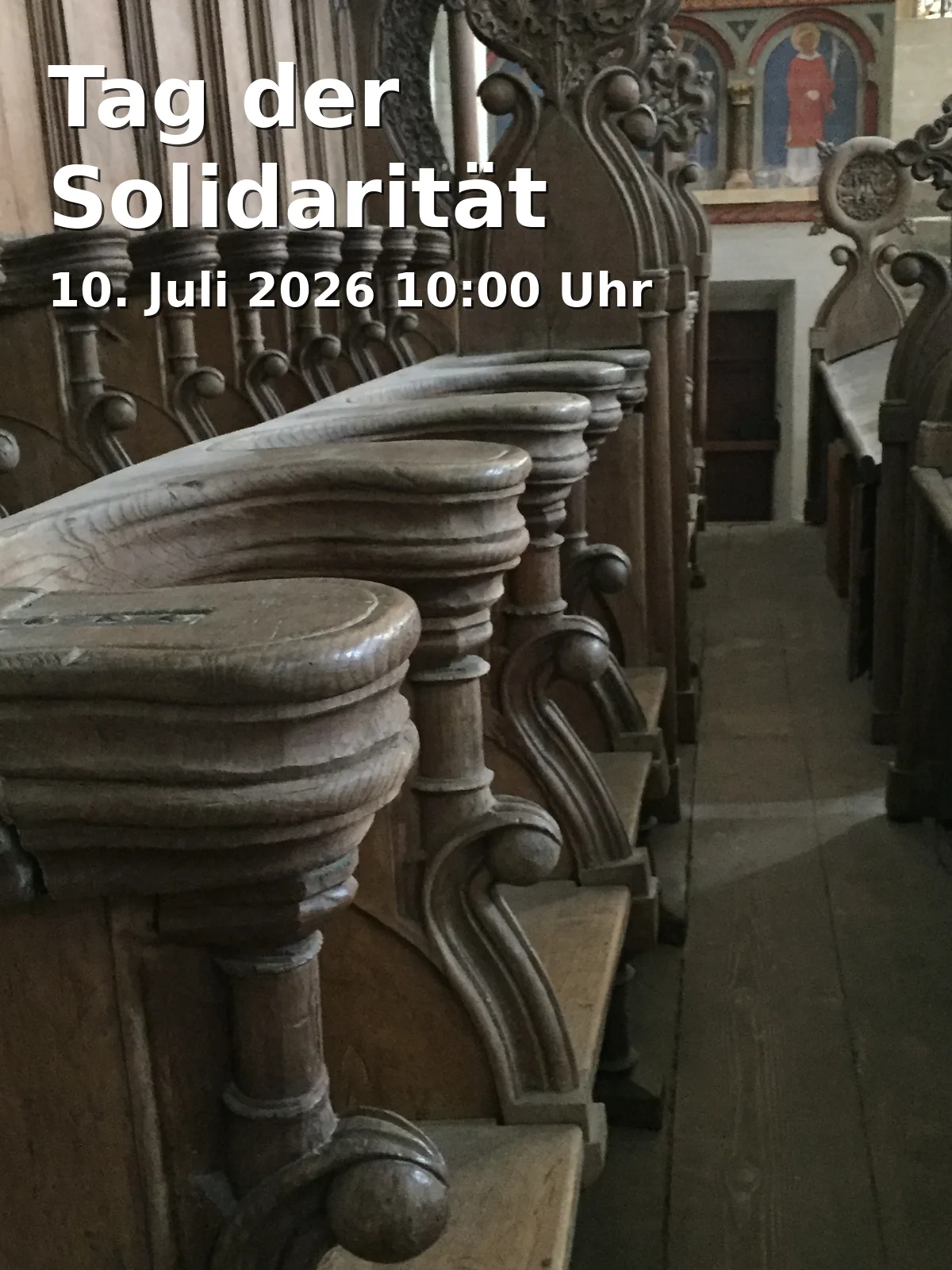
A day for attitude and hope in Ansbach: Solidarity with Jewish life, encounters, and a strong sign against exclusion. #Solidarity #Ansbach
Long Shopping Night
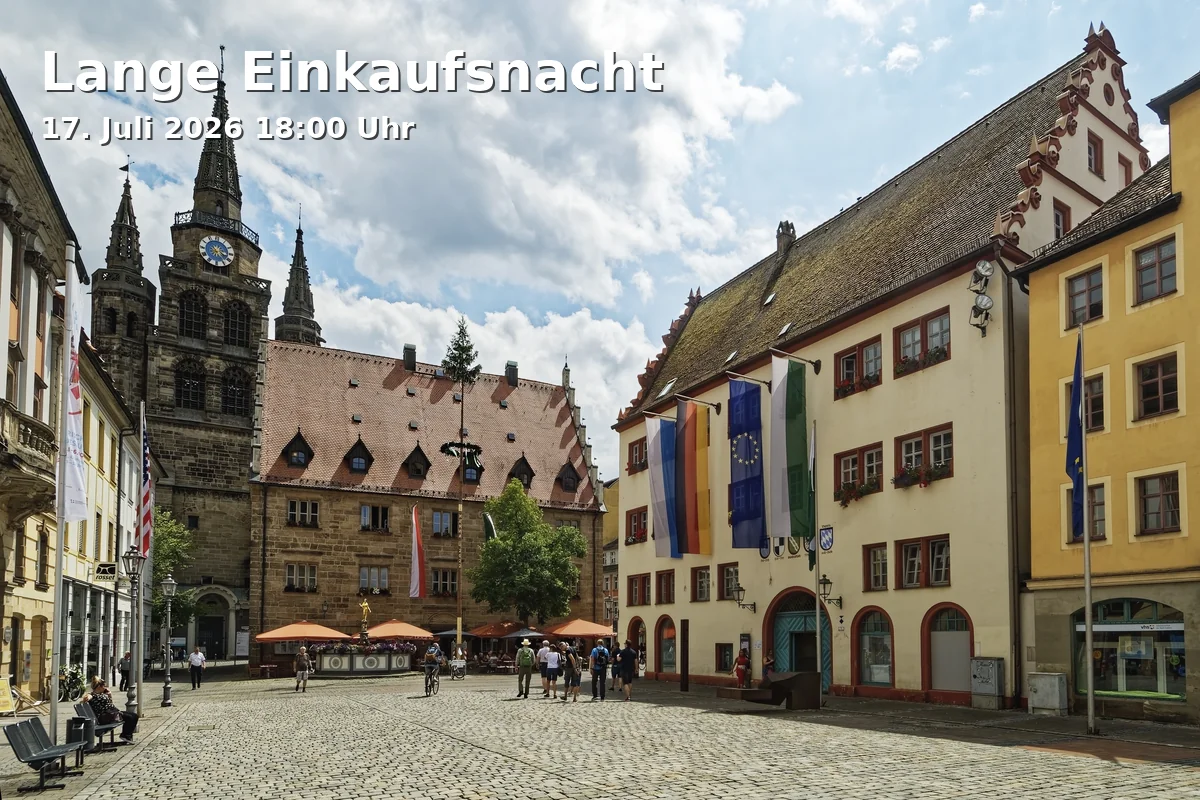
Ansbach's city center lights up: The Long Shopping Night invites you to stroll, enjoy, and discover. On July 17, 2026, starting at 6 PM, free entry. #Ansbach
Rococo Market Whispers in the Ansbach Old Town
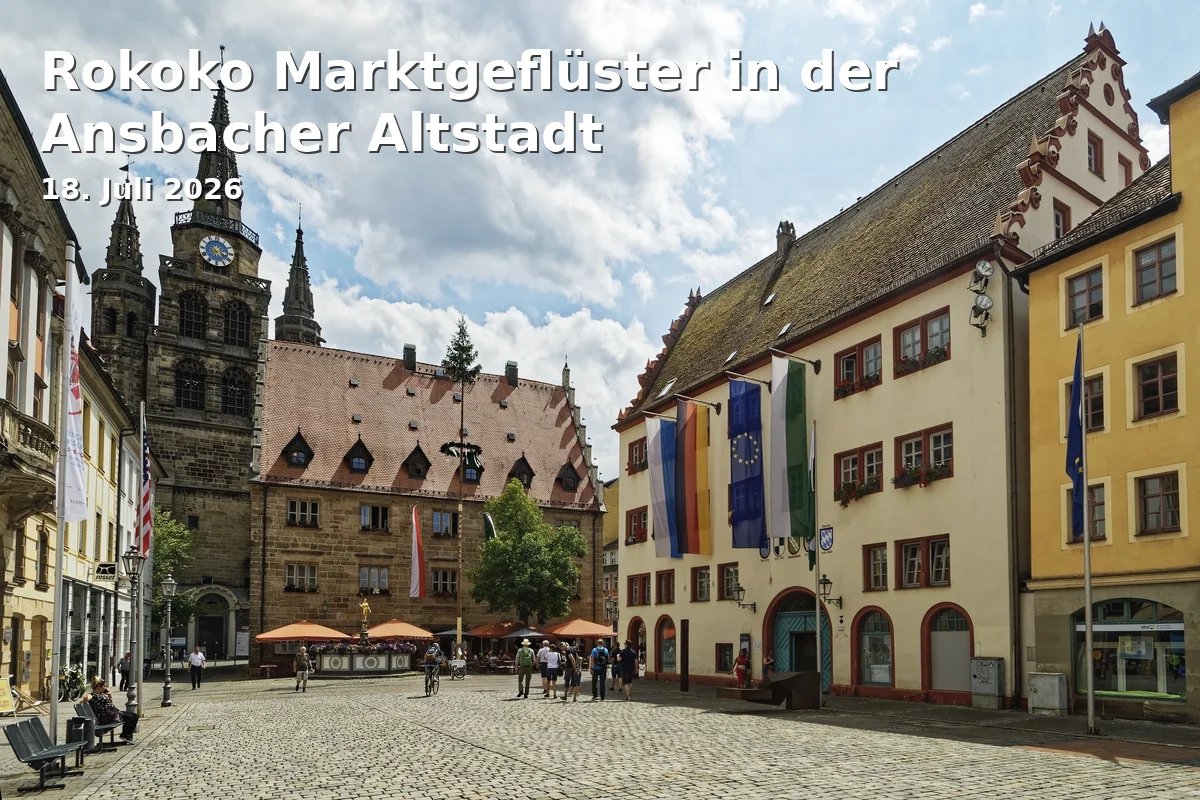
Experience Baroque charm with historical performers, music, and food. A feast for the senses in the heart of Ansbach.
Noah's Ark
Visit the musical 'Noah's Ark' in Ansbach. A free event full of music and joy for the whole family.
Concert: A German Requiem op. 45 by Johannes Brahms
Brahms in full sound depth: In St. Gumbertus Ansbach, great choral art meets romantic expansiveness. Free, intense, unforgettable. #Ansbach #Brahms
Johannes Brahms: A German Requiem op. 45 with the Windsbacher Boys Choir
Brahms in his quietest greatness: The Windsbacher Boys Choir fills St. Gumbertus with hope, brilliance, and deep sound. 31.07.2026, from €17. #Ansbach #Concert

4th Ansbach Wine Festival
Enjoy Franconian wines and regional cuisine accompanied by live music at the Johann-Sebastian-Bach-Platz in Ansbach.
27th Training Opportunities Fair Ansbach
Ansbach's city center becomes a meeting point for apprenticeships, internships, and dual pathways. On 09/25/2026, free admission, talk, insights, and opportunities await. #Ansbach #Training
Frequently Asked Questions
Reviews
No reviews found