
Ansbach
Promenade, 91522 Ansbach, Deutschland
Hofgarten Ansbach | Opening Hours & Parking
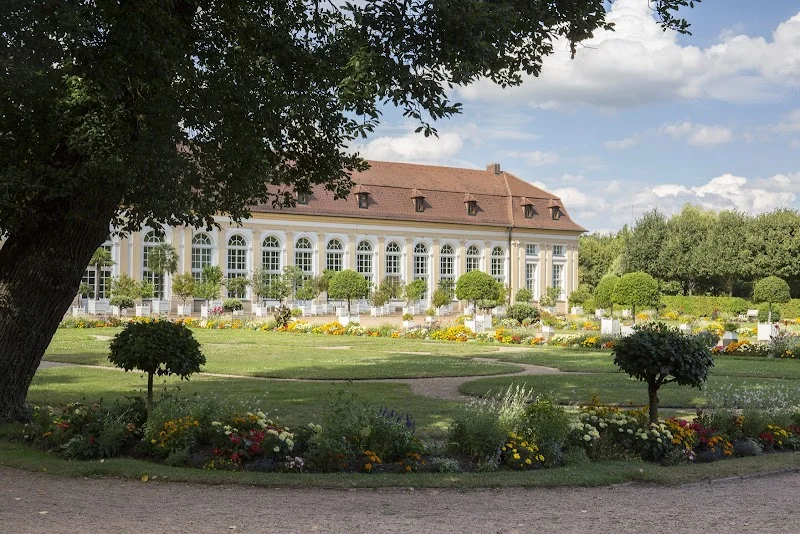
The Hofgarten Ansbach is much more than a beautiful green space: it is a historically evolved garden artwork, a listed recreational area, a place for walks in the city center, and at the same time a stage for culture, gastronomy, and celebrations. Those looking for opening hours, parking, admission, tours, weddings, or cafes will find a location here that has preserved its baroque origins to this day while functioning right in the middle of modern city life. The official palace administration describes the Hofgarten as a publicly accessible historical garden that is meant to offer tranquility and quiet relaxation, and at the same time as a FFH area with special protection for animal and plant species. This very mix of representation, nature, and quality of stay makes the Hofgarten so special. In addition, there is the defining orangery with restaurant use, event rooms, and a long construction history that makes the Hofgarten attractive for events, cultural visits, and weddings. Those who consciously visit the place do not simply experience a park, but a cultivated landscape with a clear identity, seasonal opening hours, free access, and many details that only reveal themselves upon closer inspection. ([schloesser.bayern.de](https://www.schloesser.bayern.de/deutsch/garten/objekte/ansbach.htm))
Opening Hours and Admission at Hofgarten Ansbach
The most important information for the first visit is pleasantly clear: The Hofgarten Ansbach is freely accessible and has seasonally adjusted opening hours. Between November and February, the park is open from 7:15 AM to 6:00 PM, in March from 7:15 AM to 8:00 PM, from April to August from 7:15 AM to 10:00 PM, and in September and October from 7:15 AM to 8:00 PM. This means great flexibility for visitors, as the Hofgarten is suitable for both an early morning walk and a long stroll in the evening when it is still light during the warmer months. This is an important advantage for people searching for "opening hours" or "admission": one does not have to buy an entrance ticket but can visit the facility as a public garden and recreational area. At the same time, the character of the place remains protected because the Hofgarten is not an arbitrarily usable amusement park. Consideration, tranquility, and adherence to the facility regulations are therefore part of the visiting experience. The freely accessible structure is thus not a contradiction to the historical dignity of the facility, but a prerequisite for it to function as a city park, monument, and habitat at the same time. ([schloesser.bayern.de](https://www.schloesser.bayern.de/deutsch/garten/objekte/ansbach.htm))
Those visiting the Hofgarten for the first time benefit from good orientation through the official site plan and clear reference points on site. The palace administration lists Hofgarten, Citrus House, and Orangery as independent points of contact and provides image material as well as a Google Maps location plan. The park is therefore easy to grasp, even though it has historically evolved and is spatially complex. It is particularly pleasant that the facility can be intuitively understood: the long main axis with its linden trees, the parterre in front of the orangery, and the various garden rooms provide a clear direction from the very first walk. For guests who have little time, this is practical because a brief impression can be realized just as well as an extensive tour. Those who want to dive deeper can combine their visit with a coffee in the orangery, a look at the citrus house, or a detour to the residence. Thus, a simple walk becomes a compact cultural and nature appointment that works without complicated pre-planning. ([schloesser.bayern.de](https://www.schloesser.bayern.de/deutsch/garten/objekte/ansbach.htm))
Access, Parking, and Location at Schlossplatz
Getting to Hofgarten Ansbach is straightforward because the facility is centrally located within the urban structure. The official visitor information names Ansbach as the destination, recommends traveling by train, and refers to the bus to Schlossplatz. Additionally, there are short- and long-term parking spaces near the castle, so visitors do not have to park directly in the park but can conveniently park in the vicinity and walk the last meters. This fits excellently with the character of the Hofgarten, as the facility is expressly reserved for pedestrian traffic. Those wondering where to park at "hofgarten ansbach" will thus receive a clear answer: in the nearby city center and castle area, not in the park itself. The city of Ansbach also points out a very large parking offer in the city center, with over 4,000 parking spaces in different categories. This makes it easy to combine the visit with a city stroll, an appointment in the old town, or a restaurant visit. This location is particularly attractive for day visitors because one does not have to expect a long search for parking around a remote location. The Hofgarten is deliberately urban and yet pleasantly shielded from traffic. ([schloesser.bayern.de](https://www.schloesser.bayern.de/deutsch/garten/objekte/ansbach.htm))
Visitors with special mobility needs also find helpful information. The official accessibility page for the residence and Hofgarten lists several designated public disabled parking spaces in the vicinity, with a distance of 50 to 250 meters. Additionally, there are accessible toilets near the Hofgarten, including a distance of about 40 meters from the main entrance and about 210 meters from the south entrance. The access at the promenade west of the orangery is described with gates of at least 125 and a maximum of 140 centimeters in width, the paths consist of compacted gravel and have only a few short inclines. Seating is available, making the stay in the park pleasant. For people who are not only looking for parking but also for a practical city center location with good accessibility, this is a real plus. Even though the Hofgarten remains a historical monument, it is thus not only beautiful but also pragmatically accessible in important parts. This connection of charm and usability makes it attractive for different visitor groups. ([schloesser.bayern.de](https://www.schloesser.bayern.de/deutsch/schloss/Objekte/ansbach_mobilitaet.htm?utm_source=openai))
History of Hofgarten Ansbach and its Baroque Roots
The history of the Hofgarten does not begin as a casual green space, but as a deliberately planned garden facility of the residence. According to official information, the still recognizable basic structure was laid out starting in 1724 under Margravine Christiane Charlotte of Brandenburg-Ansbach. Between 1726 and 1743, the orangery with a forecourt and side-arranged linden halls was created, and the main axis of the facility runs parallel to the building front in the form of double-row linden hedges. This is classic baroque thinking in space, line, and staging: the garden shows order, perspective, and representation. Especially in spring and summer, this is visible in the parterre when the flower plantings are displayed in a diverse, baroque pattern book-inspired form. For visitors, this means that the Hofgarten is not just a green backdrop but a historical design concept that remains readable to this day. Those interested in "history" will find a place here where architectural and gardening planning have been held together over centuries and which, despite all changes, has preserved its identity. ([schloesser.bayern.de](https://www.schloesser.bayern.de/deutsch/service/infomat/screen-pdf/ansbach_park_dt.pdf))
The further development of the Hofgarten shows how a historical garden monument can remain adaptable. After the abdication of the last margrave, the facility was landscaped in the English style under Prussian administration starting in 1791, meaning it was transformed more towards a landscape garden. The formal design of the orangery and the large main avenue with its partly 300-year-old linden trees remained. Additionally, the Hofgarten was hit by over 100 aerial bombs during World War II, necessitating later reconstructions. This turning point is important because it explains why the park looks old but does not simply originate unchanged from the 18th century. It is precisely the mix of original substance, transformation, and restoration that makes it historically interesting. Added to this are the monuments and memorial plaques for Leonhart Fuchs, Johann Peter Uz, Baron von Benkendorff, and Kaspar Hauser. The medicinal herb garden established in 2001 for the 500th birthday of Leonhart Fuchs adds a botanical and educational historical accent to the historical ensemble. Thus, a place emerges that tells of memory, plant knowledge, and city history at the same time. ([schloesser.bayern.de](https://www.schloesser.bayern.de/deutsch/service/infomat/screen-pdf/ansbach_park_dt.pdf))
Orangery, Café, and Events in Hofgarten Ansbach
The orangery is the part of the Hofgarten that most vividly brings the theme of "café" and "events" to life. The palace administration describes it as an elongated gallery building constructed according to the plans of Karl Friedrich von Zocha in the mid-18th century. It used to serve as a greenhouse and pleasure palace; today, part of it is used as a restaurant, including the Green Hall, while the other part with the Blue Hall, dome hall, and foyer can be rented for concerts, lectures, conferences, festive banquets, and weddings. This makes the orangery a location that directly connects historical architecture and modern use. For visitors, this is attractive because one does not just glance at a monument here but can actually stop by, celebrate, or attend a cultural event. The fact that the palace administration also describes the orangery as a popular point of contact for local, regional, and national guests shows its significance in the everyday life of the city. Those looking for a combination of garden, gastronomy, and event venue will find one of the strongest connections in the entire Hofgarten here. ([schloesser.bayern.de](https://www.schloesser.bayern.de/deutsch/raeume/objekte/an_or_bl.htm))
The room data shows how versatile the orangery is indeed usable. The entire orangery is suitable for weddings, dance events, seated meals, concerts, and standing receptions for up to 1,088 people. The dome hall is suitable for up to 300 people, the foyer for smaller exhibitions and standing receptions for up to 200 people, and the citrus house in the Hofgarten for civil and free weddings as well as art exhibitions for a maximum of 70 people. This is complemented by practical infrastructure such as toilets, cloakrooms, changing rooms, conference technology, and 35 parking spaces. The possibility of booking special cultural events at reduced rents also shows that the location is interesting not only for private parties but also for public cultural formats. For couples, organizers, and cultural creators, this is a strong combination because the rooms are not only pretty but also logically planned and truly usable. Queries for "wedding" or "events" are thus not answered here with marketing phrases but with concrete capacities and clear room functions. ([schloesser.bayern.de](https://www.schloesser.bayern.de/deutsch/raeume/objekte/an_or_bl.htm))
Dogs, Paths, Playground, and Rules in the Park
The Hofgarten is a beautiful place, but not a place for arbitrary leisure use. The facility regulations make it clear that the historical garden is intended for tranquility and quiet relaxation and enjoys special protection as a FFH area. Therefore, paths must not be left, lawns and plantings must not be entered, and fountains must not be used. Dogs are allowed, but they must be kept on a short, tear-resistant leash; dog waste must also be disposed of. In the Fox Garden, bringing dogs is even prohibited. Likewise, bicycles, Segways, and e-scooters are not allowed in the park, and drones, barbecuing, open fires, camping, noise, ball games, and feeding wild animals are prohibited. These rules may sound strict, but they serve an important function: they protect a sensitive garden monument and preserve the tranquility that many visitors are precisely seeking. Those asking "dogs allowed" can visit the Hofgarten but should be considerate and adhere to the rules. This is how the facility remains livable for people, animals, and plants alike. ([schloesser.bayern.de](https://www.schloesser.bayern.de/deutsch/garten/objekte/anlagenvorschriften/ansbach_hofgarten_avo.pdf))
The keyword area "playground" can also be classified seriously. The facility regulations explicitly mention a children's playground and a sports field, but their use is subject to special regulations of the city of Ansbach. This means: there is a connection to family-friendly areas in the vicinity or in the regulation of the Hofgarten, but not the logic of a classic amusement park. This is helpful for parents because the Hofgarten thus remains a quiet place to stay with children without raising excessive expectations. At the same time, the accessibility information helps to realistically assess the place: the gates at the promenade are wide enough, the paths are paved, seating is available, and there are accessible toilets nearby. The Hofgarten is thus a place where different needs can come together as long as the rules are respected. This makes it not only historically valuable but also socially functional. A location that demands tranquility but remains open, family-friendly, and partly practical in an inner city like Ansbach is particularly valuable. ([schloesser.bayern.de](https://www.schloesser.bayern.de/deutsch/garten/objekte/anlagenvorschriften/ansbach_hofgarten_avo.pdf))
Tours, Photos, Plan, and Special Highlights
Those who want to not only see the Hofgarten but also understand it should plan a tour. The official palace administration offers tours upon request, and the city of Ansbach also conducts events and tours through the Hofgarten. A good example of this is the tour "The Hofgarten Ansbach - yesterday and today," which makes the transformation of the park facility over the past 300 years visible through historical photographs. This is particularly exciting for visitors because the Hofgarten reveals its complexity only at second glance: baroque basic idea, landscape transformation, war destruction, reconstruction, and current use together create a historical narrative that does not reveal itself while walking. This is why search terms like "tour," "photos," and "plan" fit together so well. A photo shows a beautiful place, a tour explains its layers, and a site plan helps to sensibly connect the different areas. This combination makes the Hofgarten particularly attractive for day visitors, culture enthusiasts, and historically curious individuals. ([schloesser.bayern.de](https://www.schloesser.bayern.de/deutsch/garten/objekte/ansbach.htm))
The visual and spatial documentation is also strong. The official object page shows images of the Hofgarten, Citrus House, and Orangery, and the event rooms even refer to 360-degree recordings of the orangery. This is particularly important for SEO and user expectations because many people first look for impressions before a visit. Those who look at the photos immediately recognize the mix of historical facades, well-kept garden rooms, and representative sight lines. Those who use the plan find their way faster between the promenade, citrus house, orangery, and the adjacent paths. And those who ask about the size should remain serious: an official square meter figure is not provided in the available information, but the palace administration describes the Hofgarten as the most significant green space in Ansbach. This is precisely why the qualitative effect is more important than a mere number. The Hofgarten is not a place to be defined by size but by its location, history, tree substance, events, and its function for the city. This makes it one of the most defining addresses in Ansbach. ([schloesser.bayern.de](https://www.schloesser.bayern.de/deutsch/garten/objekte/ansbach.htm))
Sources:
- Bavarian Palace Administration – Hofgarten Ansbach, Object Page and Visitor Information ([schloesser.bayern.de](https://www.schloesser.bayern.de/deutsch/garten/objekte/ansbach.htm))
- Bavarian Palace Administration – Orangery Ansbach and Event Rooms ([schloesser.bayern.de](https://www.schloesser.bayern.de/deutsch/raeume/objekte/an_or_bl.htm))
- City of Ansbach – Tours and Anniversary Contributions to the Hofgarten ([ansbach.de](https://www.ansbach.de/B%C3%BCrger/Rathaus-Service/B%C3%BCrgerservice-Online-Dienste/B%C3%BCrgerb%C3%BCro/Fundsachen/Der-Hofgarten-Ansbach-gestern-und-heute.php?FID=2595.6343.1&ModID=11&NavID=2595.189&object=tx%2C2595.5.1&utm_source=openai))
- Bavarian Palace Administration – Facility Regulations and Accessibility ([schloesser.bayern.de](https://www.schloesser.bayern.de/deutsch/garten/objekte/anlagenvorschriften/ansbach_hofgarten_avo.pdf))
Mehr anzeigenWeniger anzeigen
Hofgarten Ansbach | Opening Hours & Parking
The Hofgarten Ansbach is much more than a beautiful green space: it is a historically evolved garden artwork, a listed recreational area, a place for walks in the city center, and at the same time a stage for culture, gastronomy, and celebrations. Those looking for opening hours, parking, admission, tours, weddings, or cafes will find a location here that has preserved its baroque origins to this day while functioning right in the middle of modern city life. The official palace administration describes the Hofgarten as a publicly accessible historical garden that is meant to offer tranquility and quiet relaxation, and at the same time as a FFH area with special protection for animal and plant species. This very mix of representation, nature, and quality of stay makes the Hofgarten so special. In addition, there is the defining orangery with restaurant use, event rooms, and a long construction history that makes the Hofgarten attractive for events, cultural visits, and weddings. Those who consciously visit the place do not simply experience a park, but a cultivated landscape with a clear identity, seasonal opening hours, free access, and many details that only reveal themselves upon closer inspection. ([schloesser.bayern.de](https://www.schloesser.bayern.de/deutsch/garten/objekte/ansbach.htm))
Opening Hours and Admission at Hofgarten Ansbach
The most important information for the first visit is pleasantly clear: The Hofgarten Ansbach is freely accessible and has seasonally adjusted opening hours. Between November and February, the park is open from 7:15 AM to 6:00 PM, in March from 7:15 AM to 8:00 PM, from April to August from 7:15 AM to 10:00 PM, and in September and October from 7:15 AM to 8:00 PM. This means great flexibility for visitors, as the Hofgarten is suitable for both an early morning walk and a long stroll in the evening when it is still light during the warmer months. This is an important advantage for people searching for "opening hours" or "admission": one does not have to buy an entrance ticket but can visit the facility as a public garden and recreational area. At the same time, the character of the place remains protected because the Hofgarten is not an arbitrarily usable amusement park. Consideration, tranquility, and adherence to the facility regulations are therefore part of the visiting experience. The freely accessible structure is thus not a contradiction to the historical dignity of the facility, but a prerequisite for it to function as a city park, monument, and habitat at the same time. ([schloesser.bayern.de](https://www.schloesser.bayern.de/deutsch/garten/objekte/ansbach.htm))
Those visiting the Hofgarten for the first time benefit from good orientation through the official site plan and clear reference points on site. The palace administration lists Hofgarten, Citrus House, and Orangery as independent points of contact and provides image material as well as a Google Maps location plan. The park is therefore easy to grasp, even though it has historically evolved and is spatially complex. It is particularly pleasant that the facility can be intuitively understood: the long main axis with its linden trees, the parterre in front of the orangery, and the various garden rooms provide a clear direction from the very first walk. For guests who have little time, this is practical because a brief impression can be realized just as well as an extensive tour. Those who want to dive deeper can combine their visit with a coffee in the orangery, a look at the citrus house, or a detour to the residence. Thus, a simple walk becomes a compact cultural and nature appointment that works without complicated pre-planning. ([schloesser.bayern.de](https://www.schloesser.bayern.de/deutsch/garten/objekte/ansbach.htm))
Access, Parking, and Location at Schlossplatz
Getting to Hofgarten Ansbach is straightforward because the facility is centrally located within the urban structure. The official visitor information names Ansbach as the destination, recommends traveling by train, and refers to the bus to Schlossplatz. Additionally, there are short- and long-term parking spaces near the castle, so visitors do not have to park directly in the park but can conveniently park in the vicinity and walk the last meters. This fits excellently with the character of the Hofgarten, as the facility is expressly reserved for pedestrian traffic. Those wondering where to park at "hofgarten ansbach" will thus receive a clear answer: in the nearby city center and castle area, not in the park itself. The city of Ansbach also points out a very large parking offer in the city center, with over 4,000 parking spaces in different categories. This makes it easy to combine the visit with a city stroll, an appointment in the old town, or a restaurant visit. This location is particularly attractive for day visitors because one does not have to expect a long search for parking around a remote location. The Hofgarten is deliberately urban and yet pleasantly shielded from traffic. ([schloesser.bayern.de](https://www.schloesser.bayern.de/deutsch/garten/objekte/ansbach.htm))
Visitors with special mobility needs also find helpful information. The official accessibility page for the residence and Hofgarten lists several designated public disabled parking spaces in the vicinity, with a distance of 50 to 250 meters. Additionally, there are accessible toilets near the Hofgarten, including a distance of about 40 meters from the main entrance and about 210 meters from the south entrance. The access at the promenade west of the orangery is described with gates of at least 125 and a maximum of 140 centimeters in width, the paths consist of compacted gravel and have only a few short inclines. Seating is available, making the stay in the park pleasant. For people who are not only looking for parking but also for a practical city center location with good accessibility, this is a real plus. Even though the Hofgarten remains a historical monument, it is thus not only beautiful but also pragmatically accessible in important parts. This connection of charm and usability makes it attractive for different visitor groups. ([schloesser.bayern.de](https://www.schloesser.bayern.de/deutsch/schloss/Objekte/ansbach_mobilitaet.htm?utm_source=openai))
History of Hofgarten Ansbach and its Baroque Roots
The history of the Hofgarten does not begin as a casual green space, but as a deliberately planned garden facility of the residence. According to official information, the still recognizable basic structure was laid out starting in 1724 under Margravine Christiane Charlotte of Brandenburg-Ansbach. Between 1726 and 1743, the orangery with a forecourt and side-arranged linden halls was created, and the main axis of the facility runs parallel to the building front in the form of double-row linden hedges. This is classic baroque thinking in space, line, and staging: the garden shows order, perspective, and representation. Especially in spring and summer, this is visible in the parterre when the flower plantings are displayed in a diverse, baroque pattern book-inspired form. For visitors, this means that the Hofgarten is not just a green backdrop but a historical design concept that remains readable to this day. Those interested in "history" will find a place here where architectural and gardening planning have been held together over centuries and which, despite all changes, has preserved its identity. ([schloesser.bayern.de](https://www.schloesser.bayern.de/deutsch/service/infomat/screen-pdf/ansbach_park_dt.pdf))
The further development of the Hofgarten shows how a historical garden monument can remain adaptable. After the abdication of the last margrave, the facility was landscaped in the English style under Prussian administration starting in 1791, meaning it was transformed more towards a landscape garden. The formal design of the orangery and the large main avenue with its partly 300-year-old linden trees remained. Additionally, the Hofgarten was hit by over 100 aerial bombs during World War II, necessitating later reconstructions. This turning point is important because it explains why the park looks old but does not simply originate unchanged from the 18th century. It is precisely the mix of original substance, transformation, and restoration that makes it historically interesting. Added to this are the monuments and memorial plaques for Leonhart Fuchs, Johann Peter Uz, Baron von Benkendorff, and Kaspar Hauser. The medicinal herb garden established in 2001 for the 500th birthday of Leonhart Fuchs adds a botanical and educational historical accent to the historical ensemble. Thus, a place emerges that tells of memory, plant knowledge, and city history at the same time. ([schloesser.bayern.de](https://www.schloesser.bayern.de/deutsch/service/infomat/screen-pdf/ansbach_park_dt.pdf))
Orangery, Café, and Events in Hofgarten Ansbach
The orangery is the part of the Hofgarten that most vividly brings the theme of "café" and "events" to life. The palace administration describes it as an elongated gallery building constructed according to the plans of Karl Friedrich von Zocha in the mid-18th century. It used to serve as a greenhouse and pleasure palace; today, part of it is used as a restaurant, including the Green Hall, while the other part with the Blue Hall, dome hall, and foyer can be rented for concerts, lectures, conferences, festive banquets, and weddings. This makes the orangery a location that directly connects historical architecture and modern use. For visitors, this is attractive because one does not just glance at a monument here but can actually stop by, celebrate, or attend a cultural event. The fact that the palace administration also describes the orangery as a popular point of contact for local, regional, and national guests shows its significance in the everyday life of the city. Those looking for a combination of garden, gastronomy, and event venue will find one of the strongest connections in the entire Hofgarten here. ([schloesser.bayern.de](https://www.schloesser.bayern.de/deutsch/raeume/objekte/an_or_bl.htm))
The room data shows how versatile the orangery is indeed usable. The entire orangery is suitable for weddings, dance events, seated meals, concerts, and standing receptions for up to 1,088 people. The dome hall is suitable for up to 300 people, the foyer for smaller exhibitions and standing receptions for up to 200 people, and the citrus house in the Hofgarten for civil and free weddings as well as art exhibitions for a maximum of 70 people. This is complemented by practical infrastructure such as toilets, cloakrooms, changing rooms, conference technology, and 35 parking spaces. The possibility of booking special cultural events at reduced rents also shows that the location is interesting not only for private parties but also for public cultural formats. For couples, organizers, and cultural creators, this is a strong combination because the rooms are not only pretty but also logically planned and truly usable. Queries for "wedding" or "events" are thus not answered here with marketing phrases but with concrete capacities and clear room functions. ([schloesser.bayern.de](https://www.schloesser.bayern.de/deutsch/raeume/objekte/an_or_bl.htm))
Dogs, Paths, Playground, and Rules in the Park
The Hofgarten is a beautiful place, but not a place for arbitrary leisure use. The facility regulations make it clear that the historical garden is intended for tranquility and quiet relaxation and enjoys special protection as a FFH area. Therefore, paths must not be left, lawns and plantings must not be entered, and fountains must not be used. Dogs are allowed, but they must be kept on a short, tear-resistant leash; dog waste must also be disposed of. In the Fox Garden, bringing dogs is even prohibited. Likewise, bicycles, Segways, and e-scooters are not allowed in the park, and drones, barbecuing, open fires, camping, noise, ball games, and feeding wild animals are prohibited. These rules may sound strict, but they serve an important function: they protect a sensitive garden monument and preserve the tranquility that many visitors are precisely seeking. Those asking "dogs allowed" can visit the Hofgarten but should be considerate and adhere to the rules. This is how the facility remains livable for people, animals, and plants alike. ([schloesser.bayern.de](https://www.schloesser.bayern.de/deutsch/garten/objekte/anlagenvorschriften/ansbach_hofgarten_avo.pdf))
The keyword area "playground" can also be classified seriously. The facility regulations explicitly mention a children's playground and a sports field, but their use is subject to special regulations of the city of Ansbach. This means: there is a connection to family-friendly areas in the vicinity or in the regulation of the Hofgarten, but not the logic of a classic amusement park. This is helpful for parents because the Hofgarten thus remains a quiet place to stay with children without raising excessive expectations. At the same time, the accessibility information helps to realistically assess the place: the gates at the promenade are wide enough, the paths are paved, seating is available, and there are accessible toilets nearby. The Hofgarten is thus a place where different needs can come together as long as the rules are respected. This makes it not only historically valuable but also socially functional. A location that demands tranquility but remains open, family-friendly, and partly practical in an inner city like Ansbach is particularly valuable. ([schloesser.bayern.de](https://www.schloesser.bayern.de/deutsch/garten/objekte/anlagenvorschriften/ansbach_hofgarten_avo.pdf))
Tours, Photos, Plan, and Special Highlights
Those who want to not only see the Hofgarten but also understand it should plan a tour. The official palace administration offers tours upon request, and the city of Ansbach also conducts events and tours through the Hofgarten. A good example of this is the tour "The Hofgarten Ansbach - yesterday and today," which makes the transformation of the park facility over the past 300 years visible through historical photographs. This is particularly exciting for visitors because the Hofgarten reveals its complexity only at second glance: baroque basic idea, landscape transformation, war destruction, reconstruction, and current use together create a historical narrative that does not reveal itself while walking. This is why search terms like "tour," "photos," and "plan" fit together so well. A photo shows a beautiful place, a tour explains its layers, and a site plan helps to sensibly connect the different areas. This combination makes the Hofgarten particularly attractive for day visitors, culture enthusiasts, and historically curious individuals. ([schloesser.bayern.de](https://www.schloesser.bayern.de/deutsch/garten/objekte/ansbach.htm))
The visual and spatial documentation is also strong. The official object page shows images of the Hofgarten, Citrus House, and Orangery, and the event rooms even refer to 360-degree recordings of the orangery. This is particularly important for SEO and user expectations because many people first look for impressions before a visit. Those who look at the photos immediately recognize the mix of historical facades, well-kept garden rooms, and representative sight lines. Those who use the plan find their way faster between the promenade, citrus house, orangery, and the adjacent paths. And those who ask about the size should remain serious: an official square meter figure is not provided in the available information, but the palace administration describes the Hofgarten as the most significant green space in Ansbach. This is precisely why the qualitative effect is more important than a mere number. The Hofgarten is not a place to be defined by size but by its location, history, tree substance, events, and its function for the city. This makes it one of the most defining addresses in Ansbach. ([schloesser.bayern.de](https://www.schloesser.bayern.de/deutsch/garten/objekte/ansbach.htm))
Sources:
- Bavarian Palace Administration – Hofgarten Ansbach, Object Page and Visitor Information ([schloesser.bayern.de](https://www.schloesser.bayern.de/deutsch/garten/objekte/ansbach.htm))
- Bavarian Palace Administration – Orangery Ansbach and Event Rooms ([schloesser.bayern.de](https://www.schloesser.bayern.de/deutsch/raeume/objekte/an_or_bl.htm))
- City of Ansbach – Tours and Anniversary Contributions to the Hofgarten ([ansbach.de](https://www.ansbach.de/B%C3%BCrger/Rathaus-Service/B%C3%BCrgerservice-Online-Dienste/B%C3%BCrgerb%C3%BCro/Fundsachen/Der-Hofgarten-Ansbach-gestern-und-heute.php?FID=2595.6343.1&ModID=11&NavID=2595.189&object=tx%2C2595.5.1&utm_source=openai))
- Bavarian Palace Administration – Facility Regulations and Accessibility ([schloesser.bayern.de](https://www.schloesser.bayern.de/deutsch/garten/objekte/anlagenvorschriften/ansbach_hofgarten_avo.pdf))
Hofgarten Ansbach | Opening Hours & Parking
The Hofgarten Ansbach is much more than a beautiful green space: it is a historically evolved garden artwork, a listed recreational area, a place for walks in the city center, and at the same time a stage for culture, gastronomy, and celebrations. Those looking for opening hours, parking, admission, tours, weddings, or cafes will find a location here that has preserved its baroque origins to this day while functioning right in the middle of modern city life. The official palace administration describes the Hofgarten as a publicly accessible historical garden that is meant to offer tranquility and quiet relaxation, and at the same time as a FFH area with special protection for animal and plant species. This very mix of representation, nature, and quality of stay makes the Hofgarten so special. In addition, there is the defining orangery with restaurant use, event rooms, and a long construction history that makes the Hofgarten attractive for events, cultural visits, and weddings. Those who consciously visit the place do not simply experience a park, but a cultivated landscape with a clear identity, seasonal opening hours, free access, and many details that only reveal themselves upon closer inspection. ([schloesser.bayern.de](https://www.schloesser.bayern.de/deutsch/garten/objekte/ansbach.htm))
Opening Hours and Admission at Hofgarten Ansbach
The most important information for the first visit is pleasantly clear: The Hofgarten Ansbach is freely accessible and has seasonally adjusted opening hours. Between November and February, the park is open from 7:15 AM to 6:00 PM, in March from 7:15 AM to 8:00 PM, from April to August from 7:15 AM to 10:00 PM, and in September and October from 7:15 AM to 8:00 PM. This means great flexibility for visitors, as the Hofgarten is suitable for both an early morning walk and a long stroll in the evening when it is still light during the warmer months. This is an important advantage for people searching for "opening hours" or "admission": one does not have to buy an entrance ticket but can visit the facility as a public garden and recreational area. At the same time, the character of the place remains protected because the Hofgarten is not an arbitrarily usable amusement park. Consideration, tranquility, and adherence to the facility regulations are therefore part of the visiting experience. The freely accessible structure is thus not a contradiction to the historical dignity of the facility, but a prerequisite for it to function as a city park, monument, and habitat at the same time. ([schloesser.bayern.de](https://www.schloesser.bayern.de/deutsch/garten/objekte/ansbach.htm))
Those visiting the Hofgarten for the first time benefit from good orientation through the official site plan and clear reference points on site. The palace administration lists Hofgarten, Citrus House, and Orangery as independent points of contact and provides image material as well as a Google Maps location plan. The park is therefore easy to grasp, even though it has historically evolved and is spatially complex. It is particularly pleasant that the facility can be intuitively understood: the long main axis with its linden trees, the parterre in front of the orangery, and the various garden rooms provide a clear direction from the very first walk. For guests who have little time, this is practical because a brief impression can be realized just as well as an extensive tour. Those who want to dive deeper can combine their visit with a coffee in the orangery, a look at the citrus house, or a detour to the residence. Thus, a simple walk becomes a compact cultural and nature appointment that works without complicated pre-planning. ([schloesser.bayern.de](https://www.schloesser.bayern.de/deutsch/garten/objekte/ansbach.htm))
Access, Parking, and Location at Schlossplatz
Getting to Hofgarten Ansbach is straightforward because the facility is centrally located within the urban structure. The official visitor information names Ansbach as the destination, recommends traveling by train, and refers to the bus to Schlossplatz. Additionally, there are short- and long-term parking spaces near the castle, so visitors do not have to park directly in the park but can conveniently park in the vicinity and walk the last meters. This fits excellently with the character of the Hofgarten, as the facility is expressly reserved for pedestrian traffic. Those wondering where to park at "hofgarten ansbach" will thus receive a clear answer: in the nearby city center and castle area, not in the park itself. The city of Ansbach also points out a very large parking offer in the city center, with over 4,000 parking spaces in different categories. This makes it easy to combine the visit with a city stroll, an appointment in the old town, or a restaurant visit. This location is particularly attractive for day visitors because one does not have to expect a long search for parking around a remote location. The Hofgarten is deliberately urban and yet pleasantly shielded from traffic. ([schloesser.bayern.de](https://www.schloesser.bayern.de/deutsch/garten/objekte/ansbach.htm))
Visitors with special mobility needs also find helpful information. The official accessibility page for the residence and Hofgarten lists several designated public disabled parking spaces in the vicinity, with a distance of 50 to 250 meters. Additionally, there are accessible toilets near the Hofgarten, including a distance of about 40 meters from the main entrance and about 210 meters from the south entrance. The access at the promenade west of the orangery is described with gates of at least 125 and a maximum of 140 centimeters in width, the paths consist of compacted gravel and have only a few short inclines. Seating is available, making the stay in the park pleasant. For people who are not only looking for parking but also for a practical city center location with good accessibility, this is a real plus. Even though the Hofgarten remains a historical monument, it is thus not only beautiful but also pragmatically accessible in important parts. This connection of charm and usability makes it attractive for different visitor groups. ([schloesser.bayern.de](https://www.schloesser.bayern.de/deutsch/schloss/Objekte/ansbach_mobilitaet.htm?utm_source=openai))
History of Hofgarten Ansbach and its Baroque Roots
The history of the Hofgarten does not begin as a casual green space, but as a deliberately planned garden facility of the residence. According to official information, the still recognizable basic structure was laid out starting in 1724 under Margravine Christiane Charlotte of Brandenburg-Ansbach. Between 1726 and 1743, the orangery with a forecourt and side-arranged linden halls was created, and the main axis of the facility runs parallel to the building front in the form of double-row linden hedges. This is classic baroque thinking in space, line, and staging: the garden shows order, perspective, and representation. Especially in spring and summer, this is visible in the parterre when the flower plantings are displayed in a diverse, baroque pattern book-inspired form. For visitors, this means that the Hofgarten is not just a green backdrop but a historical design concept that remains readable to this day. Those interested in "history" will find a place here where architectural and gardening planning have been held together over centuries and which, despite all changes, has preserved its identity. ([schloesser.bayern.de](https://www.schloesser.bayern.de/deutsch/service/infomat/screen-pdf/ansbach_park_dt.pdf))
The further development of the Hofgarten shows how a historical garden monument can remain adaptable. After the abdication of the last margrave, the facility was landscaped in the English style under Prussian administration starting in 1791, meaning it was transformed more towards a landscape garden. The formal design of the orangery and the large main avenue with its partly 300-year-old linden trees remained. Additionally, the Hofgarten was hit by over 100 aerial bombs during World War II, necessitating later reconstructions. This turning point is important because it explains why the park looks old but does not simply originate unchanged from the 18th century. It is precisely the mix of original substance, transformation, and restoration that makes it historically interesting. Added to this are the monuments and memorial plaques for Leonhart Fuchs, Johann Peter Uz, Baron von Benkendorff, and Kaspar Hauser. The medicinal herb garden established in 2001 for the 500th birthday of Leonhart Fuchs adds a botanical and educational historical accent to the historical ensemble. Thus, a place emerges that tells of memory, plant knowledge, and city history at the same time. ([schloesser.bayern.de](https://www.schloesser.bayern.de/deutsch/service/infomat/screen-pdf/ansbach_park_dt.pdf))
Orangery, Café, and Events in Hofgarten Ansbach
The orangery is the part of the Hofgarten that most vividly brings the theme of "café" and "events" to life. The palace administration describes it as an elongated gallery building constructed according to the plans of Karl Friedrich von Zocha in the mid-18th century. It used to serve as a greenhouse and pleasure palace; today, part of it is used as a restaurant, including the Green Hall, while the other part with the Blue Hall, dome hall, and foyer can be rented for concerts, lectures, conferences, festive banquets, and weddings. This makes the orangery a location that directly connects historical architecture and modern use. For visitors, this is attractive because one does not just glance at a monument here but can actually stop by, celebrate, or attend a cultural event. The fact that the palace administration also describes the orangery as a popular point of contact for local, regional, and national guests shows its significance in the everyday life of the city. Those looking for a combination of garden, gastronomy, and event venue will find one of the strongest connections in the entire Hofgarten here. ([schloesser.bayern.de](https://www.schloesser.bayern.de/deutsch/raeume/objekte/an_or_bl.htm))
The room data shows how versatile the orangery is indeed usable. The entire orangery is suitable for weddings, dance events, seated meals, concerts, and standing receptions for up to 1,088 people. The dome hall is suitable for up to 300 people, the foyer for smaller exhibitions and standing receptions for up to 200 people, and the citrus house in the Hofgarten for civil and free weddings as well as art exhibitions for a maximum of 70 people. This is complemented by practical infrastructure such as toilets, cloakrooms, changing rooms, conference technology, and 35 parking spaces. The possibility of booking special cultural events at reduced rents also shows that the location is interesting not only for private parties but also for public cultural formats. For couples, organizers, and cultural creators, this is a strong combination because the rooms are not only pretty but also logically planned and truly usable. Queries for "wedding" or "events" are thus not answered here with marketing phrases but with concrete capacities and clear room functions. ([schloesser.bayern.de](https://www.schloesser.bayern.de/deutsch/raeume/objekte/an_or_bl.htm))
Dogs, Paths, Playground, and Rules in the Park
The Hofgarten is a beautiful place, but not a place for arbitrary leisure use. The facility regulations make it clear that the historical garden is intended for tranquility and quiet relaxation and enjoys special protection as a FFH area. Therefore, paths must not be left, lawns and plantings must not be entered, and fountains must not be used. Dogs are allowed, but they must be kept on a short, tear-resistant leash; dog waste must also be disposed of. In the Fox Garden, bringing dogs is even prohibited. Likewise, bicycles, Segways, and e-scooters are not allowed in the park, and drones, barbecuing, open fires, camping, noise, ball games, and feeding wild animals are prohibited. These rules may sound strict, but they serve an important function: they protect a sensitive garden monument and preserve the tranquility that many visitors are precisely seeking. Those asking "dogs allowed" can visit the Hofgarten but should be considerate and adhere to the rules. This is how the facility remains livable for people, animals, and plants alike. ([schloesser.bayern.de](https://www.schloesser.bayern.de/deutsch/garten/objekte/anlagenvorschriften/ansbach_hofgarten_avo.pdf))
The keyword area "playground" can also be classified seriously. The facility regulations explicitly mention a children's playground and a sports field, but their use is subject to special regulations of the city of Ansbach. This means: there is a connection to family-friendly areas in the vicinity or in the regulation of the Hofgarten, but not the logic of a classic amusement park. This is helpful for parents because the Hofgarten thus remains a quiet place to stay with children without raising excessive expectations. At the same time, the accessibility information helps to realistically assess the place: the gates at the promenade are wide enough, the paths are paved, seating is available, and there are accessible toilets nearby. The Hofgarten is thus a place where different needs can come together as long as the rules are respected. This makes it not only historically valuable but also socially functional. A location that demands tranquility but remains open, family-friendly, and partly practical in an inner city like Ansbach is particularly valuable. ([schloesser.bayern.de](https://www.schloesser.bayern.de/deutsch/garten/objekte/anlagenvorschriften/ansbach_hofgarten_avo.pdf))
Tours, Photos, Plan, and Special Highlights
Those who want to not only see the Hofgarten but also understand it should plan a tour. The official palace administration offers tours upon request, and the city of Ansbach also conducts events and tours through the Hofgarten. A good example of this is the tour "The Hofgarten Ansbach - yesterday and today," which makes the transformation of the park facility over the past 300 years visible through historical photographs. This is particularly exciting for visitors because the Hofgarten reveals its complexity only at second glance: baroque basic idea, landscape transformation, war destruction, reconstruction, and current use together create a historical narrative that does not reveal itself while walking. This is why search terms like "tour," "photos," and "plan" fit together so well. A photo shows a beautiful place, a tour explains its layers, and a site plan helps to sensibly connect the different areas. This combination makes the Hofgarten particularly attractive for day visitors, culture enthusiasts, and historically curious individuals. ([schloesser.bayern.de](https://www.schloesser.bayern.de/deutsch/garten/objekte/ansbach.htm))
The visual and spatial documentation is also strong. The official object page shows images of the Hofgarten, Citrus House, and Orangery, and the event rooms even refer to 360-degree recordings of the orangery. This is particularly important for SEO and user expectations because many people first look for impressions before a visit. Those who look at the photos immediately recognize the mix of historical facades, well-kept garden rooms, and representative sight lines. Those who use the plan find their way faster between the promenade, citrus house, orangery, and the adjacent paths. And those who ask about the size should remain serious: an official square meter figure is not provided in the available information, but the palace administration describes the Hofgarten as the most significant green space in Ansbach. This is precisely why the qualitative effect is more important than a mere number. The Hofgarten is not a place to be defined by size but by its location, history, tree substance, events, and its function for the city. This makes it one of the most defining addresses in Ansbach. ([schloesser.bayern.de](https://www.schloesser.bayern.de/deutsch/garten/objekte/ansbach.htm))
Sources:
- Bavarian Palace Administration – Hofgarten Ansbach, Object Page and Visitor Information ([schloesser.bayern.de](https://www.schloesser.bayern.de/deutsch/garten/objekte/ansbach.htm))
- Bavarian Palace Administration – Orangery Ansbach and Event Rooms ([schloesser.bayern.de](https://www.schloesser.bayern.de/deutsch/raeume/objekte/an_or_bl.htm))
- City of Ansbach – Tours and Anniversary Contributions to the Hofgarten ([ansbach.de](https://www.ansbach.de/B%C3%BCrger/Rathaus-Service/B%C3%BCrgerservice-Online-Dienste/B%C3%BCrgerb%C3%BCro/Fundsachen/Der-Hofgarten-Ansbach-gestern-und-heute.php?FID=2595.6343.1&ModID=11&NavID=2595.189&object=tx%2C2595.5.1&utm_source=openai))
- Bavarian Palace Administration – Facility Regulations and Accessibility ([schloesser.bayern.de](https://www.schloesser.bayern.de/deutsch/garten/objekte/anlagenvorschriften/ansbach_hofgarten_avo.pdf))
Upcoming Events
No events found
Frequently Asked Questions
Reviews
Mihir Talwalkar
12. April 2025
A beautiful garden in Ansbach just 3 minutes away from the train station. It is very big and also has sports courts (for running, basketball). There is a separate play area for children with swings and slides. The area is lush with many trees and fountains. There are many birds chirping in the area, and it's quite relaxing to spend some time here.
Krishnendu Saji
22. May 2025
It is a relaxing spot in the heart of Ansbach. Dense trees and the fresh feeling near the entrance attract more towards the garden. Still, the sound from the road will be a little bit disturbing. When it comes to the garden, it was under maintenance and preparation for the new season.
Felipe Corrêa Ribeiro
17. January 2025
A nice place to go to when you arrive in Ansbach. The garden is next to the train station and has a lot of possibilities to walk, playgrounds for kids, and paths through fields. The garden is close to the old center of the city.
david antoun
16. September 2024
The residence garden with fountains, a restaurant replacing the orangerie, and a lot of well-designed paths between trees.
Nick M
12. August 2022
My wife and I walked here for a brief time while waiting for a connecting train. It's a pleasant, peaceful park.