
Ansbach
Vorderberg 1, 91623 Sachsen bei Ansbach, Deutschland
House of the Farmer's Wife | Sachsen near Ansbach & Events
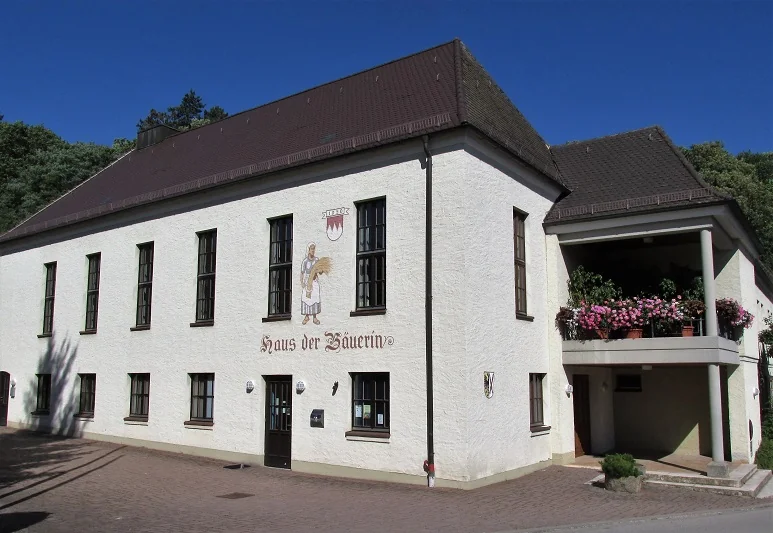
The House of the Farmer's Wife in Sachsen near Ansbach is a vibrant center for culture, clubs, and community life. Located in close proximity to the town center and not far from the train station, the address Vorderberg 1 brings together tradition, encounters, and services under one roof. The location has grown historically: intended as a community center in the post-war period, it continues to shape interactions in the village today – from art and exhibitions to bazaars and senior afternoons to information evenings and sporty social tournaments. Thanks to the large and small halls, programs can be flexibly combined, such as reception and lecture, concert and exhibition, or club celebration and family festival. The special charm lies in the mix of down-to-earthness and openness: local artists present their work alongside clubs, initiatives, and the community. Those looking for a central, easily accessible location in the Ansbach district will find here an authentic place with history that enables events close to the people – with short distances, friendly contacts, and an environment that makes the engagement of the citizens visible.
Events and Program at the House of the Farmer's Wife
The program at the House of the Farmer's Wife reflects what moves the community – and what excites them. This was particularly impressively demonstrated by the exhibition “Art Days in Sachsen,” where 11 local artists presented their works. Over 150 interested visitors attended the opening in mid-February, engaging directly with the artists over a glass and small snacks. A diverse range was exhibited: acrylic painting, photography, garden art, and sculptures made from various materials. The cultural officer of the community, who initiated the exhibition, emphasizes how important such a place of encounter is for the local art and culture scene – here, exchange takes place on equal footing, and curious visitors gain immediate insights into the creation of artworks. Another format is the children's bazaar, which regularly attracts many families in the autumn/winter. On October 11, 2025, the House of the Farmer's Wife focused on well-preserved children's clothing, toys, and equipment – with early entry for pregnant women, a long morning for browsing, and a popular cake buffet, the proceeds of which support the bazaar association. Such bazaars are more than just sales: they are meeting points where young parents exchange experiences and strengthen second-hand cycles.
It is lively and sociable at the Cornhole tournament of the local CSU chapter, which brought many teams back to the halls after a pandemic-related pause. In 2023, 30 two-person teams participated; games were played simultaneously in the large and small halls. Five matches ran concurrently, and the atmosphere was exuberant – an event that clearly showcases the qualities of the house: it allows flexible tournament setups, provides enough space for players and spectators, and the paths between playing fields, serving areas, and seating are short. Information evenings and advisory formats also find their space. On June 25, 2025, a specialist office for caregivers informed about current innovations, support offers, and contact points – a low-threshold offer that provides citizens with orientation in often complex life situations. Additionally, the senior café has established itself as a popular meeting place: at the end of October, around 50 people gathered for music, readings, sketches, and communal singing – a pleasant afternoon with much exchange. Throughout the year, a varied calendar emerges, with the common denominator being proximity to the citizens: open, affordable, easily accessible, and always with the aim of ensuring that people of all ages find suitable offerings.
Access by Train, Car, and Parking Information
The location of the House of the Farmer's Wife facilitates travel from the region. Those arriving by public transport disembark at the Sachsen bei Ansbach train station, which is on the S-Bahn line S4 (Nuremberg–Crailsheim). From there, a short walk leads to the town center in the direction of Vorderberg. The central address – Vorderberg 1, 91623 Sachsen bei Ansbach – is suitable as a destination for navigation devices, regardless of whether coming from Ansbach, Lichtenau, or neighboring towns. By car, the fastest route is usually via the A6 motorway: via exit 53 Lichtenau, one reaches the state road 2223, which connects the Lichtenau area with Ansbach. Depending on the starting point, municipal connecting roads lead into the village; they access the nearby districts and merge into the main streets of the center. For visitors, this means: short travel times when coming from the metropolitan region of Nuremberg, from the Ansbach district, or from the Hohenlohe region.
In the town center, public parking options are available depending on the event situation; during heavily attended events, spaces can be quickly occupied. Therefore, early arrival is recommended or – if possible – using the S-Bahn to reach the destination on foot in a short time. Since the parking and access situation depends on the current daily demand, it is advisable to pay attention to local signage and, for large events, to use surrounding parking areas. Organizers often provide information in their invitations about where parking is specifically allowed. Those delivering equipment should coordinate access with the municipal administration to ensure smooth loading and unloading. For guests using public transport, the combination of S-Bahn and a short walk is particularly convenient, as it avoids traffic jams in the region and also offers reliable return trips for evening events. With the easily memorable address Vorderberg 1 and the proximity to notable facilities in the village, finding the way is uncomplicated – both with navigation devices and on foot from the train station and bus stops. Those coming from the Ansbach region additionally benefit from clear signage along the state roads; the route to Sachsen is already well oriented from the larger neighboring towns.
Halls, Equipment, and Rental for Celebrations and Conferences
The House of the Farmer's Wife has a large and a small hall, which can be used individually or in parallel depending on the concept. This division is a plus for organizers who want to switch between lectures, competitions, exhibitions, catering, and social gatherings. Practice shows how flexible this works: at the Cornhole tournament, the organizers arranged the playing areas so that five matches could take place simultaneously; at exhibitions like the Art Days, the large hall serves as a stage for large-format works, while the smaller room allows for intimate presentations and discussions. For bazaars, the combination of tables, pathways, and clearly marked areas is crucial so that visitors can quickly find what they are looking for. The structure also proves effective for information evenings: central welcome and lecture, advisory islands and discussions in the smaller hall away from the main event – creating quiet areas without long distances.
Those wishing to use the location for private or club events encounter uncomplicated processes: the contact person is the municipal administration of Sachsen bei Ansbach. They coordinate appointment arrangements, room allocation, and usage details. Since the house is municipally anchored, transparent framework conditions apply; questions regarding house rules, key handover, cleaning stages, or shared use on heavily requested weekends are clarified in personal contact. For technology and equipment, planning is oriented towards the purpose of the event: row or banquet seating, information tables, partition walls, and mobile elements can be adapted to the formats. For exhibitions or bazaars, sufficient power outlets and clear pathways are essential; for lectures and discussion formats, sightlines and acoustics are crucial. Organizers should clarify early on whether additional equipment – such as partition walls or presentation media – is needed and whether these will be brought in or organized on-site. Catering can also be thought of flexibly: from self-organized cake buffets like at the children's bazaar to external service providers for club anniversaries. The central location in the village supports short delivery routes and relaxed arrivals and departures for all involved.
History and Special Features of the House of the Farmer's Wife
The history of the House of the Farmer's Wife is closely linked to the post-war period. In the years after 1945, there was a desire in Sachsen near Ansbach for a central meeting place for locals and the many refugees of that time. Under Mayor Hans Flier, it was possible to start a pilot project as a “trial community” in Middle Franconia, which had model character. On October 30, 1950, the house was ceremoniously inaugurated – financially supported by the United States of America. Thus, it was one of the first of its kind in the region. The original functions are remarkable: in addition to a hall, the house offered baths, a laundry room with a hot mangle, a sack sewing machine, an oven, a small library, a cider press, and slaughter rooms. It was thus not only a place for festivities and gatherings but also a practical infrastructure for managing everyday life, processing harvest products, and sharing expensive technology. This interplay of encounter, supply, and self-help shaped the house and made it the heart of the reviving village life.
In the following decades, the building was adapted to the growing needs. In 1961, an extension was added, and in 1974, another extension was built to accommodate the vehicles of the volunteer fire department. Many older residents fondly remember the well-attended carnival events, shooting festivals, and club celebrations that gave the house a lively face in those years. As households became increasingly modern in the 1980s and 1990s, making laundry room offerings unnecessary, the use of the building also changed: in 1995, the youth center (JuZ) moved into the vacated rooms – a symbol of the continuous adaptation to new societal demands. The community history also highlights that the new construction of the House of the Farmer's Wife in the early 1950s contributed to the development of the settlement “Am Vorderberg”: the building created a clear village center, strengthened the identity of the place, and set impulses for housing construction and infrastructure.
Today, the House of the Farmer's Wife stands for this tradition of renewal capability. It is less a rigid monument than a place that continually reinvents itself – depending on what clubs, initiatives, and the municipal administration bring in ideas. Whether art days, bazaars, information evenings, or social tournaments: the halls provide the spatial foundation, and the nearby paths in the community ensure that audiences, helpers, and exhibitors come together without much effort. Due to the central location, guests from neighboring towns can also reach the site quickly; the A6 exit Lichtenau and the S-Bahn line S4 facilitate the view beyond the village boundary. Thus, the House of the Farmer's Wife, more than seventy years after its inauguration, remains what it was meant to be from the beginning: an open house for the people – with history, but without fear of new formats.
Youth Center and Fire Department Under One Roof
A special feature of the House of the Farmer's Wife is the bundling of important community functions. Since 1995, the youth center (JuZ) has been housed in the building's rooms. For children, teenagers, and young adults, this means: short distances to meetings, programs, and counseling – and at the same time immediate touchpoints with cultural and social events taking place in the house. This spatial proximity promotes exchange and gives young people the opportunity to test their own ideas early in community life, whether through small exhibitions, music projects, or volunteer efforts at events. The volunteer fire department of Sachsen near Ansbach also has its place here: in 1974, an extension was built for the vehicles, and the fire department has since been present at the address Am/Vorderberg 1. The interplay of the community house and fire department is typical for rural communities: it combines safety infrastructure with public life, shortens distances during drills and operations, and simultaneously strengthens the understanding of volunteer engagement. Events in the house benefit from the fact that municipal contacts and club structures are in immediate proximity – decisions can be made quickly, and questions can be clarified at short notice.
For organizers, this is a real advantage. Those planning a youth workshop find not only rooms on-site but also the JuZ as a contact point with experience in working with young people. Those organizing a club festival can rely on established networks of volunteers. And those offering information evenings – for example, on care, prevention, or volunteer work – reach target groups directly where they already come together. The community spirit that shaped the House of the Farmer's Wife in 1950 is still evident today: the institutions under the roof are not just co-users but co-designers. They contribute to the success of events, the testing of new formats, and ensuring that the location remains a place where people can easily come together, share knowledge, and celebrate together.
Photos, Impressions, and Reviews from the Community
Those wanting to get an impression of the House of the Farmer's Wife can find numerous photo series in the reports of the community and local initiatives. Whether art days, senior café, bazaar, or tournament – pictures show the halls in use, the type of seating, the pathways, and the atmosphere when many people come together. This is particularly worthwhile for exhibitors and organizers: it conveys a sense of how the space can be utilized, where, for example, partition walls can fit, or how buffet and beverage distribution can be positioned. Retrospectives on previously held events also provide helpful insights: How was entry organized? Where were information and cash points located? What layout proved effective when both exhibitions and stage programs were running? For family and club celebrations, this can provide a good estimate of what details need to be considered during planning – from the schedule to volunteer assignments.
In voices from the community, the role of the house as a place of encounter is repeatedly emphasized. The short distance from the village to the event location, the functional rooms, and the reliability in collaboration with the community are praised. It is palpable that many people identify with the house – some remember carnival celebrations and club parties from previous decades, while others are pleased with new formats such as exhibitions, information evenings, or tournaments that appeal to new target groups. Those planning an event can utilize these experiences: through early communication, clear task distribution, and planning that takes the house's conditions into account. For guests, the location offers advantages: with the S-Bahn and direct village reference, visits can be planned spontaneously – whether on weekends or during the week in the early evening. Those visiting the house for the first time will find additional impressions and practical details through the sources below. They show the house in real operation – just as it is: a place that brings people together, week after week, year after year.
Sources:
- Community Sachsen b. Ansbach – House of the Farmer's Wife (History, Equipment, Extensions)
- Habewind Information Service – Meeting Place Then and Now: The House of the Farmer's Wife
- Wikipedia – Sachsen near Ansbach (Transport, S-Bahn S4, A6 Exit 53 Lichtenau)
- Gemeinsam-Sachsen – Cornhole Tournament: Use of Large and Small Hall
- Community Sachsen b. Ansbach – Event Calendar: Children's Bazaar Autumn/Winter (11.10.2025)
- Habewind Information Service – Information Evening Care (25.06.2025) at the House of the Farmer's Wife
- Volunteer Fire Department Sachsen b. Ansbach – Contact/Address at Location Vorderberg 1
Show moreShow less
House of the Farmer's Wife | Sachsen near Ansbach & Events
The House of the Farmer's Wife in Sachsen near Ansbach is a vibrant center for culture, clubs, and community life. Located in close proximity to the town center and not far from the train station, the address Vorderberg 1 brings together tradition, encounters, and services under one roof. The location has grown historically: intended as a community center in the post-war period, it continues to shape interactions in the village today – from art and exhibitions to bazaars and senior afternoons to information evenings and sporty social tournaments. Thanks to the large and small halls, programs can be flexibly combined, such as reception and lecture, concert and exhibition, or club celebration and family festival. The special charm lies in the mix of down-to-earthness and openness: local artists present their work alongside clubs, initiatives, and the community. Those looking for a central, easily accessible location in the Ansbach district will find here an authentic place with history that enables events close to the people – with short distances, friendly contacts, and an environment that makes the engagement of the citizens visible.
Events and Program at the House of the Farmer's Wife
The program at the House of the Farmer's Wife reflects what moves the community – and what excites them. This was particularly impressively demonstrated by the exhibition “Art Days in Sachsen,” where 11 local artists presented their works. Over 150 interested visitors attended the opening in mid-February, engaging directly with the artists over a glass and small snacks. A diverse range was exhibited: acrylic painting, photography, garden art, and sculptures made from various materials. The cultural officer of the community, who initiated the exhibition, emphasizes how important such a place of encounter is for the local art and culture scene – here, exchange takes place on equal footing, and curious visitors gain immediate insights into the creation of artworks. Another format is the children's bazaar, which regularly attracts many families in the autumn/winter. On October 11, 2025, the House of the Farmer's Wife focused on well-preserved children's clothing, toys, and equipment – with early entry for pregnant women, a long morning for browsing, and a popular cake buffet, the proceeds of which support the bazaar association. Such bazaars are more than just sales: they are meeting points where young parents exchange experiences and strengthen second-hand cycles.
It is lively and sociable at the Cornhole tournament of the local CSU chapter, which brought many teams back to the halls after a pandemic-related pause. In 2023, 30 two-person teams participated; games were played simultaneously in the large and small halls. Five matches ran concurrently, and the atmosphere was exuberant – an event that clearly showcases the qualities of the house: it allows flexible tournament setups, provides enough space for players and spectators, and the paths between playing fields, serving areas, and seating are short. Information evenings and advisory formats also find their space. On June 25, 2025, a specialist office for caregivers informed about current innovations, support offers, and contact points – a low-threshold offer that provides citizens with orientation in often complex life situations. Additionally, the senior café has established itself as a popular meeting place: at the end of October, around 50 people gathered for music, readings, sketches, and communal singing – a pleasant afternoon with much exchange. Throughout the year, a varied calendar emerges, with the common denominator being proximity to the citizens: open, affordable, easily accessible, and always with the aim of ensuring that people of all ages find suitable offerings.
Access by Train, Car, and Parking Information
The location of the House of the Farmer's Wife facilitates travel from the region. Those arriving by public transport disembark at the Sachsen bei Ansbach train station, which is on the S-Bahn line S4 (Nuremberg–Crailsheim). From there, a short walk leads to the town center in the direction of Vorderberg. The central address – Vorderberg 1, 91623 Sachsen bei Ansbach – is suitable as a destination for navigation devices, regardless of whether coming from Ansbach, Lichtenau, or neighboring towns. By car, the fastest route is usually via the A6 motorway: via exit 53 Lichtenau, one reaches the state road 2223, which connects the Lichtenau area with Ansbach. Depending on the starting point, municipal connecting roads lead into the village; they access the nearby districts and merge into the main streets of the center. For visitors, this means: short travel times when coming from the metropolitan region of Nuremberg, from the Ansbach district, or from the Hohenlohe region.
In the town center, public parking options are available depending on the event situation; during heavily attended events, spaces can be quickly occupied. Therefore, early arrival is recommended or – if possible – using the S-Bahn to reach the destination on foot in a short time. Since the parking and access situation depends on the current daily demand, it is advisable to pay attention to local signage and, for large events, to use surrounding parking areas. Organizers often provide information in their invitations about where parking is specifically allowed. Those delivering equipment should coordinate access with the municipal administration to ensure smooth loading and unloading. For guests using public transport, the combination of S-Bahn and a short walk is particularly convenient, as it avoids traffic jams in the region and also offers reliable return trips for evening events. With the easily memorable address Vorderberg 1 and the proximity to notable facilities in the village, finding the way is uncomplicated – both with navigation devices and on foot from the train station and bus stops. Those coming from the Ansbach region additionally benefit from clear signage along the state roads; the route to Sachsen is already well oriented from the larger neighboring towns.
Halls, Equipment, and Rental for Celebrations and Conferences
The House of the Farmer's Wife has a large and a small hall, which can be used individually or in parallel depending on the concept. This division is a plus for organizers who want to switch between lectures, competitions, exhibitions, catering, and social gatherings. Practice shows how flexible this works: at the Cornhole tournament, the organizers arranged the playing areas so that five matches could take place simultaneously; at exhibitions like the Art Days, the large hall serves as a stage for large-format works, while the smaller room allows for intimate presentations and discussions. For bazaars, the combination of tables, pathways, and clearly marked areas is crucial so that visitors can quickly find what they are looking for. The structure also proves effective for information evenings: central welcome and lecture, advisory islands and discussions in the smaller hall away from the main event – creating quiet areas without long distances.
Those wishing to use the location for private or club events encounter uncomplicated processes: the contact person is the municipal administration of Sachsen bei Ansbach. They coordinate appointment arrangements, room allocation, and usage details. Since the house is municipally anchored, transparent framework conditions apply; questions regarding house rules, key handover, cleaning stages, or shared use on heavily requested weekends are clarified in personal contact. For technology and equipment, planning is oriented towards the purpose of the event: row or banquet seating, information tables, partition walls, and mobile elements can be adapted to the formats. For exhibitions or bazaars, sufficient power outlets and clear pathways are essential; for lectures and discussion formats, sightlines and acoustics are crucial. Organizers should clarify early on whether additional equipment – such as partition walls or presentation media – is needed and whether these will be brought in or organized on-site. Catering can also be thought of flexibly: from self-organized cake buffets like at the children's bazaar to external service providers for club anniversaries. The central location in the village supports short delivery routes and relaxed arrivals and departures for all involved.
History and Special Features of the House of the Farmer's Wife
The history of the House of the Farmer's Wife is closely linked to the post-war period. In the years after 1945, there was a desire in Sachsen near Ansbach for a central meeting place for locals and the many refugees of that time. Under Mayor Hans Flier, it was possible to start a pilot project as a “trial community” in Middle Franconia, which had model character. On October 30, 1950, the house was ceremoniously inaugurated – financially supported by the United States of America. Thus, it was one of the first of its kind in the region. The original functions are remarkable: in addition to a hall, the house offered baths, a laundry room with a hot mangle, a sack sewing machine, an oven, a small library, a cider press, and slaughter rooms. It was thus not only a place for festivities and gatherings but also a practical infrastructure for managing everyday life, processing harvest products, and sharing expensive technology. This interplay of encounter, supply, and self-help shaped the house and made it the heart of the reviving village life.
In the following decades, the building was adapted to the growing needs. In 1961, an extension was added, and in 1974, another extension was built to accommodate the vehicles of the volunteer fire department. Many older residents fondly remember the well-attended carnival events, shooting festivals, and club celebrations that gave the house a lively face in those years. As households became increasingly modern in the 1980s and 1990s, making laundry room offerings unnecessary, the use of the building also changed: in 1995, the youth center (JuZ) moved into the vacated rooms – a symbol of the continuous adaptation to new societal demands. The community history also highlights that the new construction of the House of the Farmer's Wife in the early 1950s contributed to the development of the settlement “Am Vorderberg”: the building created a clear village center, strengthened the identity of the place, and set impulses for housing construction and infrastructure.
Today, the House of the Farmer's Wife stands for this tradition of renewal capability. It is less a rigid monument than a place that continually reinvents itself – depending on what clubs, initiatives, and the municipal administration bring in ideas. Whether art days, bazaars, information evenings, or social tournaments: the halls provide the spatial foundation, and the nearby paths in the community ensure that audiences, helpers, and exhibitors come together without much effort. Due to the central location, guests from neighboring towns can also reach the site quickly; the A6 exit Lichtenau and the S-Bahn line S4 facilitate the view beyond the village boundary. Thus, the House of the Farmer's Wife, more than seventy years after its inauguration, remains what it was meant to be from the beginning: an open house for the people – with history, but without fear of new formats.
Youth Center and Fire Department Under One Roof
A special feature of the House of the Farmer's Wife is the bundling of important community functions. Since 1995, the youth center (JuZ) has been housed in the building's rooms. For children, teenagers, and young adults, this means: short distances to meetings, programs, and counseling – and at the same time immediate touchpoints with cultural and social events taking place in the house. This spatial proximity promotes exchange and gives young people the opportunity to test their own ideas early in community life, whether through small exhibitions, music projects, or volunteer efforts at events. The volunteer fire department of Sachsen near Ansbach also has its place here: in 1974, an extension was built for the vehicles, and the fire department has since been present at the address Am/Vorderberg 1. The interplay of the community house and fire department is typical for rural communities: it combines safety infrastructure with public life, shortens distances during drills and operations, and simultaneously strengthens the understanding of volunteer engagement. Events in the house benefit from the fact that municipal contacts and club structures are in immediate proximity – decisions can be made quickly, and questions can be clarified at short notice.
For organizers, this is a real advantage. Those planning a youth workshop find not only rooms on-site but also the JuZ as a contact point with experience in working with young people. Those organizing a club festival can rely on established networks of volunteers. And those offering information evenings – for example, on care, prevention, or volunteer work – reach target groups directly where they already come together. The community spirit that shaped the House of the Farmer's Wife in 1950 is still evident today: the institutions under the roof are not just co-users but co-designers. They contribute to the success of events, the testing of new formats, and ensuring that the location remains a place where people can easily come together, share knowledge, and celebrate together.
Photos, Impressions, and Reviews from the Community
Those wanting to get an impression of the House of the Farmer's Wife can find numerous photo series in the reports of the community and local initiatives. Whether art days, senior café, bazaar, or tournament – pictures show the halls in use, the type of seating, the pathways, and the atmosphere when many people come together. This is particularly worthwhile for exhibitors and organizers: it conveys a sense of how the space can be utilized, where, for example, partition walls can fit, or how buffet and beverage distribution can be positioned. Retrospectives on previously held events also provide helpful insights: How was entry organized? Where were information and cash points located? What layout proved effective when both exhibitions and stage programs were running? For family and club celebrations, this can provide a good estimate of what details need to be considered during planning – from the schedule to volunteer assignments.
In voices from the community, the role of the house as a place of encounter is repeatedly emphasized. The short distance from the village to the event location, the functional rooms, and the reliability in collaboration with the community are praised. It is palpable that many people identify with the house – some remember carnival celebrations and club parties from previous decades, while others are pleased with new formats such as exhibitions, information evenings, or tournaments that appeal to new target groups. Those planning an event can utilize these experiences: through early communication, clear task distribution, and planning that takes the house's conditions into account. For guests, the location offers advantages: with the S-Bahn and direct village reference, visits can be planned spontaneously – whether on weekends or during the week in the early evening. Those visiting the house for the first time will find additional impressions and practical details through the sources below. They show the house in real operation – just as it is: a place that brings people together, week after week, year after year.
Sources:
- Community Sachsen b. Ansbach – House of the Farmer's Wife (History, Equipment, Extensions)
- Habewind Information Service – Meeting Place Then and Now: The House of the Farmer's Wife
- Wikipedia – Sachsen near Ansbach (Transport, S-Bahn S4, A6 Exit 53 Lichtenau)
- Gemeinsam-Sachsen – Cornhole Tournament: Use of Large and Small Hall
- Community Sachsen b. Ansbach – Event Calendar: Children's Bazaar Autumn/Winter (11.10.2025)
- Habewind Information Service – Information Evening Care (25.06.2025) at the House of the Farmer's Wife
- Volunteer Fire Department Sachsen b. Ansbach – Contact/Address at Location Vorderberg 1
House of the Farmer's Wife | Sachsen near Ansbach & Events
The House of the Farmer's Wife in Sachsen near Ansbach is a vibrant center for culture, clubs, and community life. Located in close proximity to the town center and not far from the train station, the address Vorderberg 1 brings together tradition, encounters, and services under one roof. The location has grown historically: intended as a community center in the post-war period, it continues to shape interactions in the village today – from art and exhibitions to bazaars and senior afternoons to information evenings and sporty social tournaments. Thanks to the large and small halls, programs can be flexibly combined, such as reception and lecture, concert and exhibition, or club celebration and family festival. The special charm lies in the mix of down-to-earthness and openness: local artists present their work alongside clubs, initiatives, and the community. Those looking for a central, easily accessible location in the Ansbach district will find here an authentic place with history that enables events close to the people – with short distances, friendly contacts, and an environment that makes the engagement of the citizens visible.
Events and Program at the House of the Farmer's Wife
The program at the House of the Farmer's Wife reflects what moves the community – and what excites them. This was particularly impressively demonstrated by the exhibition “Art Days in Sachsen,” where 11 local artists presented their works. Over 150 interested visitors attended the opening in mid-February, engaging directly with the artists over a glass and small snacks. A diverse range was exhibited: acrylic painting, photography, garden art, and sculptures made from various materials. The cultural officer of the community, who initiated the exhibition, emphasizes how important such a place of encounter is for the local art and culture scene – here, exchange takes place on equal footing, and curious visitors gain immediate insights into the creation of artworks. Another format is the children's bazaar, which regularly attracts many families in the autumn/winter. On October 11, 2025, the House of the Farmer's Wife focused on well-preserved children's clothing, toys, and equipment – with early entry for pregnant women, a long morning for browsing, and a popular cake buffet, the proceeds of which support the bazaar association. Such bazaars are more than just sales: they are meeting points where young parents exchange experiences and strengthen second-hand cycles.
It is lively and sociable at the Cornhole tournament of the local CSU chapter, which brought many teams back to the halls after a pandemic-related pause. In 2023, 30 two-person teams participated; games were played simultaneously in the large and small halls. Five matches ran concurrently, and the atmosphere was exuberant – an event that clearly showcases the qualities of the house: it allows flexible tournament setups, provides enough space for players and spectators, and the paths between playing fields, serving areas, and seating are short. Information evenings and advisory formats also find their space. On June 25, 2025, a specialist office for caregivers informed about current innovations, support offers, and contact points – a low-threshold offer that provides citizens with orientation in often complex life situations. Additionally, the senior café has established itself as a popular meeting place: at the end of October, around 50 people gathered for music, readings, sketches, and communal singing – a pleasant afternoon with much exchange. Throughout the year, a varied calendar emerges, with the common denominator being proximity to the citizens: open, affordable, easily accessible, and always with the aim of ensuring that people of all ages find suitable offerings.
Access by Train, Car, and Parking Information
The location of the House of the Farmer's Wife facilitates travel from the region. Those arriving by public transport disembark at the Sachsen bei Ansbach train station, which is on the S-Bahn line S4 (Nuremberg–Crailsheim). From there, a short walk leads to the town center in the direction of Vorderberg. The central address – Vorderberg 1, 91623 Sachsen bei Ansbach – is suitable as a destination for navigation devices, regardless of whether coming from Ansbach, Lichtenau, or neighboring towns. By car, the fastest route is usually via the A6 motorway: via exit 53 Lichtenau, one reaches the state road 2223, which connects the Lichtenau area with Ansbach. Depending on the starting point, municipal connecting roads lead into the village; they access the nearby districts and merge into the main streets of the center. For visitors, this means: short travel times when coming from the metropolitan region of Nuremberg, from the Ansbach district, or from the Hohenlohe region.
In the town center, public parking options are available depending on the event situation; during heavily attended events, spaces can be quickly occupied. Therefore, early arrival is recommended or – if possible – using the S-Bahn to reach the destination on foot in a short time. Since the parking and access situation depends on the current daily demand, it is advisable to pay attention to local signage and, for large events, to use surrounding parking areas. Organizers often provide information in their invitations about where parking is specifically allowed. Those delivering equipment should coordinate access with the municipal administration to ensure smooth loading and unloading. For guests using public transport, the combination of S-Bahn and a short walk is particularly convenient, as it avoids traffic jams in the region and also offers reliable return trips for evening events. With the easily memorable address Vorderberg 1 and the proximity to notable facilities in the village, finding the way is uncomplicated – both with navigation devices and on foot from the train station and bus stops. Those coming from the Ansbach region additionally benefit from clear signage along the state roads; the route to Sachsen is already well oriented from the larger neighboring towns.
Halls, Equipment, and Rental for Celebrations and Conferences
The House of the Farmer's Wife has a large and a small hall, which can be used individually or in parallel depending on the concept. This division is a plus for organizers who want to switch between lectures, competitions, exhibitions, catering, and social gatherings. Practice shows how flexible this works: at the Cornhole tournament, the organizers arranged the playing areas so that five matches could take place simultaneously; at exhibitions like the Art Days, the large hall serves as a stage for large-format works, while the smaller room allows for intimate presentations and discussions. For bazaars, the combination of tables, pathways, and clearly marked areas is crucial so that visitors can quickly find what they are looking for. The structure also proves effective for information evenings: central welcome and lecture, advisory islands and discussions in the smaller hall away from the main event – creating quiet areas without long distances.
Those wishing to use the location for private or club events encounter uncomplicated processes: the contact person is the municipal administration of Sachsen bei Ansbach. They coordinate appointment arrangements, room allocation, and usage details. Since the house is municipally anchored, transparent framework conditions apply; questions regarding house rules, key handover, cleaning stages, or shared use on heavily requested weekends are clarified in personal contact. For technology and equipment, planning is oriented towards the purpose of the event: row or banquet seating, information tables, partition walls, and mobile elements can be adapted to the formats. For exhibitions or bazaars, sufficient power outlets and clear pathways are essential; for lectures and discussion formats, sightlines and acoustics are crucial. Organizers should clarify early on whether additional equipment – such as partition walls or presentation media – is needed and whether these will be brought in or organized on-site. Catering can also be thought of flexibly: from self-organized cake buffets like at the children's bazaar to external service providers for club anniversaries. The central location in the village supports short delivery routes and relaxed arrivals and departures for all involved.
History and Special Features of the House of the Farmer's Wife
The history of the House of the Farmer's Wife is closely linked to the post-war period. In the years after 1945, there was a desire in Sachsen near Ansbach for a central meeting place for locals and the many refugees of that time. Under Mayor Hans Flier, it was possible to start a pilot project as a “trial community” in Middle Franconia, which had model character. On October 30, 1950, the house was ceremoniously inaugurated – financially supported by the United States of America. Thus, it was one of the first of its kind in the region. The original functions are remarkable: in addition to a hall, the house offered baths, a laundry room with a hot mangle, a sack sewing machine, an oven, a small library, a cider press, and slaughter rooms. It was thus not only a place for festivities and gatherings but also a practical infrastructure for managing everyday life, processing harvest products, and sharing expensive technology. This interplay of encounter, supply, and self-help shaped the house and made it the heart of the reviving village life.
In the following decades, the building was adapted to the growing needs. In 1961, an extension was added, and in 1974, another extension was built to accommodate the vehicles of the volunteer fire department. Many older residents fondly remember the well-attended carnival events, shooting festivals, and club celebrations that gave the house a lively face in those years. As households became increasingly modern in the 1980s and 1990s, making laundry room offerings unnecessary, the use of the building also changed: in 1995, the youth center (JuZ) moved into the vacated rooms – a symbol of the continuous adaptation to new societal demands. The community history also highlights that the new construction of the House of the Farmer's Wife in the early 1950s contributed to the development of the settlement “Am Vorderberg”: the building created a clear village center, strengthened the identity of the place, and set impulses for housing construction and infrastructure.
Today, the House of the Farmer's Wife stands for this tradition of renewal capability. It is less a rigid monument than a place that continually reinvents itself – depending on what clubs, initiatives, and the municipal administration bring in ideas. Whether art days, bazaars, information evenings, or social tournaments: the halls provide the spatial foundation, and the nearby paths in the community ensure that audiences, helpers, and exhibitors come together without much effort. Due to the central location, guests from neighboring towns can also reach the site quickly; the A6 exit Lichtenau and the S-Bahn line S4 facilitate the view beyond the village boundary. Thus, the House of the Farmer's Wife, more than seventy years after its inauguration, remains what it was meant to be from the beginning: an open house for the people – with history, but without fear of new formats.
Youth Center and Fire Department Under One Roof
A special feature of the House of the Farmer's Wife is the bundling of important community functions. Since 1995, the youth center (JuZ) has been housed in the building's rooms. For children, teenagers, and young adults, this means: short distances to meetings, programs, and counseling – and at the same time immediate touchpoints with cultural and social events taking place in the house. This spatial proximity promotes exchange and gives young people the opportunity to test their own ideas early in community life, whether through small exhibitions, music projects, or volunteer efforts at events. The volunteer fire department of Sachsen near Ansbach also has its place here: in 1974, an extension was built for the vehicles, and the fire department has since been present at the address Am/Vorderberg 1. The interplay of the community house and fire department is typical for rural communities: it combines safety infrastructure with public life, shortens distances during drills and operations, and simultaneously strengthens the understanding of volunteer engagement. Events in the house benefit from the fact that municipal contacts and club structures are in immediate proximity – decisions can be made quickly, and questions can be clarified at short notice.
For organizers, this is a real advantage. Those planning a youth workshop find not only rooms on-site but also the JuZ as a contact point with experience in working with young people. Those organizing a club festival can rely on established networks of volunteers. And those offering information evenings – for example, on care, prevention, or volunteer work – reach target groups directly where they already come together. The community spirit that shaped the House of the Farmer's Wife in 1950 is still evident today: the institutions under the roof are not just co-users but co-designers. They contribute to the success of events, the testing of new formats, and ensuring that the location remains a place where people can easily come together, share knowledge, and celebrate together.
Photos, Impressions, and Reviews from the Community
Those wanting to get an impression of the House of the Farmer's Wife can find numerous photo series in the reports of the community and local initiatives. Whether art days, senior café, bazaar, or tournament – pictures show the halls in use, the type of seating, the pathways, and the atmosphere when many people come together. This is particularly worthwhile for exhibitors and organizers: it conveys a sense of how the space can be utilized, where, for example, partition walls can fit, or how buffet and beverage distribution can be positioned. Retrospectives on previously held events also provide helpful insights: How was entry organized? Where were information and cash points located? What layout proved effective when both exhibitions and stage programs were running? For family and club celebrations, this can provide a good estimate of what details need to be considered during planning – from the schedule to volunteer assignments.
In voices from the community, the role of the house as a place of encounter is repeatedly emphasized. The short distance from the village to the event location, the functional rooms, and the reliability in collaboration with the community are praised. It is palpable that many people identify with the house – some remember carnival celebrations and club parties from previous decades, while others are pleased with new formats such as exhibitions, information evenings, or tournaments that appeal to new target groups. Those planning an event can utilize these experiences: through early communication, clear task distribution, and planning that takes the house's conditions into account. For guests, the location offers advantages: with the S-Bahn and direct village reference, visits can be planned spontaneously – whether on weekends or during the week in the early evening. Those visiting the house for the first time will find additional impressions and practical details through the sources below. They show the house in real operation – just as it is: a place that brings people together, week after week, year after year.
Sources:
- Community Sachsen b. Ansbach – House of the Farmer's Wife (History, Equipment, Extensions)
- Habewind Information Service – Meeting Place Then and Now: The House of the Farmer's Wife
- Wikipedia – Sachsen near Ansbach (Transport, S-Bahn S4, A6 Exit 53 Lichtenau)
- Gemeinsam-Sachsen – Cornhole Tournament: Use of Large and Small Hall
- Community Sachsen b. Ansbach – Event Calendar: Children's Bazaar Autumn/Winter (11.10.2025)
- Habewind Information Service – Information Evening Care (25.06.2025) at the House of the Farmer's Wife
- Volunteer Fire Department Sachsen b. Ansbach – Contact/Address at Location Vorderberg 1
Upcoming Events
No events found
Frequently Asked Questions
Reviews
Florian Conradt (DrAzHaR)
18. March 2025
You can vote here well :D I haven't done anything else there yet. The house serves many events and is important for the community.
Waltraud Schmidt
30. September 2025
Yes, for registered events.
Markus Scheuerpflug
25. August 2022
A very nice venue. With two beautiful halls for celebrations. Everything is accessible for people with disabilities. The youth center and fire department are also in the building. It's about a 5-minute walk to the train station.
Alexander “Gipsyalex” Tornow
1. October 2021
Very clean house, accessible only for community members for public events, like elections..... but they have a stairlift for people with disabilities so everyone can reach the second floor.
Norbert Witteck
12. November 2023
Today I watched a comedy theater.... super funny, just hilarious 😄🤣🤣🤣