
Ansbach
91522 Ansbach, Deutschland
Ansbach Schloßplatz | Stops & Schloßstraße
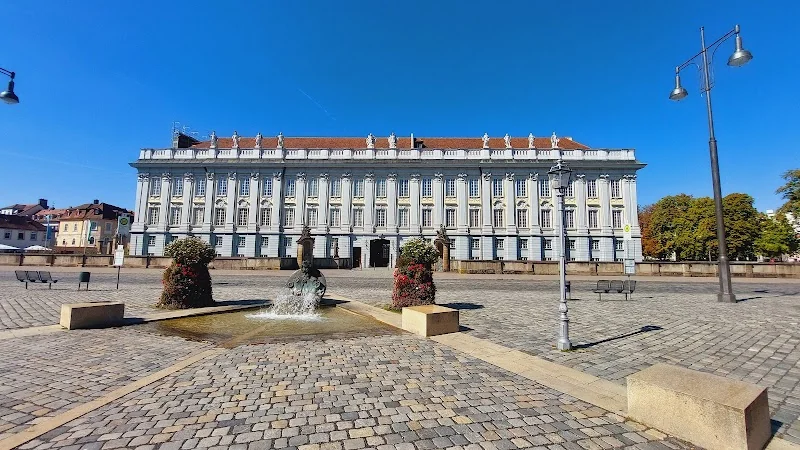
The Ansbach Schloßplatz is one of those places where city history, orientation, and everyday life overlap particularly closely. Those who arrive here stand in the heart of Ansbach's city center, in the Promenade, and thus directly in an environment that has been shaped for centuries by the residence, court garden, and historic old town. For visitors, the square is therefore not just a name on the city map, but a practical starting point for walks, museum visits, official errands, cultural events, and short routes through the center. Officially, the Schloßplatz in Ansbach is listed as an address in the Promenade; at the same time, the bus connections and the proximity to the residence and court garden mark it as one of the most important hubs of the city. This is a great advantage, especially for travelers who are on the move without a car: The square is easy to find, well accessible, and integrated into urban mobility. The surroundings connect the representative history of the former residence city with a modern urban life characterized by public transport, parking options, and many pedestrian paths. ([ansbach.de](https://www.ansbach.de/B%C3%BCrger/Rathaus-Service/B%C3%BCrgerservice-Online-Dienste/Wo-finden-Sie-uns-/Schlossplatz.php?FID=2595.700.1&La=1&ModID=9&mNavID=2595.68&object=tx%7C2595.2.1&redir=1&sNavID=2595.68&utm_source=openai))
Stops at Schloßplatz: Bus Lines, Transfers, and Accessibility
When users search for "Ansbach Schloßplatz stops," it usually revolves around the same core question: How do I quickly and reliably get close to the residence, court garden, and city center? The official transport page of the VGN answers exactly that by listing the Schloßplatz as a central reference point of urban transport. Several bus lines are directly oriented towards the Schloßplatz, including lines 751, 752, 753, 755, and 756. This is particularly helpful for visitors, as the square is not only a sight but also a real transfer point in daily urban traffic. Those coming from various districts typically arrive very close to the most important destinations in the center via these lines. This makes the Schloßplatz attractive for both tourists and locals who want to complete appointments in the historic core of the city or start a cultural tour. The square thus functions not in isolation, but as part of a finely meshed network of city buses, regional transport, and pedestrian paths. ([vgn.de](https://www.vgn.de/fuer/stadt-menschen/ansbach/))
Particularly significant is also the official notice from the Bavarian Palace Administration for the residence and the court garden: "All buses to Schloßplatz." This marks the Schloßplatz as the clearly recommended arrival address for visiting the margravial facilities. For train travelers, it is also relevant that the brochure for the residence and court garden describes the walk from the train station as about seven minutes on foot. This means: Those arriving by train in Ansbach can easily walk or take the bus into the city center. The combination of train, bus, and a short walk is a strong argument for the location, as it facilitates spontaneous visits just as much as planned city walks. The renaming of a nearby bus stop from "Schloßplatz 10" to "Retti-Palais" also shows that the city has further clarified orientation in the immediate vicinity of the residence. Thus, the Schloßplatz remains a historical reference point while individual stops are named more modernly and clearly. ([schloesser.bayern.de](https://www.schloesser.bayern.de/deutsch/service/infomat/screen-pdf/ansbach_dt.pdf?utm_source=openai))
From an SEO perspective, the topic of stops is particularly strong because the Schloßplatz in Ansbach offers exactly that mix of city center, cultural site, and mobility hub that users often search for. Those attending an event want to know which line runs; those who want to see the residence do not want to search long for the entry point; and those who want to go to the old town want to arrive as directly as possible. The Schloßplatz answers these questions almost ideally, as it is located in a city whose public transport, according to city information, is based on about 145 kilometers of routes, city buses, call buses, and call taxis. For the city center, this means: The Schloßplatz is more than just a stop; it is a logical hub in the entire flow of visitors. Especially during events, walks, or last-minute visits, this reliability is a decisive advantage. So those looking for access, transfers, and stops will find at the Schloßplatz a location that combines historical ambiance and modern accessibility in a way that is not often found so cohesively in many medium-sized cities. ([ansbach.de](https://www.ansbach.de/B%C3%BCrger/%C3%96PNV-Verkehr/Verkehr-Mobilit%C3%A4t/?utm_source=openai))
Schloßstraße and Parking in Ansbach's City Center
The second major search topic behind "Ansbach Schloßplatz stops" is almost always parking. Those arriving by car want to know where the nearest parking spaces are located, what fees apply, and which streets near the square are particularly relevant. The city of Ansbach provides very concrete information on this: Currently, there are more than 4,000 parking spaces available in the city center in different price categories. This ranges from free areas to regular city center spaces. For the area around the Schloßplatz, it is particularly important that the Schloßstraße is listed in Zone 2 of the parking regulations. Also listed in the city center zones are, among others, Bischof-Meiser-Straße, Karlsplatz, Karolinenstraße, Promenade, and other central streets. This shows that the Schloßplatz is not located in an isolated fringe area but right in the middle of a regulated yet well-utilized city center parking space. This is practical for day visitors, as they can park within walking distance and then reach the historical sites on foot. ([ansbach.de](https://www.ansbach.de/B%C3%BCrger/%C3%96PNV-Verkehr/Parken/?utm_source=openai))
The fee structure is clearly organized: Fees apply Monday to Friday from 8 AM to 6 PM and Saturday from 8 AM to 2 PM; parking is free on Sundays and public holidays. For visitors, this means that the timing of their stay plays a significant role, especially if they combine their city visit with a walk or a museum stay. Additionally, the city offers the digital service "Mobile Parking." According to the city website, this applies to all public parking areas subject to the parking regulations, as well as to the parking garage at the train station, the old town parking garage, and the Rezatwiese West parking lot. This is a significant comfort gain, especially for guests who do not want to search long for a parking machine. So those who specifically drive to the Schloßplatz will find not only a dense network of spaces but also modern payment options. In practice, this means: City center visits, cultural programs, and short walks can be very well combined here. ([ansbach.de](https://www.ansbach.de/B%C3%BCrger/%C3%96PNV-Verkehr/Parken/Handyparken/?utm_source=openai))
For orientation around "ansbach schlossstraße," it is also important that the Schloßplatz itself is part of a larger historical network of streets and squares. The Schloß- or Schloßstraße appears in the city's parking zone logic as a clearly named street section and thus lies in close proximity to the most important destinations. Those coming from the direction of Bahnhofsplatz or from the western old town areas find here an urban environment that is consciously designed for short distances. This makes the Schloßplatz equally interesting for visitor groups, older guests, and families. Because the center is not only touristically attractive but also organized in such a way that one can plan the routes between parking, stops, and destination quite well. Additionally, for longer stays or frequent visits to the city center, the city even offers permanent parking spaces in the inner-city area as well as park-and-ride options. This makes the Schloßplatz not only the destination of a single visit but also a practical reference point in the entire mobility mix of Ansbach's city center. ([ansbach.de](https://www.ansbach.de/B%C3%BCrger/%C3%96PNV-Verkehr/Parken/Dauerstellpl%C3%A4tze/?utm_source=openai))
Residenz Ansbach and Hofgarten Directly at Schloßplatz
The perhaps most important reason why the Schloßplatz in Ansbach is searched so frequently is its direct proximity to the residence and the court garden. The Bavarian Palace Administration describes the Ansbach Residence as a complex with medieval roots, whose development began in the second half of the 16th century with the Gothic Hall. Between 1705 and 1730, the building structure was transformed into a modern residence, and the interiors that characterize it today were mainly created between 1734 and 1745 under the artistic direction of Leopoldo Retti. Particularly noteworthy are the festival hall with the ceiling fresco by Carlo Carlone, the picture gallery with works of the Rococo, the collection of Meissen porcelain, and the mounted margravial horses from the 18th century. These details show that the square is not only significant in terms of landscape but also in terms of art and cultural history. Thus, standing at the Schloßplatz means being next to one of the most important historical spaces in Middle Franconia. ([schloesser.bayern.de](https://www.schloesser.bayern.de/deutsch/schloss/objekte/ansbach.htm?utm_source=openai))
The court garden is also central to the impact of the Schloßplatz. It belongs to the residence and was designed, according to the Palace Administration, with the orangery between 1726 and 1743. The garden structure includes a forecourt, side-placed linden halls, and a clear main axis accompanied by double-rowed linden hedges. In summer, the orangery presents citrus, orange, olive, pistachio, bay, and fig trees; at the same time, monuments and memorial plaques commemorate important personalities such as Leonhart Fuchs, Johann Peter Uz, and Kaspar Hauser. For visitors, this means that the Schloßplatz is not only a place of arrival but a kind of threshold to a cultural ensemble of architecture, garden art, and memorial culture. The pathways are designed in such a way that one can easily access the court garden. The Palace Administration even points out the bus to Schloßplatz for the visit, further emphasizing the role of the square as an access point. ([schloesser.bayern.de](https://www.schloesser.bayern.de/deutsch/garten/objekte/ansbach.htm?utm_source=openai))
For the external impact of the location, it is crucial that Schloßplatz, residence, and court garden together read like a single large urban space. The Schloßplatz is the visible connecting zone between the margravial past and today's public life. The city of Ansbach describes its history as that of a former residence city with more than 1,250 years of development, and this depth is particularly palpable at this location. The ensemble does not appear museum-like and isolated but embedded in the city: a square, a promenade, a court garden, and a residence that together form a very strong image. For SEO and user intention, this is valuable because many searches around the Schloßplatz actually target the residence, the garden complex, or cultural tours. So when someone enters the term "Ansbach Schloßplatz," they often mean exactly this interface of access, history, and sight. The special quality lies in the fact that one does not have to choose between city and culture here; both come together in the same place. ([ansbach.de](https://www.ansbach.de/B%C3%BCrger/Rathaus-Service/Stadtportrait/Historisches/?utm_source=openai))
Anscavallo, Old Town, and Events at Schloßplatz
A defining detail at Schloßplatz is the horse sculpture Anscavallo. It is not only an art object but also a clear meeting point in public space. The city of Ansbach uses Anscavallo at events as a defined orientation, such as during city tours and walks through the urban nature. The sculpture has been indicated as a meeting point for the musical walk through the urban nature as well as for the anniversary city tour "800 Years - 800 Steps." This shows that the Schloßplatz is not just an area between buildings but a place with recognition value where visitor groups actually gather. This is important for external perception: A square with a clear landmark point increases the quality of stay, facilitates orientation, and is photographed, described, and recommended more often. That is why Anscavallo is also a strong detail for the Schloßplatz from an SEO perspective, as it links the location with a real, specific image. ([ansbach.de](https://www.ansbach.de/B%C3%BCrger/Rathaus-Service/Stadtnachrichten/Stadt-der-Vielfalt-Ein-musikalischer-Spaziergang-durch-die-Stadtnatur.php?FID=2595.6344.1&La=1&ModID=11&NavID=2595.280&object=tx%2C2595.5.1&utm_source=openai))
The Schloßplatz also benefits from being content-wise and spatially connected to the old town. From here, paths lead past the residence into the historic center, and many culture-related city tours start right here. The city itself uses the location in communication around events, tours, and leisure activities, making it a recurring reference point for different target groups. Those visiting Ansbach as tourists often orient themselves around exactly such meeting points: a square with a sculpture, a residence, a court garden, and the old town in immediate reach. This is also the reason why the Schloßplatz works so strongly in content strategies. It connects practical questions like "Where is the stop?" with emotional questions like "Where does beautiful Ansbach begin?" and "Where do I meet for the tour?" Because the square fulfills so many functions simultaneously, it is intuitively understandable for visitors and highly compatible with search engines. The combination of historical context and concrete use makes the Schloßplatz a place that is not only visited but also experienced as a starting point. ([ansbach.de](https://www.ansbach.de/B%C3%BCrger/Rathaus-Service/Stadtnachrichten/Stadt-der-Vielfalt-Ein-musikalischer-Spaziergang-durch-die-Stadtnatur.php?FID=2595.6344.1&La=1&ModID=11&NavID=2595.280&object=tx%2C2595.5.1&utm_source=openai))
In terms of tourist experience, the Schloßplatz is also a hub. It represents the way to the residence, the view of the court garden, and the transition into the old town. Those who stay here get a typical Ansbach mix of representative architecture, urban movement, and public cultural space. The city utilizes this quality in various formats, from the official event calendar to guided tours and thematic walks. This keeps the square present without needing to be loud. This makes it pleasant for visitors: One does not need a long explanation to find their way; the landmarks are clear, the paths understandable, and the atmosphere is both calm and steeped in history. For an SEO page, this is worth its weight in gold because content about the Schloßplatz not only provides facts but actually helps plan a visit. Therefore, it is worthwhile to always think of culture, meeting points, photo motifs, and urban experiences at this location. The Schloßplatz is not just a name in Ansbach but an urban hinge between everyday life and special moments. ([ansbach.de](https://www.ansbach.de/B%C3%BCrger/Rathaus-Service/Stadtnachrichten/Stadt-der-Vielfalt-Ein-musikalischer-Spaziergang-durch-die-Stadtnatur.php?FID=2595.6344.1&La=1&ModID=11&NavID=2595.280&object=tx%2C2595.5.1&utm_source=openai))
Accessibility, Practical Tips, and Visitor Recommendations
For many visitors, the practical usability of a place is just as important as its beauty. Therefore, around the residence and the court garden, the Bavarian Palace Administration provides detailed information on accessibility. Designated public disabled parking spaces are available within about 50 to 250 meters; the paths there are flat and without major inclines. The residence itself offers, among other things, step-free access to the grand staircase, an elevator to the rooms, and further information on door widths, thresholds, and seating. The court garden is accessible through gates with sufficient width, and paths, surfaces, and short inclines are also described there. This is relevant for the Schloßplatz because many visitors start their visit to these facilities from here. Those with mobility impairments can thus plan their visit much better than at many other historical sites. Such transparency is a real plus, especially for old town and garden facilities. ([schloesser.bayern.de](https://www.schloesser.bayern.de/deutsch/schloss/Objekte/ansbach_mobilitaet.htm?utm_source=openai))
Additionally, the city of Ansbach shows that accessibility is not just limited to individual monument sites but is an overall theme of city center development. According to its own statements, the municipality equips more bus stops each year with the Kassel special curb, and public transport offerings are gradually being made more inclusive. At the same time, public transport in Ansbach refers to a network of city bus lines, call buses, and call taxis that also enable mobility outside of traditional peak hours. For visitors to the Schloßplatz, this means: The location is not only aesthetically appealing but also well integrated into a modern mobility concept. Those arriving without a car can easily reach the square by bus and train; those coming by car will find an organized parking system; and those relying on barrier-free paths receive reliable information in advance. This combination makes the Schloßplatz so valuable in everyday life. It is not an inaccessible prestige location but a historical urban space that remains usable today. Thus, it meets several expectations at once: orientation, history, accessibility, and a pleasant visitor experience. ([ansbach.de](https://www.ansbach.de/B%C3%BCrger/Familie-Soziales/Inklusion/Barrierefreiheit-in-Ansbach/?utm_source=openai))
Another practical tip concerns the planning of the visit itself. Those wishing to visit the residence and the court garden should think of the Schloßplatz as a starting point and not just as a mere address. This allows for a sensible combination of bus arrival, short walk, and possible parking time. The Schloßplatz is so centrally located that one can also easily incorporate spontaneous detours into the old town from there. For day guests, an early start is worthwhile because the square is best perceived in peace when the paths are not yet marked by groups, delivery traffic, or event operations. For culture enthusiasts, the connection between the square, residence, and court garden is particularly appealing because the three areas together form a strong unit. And for all those working with navigation or search terms, the clear logic of the place is helpful: Those searching for stops, Schloßstraße, residence, court garden, or Anscavallo always end up here at the core. Exactly therein lies the strength of the Schloßplatz as a search and experience location: It is precise enough for orientation and versatile enough for different visiting intentions. ([ansbach.de](https://www.ansbach.de/B%C3%BCrger/Rathaus-Service/B%C3%BCrgerservice-Online-Dienste/Wo-finden-Sie-uns-/Schlossplatz.php?FID=2595.700.1&La=1&ModID=9&mNavID=2595.68&object=tx%7C2595.2.1&redir=1&sNavID=2595.68&utm_source=openai))
Sources:
- City of Ansbach – Schloßplatz
- VGN – City Transport Ansbach
- City of Ansbach – Parking in Ansbach
- Bavarian Palace Administration – Ansbach Residence
- Bavarian Palace Administration – Ansbach Court Garden
- City of Ansbach – City of Diversity: A Musical Walk Through Urban Nature
- City of Ansbach – Accessibility in Ansbach
Show moreShow less
Ansbach Schloßplatz | Stops & Schloßstraße
The Ansbach Schloßplatz is one of those places where city history, orientation, and everyday life overlap particularly closely. Those who arrive here stand in the heart of Ansbach's city center, in the Promenade, and thus directly in an environment that has been shaped for centuries by the residence, court garden, and historic old town. For visitors, the square is therefore not just a name on the city map, but a practical starting point for walks, museum visits, official errands, cultural events, and short routes through the center. Officially, the Schloßplatz in Ansbach is listed as an address in the Promenade; at the same time, the bus connections and the proximity to the residence and court garden mark it as one of the most important hubs of the city. This is a great advantage, especially for travelers who are on the move without a car: The square is easy to find, well accessible, and integrated into urban mobility. The surroundings connect the representative history of the former residence city with a modern urban life characterized by public transport, parking options, and many pedestrian paths. ([ansbach.de](https://www.ansbach.de/B%C3%BCrger/Rathaus-Service/B%C3%BCrgerservice-Online-Dienste/Wo-finden-Sie-uns-/Schlossplatz.php?FID=2595.700.1&La=1&ModID=9&mNavID=2595.68&object=tx%7C2595.2.1&redir=1&sNavID=2595.68&utm_source=openai))
Stops at Schloßplatz: Bus Lines, Transfers, and Accessibility
When users search for "Ansbach Schloßplatz stops," it usually revolves around the same core question: How do I quickly and reliably get close to the residence, court garden, and city center? The official transport page of the VGN answers exactly that by listing the Schloßplatz as a central reference point of urban transport. Several bus lines are directly oriented towards the Schloßplatz, including lines 751, 752, 753, 755, and 756. This is particularly helpful for visitors, as the square is not only a sight but also a real transfer point in daily urban traffic. Those coming from various districts typically arrive very close to the most important destinations in the center via these lines. This makes the Schloßplatz attractive for both tourists and locals who want to complete appointments in the historic core of the city or start a cultural tour. The square thus functions not in isolation, but as part of a finely meshed network of city buses, regional transport, and pedestrian paths. ([vgn.de](https://www.vgn.de/fuer/stadt-menschen/ansbach/))
Particularly significant is also the official notice from the Bavarian Palace Administration for the residence and the court garden: "All buses to Schloßplatz." This marks the Schloßplatz as the clearly recommended arrival address for visiting the margravial facilities. For train travelers, it is also relevant that the brochure for the residence and court garden describes the walk from the train station as about seven minutes on foot. This means: Those arriving by train in Ansbach can easily walk or take the bus into the city center. The combination of train, bus, and a short walk is a strong argument for the location, as it facilitates spontaneous visits just as much as planned city walks. The renaming of a nearby bus stop from "Schloßplatz 10" to "Retti-Palais" also shows that the city has further clarified orientation in the immediate vicinity of the residence. Thus, the Schloßplatz remains a historical reference point while individual stops are named more modernly and clearly. ([schloesser.bayern.de](https://www.schloesser.bayern.de/deutsch/service/infomat/screen-pdf/ansbach_dt.pdf?utm_source=openai))
From an SEO perspective, the topic of stops is particularly strong because the Schloßplatz in Ansbach offers exactly that mix of city center, cultural site, and mobility hub that users often search for. Those attending an event want to know which line runs; those who want to see the residence do not want to search long for the entry point; and those who want to go to the old town want to arrive as directly as possible. The Schloßplatz answers these questions almost ideally, as it is located in a city whose public transport, according to city information, is based on about 145 kilometers of routes, city buses, call buses, and call taxis. For the city center, this means: The Schloßplatz is more than just a stop; it is a logical hub in the entire flow of visitors. Especially during events, walks, or last-minute visits, this reliability is a decisive advantage. So those looking for access, transfers, and stops will find at the Schloßplatz a location that combines historical ambiance and modern accessibility in a way that is not often found so cohesively in many medium-sized cities. ([ansbach.de](https://www.ansbach.de/B%C3%BCrger/%C3%96PNV-Verkehr/Verkehr-Mobilit%C3%A4t/?utm_source=openai))
Schloßstraße and Parking in Ansbach's City Center
The second major search topic behind "Ansbach Schloßplatz stops" is almost always parking. Those arriving by car want to know where the nearest parking spaces are located, what fees apply, and which streets near the square are particularly relevant. The city of Ansbach provides very concrete information on this: Currently, there are more than 4,000 parking spaces available in the city center in different price categories. This ranges from free areas to regular city center spaces. For the area around the Schloßplatz, it is particularly important that the Schloßstraße is listed in Zone 2 of the parking regulations. Also listed in the city center zones are, among others, Bischof-Meiser-Straße, Karlsplatz, Karolinenstraße, Promenade, and other central streets. This shows that the Schloßplatz is not located in an isolated fringe area but right in the middle of a regulated yet well-utilized city center parking space. This is practical for day visitors, as they can park within walking distance and then reach the historical sites on foot. ([ansbach.de](https://www.ansbach.de/B%C3%BCrger/%C3%96PNV-Verkehr/Parken/?utm_source=openai))
The fee structure is clearly organized: Fees apply Monday to Friday from 8 AM to 6 PM and Saturday from 8 AM to 2 PM; parking is free on Sundays and public holidays. For visitors, this means that the timing of their stay plays a significant role, especially if they combine their city visit with a walk or a museum stay. Additionally, the city offers the digital service "Mobile Parking." According to the city website, this applies to all public parking areas subject to the parking regulations, as well as to the parking garage at the train station, the old town parking garage, and the Rezatwiese West parking lot. This is a significant comfort gain, especially for guests who do not want to search long for a parking machine. So those who specifically drive to the Schloßplatz will find not only a dense network of spaces but also modern payment options. In practice, this means: City center visits, cultural programs, and short walks can be very well combined here. ([ansbach.de](https://www.ansbach.de/B%C3%BCrger/%C3%96PNV-Verkehr/Parken/Handyparken/?utm_source=openai))
For orientation around "ansbach schlossstraße," it is also important that the Schloßplatz itself is part of a larger historical network of streets and squares. The Schloß- or Schloßstraße appears in the city's parking zone logic as a clearly named street section and thus lies in close proximity to the most important destinations. Those coming from the direction of Bahnhofsplatz or from the western old town areas find here an urban environment that is consciously designed for short distances. This makes the Schloßplatz equally interesting for visitor groups, older guests, and families. Because the center is not only touristically attractive but also organized in such a way that one can plan the routes between parking, stops, and destination quite well. Additionally, for longer stays or frequent visits to the city center, the city even offers permanent parking spaces in the inner-city area as well as park-and-ride options. This makes the Schloßplatz not only the destination of a single visit but also a practical reference point in the entire mobility mix of Ansbach's city center. ([ansbach.de](https://www.ansbach.de/B%C3%BCrger/%C3%96PNV-Verkehr/Parken/Dauerstellpl%C3%A4tze/?utm_source=openai))
Residenz Ansbach and Hofgarten Directly at Schloßplatz
The perhaps most important reason why the Schloßplatz in Ansbach is searched so frequently is its direct proximity to the residence and the court garden. The Bavarian Palace Administration describes the Ansbach Residence as a complex with medieval roots, whose development began in the second half of the 16th century with the Gothic Hall. Between 1705 and 1730, the building structure was transformed into a modern residence, and the interiors that characterize it today were mainly created between 1734 and 1745 under the artistic direction of Leopoldo Retti. Particularly noteworthy are the festival hall with the ceiling fresco by Carlo Carlone, the picture gallery with works of the Rococo, the collection of Meissen porcelain, and the mounted margravial horses from the 18th century. These details show that the square is not only significant in terms of landscape but also in terms of art and cultural history. Thus, standing at the Schloßplatz means being next to one of the most important historical spaces in Middle Franconia. ([schloesser.bayern.de](https://www.schloesser.bayern.de/deutsch/schloss/objekte/ansbach.htm?utm_source=openai))
The court garden is also central to the impact of the Schloßplatz. It belongs to the residence and was designed, according to the Palace Administration, with the orangery between 1726 and 1743. The garden structure includes a forecourt, side-placed linden halls, and a clear main axis accompanied by double-rowed linden hedges. In summer, the orangery presents citrus, orange, olive, pistachio, bay, and fig trees; at the same time, monuments and memorial plaques commemorate important personalities such as Leonhart Fuchs, Johann Peter Uz, and Kaspar Hauser. For visitors, this means that the Schloßplatz is not only a place of arrival but a kind of threshold to a cultural ensemble of architecture, garden art, and memorial culture. The pathways are designed in such a way that one can easily access the court garden. The Palace Administration even points out the bus to Schloßplatz for the visit, further emphasizing the role of the square as an access point. ([schloesser.bayern.de](https://www.schloesser.bayern.de/deutsch/garten/objekte/ansbach.htm?utm_source=openai))
For the external impact of the location, it is crucial that Schloßplatz, residence, and court garden together read like a single large urban space. The Schloßplatz is the visible connecting zone between the margravial past and today's public life. The city of Ansbach describes its history as that of a former residence city with more than 1,250 years of development, and this depth is particularly palpable at this location. The ensemble does not appear museum-like and isolated but embedded in the city: a square, a promenade, a court garden, and a residence that together form a very strong image. For SEO and user intention, this is valuable because many searches around the Schloßplatz actually target the residence, the garden complex, or cultural tours. So when someone enters the term "Ansbach Schloßplatz," they often mean exactly this interface of access, history, and sight. The special quality lies in the fact that one does not have to choose between city and culture here; both come together in the same place. ([ansbach.de](https://www.ansbach.de/B%C3%BCrger/Rathaus-Service/Stadtportrait/Historisches/?utm_source=openai))
Anscavallo, Old Town, and Events at Schloßplatz
A defining detail at Schloßplatz is the horse sculpture Anscavallo. It is not only an art object but also a clear meeting point in public space. The city of Ansbach uses Anscavallo at events as a defined orientation, such as during city tours and walks through the urban nature. The sculpture has been indicated as a meeting point for the musical walk through the urban nature as well as for the anniversary city tour "800 Years - 800 Steps." This shows that the Schloßplatz is not just an area between buildings but a place with recognition value where visitor groups actually gather. This is important for external perception: A square with a clear landmark point increases the quality of stay, facilitates orientation, and is photographed, described, and recommended more often. That is why Anscavallo is also a strong detail for the Schloßplatz from an SEO perspective, as it links the location with a real, specific image. ([ansbach.de](https://www.ansbach.de/B%C3%BCrger/Rathaus-Service/Stadtnachrichten/Stadt-der-Vielfalt-Ein-musikalischer-Spaziergang-durch-die-Stadtnatur.php?FID=2595.6344.1&La=1&ModID=11&NavID=2595.280&object=tx%2C2595.5.1&utm_source=openai))
The Schloßplatz also benefits from being content-wise and spatially connected to the old town. From here, paths lead past the residence into the historic center, and many culture-related city tours start right here. The city itself uses the location in communication around events, tours, and leisure activities, making it a recurring reference point for different target groups. Those visiting Ansbach as tourists often orient themselves around exactly such meeting points: a square with a sculpture, a residence, a court garden, and the old town in immediate reach. This is also the reason why the Schloßplatz works so strongly in content strategies. It connects practical questions like "Where is the stop?" with emotional questions like "Where does beautiful Ansbach begin?" and "Where do I meet for the tour?" Because the square fulfills so many functions simultaneously, it is intuitively understandable for visitors and highly compatible with search engines. The combination of historical context and concrete use makes the Schloßplatz a place that is not only visited but also experienced as a starting point. ([ansbach.de](https://www.ansbach.de/B%C3%BCrger/Rathaus-Service/Stadtnachrichten/Stadt-der-Vielfalt-Ein-musikalischer-Spaziergang-durch-die-Stadtnatur.php?FID=2595.6344.1&La=1&ModID=11&NavID=2595.280&object=tx%2C2595.5.1&utm_source=openai))
In terms of tourist experience, the Schloßplatz is also a hub. It represents the way to the residence, the view of the court garden, and the transition into the old town. Those who stay here get a typical Ansbach mix of representative architecture, urban movement, and public cultural space. The city utilizes this quality in various formats, from the official event calendar to guided tours and thematic walks. This keeps the square present without needing to be loud. This makes it pleasant for visitors: One does not need a long explanation to find their way; the landmarks are clear, the paths understandable, and the atmosphere is both calm and steeped in history. For an SEO page, this is worth its weight in gold because content about the Schloßplatz not only provides facts but actually helps plan a visit. Therefore, it is worthwhile to always think of culture, meeting points, photo motifs, and urban experiences at this location. The Schloßplatz is not just a name in Ansbach but an urban hinge between everyday life and special moments. ([ansbach.de](https://www.ansbach.de/B%C3%BCrger/Rathaus-Service/Stadtnachrichten/Stadt-der-Vielfalt-Ein-musikalischer-Spaziergang-durch-die-Stadtnatur.php?FID=2595.6344.1&La=1&ModID=11&NavID=2595.280&object=tx%2C2595.5.1&utm_source=openai))
Accessibility, Practical Tips, and Visitor Recommendations
For many visitors, the practical usability of a place is just as important as its beauty. Therefore, around the residence and the court garden, the Bavarian Palace Administration provides detailed information on accessibility. Designated public disabled parking spaces are available within about 50 to 250 meters; the paths there are flat and without major inclines. The residence itself offers, among other things, step-free access to the grand staircase, an elevator to the rooms, and further information on door widths, thresholds, and seating. The court garden is accessible through gates with sufficient width, and paths, surfaces, and short inclines are also described there. This is relevant for the Schloßplatz because many visitors start their visit to these facilities from here. Those with mobility impairments can thus plan their visit much better than at many other historical sites. Such transparency is a real plus, especially for old town and garden facilities. ([schloesser.bayern.de](https://www.schloesser.bayern.de/deutsch/schloss/Objekte/ansbach_mobilitaet.htm?utm_source=openai))
Additionally, the city of Ansbach shows that accessibility is not just limited to individual monument sites but is an overall theme of city center development. According to its own statements, the municipality equips more bus stops each year with the Kassel special curb, and public transport offerings are gradually being made more inclusive. At the same time, public transport in Ansbach refers to a network of city bus lines, call buses, and call taxis that also enable mobility outside of traditional peak hours. For visitors to the Schloßplatz, this means: The location is not only aesthetically appealing but also well integrated into a modern mobility concept. Those arriving without a car can easily reach the square by bus and train; those coming by car will find an organized parking system; and those relying on barrier-free paths receive reliable information in advance. This combination makes the Schloßplatz so valuable in everyday life. It is not an inaccessible prestige location but a historical urban space that remains usable today. Thus, it meets several expectations at once: orientation, history, accessibility, and a pleasant visitor experience. ([ansbach.de](https://www.ansbach.de/B%C3%BCrger/Familie-Soziales/Inklusion/Barrierefreiheit-in-Ansbach/?utm_source=openai))
Another practical tip concerns the planning of the visit itself. Those wishing to visit the residence and the court garden should think of the Schloßplatz as a starting point and not just as a mere address. This allows for a sensible combination of bus arrival, short walk, and possible parking time. The Schloßplatz is so centrally located that one can also easily incorporate spontaneous detours into the old town from there. For day guests, an early start is worthwhile because the square is best perceived in peace when the paths are not yet marked by groups, delivery traffic, or event operations. For culture enthusiasts, the connection between the square, residence, and court garden is particularly appealing because the three areas together form a strong unit. And for all those working with navigation or search terms, the clear logic of the place is helpful: Those searching for stops, Schloßstraße, residence, court garden, or Anscavallo always end up here at the core. Exactly therein lies the strength of the Schloßplatz as a search and experience location: It is precise enough for orientation and versatile enough for different visiting intentions. ([ansbach.de](https://www.ansbach.de/B%C3%BCrger/Rathaus-Service/B%C3%BCrgerservice-Online-Dienste/Wo-finden-Sie-uns-/Schlossplatz.php?FID=2595.700.1&La=1&ModID=9&mNavID=2595.68&object=tx%7C2595.2.1&redir=1&sNavID=2595.68&utm_source=openai))
Sources:
- City of Ansbach – Schloßplatz
- VGN – City Transport Ansbach
- City of Ansbach – Parking in Ansbach
- Bavarian Palace Administration – Ansbach Residence
- Bavarian Palace Administration – Ansbach Court Garden
- City of Ansbach – City of Diversity: A Musical Walk Through Urban Nature
- City of Ansbach – Accessibility in Ansbach
Ansbach Schloßplatz | Stops & Schloßstraße
The Ansbach Schloßplatz is one of those places where city history, orientation, and everyday life overlap particularly closely. Those who arrive here stand in the heart of Ansbach's city center, in the Promenade, and thus directly in an environment that has been shaped for centuries by the residence, court garden, and historic old town. For visitors, the square is therefore not just a name on the city map, but a practical starting point for walks, museum visits, official errands, cultural events, and short routes through the center. Officially, the Schloßplatz in Ansbach is listed as an address in the Promenade; at the same time, the bus connections and the proximity to the residence and court garden mark it as one of the most important hubs of the city. This is a great advantage, especially for travelers who are on the move without a car: The square is easy to find, well accessible, and integrated into urban mobility. The surroundings connect the representative history of the former residence city with a modern urban life characterized by public transport, parking options, and many pedestrian paths. ([ansbach.de](https://www.ansbach.de/B%C3%BCrger/Rathaus-Service/B%C3%BCrgerservice-Online-Dienste/Wo-finden-Sie-uns-/Schlossplatz.php?FID=2595.700.1&La=1&ModID=9&mNavID=2595.68&object=tx%7C2595.2.1&redir=1&sNavID=2595.68&utm_source=openai))
Stops at Schloßplatz: Bus Lines, Transfers, and Accessibility
When users search for "Ansbach Schloßplatz stops," it usually revolves around the same core question: How do I quickly and reliably get close to the residence, court garden, and city center? The official transport page of the VGN answers exactly that by listing the Schloßplatz as a central reference point of urban transport. Several bus lines are directly oriented towards the Schloßplatz, including lines 751, 752, 753, 755, and 756. This is particularly helpful for visitors, as the square is not only a sight but also a real transfer point in daily urban traffic. Those coming from various districts typically arrive very close to the most important destinations in the center via these lines. This makes the Schloßplatz attractive for both tourists and locals who want to complete appointments in the historic core of the city or start a cultural tour. The square thus functions not in isolation, but as part of a finely meshed network of city buses, regional transport, and pedestrian paths. ([vgn.de](https://www.vgn.de/fuer/stadt-menschen/ansbach/))
Particularly significant is also the official notice from the Bavarian Palace Administration for the residence and the court garden: "All buses to Schloßplatz." This marks the Schloßplatz as the clearly recommended arrival address for visiting the margravial facilities. For train travelers, it is also relevant that the brochure for the residence and court garden describes the walk from the train station as about seven minutes on foot. This means: Those arriving by train in Ansbach can easily walk or take the bus into the city center. The combination of train, bus, and a short walk is a strong argument for the location, as it facilitates spontaneous visits just as much as planned city walks. The renaming of a nearby bus stop from "Schloßplatz 10" to "Retti-Palais" also shows that the city has further clarified orientation in the immediate vicinity of the residence. Thus, the Schloßplatz remains a historical reference point while individual stops are named more modernly and clearly. ([schloesser.bayern.de](https://www.schloesser.bayern.de/deutsch/service/infomat/screen-pdf/ansbach_dt.pdf?utm_source=openai))
From an SEO perspective, the topic of stops is particularly strong because the Schloßplatz in Ansbach offers exactly that mix of city center, cultural site, and mobility hub that users often search for. Those attending an event want to know which line runs; those who want to see the residence do not want to search long for the entry point; and those who want to go to the old town want to arrive as directly as possible. The Schloßplatz answers these questions almost ideally, as it is located in a city whose public transport, according to city information, is based on about 145 kilometers of routes, city buses, call buses, and call taxis. For the city center, this means: The Schloßplatz is more than just a stop; it is a logical hub in the entire flow of visitors. Especially during events, walks, or last-minute visits, this reliability is a decisive advantage. So those looking for access, transfers, and stops will find at the Schloßplatz a location that combines historical ambiance and modern accessibility in a way that is not often found so cohesively in many medium-sized cities. ([ansbach.de](https://www.ansbach.de/B%C3%BCrger/%C3%96PNV-Verkehr/Verkehr-Mobilit%C3%A4t/?utm_source=openai))
Schloßstraße and Parking in Ansbach's City Center
The second major search topic behind "Ansbach Schloßplatz stops" is almost always parking. Those arriving by car want to know where the nearest parking spaces are located, what fees apply, and which streets near the square are particularly relevant. The city of Ansbach provides very concrete information on this: Currently, there are more than 4,000 parking spaces available in the city center in different price categories. This ranges from free areas to regular city center spaces. For the area around the Schloßplatz, it is particularly important that the Schloßstraße is listed in Zone 2 of the parking regulations. Also listed in the city center zones are, among others, Bischof-Meiser-Straße, Karlsplatz, Karolinenstraße, Promenade, and other central streets. This shows that the Schloßplatz is not located in an isolated fringe area but right in the middle of a regulated yet well-utilized city center parking space. This is practical for day visitors, as they can park within walking distance and then reach the historical sites on foot. ([ansbach.de](https://www.ansbach.de/B%C3%BCrger/%C3%96PNV-Verkehr/Parken/?utm_source=openai))
The fee structure is clearly organized: Fees apply Monday to Friday from 8 AM to 6 PM and Saturday from 8 AM to 2 PM; parking is free on Sundays and public holidays. For visitors, this means that the timing of their stay plays a significant role, especially if they combine their city visit with a walk or a museum stay. Additionally, the city offers the digital service "Mobile Parking." According to the city website, this applies to all public parking areas subject to the parking regulations, as well as to the parking garage at the train station, the old town parking garage, and the Rezatwiese West parking lot. This is a significant comfort gain, especially for guests who do not want to search long for a parking machine. So those who specifically drive to the Schloßplatz will find not only a dense network of spaces but also modern payment options. In practice, this means: City center visits, cultural programs, and short walks can be very well combined here. ([ansbach.de](https://www.ansbach.de/B%C3%BCrger/%C3%96PNV-Verkehr/Parken/Handyparken/?utm_source=openai))
For orientation around "ansbach schlossstraße," it is also important that the Schloßplatz itself is part of a larger historical network of streets and squares. The Schloß- or Schloßstraße appears in the city's parking zone logic as a clearly named street section and thus lies in close proximity to the most important destinations. Those coming from the direction of Bahnhofsplatz or from the western old town areas find here an urban environment that is consciously designed for short distances. This makes the Schloßplatz equally interesting for visitor groups, older guests, and families. Because the center is not only touristically attractive but also organized in such a way that one can plan the routes between parking, stops, and destination quite well. Additionally, for longer stays or frequent visits to the city center, the city even offers permanent parking spaces in the inner-city area as well as park-and-ride options. This makes the Schloßplatz not only the destination of a single visit but also a practical reference point in the entire mobility mix of Ansbach's city center. ([ansbach.de](https://www.ansbach.de/B%C3%BCrger/%C3%96PNV-Verkehr/Parken/Dauerstellpl%C3%A4tze/?utm_source=openai))
Residenz Ansbach and Hofgarten Directly at Schloßplatz
The perhaps most important reason why the Schloßplatz in Ansbach is searched so frequently is its direct proximity to the residence and the court garden. The Bavarian Palace Administration describes the Ansbach Residence as a complex with medieval roots, whose development began in the second half of the 16th century with the Gothic Hall. Between 1705 and 1730, the building structure was transformed into a modern residence, and the interiors that characterize it today were mainly created between 1734 and 1745 under the artistic direction of Leopoldo Retti. Particularly noteworthy are the festival hall with the ceiling fresco by Carlo Carlone, the picture gallery with works of the Rococo, the collection of Meissen porcelain, and the mounted margravial horses from the 18th century. These details show that the square is not only significant in terms of landscape but also in terms of art and cultural history. Thus, standing at the Schloßplatz means being next to one of the most important historical spaces in Middle Franconia. ([schloesser.bayern.de](https://www.schloesser.bayern.de/deutsch/schloss/objekte/ansbach.htm?utm_source=openai))
The court garden is also central to the impact of the Schloßplatz. It belongs to the residence and was designed, according to the Palace Administration, with the orangery between 1726 and 1743. The garden structure includes a forecourt, side-placed linden halls, and a clear main axis accompanied by double-rowed linden hedges. In summer, the orangery presents citrus, orange, olive, pistachio, bay, and fig trees; at the same time, monuments and memorial plaques commemorate important personalities such as Leonhart Fuchs, Johann Peter Uz, and Kaspar Hauser. For visitors, this means that the Schloßplatz is not only a place of arrival but a kind of threshold to a cultural ensemble of architecture, garden art, and memorial culture. The pathways are designed in such a way that one can easily access the court garden. The Palace Administration even points out the bus to Schloßplatz for the visit, further emphasizing the role of the square as an access point. ([schloesser.bayern.de](https://www.schloesser.bayern.de/deutsch/garten/objekte/ansbach.htm?utm_source=openai))
For the external impact of the location, it is crucial that Schloßplatz, residence, and court garden together read like a single large urban space. The Schloßplatz is the visible connecting zone between the margravial past and today's public life. The city of Ansbach describes its history as that of a former residence city with more than 1,250 years of development, and this depth is particularly palpable at this location. The ensemble does not appear museum-like and isolated but embedded in the city: a square, a promenade, a court garden, and a residence that together form a very strong image. For SEO and user intention, this is valuable because many searches around the Schloßplatz actually target the residence, the garden complex, or cultural tours. So when someone enters the term "Ansbach Schloßplatz," they often mean exactly this interface of access, history, and sight. The special quality lies in the fact that one does not have to choose between city and culture here; both come together in the same place. ([ansbach.de](https://www.ansbach.de/B%C3%BCrger/Rathaus-Service/Stadtportrait/Historisches/?utm_source=openai))
Anscavallo, Old Town, and Events at Schloßplatz
A defining detail at Schloßplatz is the horse sculpture Anscavallo. It is not only an art object but also a clear meeting point in public space. The city of Ansbach uses Anscavallo at events as a defined orientation, such as during city tours and walks through the urban nature. The sculpture has been indicated as a meeting point for the musical walk through the urban nature as well as for the anniversary city tour "800 Years - 800 Steps." This shows that the Schloßplatz is not just an area between buildings but a place with recognition value where visitor groups actually gather. This is important for external perception: A square with a clear landmark point increases the quality of stay, facilitates orientation, and is photographed, described, and recommended more often. That is why Anscavallo is also a strong detail for the Schloßplatz from an SEO perspective, as it links the location with a real, specific image. ([ansbach.de](https://www.ansbach.de/B%C3%BCrger/Rathaus-Service/Stadtnachrichten/Stadt-der-Vielfalt-Ein-musikalischer-Spaziergang-durch-die-Stadtnatur.php?FID=2595.6344.1&La=1&ModID=11&NavID=2595.280&object=tx%2C2595.5.1&utm_source=openai))
The Schloßplatz also benefits from being content-wise and spatially connected to the old town. From here, paths lead past the residence into the historic center, and many culture-related city tours start right here. The city itself uses the location in communication around events, tours, and leisure activities, making it a recurring reference point for different target groups. Those visiting Ansbach as tourists often orient themselves around exactly such meeting points: a square with a sculpture, a residence, a court garden, and the old town in immediate reach. This is also the reason why the Schloßplatz works so strongly in content strategies. It connects practical questions like "Where is the stop?" with emotional questions like "Where does beautiful Ansbach begin?" and "Where do I meet for the tour?" Because the square fulfills so many functions simultaneously, it is intuitively understandable for visitors and highly compatible with search engines. The combination of historical context and concrete use makes the Schloßplatz a place that is not only visited but also experienced as a starting point. ([ansbach.de](https://www.ansbach.de/B%C3%BCrger/Rathaus-Service/Stadtnachrichten/Stadt-der-Vielfalt-Ein-musikalischer-Spaziergang-durch-die-Stadtnatur.php?FID=2595.6344.1&La=1&ModID=11&NavID=2595.280&object=tx%2C2595.5.1&utm_source=openai))
In terms of tourist experience, the Schloßplatz is also a hub. It represents the way to the residence, the view of the court garden, and the transition into the old town. Those who stay here get a typical Ansbach mix of representative architecture, urban movement, and public cultural space. The city utilizes this quality in various formats, from the official event calendar to guided tours and thematic walks. This keeps the square present without needing to be loud. This makes it pleasant for visitors: One does not need a long explanation to find their way; the landmarks are clear, the paths understandable, and the atmosphere is both calm and steeped in history. For an SEO page, this is worth its weight in gold because content about the Schloßplatz not only provides facts but actually helps plan a visit. Therefore, it is worthwhile to always think of culture, meeting points, photo motifs, and urban experiences at this location. The Schloßplatz is not just a name in Ansbach but an urban hinge between everyday life and special moments. ([ansbach.de](https://www.ansbach.de/B%C3%BCrger/Rathaus-Service/Stadtnachrichten/Stadt-der-Vielfalt-Ein-musikalischer-Spaziergang-durch-die-Stadtnatur.php?FID=2595.6344.1&La=1&ModID=11&NavID=2595.280&object=tx%2C2595.5.1&utm_source=openai))
Accessibility, Practical Tips, and Visitor Recommendations
For many visitors, the practical usability of a place is just as important as its beauty. Therefore, around the residence and the court garden, the Bavarian Palace Administration provides detailed information on accessibility. Designated public disabled parking spaces are available within about 50 to 250 meters; the paths there are flat and without major inclines. The residence itself offers, among other things, step-free access to the grand staircase, an elevator to the rooms, and further information on door widths, thresholds, and seating. The court garden is accessible through gates with sufficient width, and paths, surfaces, and short inclines are also described there. This is relevant for the Schloßplatz because many visitors start their visit to these facilities from here. Those with mobility impairments can thus plan their visit much better than at many other historical sites. Such transparency is a real plus, especially for old town and garden facilities. ([schloesser.bayern.de](https://www.schloesser.bayern.de/deutsch/schloss/Objekte/ansbach_mobilitaet.htm?utm_source=openai))
Additionally, the city of Ansbach shows that accessibility is not just limited to individual monument sites but is an overall theme of city center development. According to its own statements, the municipality equips more bus stops each year with the Kassel special curb, and public transport offerings are gradually being made more inclusive. At the same time, public transport in Ansbach refers to a network of city bus lines, call buses, and call taxis that also enable mobility outside of traditional peak hours. For visitors to the Schloßplatz, this means: The location is not only aesthetically appealing but also well integrated into a modern mobility concept. Those arriving without a car can easily reach the square by bus and train; those coming by car will find an organized parking system; and those relying on barrier-free paths receive reliable information in advance. This combination makes the Schloßplatz so valuable in everyday life. It is not an inaccessible prestige location but a historical urban space that remains usable today. Thus, it meets several expectations at once: orientation, history, accessibility, and a pleasant visitor experience. ([ansbach.de](https://www.ansbach.de/B%C3%BCrger/Familie-Soziales/Inklusion/Barrierefreiheit-in-Ansbach/?utm_source=openai))
Another practical tip concerns the planning of the visit itself. Those wishing to visit the residence and the court garden should think of the Schloßplatz as a starting point and not just as a mere address. This allows for a sensible combination of bus arrival, short walk, and possible parking time. The Schloßplatz is so centrally located that one can also easily incorporate spontaneous detours into the old town from there. For day guests, an early start is worthwhile because the square is best perceived in peace when the paths are not yet marked by groups, delivery traffic, or event operations. For culture enthusiasts, the connection between the square, residence, and court garden is particularly appealing because the three areas together form a strong unit. And for all those working with navigation or search terms, the clear logic of the place is helpful: Those searching for stops, Schloßstraße, residence, court garden, or Anscavallo always end up here at the core. Exactly therein lies the strength of the Schloßplatz as a search and experience location: It is precise enough for orientation and versatile enough for different visiting intentions. ([ansbach.de](https://www.ansbach.de/B%C3%BCrger/Rathaus-Service/B%C3%BCrgerservice-Online-Dienste/Wo-finden-Sie-uns-/Schlossplatz.php?FID=2595.700.1&La=1&ModID=9&mNavID=2595.68&object=tx%7C2595.2.1&redir=1&sNavID=2595.68&utm_source=openai))
Sources:
- City of Ansbach – Schloßplatz
- VGN – City Transport Ansbach
- City of Ansbach – Parking in Ansbach
- Bavarian Palace Administration – Ansbach Residence
- Bavarian Palace Administration – Ansbach Court Garden
- City of Ansbach – City of Diversity: A Musical Walk Through Urban Nature
- City of Ansbach – Accessibility in Ansbach
Frequently Asked Questions
Reviews
Heike Bauthor
20. October 2021
We had a really nice tour guide who passionately told us about the city.
Idriz Hoxha
4. December 2022
Only fights and troublemakers, really bad, and the young people are quite rude.
Sandra Stoiber
22. September 2023
Very beautiful park, and the old town is gorgeous too.
Thomas Kirschner
24. May 2023
Impressive piece of art.
Thomas Fuchs
27. September 2021
No comment.