
Tim Fischer
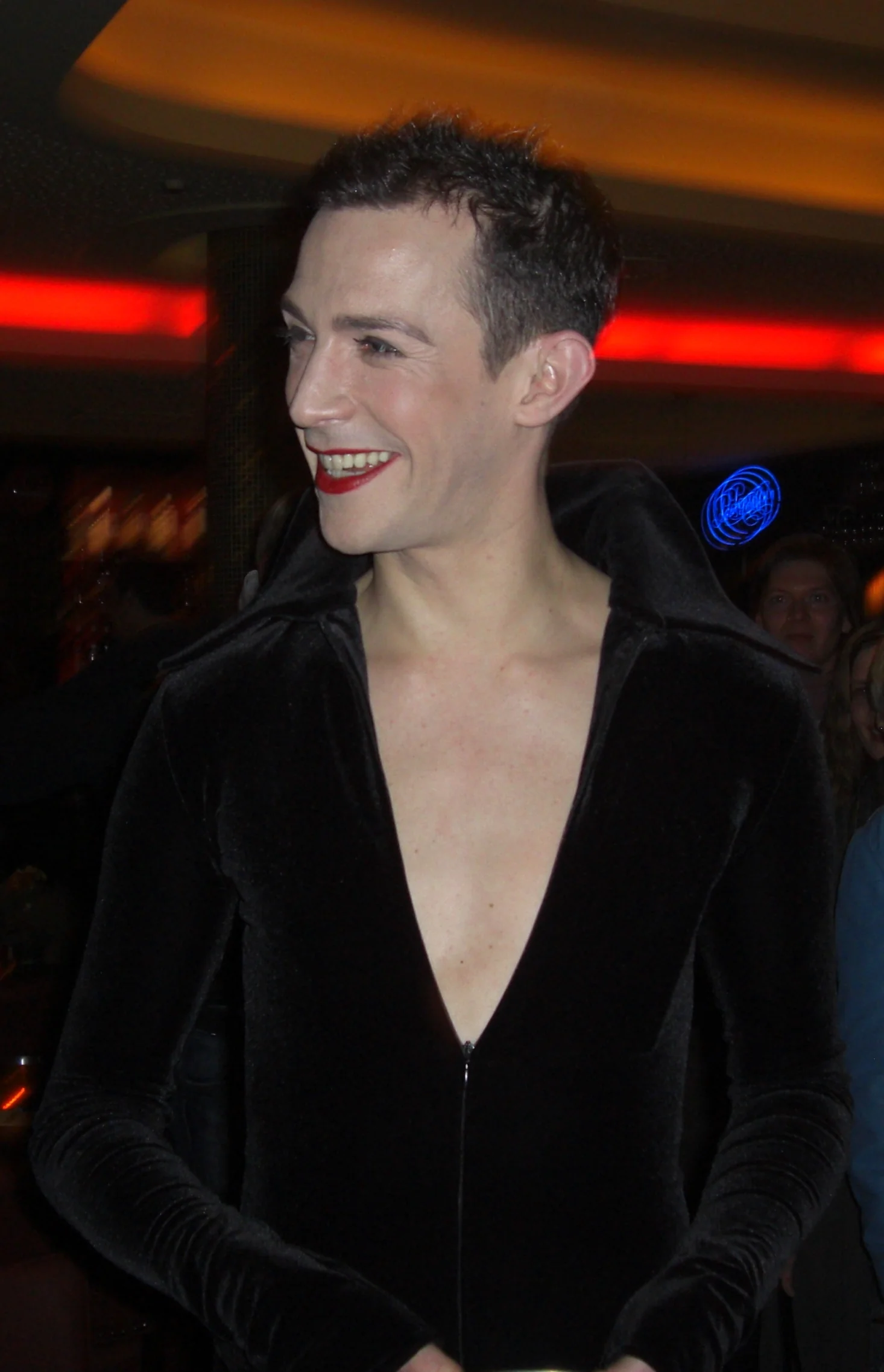
Image from Wikipedia
Image from Wikipedia
Tim Fischer – Chanson Singer and Actor
The Great Voice of German-Language Chanson: Tim Fischer Ignites Elegance, Drama, and Current Spirit
Tim Fischer was born on March 12, 1973, in Delmenhorst and has been one of the defining voices of German-language chanson since the 1990s. He developed a strong bond with the tradition of great female singers and divas as well as the literary power of the song early on. With an infallible instinct for lyrics, timbre, and stage presence, he shaped a music career that conquered small theater stages, opera houses, and festivals, as well as radio recordings. Fischer combines artistic development with a social stance, creating evenings where composition, arrangement, and interpretation merge into a moving whole.
Background and Early Years: From Delmenhorst to the Limelight
By the age of 15, Tim Fischer was organizing his own performances and singing chansons by Zarah Leander, Marlene Dietrich, and Lale Andersen—a testament to the genre's history and the art of storytelling in song form. At 17, he moved to Hamburg, where he celebrated an early success with the program "Zarah ohne Kleid" at the Schmidt Theater on the Reeperbahn. This courage to take the stage, combined with an exceptional understanding of text dramaturgy, shaped his artistic development; the characteristic mix of melancholy, irony, and grandeur became his trademark from the very beginning.
Breakthrough in Berlin: Programs that Set Standards
In 1992, Fischer moved to Berlin—a step that elevated his career to a new level. Here he created much-acclaimed programs like "Wenn die Liebe ausgeht," where texts and compositions by Rainer Werner Fassbinder, Wolf Wondratschek, Hans Magnus Enzensberger, Bertolt Brecht, Hanns Eisler, Kurt Weill, and Friedrich Hollaender came together. The press hailed him as the leading German chanson interpreter of his generation; the venues grew larger, the arrangements richer, and his artistic signature more distinct. In 1995, Fischer received the Deutscher Kleinkunstpreis in the Chanson/Music/Song category—a milestone in his career and a testament to his authority in the genre.
Touring, Theater, and Awards: Stage Presence as a Quality Guarantee
On international tours, he brought German chanson to Damascus, Cairo, Khartoum, Paris, Montpellier, Toulouse, Bordeaux, and San Francisco; thereby contributing to the international visibility of the tradition. Concurrently, he solidified his profile as an actor in theater and film productions, winning additional awards—from the Lale Andersen Prize to the Rolf Mares Prize to the Deutscher Chanson Preis. These milestones demonstrate expertise and versatility: Whether as the protagonist of a musical evening or as a soloist with a pianist—Fischer masters dynamics, phrasing, and dramatic concentration like few others, showing how finely nuanced vocal artistry can sound in the 21st century.
Discography: From "Chansons" to "Na und" – a Catalog of Colors
His discography reflects a wide stylistic range: The early album "Chansons" (1995) established him as a custodian of tradition with a modern approach. Later releases like "Die alten schönen Lieder (Live)" (2019) and "Zeitlos" (2019, double album) showcase mature program dramaturgy, where classics, rediscoveries, and contemporary authors come together in sonically finely tuned arrangements. "Cabaret Berlin" (2020) pays homage to the vibrant era between salon and variety, while "Glücklich – live in der Bar jeder Vernunft" (2024) documents the immediate stage energy. In 2025, "Na und – Tim Fischer sings Hildegard Knef – live in der Bar jeder Vernunft" followed as a live double album— a tribute to one of the most impressive voices in German-language entertainment culture.
Style, Voice, Technique: The Art of Storytelling Between Brecht, Kreisler, and Knef
Fischer's singing is characterized by characterization and text clarity. His baritone phrases elastically, shifts effortlessly between mockery, tenderness, and tragedy, and employs rubato, breath dramaturgy, and dynamic gradations to bring characters to audible life. He does not just sing songs—he performs them. In the arrangements, elements of theater music, cabaret, and chamber jazz shimmer; harmonic colorations at the piano, cantabile lines, and pointed pauses unfold their impact like directorial stage directions. Thus, the chanson remains contemporary: as a concentrated form of musical storytelling that stands against mere retro charm.
Curator of Tradition: Repertoire Preservation as Contemporary Art
Fischer connects the Weill/Eisler line with Hollaender's cabaret, Kreisler's bitter wit, and Knef's laconic poetry. This repertoire preservation does not come off as museum-like but as contemporary art: Texts gain relevance through emphasis, irony sharpening, and dramaturgical sequencing. In "Zeitlos," for example, Brel, Hirsch, Bielfeldt, Pigor, and Knef stand side by side as a matter of course—a statement that canon and modernity intersect productively. His artistic development is shown in how Fischer dusts off well-known chansons and, through clever programming and precise articulation, provides them with new perspectives.
Collaborations, Production, and Ensemble Culture
Recurring musical partners—foremost among them pianists like Thomas Dörschel—shape the sound image and stage chemistry. The distribution of roles between voice and keyboard instrument follows the principle of controlled contrast: The piano serves as companion, counterpart, and commentator. In the production of his albums, Fischer acts as the artistic curator of his discography; releases appear under his own imprint "Tim Fischer Chansons" and are regularly captured in elaborate live settings. This model strengthens independence, quality assurance, and repertoire depth.
Reception and Cultural Influence
The resonance spans from small art and theater criticism to cultural sections that regard his concerts as a reference for contemporary chanson. Attributions such as "Master of Chanson" emphasize his authority; at the same time, program texts, track lists, and live recordings work against romanticizing nostalgia. Fischer keeps the German-speaking chanson tradition alive, opening new audience segments and translating the legacy of Knef, Kreisler, and Hollaender into today's sound and language culture. His commitment to AIDS assistance and charity projects anchors the art in social life—chanson as a humanistic practice.
Current Projects 2024–2026: Anniversaries, Live Album, and Tour
With "Glücklich" (2024), Fischer presented a moving chanson evening that balances between poetic and political pieces. In 2025, he continued to honor Hildegard Knef: "Na und – Tim Fischer sang Hildegard Knef" premiered in Berlin and was released in May/June as a live double album. In 2026, tour dates will bring the program to renowned venues; the setlists reflect Knef’s range between laconic self-observation and cinematic choreography in song. For listeners, these evenings offer a school of concentrated listening—and an invitation to experience chanson as contemporary art.
Voices of the Fans
The fans' reactions clearly show: Tim Fischer captivates people worldwide. On Instagram, a fan raves: "Your Knef tribute gives me goosebumps from the first syllable—pure magic on stage!" On Facebook, a listener writes: "Zeitlos is on repeat for me—so much feeling, so much conviction. Thank you for these songs!" Such feedback confirms how strongly Fischer's stage presence, articulation, and musical design touch the audience.
Conclusion: Why Tim Fischer Matters Today
Tim Fischer transforms chanson into living storytelling art. His discography documents a consistent focus on sound, text, and form; his concert evenings create a resonance space where tradition and present meet. As a singer and actor, he shapes characters; as a curator of the repertoire, he sets standards; as a producer, he maintains artistic control. Anyone wanting to understand why German-language chanson is more than just a memory will experience it with Tim Fischer: precise, playful, bitter, and comforting at the same time. Recommendation: listen live—and rediscover the songs.
Official Channels of Tim Fischer:
- Instagram: https://www.instagram.com/tim.fischer.official
- Facebook: https://www.facebook.com/timfischer.official
- YouTube: No official profile found
- Spotify: No official profile found
- TikTok: No official profile found
Sources:
- Tim Fischer – Official Website
- Tim Fischer – Music/Releases (Tim Fischer Chansons)
- Apple Music – Tim Fischer (Artist Page)
- Apple Music – Chansons (1995)
- Apple Music – Zeitlos (2019, Double Album)
- Bar jeder Vernunft – Program "Glücklich"
- Cultural Center Pavillon Hannover – "Na und – Tim Fischer sings Hildegard Knef"
- Wikipedia – Tim Fischer
- Tim Fischer – Biography
- Tim Fischer – Awards
- Last.fm – Tim Fischer (Music Community)
- Wikipedia: Image and text source
Upcoming Events
Tim Fischer – Sings Hildegard Knef: So What
Big feelings, quiet truths: Tim Fischer sings Knef at the Stadttheater Fürth. 12.02.2026, 7:30 PM, tickets 12–48 €. Intense concert experience – secure your seats now. #Chanson
Tim Fischer
Tim Fischer live in Braunschweig: An evening full of chanson, feeling, and fine irony at Culture in the Tent. Secure tickets now! #Braunschweig
Tim Fischer live in Fürth - Stadttheater Fürth 2027
An evening full of chanson brilliance in Fürth: Tim Fischer combines emotion, theater, and a great voice into an intense live experience. 04.02.2027, €48. #Chanson