
Thomas Bernhard
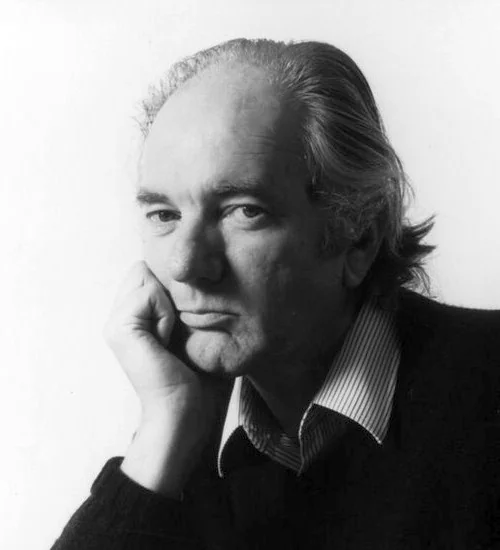
Image from Wikipedia
Image from Wikipedia
Thomas Bernhard – Language Music, Provocation, and a Work of Unbroken Power
An Author Who Elevated Literature to Sound Art
Thomas Bernhard, born in 1931 in Heerlen, Netherlands, and died in 1989 in Gmunden, Upper Austria, is one of the most influential voices in post-war German literature. He did not have a music career – instead, he experienced an unparalleled writing career in which prose, drama, and poetry merged into a distinctive "language music." Bernhard's artistic development progressed from early journalism and poetry through a radical breakthrough in prose to theatrical provocations that sparked public debates. In 1970, he was awarded the Georg-Büchner-Preis, a milestone that solidified his authority in the literary canon. To this day, his work shapes the international reception of Austrian literature.
Biography: From a Difficult Beginning to Literary Self-Empowerment
Growing up between the Netherlands, Vienna, and Salzburg, Bernhard experienced war, illness, and poverty as formative forces of his artistic identity. After initial poems and prose sketches in the 1950s, he made a decisive step into literature, supported by an uncompromising work ethic. His fictional autobiography – five volumes published between the mid-1970s and early 1980s – transformed biographical material into literature, making personal experience the aesthetic motor. This phase of his work exemplifies how Bernhard created a stage presence without a stage: through an obsessive narrative tone that condenses thinking, breathing, and speaking into a resonant compositional process.
Career Path: The Breakthrough with "Frost" and Establishment in the Suhrkamp Universe
The literary breakthrough came in 1963 with the novel "Frost." This was quickly followed by more prose works, ensuring continuous publication in collaboration with his main publishing house. His artistic development was not linear but spiral: themes such as illness, isolation, social masquerade, and intellectual uncompromisingness were reconfigured in each composition. Alongside his prose, Bernhard expanded his oeuvre into theater – with early premieres in Hamburg and Vienna, supported by directors and artistic directors who took his aesthetics of speaking and silence on stage seriously. This led to a second axis of his career: that of a playwright who permanently transformed German-speaking theater.
Style Analysis: Language Rhythm, Monologue Technique, and the “Art of Excess”
Bernhard's prose is renowned for its relentless rhythm, for sentence cascades that are composed like a process of breathing and thinking. Figures of repetition, variation, and escalation function like musical motifs: themes recur, shift, darken modulatingly or are brightly illuminated. This art of composition and arrangement, which generates sound from language itself, forms the core of his author poetics. Characters engage in long monologues; dialogues are often antiphonal reflections. The resulting "language music" destabilizes certainties, demands concentration – and unfolds an aesthetic power that was ahead of its time and still feels modern today.
Theater and Public Debates: From the Stage to the Editorial
With plays such as "A Celebration for Boris," "The Hunting Society," "The Power of Habit," and "Theater Maker," Bernhard crafted a dramaturgical signature of language surfaces, counter-rhythms, and scenic reduction. In 1988, his theatrical work culminated in the scandal surrounding "Heldenplatz" at the Burgtheater in Vienna. The piece – a world premiere that harshly attacked the politics of memory and self-image of Austria – provoked a storm of outrage and made Bernhard the most discussed author in the country. The reception was fierce but consequential: theater recognized that language criticism and social critique are not only matters of content but are also questions of form – and that Bernhard's aesthetics redefine the stage as a resonance space for collective repressions.
Work (Instead of Discography): Novels, Dramas, Poetry – A Bibliography of Intensity
As an author, Bernhard possesses a bibliography, not a discography. His defining prose works include "Frost" (1963), "Disturbance" (1967), "The Lime Works" (1970), "Correction" (1975), "The Loser" (1983), "Concrete" (1982), and "Extinction" (1986). His fictional autobiography – "The Cause," "The Cellar," "The Breath," "The Cold," and "A Child" – consolidates life material into literature. On stage, "A Celebration for Boris," "The Hunting Society," "The Power of Habit," "The Ignorant and the Madman," "The Theater Maker," "Knight, Dene, Voss," and "Heldenplatz" set standards. Even the titles mark aesthetic assertions: coldness, breath, lime, disturbance – terms that intertwine materiality and thought, yielding a distinctive sound profile.
Reception and Awards: Canonization during His Lifetime
Bernhard's authority derives from criticism and awards. In 1970, he received the Georg-Büchner-Preis – the most important literary award in the German-speaking world. Internationally, recognition grew in parallel with translations into numerous languages; in the 1980s, he became entrenched in global literary debates. Critiques highlighted the radical consistency of his prose architecture, the theatrical precision of the monologues, and the courage to dismantle national myths. This blend of technical mastery and intellectual risk-taking makes his texts benchmarks for cultural understanding.
Cultural Influence: Resonance in Theater, Prose, and Public Discourse
Bernhard's work has influenced generations of writers and directors. His aesthetics – the combination of language criticism, social analysis, and formal rigor – remains a reference point for contemporary prose and theater practice. Productions and readings keep the discourse alive; scholarly editions and research projects open new perspectives on variations, translations, and staging history. This shifts the view: Bernhard is not only an author of scandals but a composer of thought, whose texts create resonance in both performance and reading.
Editions, Archives, Research: The Work as a Living Score
Institutional support, publishing work, and digital scholarship contribute to making Bernhard's work accessible. Publishing editions gather novels, dramas, and the autobiography in reliable editions. Catalogs of works, timelines, and thematic dossiers provide editorial orientation between first editions, versions, premieres, and critiques. Research institutions and universities unveil the layers of material – from variant findings to reception – and place Bernhard within the literary-historical coordinate system of modernity. Thus, the oeuvre remains not museum-like but performative: each new reading activates the "score" of language.
Current Productions and Projects: The Present of the Classics
Even decades after his death, Bernhard remains present in theater programs. Festivals, readings, and thematic series focus on his texts, often accompanied by program brochures, discussions, and educational formats. Such events emphasize the sonic rigor of the texts and their stage effectiveness – a reminder that Bernhard's "language music" fully unfolds its power only in spoken form. New editorial compilations, reprints, and graphic approaches also keep public attention high and demonstrate how flexibly the work translates into contemporary formats.
Technique and Poetics: Composition, Arrangement, Production in the Medium of Language
Bernhard's texts employ techniques familiar from music: thematic guidance, sequence, ostinato, counterpoint. Recurring motifs – health/illness, genius/mediocrity, home/exile – are arranged, set against each other, rhythmically sharpened. The production of the texts often follows a logic of reduction: few characters, a concentrated space, an insistent voice that performs thought. This artistic development culminates in a poetics of relentlessness: no pretty ornament, no reconciling punchline, but concentrated listening to what language deceitfully conceals about society and the self – until it becomes audible.
Why Read and See Bernhard Today?
Because his literature exposes the mechanics of self-deception while offering an aesthetic experience of rare consequence. Those who read Bernhard or hear him on stage discover how language constructs a world – and how it simultaneously deconstructs this world. In times of overstimulation, his work demands attention, a listening that is thinking. In this lies its relevance: Bernhard is not a museum author but a contemporary event, always when his texts are brought to sound.
Conclusion: An Author Whose "Language Music" Endures
Thomas Bernhard fascinates because he understands literature as a highly precise instrument: composition, arrangement, and execution follow a strict aesthetic that sharpens perception and reveals contradictions. His journey from autobiographical material to form-conscious prose and to stage-ready language surfaces showcases artistic development at the highest level. Those who experience these texts live – in readings or productions – feel the energy of their rhythms. Bernhard remains an event of language: uncompromising, present, necessary. Seize every opportunity to see his works on stage – there, they unfold their full, breathtaking presence.
Official Channels of Thomas Bernhard:
- Instagram: No official profile found
- Facebook: No official profile found
- YouTube: No official profile found
- Spotify: No official profile found
- TikTok: No official profile found
Sources:
- Wikipedia – Thomas Bernhard
- Encyclopaedia Britannica – Thomas Bernhard (Novelist, Playwright, Poet)
- ThomasBernhard.at – Timeline
- ThomasBernhard.at – Novels (Work Overview)
- ThomasBernhard.at – Complete Works: The Autobiography
- German Academy for Language and Literature – Georg-Büchner-Preis 1970 (Certificate Text)
- Suhrkamp Verlag – Thomas Bernhard (Author Page/Foreign Rights)
- Stuttgarter Zeitung – Report with Context to the Premiere of "Heldenplatz"
- ThomasBernhard.at – Program Brochure "Disruptions" (2025)
- Wikipedia: Image and Text Source
Upcoming Events
Old Masters – Stage Adaptation after Thomas Bernhard
An intense Bernhard evening at the Pullach Community Center: Old Masters as clever, humorous stage literature. 08.05.2026, 8:00 PM, tickets from €26.40. Hear thinking, experience language – secure your seats now. #OldMasters

Old Masters by Thomas Bernhard in Pullach i. Isartal
Bernhard's Old Masters unfolds in Pullach a dense theater atmosphere filled with wit, loss, and linguistic power. 08.05.2026, from 26.40 €. Discover now. #ThomasBernhard