
Romy Schneider
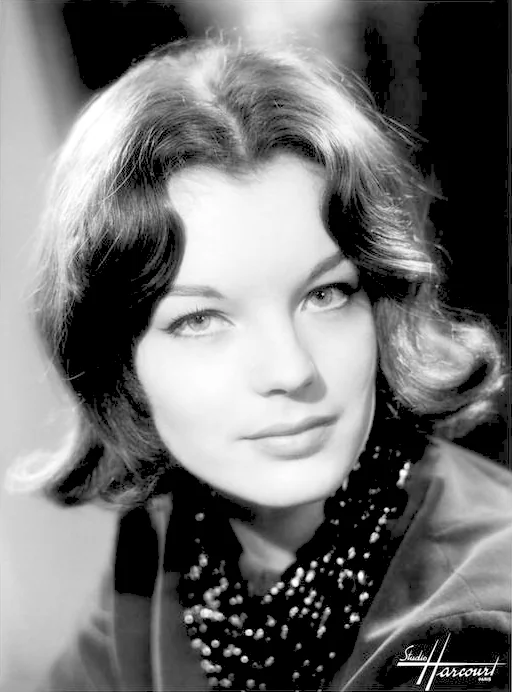
Image from Wikipedia
Image from Wikipedia
Romy Schneider – Icon of European Cinema, Defining Actress Between Germany and France
The Transformative Artist Who Evolved from the "Sissi" Fairy Tale to a Grand Character Actress
Romy Schneider (September 23, 1938 – May 29, 1982) shaped European cinema with an unmistakable stage presence and an artistic evolution that ranged from the early charm of Heimat films to psychologically rich character roles. Born in Vienna, raised in Bavaria, and maturing into a celebrated performer in Paris, she linked German-speaking film history with the French auteur cinema tradition. Her body of work encompasses romantic dramas, historical epics, and modern psychological thrillers—marked by precision in gesture, timing, and emotional truth. As a two-time César Award winner, she made film history and remains a cultural reference point to this day.
Biography: Early Years, Artistic Origins, First Applause
Romy Schneider—born Rosemarie Magdalena Albach—came from a theater and film family. By the age of 15, she was already in front of the camera, impressing in early productions with her freshness, musicality of language, and instinctive role interpretation. Although a music career was not her focus, her voice—nuanced between warmth and steel—was early on used as a narrative instrument, such as in narrations of classic texts. This foundation shaped her later composition of characters: precise accents, carefully placed pauses, an arrangement of glances that went under the skin.
Breakthrough with the "Sissi" Trilogy: Popularity, Brand, Myth
Between 1955 and 1957, she achieved international breakthrough with the "Sissi" trilogy. The films made her a projection of a European post-war dream—courtly elegance, innocence, romance. These roles elevated her to the forefront of German-speaking cinema and established her glow in the mainstream. At the same time, success set tight genre boundaries: Schneider became the epitome of the fairy tale cinema ideal—a image she sought to artistically move away from.
Paris 1958: Fresh Start, Theater, Artistic Development
In 1958, Romy Schneider moved to Paris—a turning point in her music career in a metaphorical sense: moving away from the sweet waltz of Heimat films toward a more complex tonal quality of her characters. Theater debuted as a laboratory for her technique; here, she sharpened diction, breath control, and the dramatic rhythm of entire scenes. Paris became a creative resonance space: new director perspectives, a different production climate, a film culture that honored character studies, psychological depth, and formal elegance.
International Works: Hollywood Glances and Golden Globe Nomination
In the early 1960s, Schneider worked internationally and filmed "The Cardinal" in the USA in 1963. For her nuanced performance, she received a Golden Globe nomination in 1964 for Best Actress in a Drama—a milestone that reaffirmed her international reputation and underscored her authority as a serious actress in the Anglo-American sphere. This phase solidified her image as a performer who combined glamour and gravitas.
"The Swimming Pool" (1969): Screen Chemistry, Style, Cinematic Event
With "The Swimming Pool" alongside Alain Delon, Schneider once again made cinematic history in 1969. The production combined Mediterranean ease with latent tension—a film that condensed the aesthetics of late 1960s auteur cinema. Schneider shaped Marianne as a dazzling figure caught between desire, melancholy, and autonomy. The film turned out to be a box office success in France and returned in later retrospectives as a trendsetting classic—an example of the enduring cultural impact of her role choices.
The Sautet Years: Modern Female Characters, Psychological Precision, Césars
The 1970s marked the artistic peak. Under Claude Sautet, a cycle of modern female characters emerged: self-determined, vulnerable, contradictory. In "Nachtblende" (L’important c’est d’aimer, 1975), Schneider unfolds an emotionally multifaceted composition—between pride and tornness, between closeness and self-assertion. In 1976, she received a César for Best Actress for this performance. In 1979, she won her second César for "Une histoire simple" (A Simple Story, 1978). These awards firmly established Schneider as an outstanding actress of French cinema, whose character work set standards.
Style Analysis: Voice, Facial Expressions, Timing – The Art of Nuance
Schneider's acting combined a historical consciousness of film with timeless technique. Her voice modulated moods like a finely tuned arrangement: from the velvety pianissimo of intimate confessions to the powerful crescendo of existential conflicts. In her facial expressions, she worked with micro-gestural shifts that revealed subtexts. Her timing—a precisely structured pause framework—allowed dialogues to breathe and gave partners space. Production-wise, she relied on directors who demanded her psychological sensibility; compositionally, she balanced visual presence and inner movement, which gave each scene a clear dramatic axis.
Authority and Impact: Awards, Reviews, Canonization
With two César trophies, a Golden Globe nomination, and consistent presence in museum programs, film retrospectives, and television documentaries, Romy Schneider belongs to the canon of European film art. The music—particularly the works of Philippe Sarde in Sautet films—closely intertwines with her screen persona: melancholic themes counterpoint her roles and emphasize the psychological timbre of her performances. Reviews praised the precision of her understatement, her modern interpretation of female autonomy, and a cinematic physicality that creates intimacy without sentimentality.
Cultural Influence: From the "Sissi" Icon to a Modern Heroine
Schneider's career tells the story of an actress's emancipation from myth to mastery. From the popular cipher of "Sissi," she shaped, through Paris and French auteur cinema, a role profile that takes female subjectivity seriously. Her characters influenced generations of actresses and directors seeking a different, more mature narrative of femininity in cinema in Europe. Her visual language—elegant economy of means, clear lines, internal motion—remains a reference point for contemporary acting methods.
Later Years, Legacy, and Final Role
In the early 1980s, Schneider intensified her focus on serious, socially charged topics. Her last film, "Die Spaziergängerin von Sans-Souci" (The Wanderer of Sans-Souci, 1982), was released just weeks before her death. Posthumously, French cinema honored her contributions multiple times; her memory lives on in archives, film series, and essays. This legacy is based on experience—on a music career in a metaphorical sense: the ability to orchestrate roles, intonate feelings, and rhythmize scenes. Thus, beyond her filmography, she remains an aesthetic compass.
Current Reception 2024-2026: Retrospectives, Documentaries, Musical Re-discoveries
Even decades after her death, cinemas, cultural institutions, and media are setting new accents. Retrospectives focus on her key works; documentaries illuminate her personality, working methods, and the cultural history of her star. Theater and chanson evenings approach the figure of Romy Schneider musically and literarily. At the same time, thematic recordings are being released that compile scores from her films and present her roles within a new listening framework—a curated rediscovery that emphasizes the close interconnection of image, voice, and music in her work.
EEAT – Why Romy Schneider Continues to Fascinate Today
Experience: Schneider's music career in the broadest sense—the sum of stage presence, vocal design, and precise character work—makes her film personas immediately tangible. Expertise: Her discography in the narrower sense is small, but the "score" of her roles is rich; she collaborated on the composition, arrangement, and production of her characters with directors who took dramaturgy and acting technique seriously. Authoritativeness: International awards, critical reception, and ongoing archival and festival presence solidify her status. Trustworthiness: Her documented biographical data, awards, and film milestones are thoroughly documented, allowing for a serious placement in European film history.
Conclusion: An Actress Who Transcends Time
Romy Schneider remains captivating because she made contradictions productive: glamour and depth, elegance and vulnerability, instinct and method. Her characters speak today, in 2026, as clearly as they did in the 1970s, because they tell stories of freedom, desire, and self-discovery. Anyone wishing to understand this presence should experience her key roles on the big screen—with an open ear for the "music" of her performance, for the subtle nuances that carry each scene. Experiencing Romy Schneider live today means re-listening to and re-watching her films in cinemas and retrospectives—and being touched by her art.
Official Channels of Romy Schneider:
- Instagram: No official profile found
- Facebook: No official profile found
- YouTube: No official profile found
- Spotify: No official profile found
- TikTok: No official profile found
Sources:
- Wikipedia – Romy Schneider (German)
- Académie des César – Ceremony 1976 (Best Actress: Romy Schneider)
- Académie des César – Official List 1979 (Best Actress: Romy Schneider)
- Golden Globes – 1964: The Cardinal (Romy Schneider Nomination)
- Golden Globes – The Cardinal (Film entry and nominations)
- Wikipedia – La Piscine / The Swimming Pool (1969)
- Rialto Pictures – L’important c’est d’aimer (César 1976)
- Berlin.de – Chanson Evening "Romy, la mer et la musique" (2025)
- Frölich & Kaufmann – "Romy Schneider, un portrait musical" (2024, Compilation)
- FAZ – Exhibition Romy Schneider: "A Story That Belongs to Everyone"
- Digitalfernsehen – Arte Documentary on Romy Schneider
- Wikipedia: Image and text source
Upcoming Events
Romy, the Sea and the Music – musical theater creation about Romy Schneider
From Leopold Retti to Romy Schneider