
René Heinersdorff
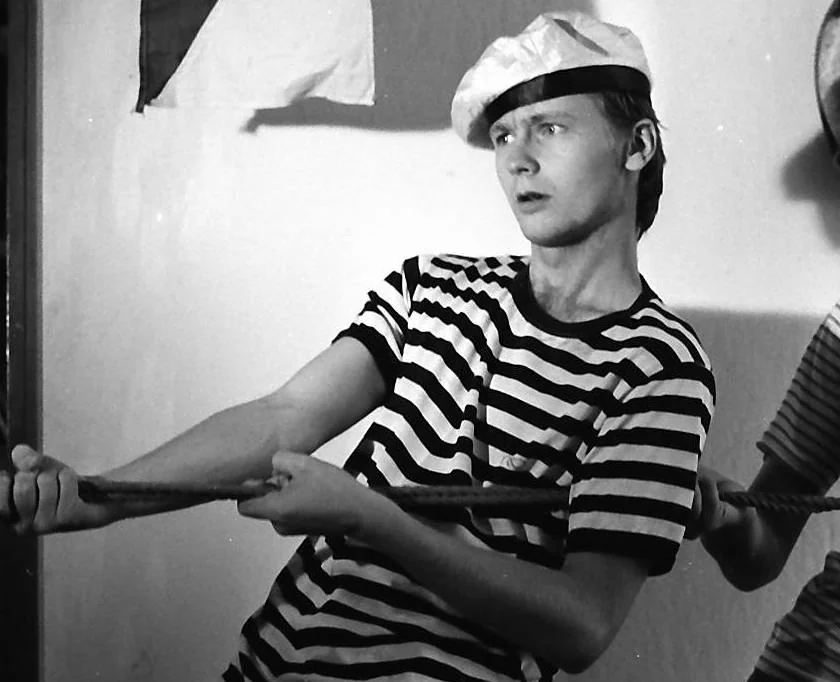
Image from Wikipedia
Image from Wikipedia
René Heinersdorff
The Boulevard Producer with Heart: René Heinersdorff has Shaped Theater Culture for Decades across Düsseldorf, Cologne, Essen, and Munich
René “Robby” Heinersdorff, born on September 29, 1963, in Düsseldorf, is one of the defining figures of German-language boulevard theater. As an actor, director, author, and theater director, he combines stage presence, artistic development, and entrepreneurial spirit. Coming from a culturally rich family, he has built a music career in the broader sense of the performing arts with his distinctive sense for comedy, timing, and ensemble direction: a career where text, rhythm, language, and scenic “arrangements” play together with precision and wit. His work connects popular themes with professional production, reaching a wide audience that appreciates him for his reliability, entertainment art, and personal style.
Biography and Early Influences
Growing up in Düsseldorf, Heinersdorff studied philosophy and German studies and early on found his way to the stage through familial cultural traditions. His grandfather ran the Ibach-Saal on Schadowstraße, and his parents operated a concert agency – a background that instilled a sense for programming, repertoire maintenance, and audience-oriented dramaturgy. He received professional training from various mentors, including Harald Leipnitz, and voice training with Ruth Grünhagen further sharpened his sensitivity for musical phrasing and breath control, which are central for pointed comedies. Mentors like Wolfgang Spier encouraged him to connect the dual role of artistic practice and management – a combination that continues to define his work today.
Career Beginnings, Screen Presence, and Popularity
After initial engagements in film and television productions, Heinersdorff gained national recognition as a serial face. Roles in Three Men in Bed and especially as Lothar Fuchs in Die Camper (RTL) acted as a catalyst: the serial timing, the precise rhythm of punchlines and counterpoints, and the close collaboration with partners strengthened his comedic technique. This experience shaped his later directorial signature: scenic economy, clear character direction, and the precise setting of comedic “chords” that reliably resonate with the audience. At the same time, he wrote and directed his first plays – the start of a substantial authorial activity.
Foundations and Management: Theater an der Kö, Theater am Dom, Theater im Rathaus
A milestone followed on September 21, 1994, with the opening of the boulevard theater Theater an der Kö in Düsseldorf. The venue became a magnet for audiences in the city center – a place for pointed, accessible comedies featuring prominent ensembles and careful production quality. In Cologne, Heinersdorff simultaneously works as an author and director at the Theater am Dom, which was opened by his mother. In 2016, a third stage was added: the Theater im Rathaus in Essen. These three venues together form a network where plays rotate, ensembles grow, and a loyal core audience experiences comedic repertoire maintenance – backed by solid artistic leadership and professional production.
Expansion to Munich: Komödie im Bayerischen Hof
On October 26, 2021, Heinersdorff acquired 51 percent of the shares in Theaterbetriebe Margit Bönisch GmbH, the leaseholder of the Komödie im Bayerischen Hof in Munich; he also took over the management. This solidified his role as one of the central private theater managers in the German-speaking area. His leadership combines artistic expertise and entrepreneurial responsibility: programming architecture, ensemble care, guest performances, co-productions, marketing – always with a focus on audience accessibility and quality standards.
Author, Director, Actor: Work Profile and Signature Style
As an author, Heinersdorff has presented around 20 plays, many with regional significance. His comedies rely on linguistic precision, situational comedic escalation, and an ensemble arrangement that treats dialogue arcs like musical themes: motifs are introduced, varied, interwoven, and resolved at the finale. Among his recurring strengths are the balance of heartfelt themes and cheerful tone, a penchant for pointed disputes, and the ability to lovingly portray characters in their contradictions. As a director, he shapes a clear “score” for the stage from text, tempo, and transitions; as an actor, he brings warmth, timing, and physical presence that his audience has appreciated for years.
Productions and Performance Operations: Examples from Recent Years
Among the notable productions is the comedy Aufguss, which ran in Berlin in 2017 with a prominent cast. Heinersdorff also directed Delaporte/Patellière: Der Vorname, a modern classic of comedy, which he carefully balanced in scene changes and character direction. In 2025, the Theater an der Kö in Düsseldorf presented new works such as Liebhaben! – accompanied by the good news that the lease in the Schadow-Arkaden has been extended until at least 2027 (announcement on May 3, 2025). Toward the end of the 2024/2025 season, Und das ist gut so! premiered, celebrating the season and confirming Heinersdorff's ability to strike a cheerful tone without superficiality. For January 11, 2026, the Heinersdorff comedy Und es gibt ihn doch was announced in Bonn – further proof of the continuous presence of his works on German-speaking stages.
Artistic Development: Style, Composition, and “Arrangement”
Heinersdorff's artistic development can be read like a stylistic composition. The genre of comedy forms the key; character constellations provide the harmonic structure; dialogues mark rhythmic patterns. His productions are characterized by a clear pulse: scenes begin with precise “counting in,” accelerandi lead to comic peaks, and pauses act like fermatas, controlling laughter and resonance. His production teams work with high craftsmanship: light dramaturgical accents, fluid transitions, pointed costumes and sets that support characters rather than caricaturing them. This results in the lightness that best characterizes boulevard theater – entertainment with character, tempo, and quality.
Ensemble Culture, Audience, and Reception
In ensemble work, Heinersdorff emphasizes re-encounters and role suitability. Recurring partners, often known from film and television, lend productions charisma and reliability. Press reports regularly highlight his dual role of artistic leadership and entrepreneurial stability, such as during the 30th anniversary of the Theater an der Kö in 2024/2025 or in reports about future issues facing private theaters. Both audiences and critics appreciate the blend of charming performance culture, pointed texts, and a programming that captures the pulse of the times without simply following the zeitgeist.
Management Performance and Cultural Political Context
Beyond individual productions, Heinersdorff operates as a networker of private theaters. Four venues in Düsseldorf, Cologne, Essen, and Munich demand strategic planning, personnel coordination, and a reliable production flow – a management task that requires special attention during crises (such as during the pandemic). At the same time, he represents the interests of private theaters in association structures and public discussions. This interface between artistic expertise and cultural political responsibility underscores his authority: theater operations as a sustainable ecosystem of materials, ensembles, technology, marketing, and audience engagement.
Current Projects 2024–2026: New Plays, Contract Security, Presence in Multiple Cities
In the calendar year 2025, the focus was on new comedy premieres, complemented by the extension of the lease for Theater an der Kö until at least 2027 – a crucial stability factor for program planning and ensemble bonding. The announcement of further performances of his works, such as Und es gibt ihn doch for January 11, 2026, in Bonn, attests to ongoing demand. Meanwhile, the Munich Komödie im Bayerischen Hof remains significant as the fourth axis of his theater management, while Cologne and Essen are reliably played as repertoire and ensemble locations. This multi-faceted approach requires precise production logistics – a field where Heinersdorff consolidates experience in selection, scheduling, rehearsal planning, and marketing.
Influence and Legacy: Boulevard as a Serious Art of Lightness
Heinersdorff demonstrates that boulevard theater is a serious art of lightness: a precise craft that requires form knowledge, linguistic sensitivity, and stage discipline. His discography in a figurative sense – the totality of his plays, productions, and roles – constitutes a repertoire that remains viable for years. Culturally, he anchors the tradition of entertaining spoken theater in the present: accessible, yet never arbitrary; popular, yet not formulaic. In a theater landscape mediating between city theaters, independent scenes, and private enterprises, he stands for professional, audience-friendly production that secures jobs, fosters talent, and affirms theater as an experience in the here and now.
Filmography and Media Work: Interactions between Stage and Camera
The extensive screen presence – from classic series to more recent appearances – acts for Heinersdorff like a laboratory for timing and precision in character portrayal. The feedback loop to the stage results in more pointed performances, dynamic scene resolutions, and a directorial language that confidently masters comedic tension arcs. Versatility as an actor, voice artist, director, and author strengthens his stylistic palette: understanding of roles, text discipline, and ensemble feeling interconnect, comparable to the voices of a well-balanced choir. This results in the signature that audiences and press regularly identify: reliable, warm, and impactful.
Networks, Co-Productions, and Location Profile
The four venues – Düsseldorf, Cologne, Essen, and Munich – enable co-productions, guest performances, and agile development of materials. A play might start in Düsseldorf, mature in Cologne, be refined in Essen, and be presented in Munich with a different cast. This production logic resembles a touring arrangement: themes are regionally adjusted, casts change like instrumentation, yet the basic composition remains recognizable. This results in outreach, planability, and a regional brand associated with René Heinersdorff.
Conclusion: Why René Heinersdorff Excites – And Why You Should Experience Him Live
René Heinersdorff represents theater that touches, inspires, and entertains with perfect timing. His artistic development from performer to author, director, and theater director shows experience, expertise, authority, and reliability in the best sense. Those who experience his productions live feel the energy of an ensemble that resonates in timing, language, and physicality like a finely tuned instrument. The stage becomes a score, the audience a resonance space – and lightness becomes a work of art. Whether in Düsseldorf, Cologne, Essen, or Munich: anyone who loves theater as a present event should have a Heinersdorff premiere on their agenda – for an evening that combines tempo, heart, and humor.
Official Channels of René Heinersdorff:
- Instagram: No official profile found
- Facebook: No official profile found
- YouTube: No official profile found
- Spotify: No official profile found
- TikTok: No official profile found
Sources:
- Wikipedia – René Heinersdorff (accessed, last edited December 19, 2025)
- Wikipedia – Theater an der Kö (History, Management)
- Schlosspark Theater – René Heinersdorff (Biography, Productions)
- Die Deutsche Bühne – René Heinersdorff (Profile)
- Ddorf-aktuell – Liebhaben! Heinersdorff's new comedy at Theater an der Kö (May 3, 2025)
- Düsseldorfer Blatt – Und das ist gut so! (End of season 2025, lease until 2027)
- termine.de – Und es gibt ihn doch (Announcement January 11, 2026, Bonn)
- Wikipedia – Komödie im Bayerischen Hof (Shareholder change 2021)
- Wikipedia – Theater am Dom (Management by René Heinersdorff)
- Filmmakers – René Heinersdorff (Excerpted engagements, stages)
- Wikipedia: Image and text source
Upcoming Events
Cold White Man
Inheritance Good - All Good
Inheritance Good - Everything Good
Heirloom good - All good
Inheritance Good - Everything Good
Heritage Good - All Good
Inheritance Good - All Good
Inheritance good - Everything good
Silent Night at the District Court - A royal Bavarian fun by René Heinersdorff