
Nadine Labaki
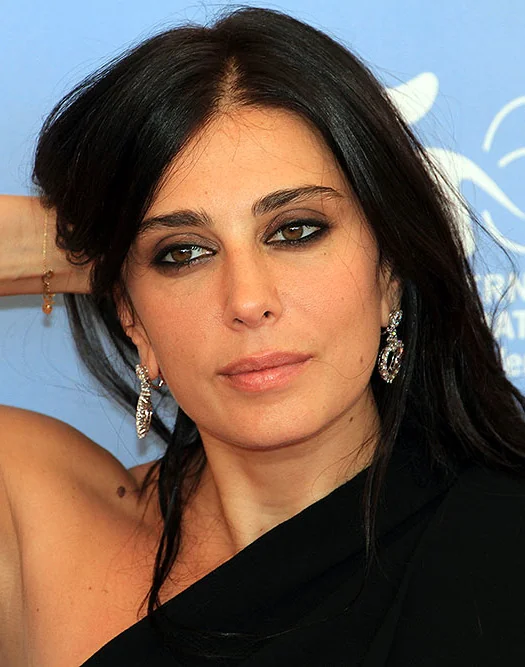
Image from Wikipedia
Image from Wikipedia
Nadine Labaki – Director, Actress, Icon of Arab Author Cinema
How Nadine Labaki Shaped Middle Eastern Cinema with Uncompromising Artistic Development
Nadine Labaki was born on February 18, 1974, in Baabdat, Lebanon, and is now regarded as one of the most influential voices in Arab auteur cinema. Her broader music career began as the director of influential music videos, before she broke through internationally with her feature film debut, “Caramel” (2007). Her on-screen presence as an actress, her directorial signature, and her sensitivity to composition, editing, and visual arrangement made her a cultural ambassador for a generation of Lebanese female artists. With “Capernaum” (2018), she made film history and anchored her name among the world’s top cinema creators.
Early Years: Narrative Tradition, Education, and Initial Directing Experiences
Growing up in the shadow of the Lebanese Civil War, Labaki developed a strong sensitivity to social issues and human vulnerability at an early age. After studying Audiovisual Arts at Université Saint-Joseph in Beirut, she shot her graduation film “11 Rue Pasteur” – an early statement for accurate observation, formal clarity, and narrative finesse. This was followed by commercials and, notably, music videos, which garnered her attention throughout the Arab world. Her artistic development was already evident here: a visual language that creates intimacy, merges choreography and camera into an emotional pulse, and reflects societal roles.
Music Videos as a Laboratory of Perspective: Pop Aesthetics, Gender Roles, and the Art of Music Editing
Labaki's impactful collaborations with Arab pop stars – particularly with Nancy Ajram – set aesthetic standards for the region's visual culture. In clips like “Akhasmak Ah,” “Ya Salam,” “Lawn Ouyounak,” or “Inta Eih,” she blended pop aesthetics with character development and narrative miniatures. Her directorial work used the vocabulary of music video production – rhythm editing, close-up psychology, costume and lighting dramaturgy – to negotiate female self-determination and physicality beyond stereotypical pose. This school of precise image and sound design became the foundation for her later filmmaking.
Breakthrough in Auteur Film: “Caramel” – A New Perspective on Beirut
With “Caramel” (2007), developed during her participation in the Résidence des Festival de Cannes, Labaki offered international cinema a surprisingly light yet astute study of urban femininity. The staging – close to the actresses, supported by musical color dramaturgy and gentle camera movements – conjures a cosmos of friendship, desire, and small rebellions against social norms. “Caramel” was sold worldwide, won numerous festival awards, and established Labaki in the international critique as a voice that intertwines everyday reality with poetic power.
“Where Do We Go Now?” – Comedy, Choral Scenes, and the Musical Timing of Peace
In 2011, she followed with “Where Do We Go Now?” – an ensemble film that uses musical elements, choreographed tableaus, and humorous breaks to tell a story of religious division and female solidarity in a village. Labaki’s directing emphasizes collective scenes with precise timing, song fragments, and ritual movements that function like an arrangement of voices and bodies. Critics highlighted her ability to balance the weight of the theme with ease, without smoothing over ambivalence. The film solidified her authority in the international press and achieved record-breaking viewership in Lebanon.
“Capernaum” – Radical Realism, Documentary Energy, and Global Success
With “Capernaum” (2018), Labaki perfected her method: months of research, work with non-professional actors, and an organic screenplay that translates life experience into cinematic structure. The production combined scenic planning with openness to the unpredictable – a directorial approach that fuses authenticity and dramatic tension. The film won the Jury Prize at Cannes, received nominations at the Golden Globes, BAFTA, and the Academy Awards, making Labaki the first Arab female director nominated for an Oscar in the Best Foreign Language Film category. “Capernaum” features an expressive soundtrack, where sound design, silence, and musical accents render the emotional topography of the characters audible.
Career 2024-2026: Jury Work at Cannes, New Roles, and International Festival Presence
In 2024, Labaki was appointed a member of the competition jury at the Festival de Cannes – a recognition of her authority and curatorial insight. Concurrently, she continued her work as an actress: in Justin Anderson's “Swimming Home” (world premiere January 29, 2024, at the International Film Festival Rotterdam, followed by a North American premiere at the Tribeca Festival), she portrays the character Laura – a quiet yet precisely positioned counter-voice in the psychological fabric of the film. In 2025, she appeared in “The Sand Castle” on Netflix – an Arabic-language, psychologically charged thriller dealing with themes of flight, loss, and childhood resilience. These recent projects demonstrate how Labaki expands her repertoire between directing, acting, and curatorial work.
Style and Work Analysis: Composition, Arrangement, and the Ethics of Perspective
Labaki's cinema thrives on a clear compositional idea: image axes are varied like musical motifs, motifs reappear – sometimes as a close-up of a face, other times as a spatial sketch of a street. Her editing employs repetitions, ellipses, and rhythmic cadences that accentuate moods rather than mere plot points. In the soundtrack, she juxtaposes soft atmospheres against eruptive external sounds that act like percussive entries. This aesthetic arises from experience: she has composed music videos, designed commercial imagery, and understands dramaturgy as an acoustic arrangement. Thematically, she connects social reality and humanistic ethics – a cinema of proximity that makes listening and watching a political gesture.
Discography? Filmography! Works, Reception, Awards
Although the term “discography” targets musicians, Labaki's filmography offers an analogous catalog of artistic milestones. “Caramel” established her theme of female self-determination; “Where Do We Go Now?” condensed the motif of collective rituals and humorous de-escalation; “Capernaum” shifted the tone to an urgent, socially realistic plea for children's rights – winning the Jury Prize at Cannes, a BAFTA nomination, and an Oscar nomination in 2019. Reviews emphasized the intensity of the amateur performances, the ethical rigor, and the visual coherence. With “Swimming Home,” she appeared again in a festival context in 2024; the film polarized critics but provided a platform for Labaki’s nuanced performance. “The Sand Castle” continued the thread of engagement with migration and memory in 2025 and reached a global audience through streaming.
Musical Handwriting in Film and Video: Score, Sound, and Body
Many of her films bear the signature of intentional sound dramaturgy. In the music videos, Labaki emphasized the synchronization of beat and movement; in the feature films, the score – often in close collaboration with composer Khaled Mouzanar – serves less as decorative melody and more as a narrative substrate. Key scenes receive soundscapes in which breathing, street noise, and music create an emotional polyphony. Thus, an “acoustic architecture” emerges that situates characters, makes conflicts audible, and directs perception.
Cultural Influence: Arab Cinema, Female Perspectives, Global Perception
Labaki's success altered the image of Lebanese and Arab cinema in the international discourse. Her artistic development shows that regional stories can generate global resonance when told consistently and crafted with formal precision. As a jury member at Cannes, she sent signals for diversity and for a cinema that takes social realities seriously. At the same time, her early music videos continue to inspire the visual language of pop culture in the region – a lasting influence on artist identities and the visual grammar of Arab pop culture.
Current Projects, Awards, and Public Impact
Apart from filming, Labaki regularly engages in discussion formats and interviews to talk about production conditions, children’s rights, and ethical filmmaking. Her presence in international juries, her festival appearances, and her continuous work in front of the camera showcase an artist who combines expertise, authority, and trustworthiness – from research to production to the political responsibility of the image. The ongoing reception of “Capernaum” in award lists and retrospectives attests to the canonical status of her work.
Conclusion: Why Nadine Labaki Inspires – and Why You Should Experience Her Live
Nadine Labaki combines artistic precision with moral courage. Her films breathe music – in the editing, in the soundtrack, in the choreography of bodies and gazes. She illuminates marginalized perspectives without producing pathos and trusts in the audience's intelligence. Those who see her work in the cinema experience how image, sound, and human experience transform into an arrangement that resonates long after. The appeal is clear: Experience her films on the big screen, where her visual compositions and sound design unfold their full power – and where art invites engagement with the world.
Official Channels of Nadine Labaki:
- Instagram: https://www.instagram.com/nadinelabaki/
- Facebook: No official profile found
- YouTube: No official profile found
- Spotify: No official profile found
- TikTok: No official profile found
Sources:
- Nadine Labaki – Official Website
- Festival de Cannes – Nadine Labaki (Jury 2024, Awards, Biography)
- PBS Amanpour & Company – Interview on “Capernaum,” 12.18.2018
- The Guardian – Review of “Swimming Home,” 01.29.2024
- International Film Festival Rotterdam – Swimming Home (Program page), 2024
- Tribeca Festival – Swimming Home (North American Premiere), 2024
- Netflix – The Sand Castle (Rating & Availability), 2025
- Sony Pictures Classics – Press Release for “Capernaum,” 05.10.2018
- Al Jazeera – Oscar Nomination “Capernaum,” 01.23.2019
- Gulf Business – 100 Most Powerful Arabs 2025 (Profile of Labaki)
- Wikipedia – Nadine Labaki (Image and text source, Filmography, Awards)
Upcoming Events
SINNema – Film in Conversation: Capernaum – City of Hope