
Myrna Loy
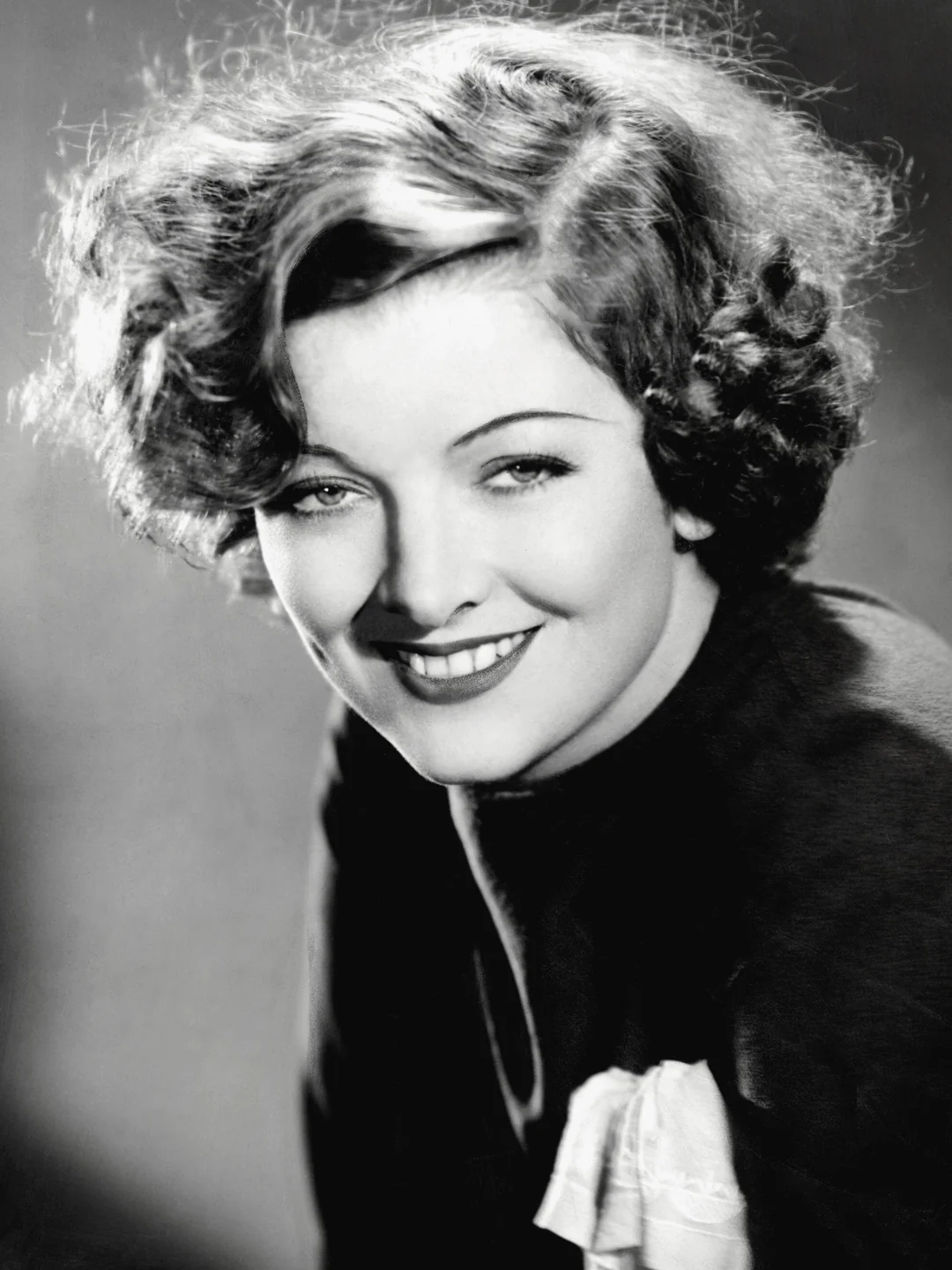
Image from Wikipedia
Image from Wikipedia
Myrna Loy: The Elegant Queen of Classic Hollywood
An Actress Between Glamour, Poise, and Timeless Screen Presence
Myrna Loy, born Myrna Adele Williams on August 2, 1905, in Helena, Montana, and died on December 14, 1993, in New York City, is one of the iconic faces of classic American cinema. Her name stands for elegance, precise timing, and a stage and screen presence that resonated long after the studio era. She became famous mainly as the partner of William Powell in 14 films together, including the legendary The Thin Man series; in 1991 she received an honorary Oscar for her lifetime achievement. ([en.wikipedia.org](https://en.wikipedia.org/wiki/Myrna_Loy))
Early Years and Artistic Influences
Myrna Loy's family roots connect the American West with a culturally open-minded household. Her mother studied music at the American Conservatory of Music in Chicago and initially wanted to become a concert performer; Loy herself grew up in Montana, later moving to California with her family, where she began taking dance lessons at an early age. By the age of twelve, she was already on stage in Helena, performing a self-choreographed dance number. This early combination of movement, expression, and public presence laid the groundwork for her future career. ([en.wikipedia.org](https://en.wikipedia.org/wiki/Myrna_Loy))
After her father's death in 1918, the family permanently moved to California. Loy attended the Westlake School for Girls and began participating in local stage productions at the age of 15, although her teachers were critical of her theatrical involvement. The transition from dance to acting was not a break but rather a logical expansion of her expression. Early on, she exhibited that controlled charm which would later become her trademark. ([en.wikipedia.org](https://en.wikipedia.org/wiki/Myrna_Loy))
From Supporting Roles to Stardom
Her journey into film started in the mid-1920s with minor roles. Initially, she was cast in exotic and "oriental" parts, a common pattern of the studio system that often pigeonholed talents into narrow types. It wasn't until the 1930s that her comedic potential was truly recognized. This phase marked a crucial transformation from interchangeable performer to an independent star figure. ([bu.edu](https://www.bu.edu/library/wp-assets/finding-aids/Loy-Myrna-1111.pdf))
Her breakout role came in 1934 with The Thin Man, when W.S. Van Dyke cast her alongside William Powell. The film became a major success and established Loy as the "Perfect Wife" of American cinema, a character that combined intelligence, irony, and elegance rather than merely showcasing decorative femininity. The chemistry between Loy and Powell developed into one of Hollywood's most famous screen partnerships, defining several sequels and becoming one of film history's most popular pairings. ([afi.com](https://www.afi.com/robert-detail/3933-THETHINMAN/))
The Great Success with William Powell
The collaboration with William Powell not only transformed Loy's career but also how she was perceived publicly. The audience loved the combination of lighthearted crime-solving, witty dialogue, and an almost effortless partnership that appeared so organically in Hollywood studios. The AFI notes that The Thin Man was the first film in an extremely successful series that was not initially seen as a guaranteed hit at MGM. This risk made the film's triumph all the more remarkable. ([afi.com](https://www.afi.com/robert-detail/3933-THETHINMAN/))
At the heart of her success was not expressive exaggeration but fine control. Loy played with subtlety, with glances, pauses, and a rhythmic precision reminiscent of good musical timing. This is one reason why her characters still feel modern today: they do not dominate the space with loudness but through presence. This quality made her one of the finest comedic actresses of her era. ([afi.com](https://www.afi.com/robert-detail/3933-THETHINMAN/))
Career Highlights Beyond the Crime Comedy
Although the Thin Man films remained the center of her fame, Loy also showcased her versatility in other productions. Some of her most notable films include The Best Years of Our Lives and The Bachelor and the Bobby-Soxer, works that underline her range between warmth, wit, and emotional credibility. The AFI and TCM describe that, by the 1940s, she was already regarded as the "screen's perfect wife" before taking on a more mature, reflective role in The Best Years of Our Lives. ([tcm.com](https://www.tcm.com/articles/afi-top-100/21812/the-best-years-of-our-lives-1946))
The Best Years of Our Lives was critically acclaimed as one of the best works of producer Samuel Goldwyn and won seven Oscars. Loy had initially been hesitant due to her smaller role and her involvement in war work but eventually accepted the assignment and received top billing. This late success illustrates the longevity of her impact: she stood not only for glamour but also for maturity, dignity, and social sensitivity. ([tcm.com](https://www.tcm.com/articles/afi-top-100/21812/the-best-years-of-our-lives-1946))
Filmography as an Artistic Body of Work
The AFI database officially documents 39 titles in her filmography, while other biographical collections cite 124 to over 130 films. This span shows how extensive her career in cinema and later on stage was. For an actress of her generation, it's not merely a question of numbers but an indication of extraordinary persistence in a system that often quickly exhausted careers. Loy endured the transition from silent films to sound and remained stylistically appropriate. ([catalog.afi.com](https://catalog.afi.com/Person/115512-Myrna-Loy))
Her early and mid-career included smaller silent film roles, later central roles in genre comedies, melodramas, and social pieces. In the 1960s, she returned to the stage with theater works, touring the country with productions like Barefoot in the Park, Don Juan in Hell, and Dear Love. This exemplifies an artist who never allowed herself to be reduced to the status of a former film star. While she did not have a musical career, her artistic development is as multifaceted in the logic of theater and cinema as that of a great interpreter. ([bu.edu](https://www.bu.edu/library/wp-assets/finding-aids/Loy-Myrna-1111.pdf))
Style, Impact, and Cultural Influence
Myrna Loy embodied a new type of female screen character: intelligent, ironic, self-assured, and never flatly decorative. In an era when female roles often fluctuated between femme fatale and innocent beauty, she created a counter-model. Her performance combined comedic lightness with urban sophistication; this was precisely where her cultural influence lay. She became a reference point for those later wanting to rethink female sovereignty in classic cinema. ([afi.com](https://www.afi.com/robert-detail/3933-THETHINMAN/))
Her engagement outside of films also contributes to her profile. During the war, she advocated for the support of the Allies, engaged politically, and was active in committees and conferences with international significance. This public stance strengthened her reputation as a person of substance, not merely as a star. The honorary Oscar in 1991 thus honored not just a film career but a long-standing cultural significance. ([bu.edu](https://www.bu.edu/library/wp-assets/finding-aids/Loy-Myrna-1111.pdf))
Current Classification and Relevance Today
Since Myrna Loy passed away in 1993, there are no current projects, new albums, tours, or contemporary releases in her name. Her presence today consists of re-releases, film series, retrospectives, and the enduring presence of her works in film history. This is precisely why she remains relevant: as a benchmark for comedic precision, stylish authority, and lasting star quality. ([en.wikipedia.org](https://en.wikipedia.org/wiki/Myrna_Loy))
Conclusion: Why Myrna Loy Continues to Fascinate
Myrna Loy is captivating because she never allowed glamour to feel empty. She combined beauty with intelligence, elegance with comedic precision, and popular cinema with genuine artistic integrity. Those who watch her films today not only experience a piece of Hollywood history but also an artistry that remains modern. Especially on the big screen, her sophistication unfolds most strongly—making it a great reason to experience her classics live in cinemas again and again. ([afi.com](https://www.afi.com/robert-detail/3933-THETHINMAN/))
Official Channels of Myrna Loy:
- Instagram: No official profile found
- Facebook: No official profile found
- YouTube: No official profile found
- Spotify: No official profile found
- TikTok: No official profile found