
Musical
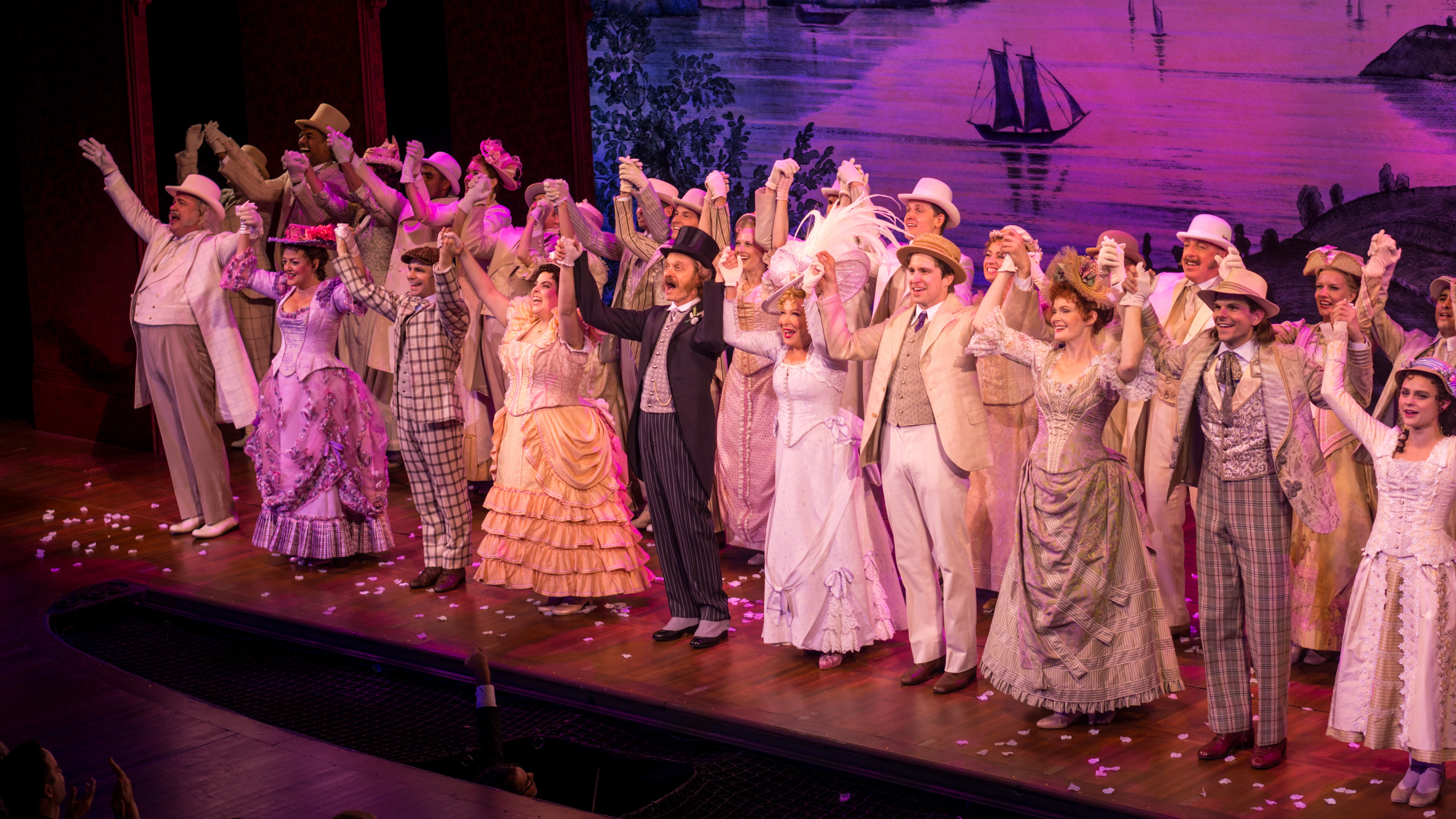
Image from Wikipedia
Image from Wikipedia
Musical – The Great Narrative Form of Popular Musical Theatre
From Broadway to West End: How Musical Theatre Writes World History with Song, Dance, and Drama
The musical combines singing, dancing, acting, and orchestral music into a fully composed narrative arc – a total work of art that has been conquering the world since the 1920s from New York's Broadway and London's West End. As a popular form of musical theatre, it captivates with exhilarating melodies, strong characters, precise dramaturgy, and a stage presence that merges intimate emotion with grand spectacle. Between comedy and tragedy, political zeitgeist and timeless love stories, the genre continuously finds new forms to make societal debates, cultural diversity, and artistic development tangible.
In its modern incarnation, the musical merges the traditions of operetta, revue, vaudeville, and singspiel with jazz, swing, soul, pop, and rock. Its musical culture thrives on the balance of song dramaturgy, choreography, scenic composition, and sonic design – remaining agile by continuously translating material from literature, cinema, or contemporary history into gripping musical theatre. The fact that many musicals are adapted into films demonstrates their cultural impact far beyond the stage.
Origin, Definition, and Artistic DNA
The musical is a genre of popular musical theatre whose central characteristic is the integration of dialogue, song, dance, and orchestral accompaniment into a narratively coherent sequence. Historically, it developed from precursors such as operetta, ballad opera, and singspiel, but gained its own identity in the USA through jazz, revue aesthetics, and the tradition of Broadway production. A pivotal moment for the musical careers of many creatives was the shift from the number-based format to action-driven composition and the "musical play" – a form where songs, motifs, and dance arrangements arise organically from the scene and musically deepen character development.
In artistic practice, composition, arrangement, and orchestration shape the emotional power of an evening: recurring motifs connect scenes, harmonic shifts mark peaks of conflict, and choreographic accents alter perspectives in the scenic space. This technical precision is complemented by sound design, light dramaturgy, and stage design – elements that define the musical as a comprehensive experience, making its stage presence an immersive encounter.
Between Broadway and West End: Production Culture, Audience, and Market
Broadway in New York and the West End in London are regarded as the metropolises of musicals – laboratories for artistic innovation as well as engines of a global theatre market. Long running series, internationally standardized production processes, touring and en-suite operations, as well as a close interplay among creative teams, orchestras, casts, and craftspeople have established a professional infrastructure. It is here that trends emerge that resonate worldwide: From meticulously staged grand productions to intimate, chamber music-style narratives.
The audience response illustrates the market power of this genre. Seasonal statistics show high attendance figures, underlining the relevance of musicals as a cultural and economic phenomenon. Alongside traditional houses, newer production venues, youth initiatives, and festivals shape the diversity. The industry simultaneously employs data-driven evaluations of audiences, runtime, and pricing strategies to balance artistic risks and renew the repertoire.
Milestones and Canon: From Classics to Contemporary Sensations
The canon of musicals lives from historical upheavals and artistic signatures. Works such as a fully composed epic, a romantic thriller, or a collection of poems that becomes a dance theatre exemplify the stylistic diversity: The continuous storytelling in song scenes, the symphonic sound language interwoven with pop idiom, the transformation of literary sources, and the consistent integration of choreography condense the genre into musical storytelling with great emotional reach.
Long-running productions in the West End or on Broadway demonstrate how certain shows shape the genre: An iconic epic about justice and redemption, a darkly romantic masquerade about desire and genius, as well as a feline ensemble revue set standards for melody, stage design, and choreography. Contemporary phenomena incorporating hip-hop poetry, historical narrative art, and pointed orchestration further show how musicals are recalibrating lyrical rhythm, songwriting, and dramaturgy, gaining new audiences.
Aesthetics, Composition, and Musical Development
Composers of musicals write for voices that unite clarity of text, expression, and scenic action. Song forms range from classical AABA ballads to poignant "Eleven O’Clock Numbers" and rap-based recitatives; harmonically, they navigate between traditional tonality, mixolydian modes, bluesy shades, and modal expansion. Orchestrations use woodwind colors for lyrical intimacy, brass and percussion for dramatic tension, while string lines carry emotional arcs and rhythm sections modernize the heartbeat.
Arrangements and dance styles are integral components of artistic development: Tap and jazz funk shape ensemble tableaus, contemporary dance vocabularies structure moments of conflict, and ballet-like passages create space for symbolic storytelling. The production utilizes lighting and projection techniques to shift locations, mark time flows, and visually condense internal monologues. This complex interplay makes the musical a precisely timed art form, where timing, sound balance, and scenic economy are crafted to perfection in detail.
Source Materials, Dramaturgy, and Cultural Influence
The musical draws from literature, myth, biography, and film. Whether it’s a historical uprising, a creative's life, or an urban coming-of-age tale: The works always connect character development, conflict dramaturgy, and musical motifs. The dialogues rhythmically build towards song points, reprises comment on character arcs, and choreography takes on storytelling functions. Thus, multidimensional narratives emerge that address societal issues – power, identity, solidarity, diversity – while remaining entertaining.
This cultural influence extends into popular culture and educational spaces: Cast albums shape listening habits, film adaptations open new audience segments, and school and amateur theatres carry repertoire works to a broader audience. Simultaneously, international licensing ensures stylistic comparability of productions, while regional ensembles add local accents. The genre thus serves as a bridge between high culture and popular culture – aesthetically sophisticated yet widely impactful.
Career Paths, Stage Presence, and Production Reality
Musical careers develop within the tension of vocal technique, acting craft, dance training, and studio work. Performers cultivate a stage presence that combines vocal precision with physical conditioning. On the production side, casting, musical direction, choreography, dramaturgy, directing, and stage technology overlap: From the first arrangements to sitz probes, staging, cue-to-cue rehearsals, and final rehearsals, a meticulously coordinated structure emerges, whose quality becomes evident in the evening performances.
Economically, musical operations use preview phases, dynamic pricing, and merchandising; artistically, revival aesthetics, new texts, and orchestrational reductions are tested to adapt material for today’s listening habits. The balance between preserving traditions and renewing them is the central artistic development thread of the present.
Present and Trends: Long-Run Productions, Records, and Audience
The recent trend in the playing season shows stable audience demand and high overall revenues; at the same time, the repertoire is being reorganized between revivals, long-runs, and new productions. Record runs in the West End emphasize the binding force of major titles, while individual milestones – such as anniversary marks of long-running productions or top positions on the list of longest-running West End musicals – establish the genre in the public eye. Concurrently, contemporary works that intertwine rhythmic language and historical materials sustainably reach new audience segments.
In London, the density of theaters, the structured ticket landscape, and an active industry organization contribute to maintaining a diverse array of performances – from family classics to operetta remakes to politically sharp new creations. In New York, targeted marketing strategies, tiered pricing, and international touring enhance the global visibility and economic resilience of the genre.
Overview of Works and Critical Reception
The discography of musicals is primarily represented through cast albums and live recordings: Original cast recordings serve as a sonic score and significantly influence reception. Enduring productions in the West End – with far more than ten thousand performances – are considered benchmarks for cultural presence. Critically acclaimed works impress with coherent material adaptation, memorable melodies, distinctive orchestration, and a directorial language that weaves dance, scene, and music seamlessly together.
Whether a symphonically charged love story, a poetic ensemble round, or a modern narrative revue: The music press honors productions that combine a clear musical signature with precise scenic economy and strong ensemble culture. The great long-runners of the late 20th century and the stylistically defining successes of the present together form a reference framework against which new works can be measured.
Conclusion: Why Experience Musicals Now?
The musical remains the most immediate form of popular musical theatre: It tells compelling stories, touches deeply, and engages with societal issues. Its artistic development thrives on bold material choices, technical excellence in composition and arrangement, and a stage presence that balances emotion and spectacle. Those who experience this genre live will feel how music, text, and movement come together in a grand arc – an evening that resonates in the ears and lingers in the mind. The best time to experience this power is always now: in the theatre space, where sound, body, and story merge into an unmistakable experience.
Official Channels for Musicals:
- Instagram: No official profile found
- Facebook: No official profile found
- YouTube: No official profile found
- Spotify: No official profile found
- TikTok: No official profile found
Sources:
- Wikipedia – Musical (Genre Article)
- The Broadway League – Season Statistics 2023/24
- Wikipedia – West End theatre (Overview, Long-Running Musicals)
- Encyclopaedia Britannica – Musical: Definition & History
- Wikipedia – Les Misérables (Long-Run and Classification)
- Wikipedia – The Phantom of the Opera (Records & Reception)
- Wikipedia – Cats (Run Lengths & History)
- Official London Theatre – West End Guide (Structure & Industry Context)
- Wikipedia: Image and Text Source
Upcoming Events
Musical Starlights - Best of Musicals
Big musical hits, strong voices, and pure goosebumps in Bielefeld: Musical Starlights live at the City Hall. It will be emotional on 10.04.2026. #Musical
How to Musical – The Slightly Different Lecture
Humorous look behind the scenes at Cultural House abraxas: How to Musical shows how musical theatre is created. Thursday, 04.06.2026, 15:00 hrs, tickets from €25. Experience, laugh, wonder. #AugsburgCulture
How to Musical - Musical Company Augsburg
An evening full of musical theater, wit, and anniversary energy in Augsburg: How to Musical shows the magic behind the stage. 04.06.2026, from 29 €. #Musical
How to Musical (the slightly different lecture!)
A behind-the-scenes look at Kulturhaus abraxas: How to Musical combines lecture, singing, and humor. Thu 04.06.2026, 19:30, tickets from €25. Understand, marvel, cheer along – secure your seats now. #AugsburgCulture
How to Musical – the slightly different lecture! (Musical Company Augsburg)
Experience How to Musical at the cultural center abraxas: Anniversary lecture with humor, singing, and workshop insights. 05.06.2026, 19:30, tickets from €25. Understand, marvel, laugh – secure your seats now! #AugsburgCulture
How to Musical - Musical Company Augsburg
Augsburg gets a musical about the musical itself: clever, charming, and full of stage magic. On 06.05.2026 at 19:30 at abraxas. #Augsburg #Musical
Six The Musical
Experience the spectacular interpretation of the Queens of Henry VIII live on stage in Munich!
How to Musical – the slightly different lecture!
An afternoon full of stage magic at Kulturhaus Abraxas: How to Musical explains and seduces. Sat 06.06.2026, 15:00, from 25 €. Insights, closeness, live experience – plan now. #Augsburg
How to Musical - Musical Company Augsburg
Augsburg receives a charming musical lecture full of wit, singing, and backstage magic. Experience the anniversary live at abraxas! #Musical #Augsburg
How to Musical – The somewhat different lecture!
Dive into the art of musicals at Kulturhaus abraxas: clever, witty, musical. 07.06.2026, 15:00, tickets from €25. Knowledge, goosebumps, live experience. Secure tickets now! #AugsburgKultur