
Mathias Richling
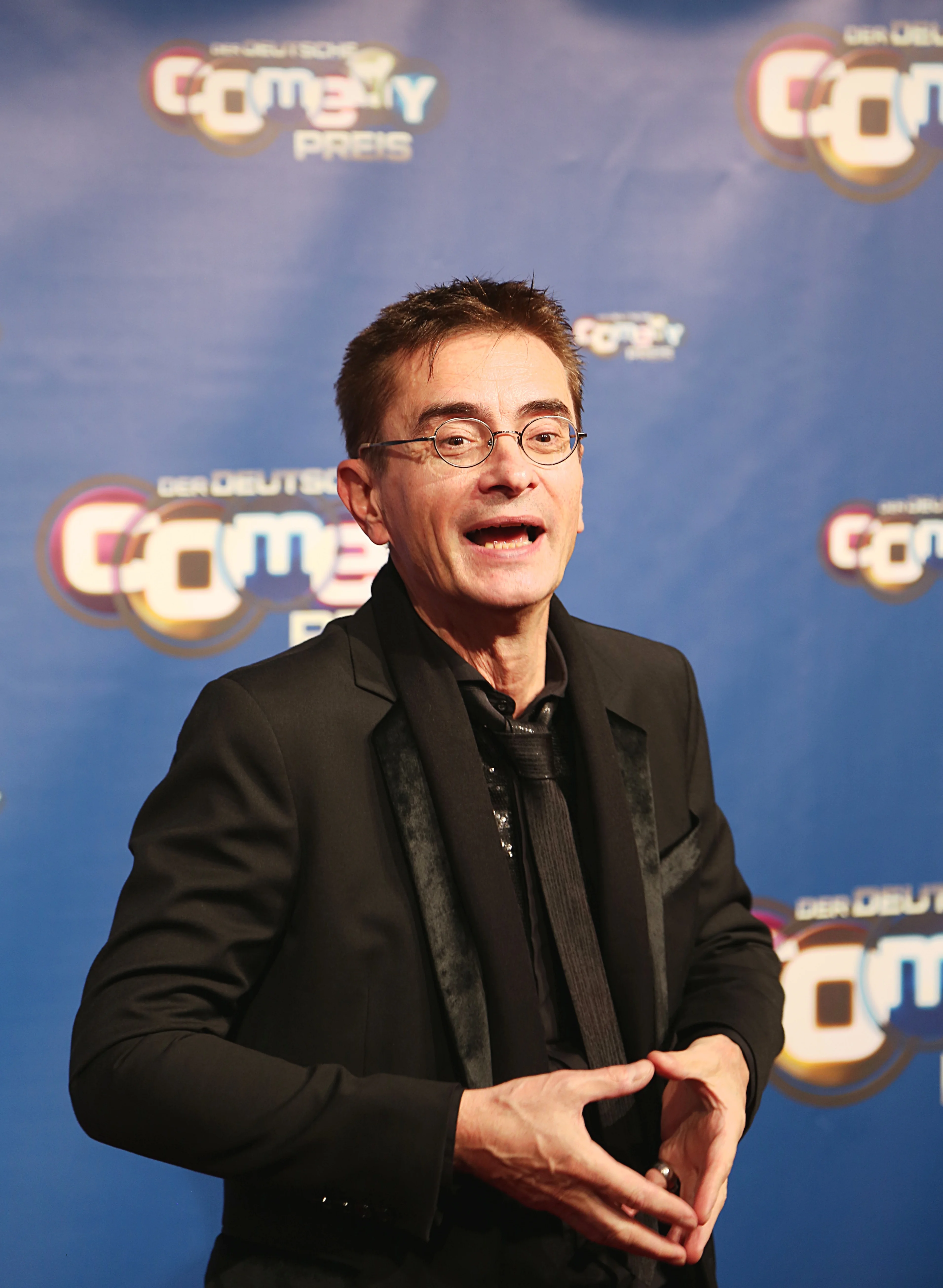
Image from Wikipedia
Image from Wikipedia
Mathias Richling
Satirical precision, voice as an instrument, five decades of stage presence: The chameleon of German cabaret
Mathias Richling, born on March 24, 1953, in Offenbach am Main and raised in the Remstal, is considered one of the most influential cabaret artists and impersonators in Germany. Since the 1970s, he has shaped German-language satire with pointed social criticism, acrobatic language brilliance, and a stage presence that breathes from second to second. His artistic development stems from an unusually broad educational background – musicology, acting, history, philosophy, and literature – culminating in a distinctive signature: voice imitation as composition, tempo as rhythm, punchline as a clean arrangement.
With TV formats such as “Jetzt schlägt’s Richling,” “Zwerch trifft Fell,” “Studio Richling,” and “Die Mathias Richling Show,” he reached millions of viewers and made media history. To this day, he remains a style-setting presence on stage: as a solo artist with dramatically dense programs, as a sharp-tongued commentator on current political issues, and as an artist who productively blurs the boundaries between literature, language, music, and performance.
Background, education, and early artistic development
Richling grew up in Endersbach near Waiblingen and later in Stuttgart-Bergheim. Early on, his talent for impersonation became evident; even as a student, he stood out with precise imitations. After graduating from high school, he began an interdisciplinary study and passed the acting exam in 1975. In 1981, he completed his studies in literary studies with a master's thesis on Karl Valentin – a reference that explains his affinity for linguistic art, grotesque exaggeration, and finely woven comedy. Musicology influenced his timing, vocal delivery, and understanding of sound dramaturgy, which continues to underpin his stage work.
His first longer engagement was in 1974 at the Stuttgart Theater der Altstadt, where the early solo programs emerged – a kind of artistic laboratory in which he sharpened his genre, his composition of voices, his dramatic arrangement, and his satirical palette of characters. From the beginning, he combined social analysis with humor that never tips into cynicism, instead revealing the mechanisms of power.
Breakthrough and television career: From “Jetzt schlägt’s Richling” to “Die Mathias Richling Show”
Richling gained nationwide recognition starting in 1989 with “Jetzt schlägt’s Richling” on ARD – short, highly concentrated satire following the daily news. From 1996, his own series “Zwerch trifft Fell” aired on SWR, renamed “Studio Richling” in 2010 and continued as “Die Mathias Richling Show” since 2013. This continuity over decades reflects an extraordinary media career in terms of constant stage and media work: each episode is precisely arranged, every character rhythmically placed, and each punchline carefully produced.
At the same time, Richling was a presence in the legendary ARD show “Scheibenwischer,” shaping the history of political cabaret there. His parodies of top politicians – including female figures, which he developed vocally and physically independently – became his trademark. At the end of 2024, his TV show was discontinued for budgetary reasons at SWR; however, the balance remained impressive: 28 years of continuous presence of a solo satire program that set standards in tone, composition, and tempo.
Programs, repertoire, and stage aesthetics
Richling's solo programs read like a precisely curated discography of cabaret: from “Köpfe u. v. a.” (1974) and “Ich bin’s gar nicht” (1977) to “Jetzt schlägt’s Richling” (1990), “RICHLING WAAAS?!” (2004), “E=m•Richling²” (2006), and “Der Richling-Code” (2010) to “Deutschland to go” (2013), “Richling spielt Richling” (2016), and “RICHLING und 2084” (2018). This series of works demonstrates a consistent artistic evolution: thematic cycles are conceived like albums, dramatically condensed, with recurring motifs, motif reprises, and counterpoints in the form of new political characters.
Characteristic are speed, articulation, voice composition, and an almost musical understanding of language. Richling uses breath as a meter, works with pauses as caesuras, and employs the sound spectrum of German dialects as a score. Thus arises a “speak-musical” satire, in which syllables, accents, and gestures interweave, turning stage presence into a total work of art.
Publications, recordings, and audiovisual releases
In addition to his stage work, Richling has published LPs, DVDs, and books. The series “Zwerch trifft Fell” has been documented in several volumes; additionally, the LP “Ich bin’s gar nicht” was released early on. In book form, he compiled his linguistic and social observations, including in “Der deutsche Selbstverstand” as well as more recently in “Das Virus Demokratie? Eine Abschätzung” (2021) and “Enttarnt! Biografische Ermittlungen im privat-öffentlichen Milieu” (2024). These publications supplement the live work with essayistic reflections in which he dissects arrangement, composition, and the production of language as a social resonance space.
On television, his oeuvre remained present even after the end of the regular TV series: retrospectives and year specials – such as “Richling #2024” – showcase the long form of his satire in seasonal cadences. Many episodes and clips from the Richling cosmos can be accessed online; in recent years, they have been significantly curated by public broadcasters.
Style, technique, and categorization: Satire as high-precision craftsmanship
Richling's satire is fueled by meticulous research, precise observation, and a vocal technique that fluctuates between spoken song, declamation, and timbral color painting. His characters emerge from micro-gestures: a changed jaw position, a slightly altered emphasis, an acoustic “tipping moment” – suddenly a political pose slips into caricature. This craftsmanship is his unique selling point in the genre, analogous to virtuosity in jazz improvisation or song interpretation.
Musically, his work can be seen as a continuation of a German-language tradition where speech rhythm and political cabaret merge: from Karl Valentin and the great ensembles of the 20th century to the television era of satirical magazines. Richling updates this line with a modern production aesthetic that intertwines television studio, solo stage, and digital distribution.
Cultural influence and awards
Over five decades, Richling has shaped the perception of political figures in Germany. His parodies have become reference points in public discourse; many talk shows, editorial boards, and audiences have cited his versions of real people as sharply focused filters of perception. He has received numerous awards for this, including the Deutscher Kleinkunstpreis (Support Prize 1978, Cabaret category 1987), the Österreichischer Kleinkunstpreis (1988), the Swiss Cabaret Prize Cornichon (2000), the Bayerischer Kabarettpreis (2007), honorary prizes in Baden-Württemberg and Berlin, and in 2023 the “Krefelder Krähe” as an honorary award.
These honors document the authority and trustworthiness of his art: critics and audiences have recognized over decades the consistent artistic development, the craft precision of the parody, and the ability to convey complex political situations in an understandable, sound- and image-rich form.
Current projects, tours, and media presence (2024–2026)
In the television sector, the year 2024 marked a turning point: “Die Mathias Richling Show” regularly aired until December 2024 on SWR television; at the same time, the two-part satire specials “Richling #2024” were released. In December 2024, Richling spoke in a major evening talk about his long stage career and the art of parody. In 2025, he launched a new podcast “Was für Zeiten – Richling plus 1,” where he analyzes and condenses current events with guests every two weeks.
On stage, he celebrated his 50th anniversary as a performer in 2025 with a concentrated series of performances in Stuttgart; during the same period, he deepened his dialogue format with audience talks and readings from the book “Enttarnt!” released in 2024. He also announced a new solo program for 2025/26 with a current political focus, where topics such as artificial intelligence, public life, and identity will play a central role. In 2026, he will also remain present with guest appearances at political cultural events and tour stops nationwide.
Reception and media resonance
For years, critics have emphasized the “demasking artistry” that characterizes Richling's work: mask, voice, and text merge into a stage character that balances between analysis and exaggeration. Regional and national media followed the transition from the TV series to live focal points, book publication, and podcast in 2024/25 – highlighting both his constancy as a solo artist and the modernization of his narrative spaces in audio and online formats.
Remarkable remains the close interweaving of work and contemporary diagnosis: Richling permanently updates his repertoire, reacts to political trends, and adjusts characters and sound colors. This iterative work is akin to an ongoing studio production series – only that the recording spaces are stages, television studios, and audio platforms.
Conclusion: Why you should experience Mathias Richling live
Because here artistic development and craftsmanship excellence come together: Richling's programs are precisely composed evenings in which language, body, voice, and political context form a tense unity. Those who experience him live feel the energy of an artist who arranges, punctuates, and breathes with the audience in real-time. In times of rapid news cycles, he offers orientation – not as a moralist, but as a virtuoso of the satirical form. The appeal is clear: Go, listen, marvel – and laugh, because it creates insight.
Official channels of Mathias Richling:
- Instagram: No official profile found
- Facebook: No official profile found
- YouTube: No official profile found
- Spotify: No official profile found
- TikTok: No official profile found
Sources:
- Mathias Richling – Official Website (Biography/Publications)
- Mathias Richling – Official Website (TV/Streaming References)
- Mathias Richling – Official Website (Tour/Program)
- Wikipedia – Mathias Richling (Works Directory, Awards, TV History)
- LEO-BW – State Archive of Baden-Württemberg (Biographical Basic Data)
- ARD Mediathek – Richling #2024 (SWR Special, Part 2, 07.23.2024)
- Quotenmeter – Launch of the SWR Podcast “Was für Zeiten – Richling plus 1” (September 2025)
- Apple Podcasts – Was für Zeiten – Richling plus 1 (SWR/ARD Audio Library)
- Stuttgarter Nachrichten – 50 Years on Stage: Interview (11.02.2025)
- Stuttgarter Zeitung – Portrait/Event Report (05.20.2025)
- Munzinger – Short Biography (Studies, Early Programs)
Upcoming Events
Mathias Richling #2025 in Unterföhring