
Jason Moran
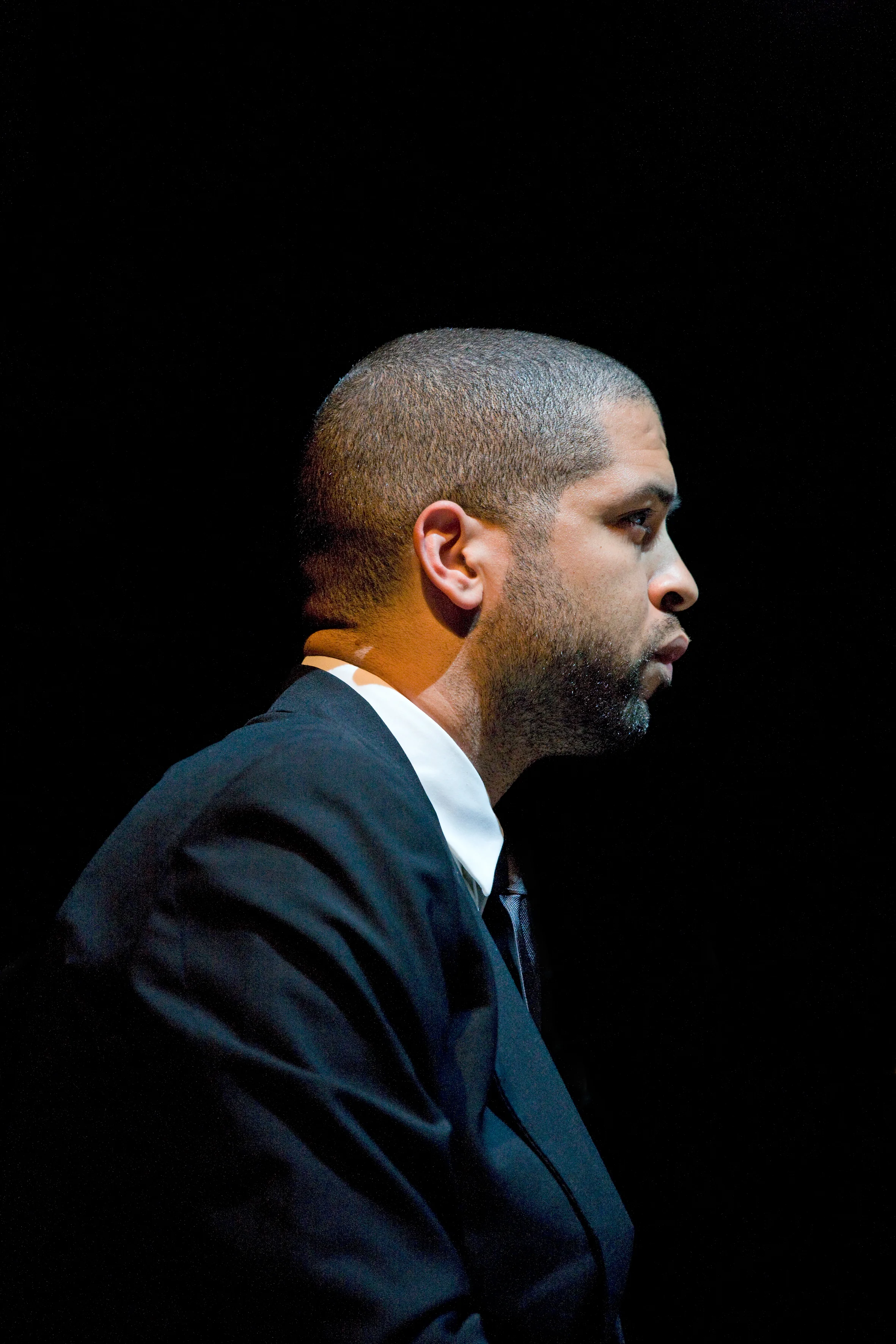
Image from Wikipedia
Image from Wikipedia
Jason Moran – Pianist, Composer, Cultural Shaper of Contemporary Jazz
An innovator at the piano who blends jazz history, stage presence, and visual arts
Jason Moran, born in 1975 in Houston, Texas, is one of the defining jazz pianists of his generation. His music career merges virtuosic piano skills with artistic development across genres: post-bop, stride, blues, classical, hip-hop, and sound art flow into a distinctive stylistic signature. As a bandleader, composer, producer, and educator, Moran has shaped contemporary jazz culture since the late 1990s – in concert halls, studios, museums, and as an artistic director.
Biography: From Houston to New York – a path to his unique sound
Growing up in Houston, Moran discovered jazz as a teenager through Thelonious Monk's ’Round Midnight. His formative training led him to the Manhattan School of Music, where he studied under Jaki Byard and received additional instruction from luminaries such as Andrew Hill and Muhal Richard Abrams. Early on, he gained experience alongside saxophonist Greg Osby and made his debut as a bandleader in 1999 with the album Soundtrack to Human Motion. This foundation of tradition, avant-garde, and personal curiosity became the driving force behind his stage presence and distinctive storytelling at the piano.
Career Breakthrough and Curatorial Role: The Bandwagon and the Kennedy Center
With his trio The Bandwagon – featuring Tarus Mateen (bass) and Nasheet Waits (drums) – Moran established a laboratory for interaction, timing, and form. Active since the early 2000s, the group expanded the piano trio model to include spoken word samples, everyday sounds, and dramatic arcs, all while maintaining jazz syntax. In parallel, Moran took on the role of musical advisor for jazz at the Kennedy Center in Washington in 2011 and became its Artistic Director for Jazz in 2014. These positions made him a central voice in curatorial practice in the USA – navigating mediation, programming, and artistic vision.
The Bandwagon: Collective virtuosity and narrative power
Concerts by The Bandwagon thrive on responsiveness, bold sound colors, and narrative density. Live recordings like The Bandwagon: Live at the Village Vanguard or later projects showcase how Moran layers composition, arrangement, and improvisation: thematic fragments, polyrhythms, subtle electronics, and the voices of the city merge into an urban jazz poetics. This stage presence allows even complex forms to breathe and resonate emotionally with the audience.
Discography – Milestones between Blue Note, YES Records, and collaborations
Moran's discography reflects a tension between classic modern jazz and experimental production: Early Blue Note albums like Facing Left (2000), Black Stars (2001, with Sam Rivers), Modernistic (2002), The Bandwagon (2003), Same Mother (2005), and Artist in Residence (2006) mark the building of a distinctive sound aesthetic. With Ten (2010), he celebrated ten years of The Bandwagon – an album rooted deeply in traditions yet sounding forward-looking. Later, he honored Fats Waller with All Rise: A Joyful Elegy for Fats Waller (2014), a project bridging dance, groove, and jazz history. In the 2020s, he made significant strides with YES Records – including The Sound Will Tell You, Thanksgiving at the Vanguard, and From the Dancehall to the Battlefield, a tribute to James Reese Europe. Collaborations with Charles Lloyd, Cassandra Wilson, Paul Motian, and many others showcase his versatility as a sideman and co-leader.
Style and Artistic Development: Between stride vocabulary, hip-hop pulse, and sound installation
Moran's style combines robust touch technique, precise timing, and dramatic architecture. He employs jazz history as living material: stride figures, Monk-like accents, blues inflections, and late modern harmonies condense with gestural patterns from hip-hop and minimal music. In production, Moran thinks like a director: voices, field recordings, and acoustic space become equal participants in the arrangement. The result is albums that open up not just songs but narrative spaces – with a sound-focused, finely balanced dramaturgy.
Interdisciplinary Projects: Museum Exhibitions, Performance, and "Expanded Jazz"
Beyond the stage, Moran works as a visual artist and performance creator. His exhibition “Jason Moran” (Walker Art Center, later Whitney Museum, ICA Boston, Wexner Center) displayed how he conceptualizes jazz history as a spatial installation – featuring replicas of legendary stages (such as “STAGED: Three Deuces”) alongside filmic, photographic, and acoustic layers. Projects with artists like Joan Jonas or Theaster Gates expand the concept of jazz by intertwining music, image, and movement. This practice creates cultural value: jazz emerges as a social memory that continues to articulate itself performatively.
Teaching, Awards, and Authority: Empowerment through Practice, Prizes, and Institutions
Since 2010, Moran has taught at the New England Conservatory, shaping the next generation of musicians in ensemble coaching, improvisation, and compositional thinking. His authority derives from critical acclaim, jury successes, and fellowships: he received the MacArthur Fellowship (“Genius Grant”) in 2010 and has been recognized by specialized media for years. These accolades underscore his role as a cultural voice that unites artistic excellence, historical awareness, and curatorial responsibility.
Current Projects (2024–2026): Exploring Repertoire and New Alliances
In recent seasons, Moran has deepened his engagement with African American music history. The program “From the Dancehall to the Battlefield” has brought the pioneer James Reese Europe back into the spotlight. In 2026, Moran will revisit the roots of the repertoire in recitals and curated evenings – including Ellington programs and project-based expansions of his Bandwagon ensemble. Additionally, cross-genre encounters have emerged, such as an exchange with techno icon Jeff Mills following the Detroit Jazz Festival, which translates the intersection of groove, structure, and improvisation into a contemporary rhythm laboratory.
Critical Reception: Between Innovation and Tradition
Specialized publications and critics describe Moran's work as consciousness-expanding and historically aware. Albums like Ten have been praised as exemplary syntheses of jazz tradition and reinvention. Reviews highlight his ability to renew the trio's language without losing dialogue with classics like Monk or Fats Waller. In reviews of Modernistic and Same Mother, the emphasis is placed on how adeptly Moran mixes stylistic registers, converting blues vocabulary into a contemporary narrative form. His artistic development acts as a catalyst: it inspires colleagues, students, and audiences to hear jazz as a living archive.
Context and Cultural Influence: Jazz as Social Memory
Moran's work demonstrates that jazz is more than sound – it is memory, community, and cultural topography. By honoring historical figures, engaging museum spaces, and integrating dance, film, and photography, Moran frames jazz as a cultural technique of the 21st century. His compositions and arrangements make audible how the past, present, and future struggle and dance together in every measure. This approach strengthens the relevance of the genre far beyond the scene.
Voices of Fans
Fan reactions clearly show: Jason Moran captivates people worldwide. On Instagram, a fan raves: “Jason's music touches my soul – so much history in every chord.” On Facebook, a listener writes: “Bandwagon live – pure magic! That energy and subtlety at the same time.” Such feedback reflects the impact of his stage presence and the depth of his interpretations.
Conclusion: Why to Listen to Jason Moran Now – and Experience Him Live
Jason Moran makes jazz immediate: he connects sound exploration with groove, memory with the present, virtuosity with form sense. Anyone following his discography hears the persistent search for new forms of expression; those who experience him live feel the urgency of an artist who does not just quote history but brings it to life. For this reason, it is worth seeing Moran in concert in the upcoming seasons – where his music unfolds its full dramatic, comedic, and tragic dimension.
Official Channels of Jason Moran:
- Instagram: https://www.instagram.com/thejasonmoran/
- Facebook: https://www.facebook.com/Jason-Moran-130715313606253/
- YouTube: No official profile found
- Spotify: https://open.spotify.com/intl-id/artist/7g3iwvP459BN53F7CDxemI
- TikTok: No official profile found
Sources:
- Wikipedia (EN) – Jason Moran (accessed and last edited on February 22, 2026)
- Wikipedia (DE) – Jason Moran
- New England Conservatory – Faculty Page: Jason Moran
- Blue Note Records – Artist Page: Jason Moran
- Whitney Museum of American Art – The Bandwagon at 20
- NPR – Jason Moran’s new album pays tribute to James Reese Europe (01.02.2023)
- Bandcamp Daily – Interview: Jason Moran on Artistic Self-Determination
- Doris Duke Charitable Foundation – Artist Announcement (Social Media Verification)
- Monterey Jazz Festival – Jason Moran & The Bandwagon
- Hopkins Center for the Arts (Dartmouth) – Playbill (2026)
- International Music Network – Jason Moran (Touring/Projects)
- YES Records – From the Dancehall to the Battlefield
- Wikipedia: Image and text source