Isabelle Faust
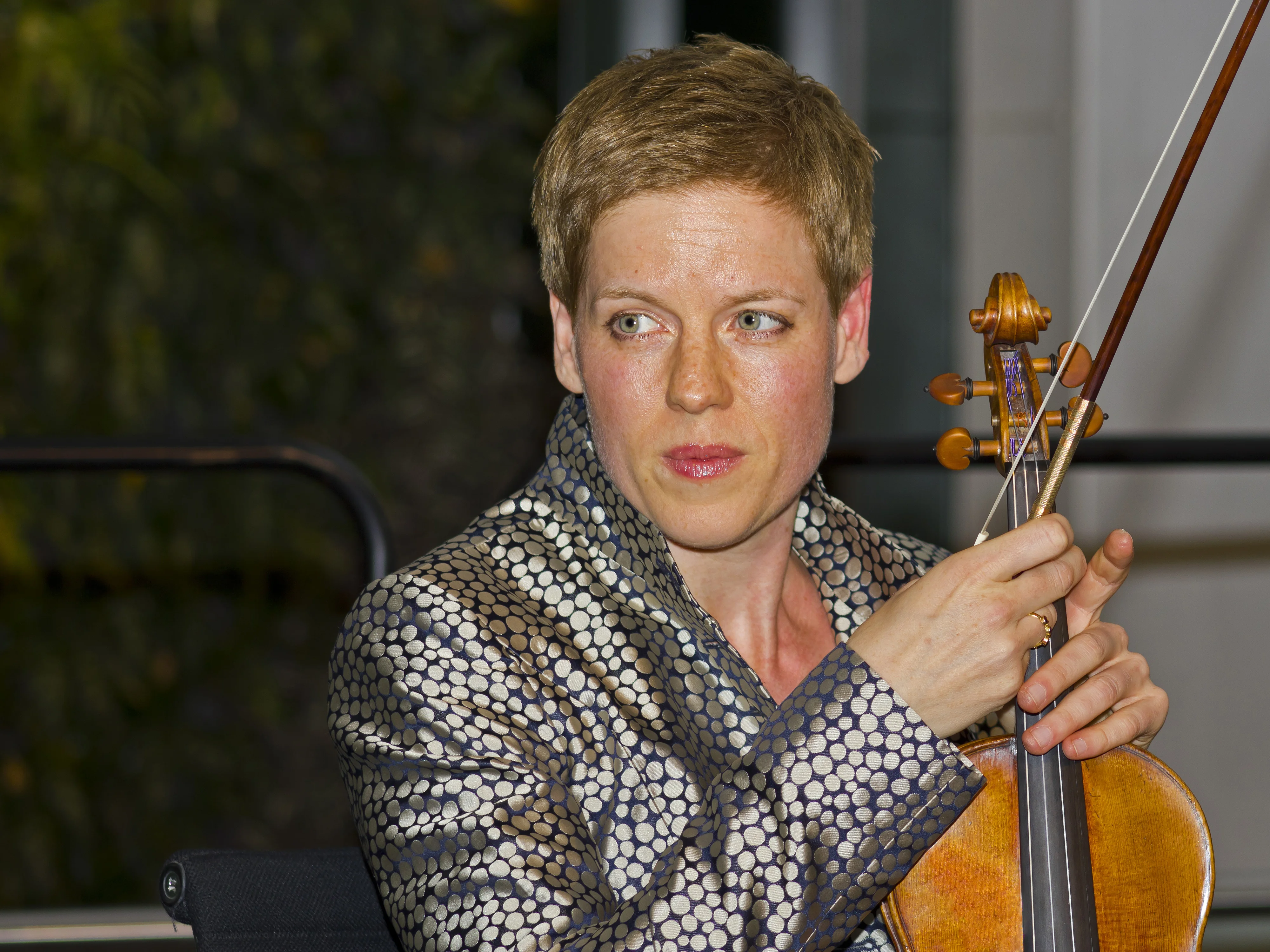
Image from Wikipedia
Image from Wikipedia
Isabelle Faust: The Violinist Who Revitalizes the Repertoire
One of the Most Important German Violinists of Her Generation
Isabelle Faust is recognized as one of the defining voices of the international classical music scene. Born in 1972 in Esslingen am Neckar, she developed an exceptionally clear technical foundation at an early age and gained recognition first through competitions and then on the grand concert stages of Europe and the world. Her profile combines stylistic curiosity, analytical depth, and a stage presence that offers new perspectives even on familiar works. ([en.wikipedia.org](https://en.wikipedia.org/wiki/Isabelle_Faust))
The key facts of her career illustrate its breadth: solo career, chamber music, contemporary music, historical performance practice, and professorship. Faust does not solely function as a pure virtuoso in the traditional sense but as a musician with architectural thinking, carefully revealing colors, structure, and musical drama. This is precisely what establishes her artistic authority. ([en.wikipedia.org](https://en.wikipedia.org/wiki/Isabelle_Faust))
Early Years: An Unusually Early Start
Isabelle Faust received her first violin lessons at the age of five. Her musical background was shaped by her family: Her father started playing the violin himself, took his daughter to lessons, inadvertently laying the groundwork for a remarkable career. Her brother was also involved in early music-making; from the family environment, a string quartet emerged that significantly influenced her musical socialization. ([en.wikipedia.org](https://en.wikipedia.org/wiki/Isabelle_Faust))
This early practice shaped not only her technique but also her listening skills. Faust grew up with chamber music as a vibrant part of daily life, not as an academic abstraction. Those who listen to her later recordings can hear this background: a sensitivity to dialogue, balance, and inner voice leading that is just as effective in chamber music as it is in the concert hall. ([en.wikipedia.org](https://en.wikipedia.org/wiki/Isabelle_Faust))
Competition Successes and International Breakthrough
The artistic breakthrough came through competitions, as is often the case for great soloists of her generation. In 1987, she won the International Leopold Mozart Competition in Augsburg, followed by a first prize at the Premio Quadrivio in Rovigo in 1990, and she triumphed at the Paganini Competition in Genoa in 1993. These awards opened the doors to an international career that quickly gained momentum. ([en.wikipedia.org](https://en.wikipedia.org/wiki/Isabelle_Faust))
After her success at Paganini, Faust moved to Paris in 1996, where she lived for nine years and recorded her first album featuring music by Béla Bartók. Her years in Paris were crucial for her development as she forged new artistic connections, sharpened her repertoire, and established her name in the European classical music landscape. ([en.wikipedia.org](https://en.wikipedia.org/wiki/Isabelle_Faust))
Repertoire and Artistic Development
Faust's repertoire spans from Bach and Telemann to Mozart, Beethoven, Brahms, and Schumann, as well as to Ligeti, Messiaen, Eötvös, and Jörg Widmann. This breadth makes her particularly interesting: She treats early music not in a museum-like manner and contemporary music not as an obligation but as equally important realms of musical understanding. Her work with historically informed instruments and bows especially marks her approach, lending her interpretations transparency and articulated precision. ([en.wikipedia.org](https://en.wikipedia.org/wiki/Isabelle_Faust))
Premieres also play an essential role in her career. According to Wikipedia, she has premiered works by Olivier Messiaen, Werner Egk, Péter Eötvös, and Jörg Widmann. This confirms her profile as a musician who not only manages a traditional repertoire but actively contributes to the present-day violin literature. ([en.wikipedia.org](https://en.wikipedia.org/wiki/Isabelle_Faust))
Teacher, Soloist, Chamber Musician
In 2004, Isabelle Faust became a professor of violin at the University of the Arts Berlin. This position underscores her authority not only as an interpreter but also as an educator who imparts technical excellence, musical intelligence, and stylistic openness. Her simultaneous demand as a soloist and chamber musician highlights the extraordinary flexibility of her profile. ([en.wikipedia.org](https://en.wikipedia.org/wiki/Isabelle_Faust))
Her chamber music partnerships are a central part of her music career. Particularly her collaborations with Alexander Melnikov, Jean-Guihen Queyras, Kristian Bezuidenhout, and other established musicians demonstrate how Faust thinks in collegial, dialogic formations. The art of listening is not a mere accessory for her but part of her aesthetic signature. ([en.wikipedia.org](https://en.wikipedia.org/wiki/Isabelle_Faust))
Discography: From Bartók Debut to Current Releases
Faust's discography is a panorama of her artistic development. Frequently mentioned key recordings include Bartók, Hartmann, Bach, Beethoven, Brahms, Schumann, Schubert, Dvořák, Berg, and Martinů. Wikipedia also notes her critically acclaimed repertoire, including the Mozart concertos, which were considered among the best recordings of 2016. ([en.wikipedia.org](https://en.wikipedia.org/wiki/Isabelle_Faust))
Particularly noteworthy are the highly awarded recordings with Harmonia Mundi and ECM: the Bartók debut, Karl Amadeus Hartmann's Concerto funebre, Bach's Sonatas and Partitas, the Beethoven Sonatas with Alexander Melnikov, Brahms and Schumann, as well as the Mozart concertos with Il Giardino Armonico and Giovanni Antonini. These recordings do not form a random collection but a consciously structured catalog of artistic positions. ([en.wikipedia.org](https://en.wikipedia.org/wiki/Isabelle_Faust))
Currently, Faust remains very present in the recordings market. Harmonia Mundi lists several releases for 2025 and 2026, including Ligeti: Violin Concerto - Concert Românesc - Piano Concerto with Jean-Frédéric Neuburger and Les Siècles, J. S. Bach: Sonatas for Violin and Continuo with Kristin von der Goltz and Kristian Bezuidenhout, Telemann: Violin Concertos. Overture. Suite. Fantasie with the Akademie für Alte Musik Berlin, and Mozart: Sonatas for Fortepiano & Violin, Vol. 4 with Alexander Melnikov. This showcases a discography that consistently advances historical repertoire and new interpretations. ([store.harmoniamundi.com](https://store.harmoniamundi.com/isabelle-faust?utm_source=openai))
Critical Reception and Awards
Professional critiques have praised Isabelle Faust for years as an extraordinary violinist. She has received numerous awards, including the Gramophone Award, the Cannes Classical Award, and the Diapason d'Or. Additionally, several of her recordings have been honored with further awards over the years, including Beethoven sonatas, Bach recordings, and Brahms/Schumann albums. ([en.wikipedia.org](https://en.wikipedia.org/wiki/Isabelle_Faust))
The Gramophone Award 2024 underscores her ongoing relevance today. Simultaneously, the press has reported her role as Artist in Residence with the WDR Symphony Orchestra for the 2025/26 season. She will be featured in nine concerts, including Mendelssohn's Violin Concerto, Schumann's Fantasie, a premiere by Vito Žuraj, and Shostakovich's Violin Concerto No. 2. This is clear evidence of her persistent artistic presence. ([musik-heute.de](https://www.musik-heute.de/26651/gramophone-awards-nach-deutschland/isabelle-faust-gramophone-awards/))
Style: Precision, Sound Culture, and Interpretive Authority
Isabelle Faust’s style can be described as controlled intensity. Her interpretations are rarely showy; instead, she builds tension through awareness of form, precise articulation, and finely balanced dynamics. This generates an interpretation, particularly in Bach, Mozart, and Beethoven, that respects tradition while breathing freely. ([music.apple.com](https://music.apple.com/us/playlist/isabelle-faust-essentials/pl.684aad4685004a58bb71b7b5e1872abd))
Descriptions of her recordings and concert programs repeatedly highlight her exceptional interpretive sovereignty. Apple Music identifies her as one of the most versatile and gifted soloists in the scene, while Harmonia Mundi describes her collaboration with various ensembles and partners as an exploration of elegance, poetry, and sound precision. These reflections align with a musician who puts the work at the center and develops her own radiance from that. ([music.apple.com](https://music.apple.com/us/playlist/isabelle-faust-essentials/pl.684aad4685004a58bb71b7b5e1872abd))
Cultural Influence: A Violinist Between Tradition and Modernity
Faust belongs to that generation of artists who not only interpret the classical concert repertoire but also reorganize it. Her significance lies in the combination of historical awareness, technical brilliance, and contemporary relevance. Because she convincingly performs across Baroque, Classical, Romantic, and Modern repertoires, she serves as a mediator between epochs and listening habits. ([en.wikipedia.org](https://en.wikipedia.org/wiki/Isabelle_Faust))
Additionally, her influence is visible institutionally: as a university lecturer, as a sought-after soloist with major orchestras, and as a partner in renowned chamber music formations. Her involvement in projects with the WDR Symphony Orchestra, the Musikfest Berlin, and international venues demonstrates her grounding in the vibrant music scene. She is not a violinist for mere effects but an artist who sharpens the repertoire in a lasting way. ([pizzicato.lu](https://www.pizzicato.lu/isabelle-faust-ist-artist-in-residence-beim-wdr-sinfonieorchester/))
Conclusion: An Artist with Depth, Courage, and Lasting Impact
Isabelle Faust captivates because she unites technical mastery, intellectual clarity, and emotional truth in rarely balanced form. Her career depicts early discipline, international breakthrough, stylistic openness, and a discography that ranks among the most relevant of her generation. Anyone wanting to understand how contemporary violin playing sounds at the highest level finds in her a benchmark. ([en.wikipedia.org](https://en.wikipedia.org/wiki/Isabelle_Faust))
What remains especially exciting is her ability to make even the most well-known works appear fragile, alive, and present once again. That’s why it is worth experiencing Isabelle Faust live: in concert, that blend of concentration, chamber music thinking, and interpretive sovereignty unfolds, making her art unmistakable. ([music.apple.com](https://music.apple.com/us/playlist/isabelle-faust-essentials/pl.684aad4685004a58bb71b7b5e1872abd))
Official Channels of Isabelle Faust:
- Instagram: No official profile found
- Facebook: No official profile found
- YouTube: No official profile found
- Spotify: No official profile found
- TikTok: No official profile found
Sources:
- Wikipedia – Isabelle Faust
- Impresariat Simmenauer – Isabelle Faust
- ECM Records – Isabelle Faust
- harmonia mundi – Isabelle Faust Discography
- harmonia mundi – J. S. Bach: Sonatas for Violin and Continuo
- harmonia mundi – Telemann: Violin Concertos. Overture. Suite. Fantasie
- harmonia mundi PDF – Ligeti: Violin Concerto - Concert Românesc - Piano Concerto
- Pizzicato – Isabelle Faust is Artist in Residence with the WDR Symphony Orchestra
- Musik Heute – Isabelle Faust receives the Gramophone Award 2024
- Apple Music Classical – Isabelle Faust Essentials
Upcoming Events
WDR Symphony Orchestra: Kissinger Summer
4. Jugendkonzert mit Petr Popelka in München
POPELKA / FAUST / DVORÁK, HENZE, STRAWINSKY / 4. Abo K4
Schumann! with Sir Simon Rattle in Bayreuth
musica viva – Isabelle Faust & Friends with the Ensemble of the Salzburg Marionette Theatre

Sewing Machine Workshop for Kids with Isabell (8–12 years)