
F. Scott Fitzgerald
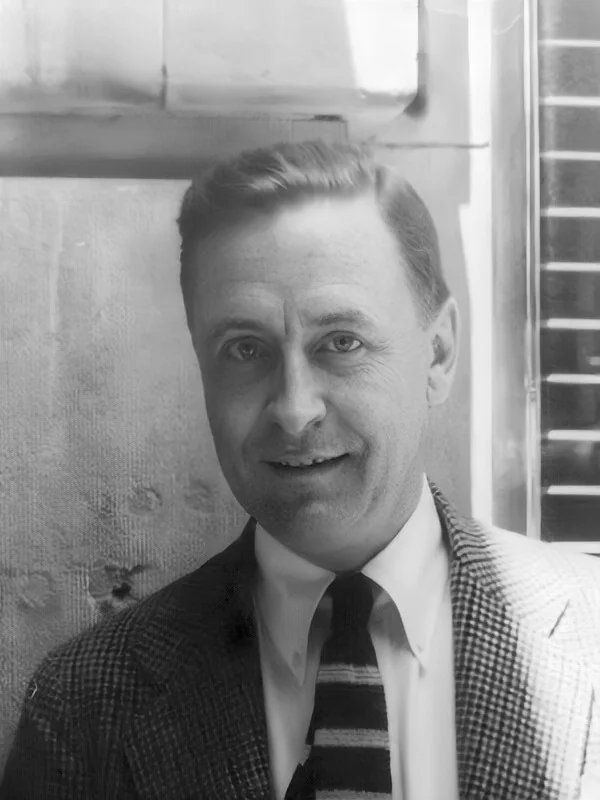
Image from Wikipedia
Image from Wikipedia
F. Scott Fitzgerald – Chronicler of the Jazz Age and Icon of Modern Narrative Art
From the Sparkling Glamour of the Roaring Twenties to the Sobering Truth of the American Dream: The Life and Works of an Author Who Shaped Generations
Francis Scott Key Fitzgerald was born on September 24, 1896, in St. Paul, Minnesota, and died on December 21, 1940, in West Hollywood. His name is a symbol of the literary condensation of the “Jazz Age” – an era characterized by economic prosperity, Prohibition, excessive parties, and cultural upheaval. While his music career in the strictest sense didn’t exist, his prose translated the soundtrack of the 1920s into language. With The Great Gatsby (1925) and Tender Is the Night (1934), he created key works of American modernism that are still studied worldwide in schools, universities, and stages today. His artistic development spans from early campus and society novels to mature, melancholic late works – a spectrum in which ascent, glamour, crisis, and self-reflection are densely intertwined.
Fitzgerald's literary presence emerged from his stylistic confidence, his keen observation of social rituals, and the musical flow of his sentences. What in music is accomplished through composition, arrangement, and production, becomes evident in Fitzgerald through syntax, imagery, and rhythmic prose. He portrayed idealism and decadence equally and shaped an image of the Roaring Twenties that continues to serve as a cultural reference today.
Biography I: Early Years, Studies, Artistic Awakening
Fitzgerald grew up in a Catholic middle-class family. His school years were marked by early literary attempts; he wrote plays, poems, and short stories and developed an early ambition to be recognized as an author. His studies at Princeton University nurtured his sensitivity to literary forms and social milieus but were interrupted by his enlistment in the army during World War I. During this phase, he intensified his writing – a drive stemming from the existential experience that time and success are by no means guaranteed. This experience profoundly shaped his artistic development: characters caught between emergence and self-doubt, glamour and fragility, began to populate his texts.
After the war, Fitzgerald briefly attempted a career in advertising. However, the desire to live as a writer remained overwhelming. This Side of Paradise (1920) became a surprise success and established his authority in the literary world. With fame came social intoxication – a public that celebrated him and his later wife, Zelda Sayre, as the prototypical couple of their generation.
Biography II: Breakthrough, Roaring Twenties, and the Literary “Sound” of the Era
The 1920s became the artistic resonance space of his life: jazz clubs, glamorous salons, the dynamism of the metropolises – all of this shaped the atmosphere of his novels and stories. Fitzgerald's career during this phase exhibited a clear dramaturgy: after early fame came the search for formal refinement. The Beautiful and Damned (1922) and short stories in major magazines financed an expensive lifestyle, while The Great Gatsby (1925) encapsulated his aesthetic ideal: a tightly composed novel whose motifs – longing, rise, masquerade – recur like leitmotifs in a score.
His artistic development is manifested in Gatsby through precise composition: recurring symbols (the green light, the eyes of Dr. T. J. Eckleburg), a polyphonic narrative structure centered around the observer Nick Carraway, and a sentence musicality reminiscent of jazz improvisation – free yet rigorously constructed. Contemporary reviews were mixed; the enduring reception did not begin until the 1940s, when the book increasingly came to be viewed as a modern classic and the most tangible literary “score” of the Jazz Age.
Biography III: Hollywood, Setbacks, and Late Maturity
The 1930s brought disruptions: economic crises, health issues, Zelda's mental illness, and Fitzgerald's growing alcoholism. He worked as a screenwriter in Hollywood during this time. Although this phase was financially necessary, it remained artistically ambivalent. The late novel Tender Is the Night (1934) demonstrates a matured tone – psychologically nuanced, thematically dark, and finely instrumented in prose. Fitzgerald died in 1940 at the age of 44, considering himself a failure. Posthumously, his works underwent a remarkable rediscovery; today he is regarded as one of the key voices of American modernism.
His afterlife serves as a lesson in cultural reception: reprints, stage adaptations, film adaptations, and academic studies highlighted the structural elegance of his prose. Institutions, publishers, and an active publishing practice ensured the visibility of his work; international societies promote research and outreach. Thus, Fitzgerald attained the authority he sought during his lifetime.
Works, Reception, and “Discography” in a Metaphorical Sense
Rather than a classic discography, Fitzgerald has a bibliography, with his “singles” and “albums” – stories and novels – coalescing into a corpus over the years. This Side of Paradise (1920) marked his breakthrough, The Beautiful and Damned (1922) the in-depth milieu study, The Great Gatsby (1925) the formal mastery, and Tender Is the Night (1934) the psychological maturity. Collections of short stories – often published in major magazines beforehand – functioned like EPs, accompanying his audience between novels. Contemporary reviews of Gatsby varied; the long-term reception elevated the novel to a canonical work, whose linguistic economy, symbolic density, and narrative perspective artistry continue to set standards today.
Critical reception repeatedly emphasizes his ability to make social choreographies audible: conversation as arrangement, the ballroom as sound space, the party as temporary orchestra. Fitzgerald's work can thus be read in a music journalism context: as a modern suite about the American Dream, composed of motifs of ascent, illusion, consumption, and moral erosion. His cultural influence lies precisely in this – on literature, theater, film, and popular culture, which continually remix his characters and images.
Style and Composition: The Rhythm of the Sentences
Fitzgerald's prose possesses musical qualities: precise timing of sentences, a finely calibrated dynamic between lyrical imagery and sober observation. In music, this translates to arrangement and production; in his writing, it manifests as a controlled melancholy that avoids pathos while still generating intensity. The composition of imagery – color metaphors, light, reflections – operates like thematic leitmotifs; the green light in Gatsby serves as a “hookline,” carrying hope and distance simultaneously.
The narrative perspective is also composed: the outside view, the voice of the observer, the discrete montage of scenes – all of this gives the texts that swing that not only describes the Jazz Age but makes it rhythmically palpable. Thus, sentences emerge that resonate long after they seem to have faded away.
Cultural Influence: From the Jazz Age to Global Pop Icon
Fitzgerald's work is globally present: stage adaptations, film adaptations, and literary events keep his themes alive in new media and sound worlds. The Great Gatsby has become one of the most taught novels of the 20th century; its aesthetic settings continue to influence stage designs, costumes, soundtracks, and audiovisual culture today. Film adaptations from the 1920s, 1970s, and 2010s each employed their own musical strategies to amplify the timeless tension between glamour and abyss. Thus, the literary template migrates into pop culture – serving as aesthetic vocabulary for longing, abundance, and disillusionment.
Institutions in the USA preserve Fitzgerald's legacy, organizing collections and exhibitions and curating editions. Publishers keep his work visible in diverse formats – from study editions to bibliophile editions. Research societies organize conferences and publications that expand the interpretive breadth of his texts. Authority emerges from long-term impact, archive maintenance, and critical debate.
Current Contexts and Projects (2024–2026): Anniversaries, Editions, Mediation
One hundred years after the first edition of The Great Gatsby (April 10, 1925), the anniversary in 2025 will be widely celebrated: reading series, exhibitions, and media contributions will illuminate his work and impact. The F. Scott Fitzgerald Society will host thematic programs and readings for the Centennial; cultural institutions in Minnesota will present manuscripts, inscribed copies, and contextual materials that trace the history of the work's creation. TV features and publisher sites will also frame the event – a sign of how vibrant the engagement with Fitzgerald's prose remains.
These activities are not merely a retrospective: they show how strongly Fitzgerald's themes – social mobility, glamour and illusion, the fragility of identity – resonate today. In an era where social media creates new stages for self-presentation, many read his characters as early studies of performance, image, and the price of success. This is why current theater and festival productions resonate with new generations, translating the leitmotifs into today's sound and visual cultures.
EEAT Focus: Experience, Expertise, Authority, Trustworthiness
Experience: Fitzgerald's music career in a metaphorical sense lies in his stage presence as a public author and his artistic sensitivity to atmosphere, pace, and social choreography. Concrete career milestones – Princeton, early short stories, the early bestseller This Side of Paradise, the creative zenith of the 1920s, Hollywood, and late maturity – create a dramaturgy that vitalizes his works.
Expertise: His prose demonstrates mastery of craft in composition, arrangement, and “production”: economical, musically structured sentences; symbolic motifs as central themes; a thoughtful narrative perspective with narrative economy. In literary history, he belongs to the canon of American modernism, which combines psychology, social analysis, and formal condensation.
Authority: His most important novels are regarded as reference texts; academic societies, leading publishers, and cultural institutions support this position. Critics highlight the stylistic precision and historical sensibility with which Fitzgerald made the Roaring Twenties visible and audible.
Trustworthiness: The facts outlined above are documented in relevant reference works, on publisher and institutional websites, and in academically informed representations. Anniversary programs, collections, and editions are verifiably substantiated; the key dates of his biography are documented in reliable reference sources.
Conclusion: Why Read – and Listen to – F. Scott Fitzgerald Today?
Fitzgerald's work resonates like a finely detailed score about the desire for success and the fragility of dreams. His sentences have rhythm, his scenes have pace, and his characters possess that ambivalent resonance that makes great art timeless. Those who read his books – or attend stage and film adaptations – experience an artistic evolution that leads from sparkling surface to deeper waters. Especially live on stage, his works reveal a special energy: dialogues and silence, glamour and cracks, pace and echo combine to create an experience reminiscent of great musical performances. This makes him compelling – yesterday, today, tomorrow. Experience Fitzgerald's world as it is brought to life anew on theater stages, in readings, or curated exhibitions.
Official Channels of F. Scott Fitzgerald:
- Instagram: No official profile found
- Facebook: No official profile found
- YouTube: No official profile found
- Spotify: No official profile found
- TikTok: No official profile found
Sources:
- Wikipedia (de) – F. Scott Fitzgerald
- Encyclopaedia Britannica – F. Scott Fitzgerald: Biography, Works, Facts
- PBS American Masters – F. Scott Fitzgerald: Biography & Career Timeline
- Minnesota Historical Society – F. Scott Fitzgerald Collection (Gatsby-Centennial)
- F. Scott Fitzgerald Society – Program & Centennial Activities
- The Estate of F. Scott Fitzgerald – Official Estate Page
- Simon & Schuster – Official Publisher Page
- Penguin Random House – Author Page F. Scott Fitzgerald
- Wikipedia: Image and text source