
Ennio Morricone
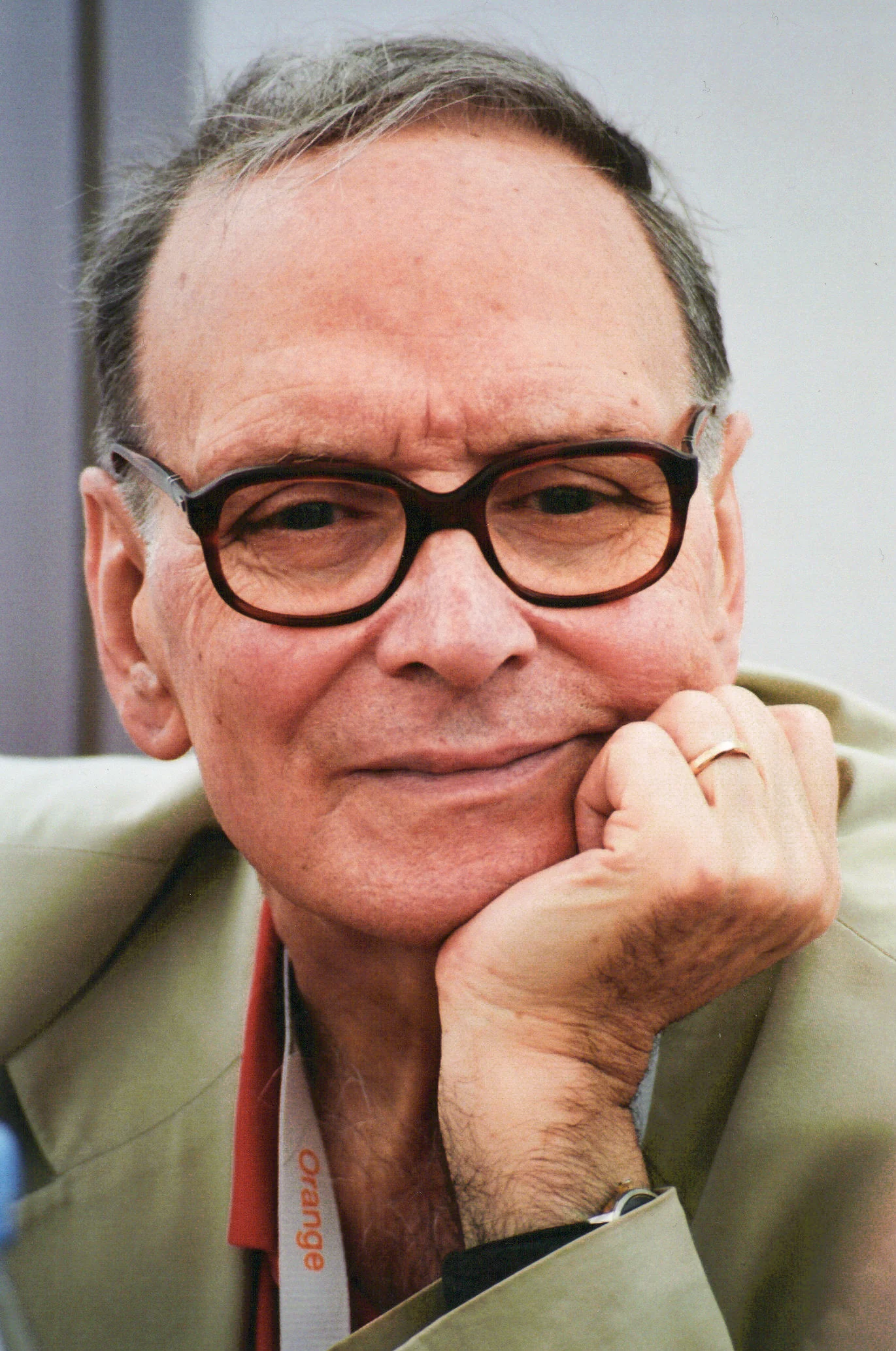
Image from Wikipedia
Image from Wikipedia
Ennio Morricone – The Maestro of Film Music and His Timeless Sound Universe
A Life for Music: How Ennio Morricone Made Cinema Audible
Ennio Morricone (November 10, 1928 – July 6, 2020) shaped the language of sound in world cinema for over seven decades. The Roman composer and conductor, who worked under the pseudonyms Dan Savio and Leo Nichols, created more than 500 film scores and countless concert works. His orchestral imagination combined melody, timbre, and sound into a distinctive signature that influenced westerns, thrillers, dramas, and arthouse cinema alike. Two Oscars, numerous Grammys, Golden Globes, BAFTAs, David di Donatello, and Nastro d’Argento attest to his exceptional authority in the history of music.
His name is inextricably linked to the Italowestern – yet Morricone's musical cosmos extends far beyond that: sacred compositions, chamber music, experimental works with the Gruppo di Improvvisazione Nuova Consonanza, as well as timeless themes for films such as The Good, the Bad and the Ugly, Once Upon a Time in the West, The Mission, Cinema Paradiso, Once Upon a Time in America, and The Untouchables. Morricone's musical career encapsulated artistic development, radical ideas, and a stage presence as a conductor that reached audiences across generations.
Early Years and Education: Foundation for a Singular Voice
Trained in Rome, Morricone early on combined strict composition theory with an openness to new sound concepts. Influenced by Pierre Boulez, Karlheinz Stockhausen, and John Cage, he explored aleatory music, serial techniques, and sound aesthetics. This eagerness to experiment was not merely an academic ornament but skillfully arranged and produced – flowed into his film music. His sense of form, counterpoint, and orchestration combined with a rare melodic talent that made his themes immediately recognizable.
Alongside his work for stage and studio, practical experience was essential: radio productions, arrangements for pop and canzone, studio orchestras – an environment that honed Morricone's technical skills in composition, arrangement, and production. This foundation later allowed him to develop a tailor-made, dramaturgically precise sound concept for each film scene.
Breakthrough in Cinema: The Revolution of Western Sound
With Sergio Leone, Morricone redefined the western genre from the mid-1960s onward. Whistles, jaw harps, electric guitars, oboes, fragments of choirs, whip cracks, and bells merged into a dramatic acoustic that made myths, vastness, and existential tension audible. In films like A Fistful of Dollars, For a Few Dollars More, and The Good, the Bad and the Ugly, a sonic dramaturgy emerged that not only accompanied the visual language but expanded it narratively.
Once Upon a Time in the West marked a pinnacle of this collaboration in 1968: the Jill theme, the harmonica motifs, and the symphonic breath became symbols of the genre. In the western, Morricone did not invent a repertoire of effects, but rather a system of musical signs that brought character psychology, landscape, and myth into a poetic unity.
International Recognition: Beyond the Western
Morricone composed for a wide range of directorial styles – from Bernardo Bertolucci, Pier Paolo Pasolini, and Elio Petri to Terrence Malick, Brian De Palma, Roland Joffé, Giuseppe Tornatore, and Quentin Tarantino. The Mission (1986) combined sacred choral elements with indigenous rhythms; Days of Heaven (1978) shone with chamber music transparency; The Untouchables (1987) consolidated rhythm and orchestral attack into iconic signals of tension; Cinema Paradiso (1988/89) and Once Upon a Time in America (1984) depicted memory spaces with lyrical delicacy.
The crowning achievement came in two stages: in 2007, Morricone received an honorary Oscar for his lifetime achievement; in 2016, at the age of 87, he won the Academy Award for the score of The Hateful Eight. This late award recognized his relentless drive for innovation and his ability to rethink the stylistic and acoustic architecture of a genre.
Discography and Work Character: Melody, Color, Architecture
Morricone's discography includes hundreds of original soundtracks, compilations, and concert works. Defining albums and highlights include the music for A Fistful of Dollars (1964), Once Upon a Time in the West (1968), The Mission (1986), The Untouchables (1987), Nuovo Cinema Paradiso (1988), Malèna (2000), as well as late compilations and reissues. Many of his themes – L’estasi dell’oro, Gabriel’s Oboe, Deborah’s Theme – have become cultural signatures that continue to thrive in pop culture, classical crossover, and live arrangements.
Stylistically, Morricone connected melodrama and modernity, contrapuntal rigor, and sonic curiosity. He conceived film music as composition in the double sense: a musical architecture that reflects the dramaturgy of a film, and an autonomous work that stands on its own in the concert hall. His production techniques ranged from tape experiments and close-miking to large orchestration with choir – always serving atmosphere, rhythm, and narrative tension.
Avant-Garde and Experiment: The Composer as Researcher
As a member of the Gruppo di Improvvisazione Nuova Consonanza (1964–1980), Morricone worked at the intersection of free improvisation, noise, and structure. This experience enriched his film music with sonic risks, asymmetric forms, and unexpected instrumentation. Aleatoric processes, serial patterns, and microtonal frictions did not serve him as ends in themselves but as dramaturgical tools.
It is precisely this permeability between new music and film aesthetics that underpins his singular position in music history: Morricone transcended genre boundaries and endowed the term “film music” with artistic authority while retaining immediate accessibility for a broad audience.
Awards, Critiques, Reception
The list of honors – Academy Awards (2007 Honorary Oscar, 2016 Best Score), Grammys, Golden Globes, BAFTAs, David di Donatello, Nastro d’Argento, European Film Award, Polar Music Prize – attests to his outstanding stature. Critics lauded his ability to acoustically model characters and spaces, set motifs as dramaturgical markers, and narrate psychology with timbres. His music continues to influence concert programs and crossover projects, from orchestral events to vocal and chamber music formats.
In the music press, Morricone is regarded as the architect of a “listening cinema.” Reviews highlight the balance of composition, arrangement, and production: from the hypnotic ostinato to the singable line, from the orchestral tutti to the solo timbre. This results in an “emotional storytelling” that charges film images and shapes memories.
Current Projects, Legacy, and Living Performance Practice (2024–2026)
Even after his death, Morricone's work remains highly present: concert tours and tribute formats, curated by his family and partners, bring his original arrangements to the stage. In 2025/2026, official concert productions with orchestras, choirs, and soloists will emphasize authentic sound, often in collaboration with archives, estates, and publishers. These programs highlight dramaturgical suites – from westerns to crime films to lyrical themes – in their original score format.
A cultural event was also the posthumous world premiere of the opera Partenope on December 12, 2025, at the Teatro di San Carlo in Naples – a work that translates Morricone's dramatic language into music theater. Parallel festivals, sound museums, and church concerts celebrate his sacred compositions – such as Missa Papae Francisci, Ave Maria Guaraní, or Requiem per un destino – in thematically curated programs. Reissues and expanded soundtrack editions (including in 2025) deepen the understanding of his production aesthetic.
Style and Technique: How Morricone Tells Stories
Morricone's composition connects melodic identity with semantic function. Leitmotifs structure character relationships, rhythmic cells create suspense, and harmonic frictions unveil emotional ambiguities. His artistry in instrumentation – oboe, harmonica, electric guitar, choir, celesta, percussion – emerges not from a love for effect but from dramaturgical necessity.
In arrangement, he employed counterpoint, canon techniques, hocket-like progressions, and layering; in the studio, tape delays, close miking, and acoustics were used to create “acoustic topographies.” Morricone viewed production as extended composition: sound balance, dynamics, and spatial impact are integral components of musical form.
Cultural Influence and Legacy
Morricone's music shapes composers from Hollywood to Europe, influencing pop, rock, electronica, and experimental scenes. Countless cover versions, samplings, and performances demonstrate how his themes have become cultural codes – from concert halls to stadium openings to museum exhibitions.
Institutionally, foundations, publishers, and official production partners secure the scholarly elaboration, editions, and performance practices. The legacy lives on in archives, scores, reissues, and on stages worldwide – a vibrant canon that continues to write music history.
Fans' Voices
The reactions of fans clearly show: Ennio Morricone enchants people around the world. A YouTube comment reads: “One of the greatest composers of our time – his music breathes cinema.” Another writes: “Every note tells a story – I hear the images even without a screen.” This resonance reflects how directly Morricone's sound world touches and connects generations.
Conclusion: Why Morricone Endures
Ennio Morricone united artistic exploration with popular appeal. His discography is more than a soundtrack register – it is an atlas of feelings and dramaturgies of the 20th and 21st centuries. Those who listen to his music experience cinema as an acoustic space in which memory, tension, comfort, and longing resonate.
His work is more present today than ever: on concert stages, in re-releases, in posthumous premieres. Experience Morricone's music live – in original arrangements, performed by great orchestras and choirs. The intensity of his sound language unfolds in the hall with the magic that makes cinema unforgettable.
Official Channels of Ennio Morricone:
- Instagram: No official profile found
- Facebook: No official profile found
- YouTube: https://www.youtube.com/@enniomorricone
- Spotify: https://open.spotify.com/artist/1nIUhcKHnK6iyumRyoV68C
- TikTok: No official profile found
Sources:
- Ennio Morricone – Official website
- Fondazione Ennio Morricone – Official Foundation
- ANSA – Morricone wins Oscar for The Hateful Eight (2016)
- Wikipedia (en) – Ennio Morricone (Biography, Works, Awards)
- Wikipedia (de) – Ennio Morricone
- Schirmer Theatrical – Ennio Morricone Concert Production
- Wikipedia – Partenope (Opera Premiere on December 12, 2025)
- Cinemusic.de – New Releases / Quartet Records (January 2025)
- YouTube – Ennio Morricone (Maestro official channel)
- Spotify – Ennio Morricone (Artist Page)
- Wikipedia: Image and text source
Upcoming Events
The Best of Ennio Morricone - Milano Festival Opera
Ennio
ENNIO – Shark Tank Tour 2026 in Munich
Concert – The Color of Sound
An Evening in Italy with Ennio
Ennio Morricone & Nino Rota - Masterpieces of Film Music
CANCELLED: Masterpieces of Film Music Ennio Morricone & Nino Rota

34th Bayreuth Pub Festival