
Daniel Beilschmidt
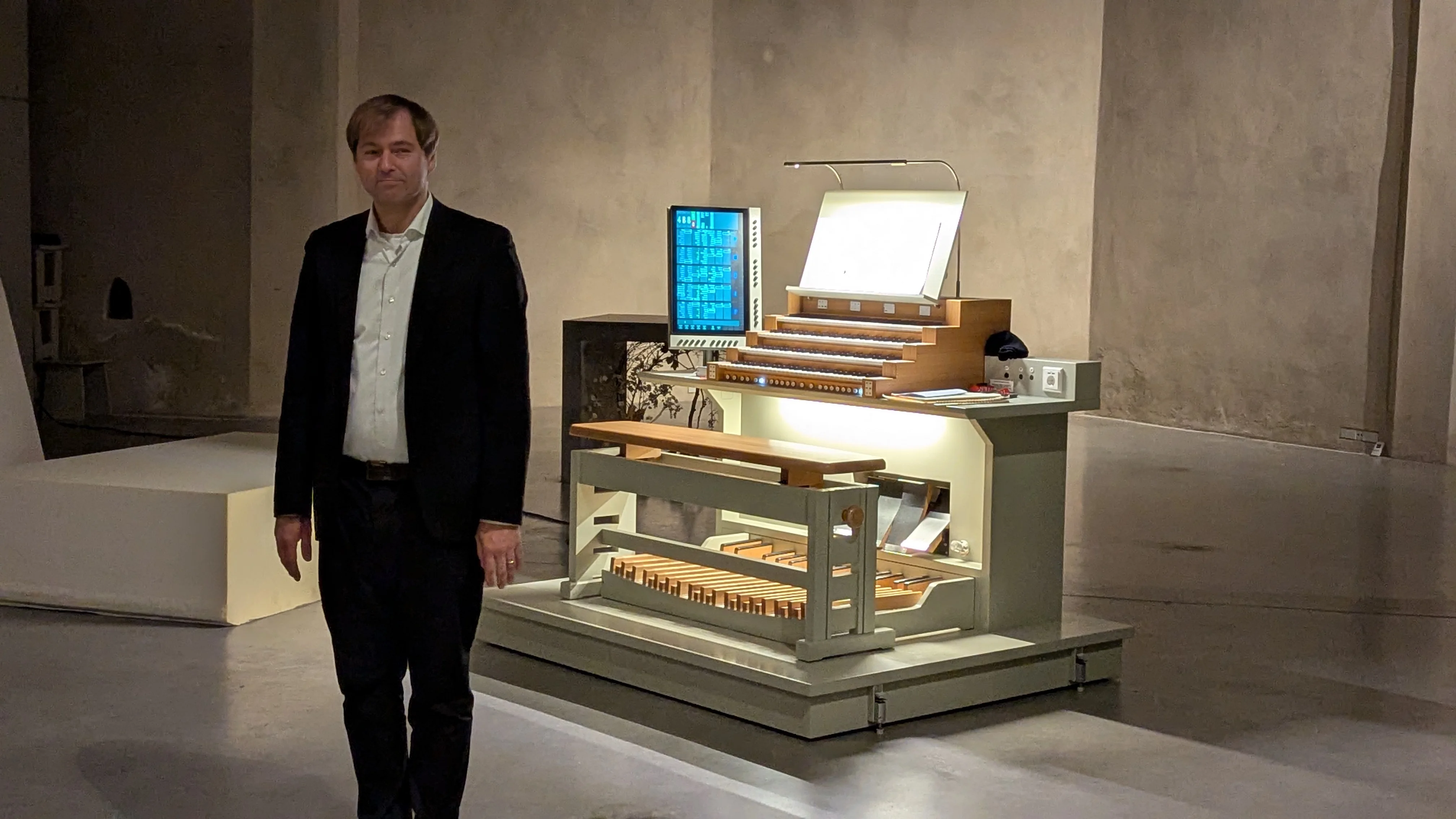
Image from Wikipedia
Image from Wikipedia
Daniel Beilschmidt – Organist, Improviser, Cultural Mediator
The Sound Architecture of the Space: How Daniel Beilschmidt Brings Organ Music to Life
Daniel Beilschmidt, born in 1978 in Zeulenroda, is regarded as one of the most versatile German organists of his generation. Since 2009, he has shaped the musical identity of the Paulinum as the university organist at the University of Leipzig, and since 2021, he has been shaping the future of the historical Trost organ as the organist at Altenburg Castle. His music career connects historically informed performance practice with contemporary improvisation art, and his stage presence ranges from ceremonial academic occasions to international organ festivals. With recordings of Bach, Messiaen, as well as Gothic and Renaissance repertoire that have received attention in specialist publications, he positions himself as a distinguished artist with a clear artistic development, navigating the realms of research, practice, and cultural mediation.
Biographical Roots and Education: From Gera to Leipzig, Copenhagen, and Weimar
Daniel Beilschmidt's artistic development begins in Thuringia: After attending the special music class in Gera, he pursues studies at the Hochschule für Musik und Theater “Felix Mendelssohn Bartholdy” Leipzig, where he studies organ with Arvid Gast and Ullrich Böhme among others. He broadens his expertise during a year abroad with Hans Fagius in Copenhagen and completes his concert examination in Weimar with Michael Kapsner and Bernhard Klapprott. This multifaceted education shapes his understanding of repertoire: historically grounded, sonically curious, and technically proficient. He is recognized early on for his improvisational independence and interpretative clarity – foundations that later influence both his discography and his pedagogical work. ([de.wikipedia.org](https://de.wikipedia.org/wiki/Daniel_Beilschmidt?utm_source=openai))
Career Stations: University Organist in Leipzig and Castle Organist in Altenburg
Since 2009, Beilschmidt has provided a musical profile to the academic celebrations and church services at the University of Leipzig. With the inauguration and development of the organs in Paulinum – including the characteristic swallow’s nest organ – he accompanies a central chapter of Leipzig's music history in the 21st century. In 2021, he takes over from Felix Friedrich as the Altenburg castle organist at the Trost organ, while also becoming the artistic director of the Thüringian Organ Academy – a dual role that combines artistic leadership, repertoire maintenance, and the promotion of young talent. In both positions, he merges a sense of tradition with contemporary aesthetics: concert series, liturgical services, and curated programs create resonant spaces for organ music in the urban context. ([unimusik.uni-leipzig.de](https://www.unimusik.uni-leipzig.de/musik-im-paulinum/universitaetsorganist?utm_source=openai))
Stage Presence Between Festival, Concert, and University
Beilschmidt’s concert activity extends beyond Germany. His performances at international organ festivals – such as in Gothenburg – showcase him as an interpreter who distills colors, registration art, and spatial acoustics into dramatic arcs. In Leipzig, he creates cycles with Bach’s complete organ works at the organs of Metzler and Jehmlich; alongside sacred spaces, he also performs at academic events, such as the opening sounds of the Arqus Annual Conference 2025. These performances document his ability to musically link program dramaturgy with context – festival, liturgy, or university. ([gu.se](https://www.gu.se/sites/default/files/2024-10/2024%20Programme%20Book%20-%20Go%CC%88teborg%20International%20Organ%20Festival%20-%20October%209-20%2C%202024%20-%20Journeys%20in%20Time%20and%20Space%20%28190924%29.pdf?utm_source=openai))
Discography: Bach, Messiaen, Gothic and Renaissance
His discography reflects stylistic range and editorial care. In 2025, “Bach Organ Works” will be released with 47 tracks – a comprehensive collection of Bach chorales that are phrased with attention to detail and registered transparently; the release presents Beilschmidt’s interpretation of Bach in a condensed form. As early as 2017, “Fortuna desperata – Organ music from the Gothic and Renaissance” positions him as a specialist in early keyboard music: On the swallow’s nest organ in Paulinum, he unfolds a sound drama rich in texture with soprano and bells that goes beyond mere documentation. Additionally, a recording of Messiaen (Méditations sur le mystère de la Sainte Trinité) documents his affinity for French modernism and his finely registered palette of colors between mixtures, reeds, and characteristic aliquots. ([music.apple.com](https://music.apple.com/us/artist/daniel-beilschmidt/575727470))
Critical Reception and Awards: Prize Lists, Profiles, and Press Reviews
“Fortuna desperata” was included in the best list of the German Record Critics' Award in 2017 – a mark of quality that confirms interpretive independence and editorial excellence. Articles and festival publications outline Beilschmidt as an organist who confidently conveys historical repertoires while productively integrating contemporary perspectives – such as improvisation and space-related dramaturgy. The combination of elaborate registration, articulation-related rhetoric, and precise sense of tempo shapes reviews, program pamphlets, and curator texts. This resonance strengthens his authority in the German-speaking organ discourse and highlights his role as a cultural mediator. ([schallplattenkritik.de](https://www.schallplattenkritik.de/media/pdsk-ausgezeichnet-2018.pdf))
Repertoire, Style, and Artistic Development
As an interpreter, Beilschmidt connects late medieval keyboard practice with Bach, Messiaen, and improvisation. In performing early modern music, he emphasizes modal tensions, contrapuntal profiling, and the interplay of space and registration. In recordings of Bach, a speaking articulation dominates, allowing the choral texture to breathe, while in passages of Messiaen, the orchestral access of the organ is highlighted by colorful manual layering and subtle crescendos. His improvisations utilize the architecture of the space as a musical parameter: reverberation, prospect, and sound projection become part of the composition – a signature that makes his stage presence unmistakable. ([music.apple.com](https://music.apple.com/us/artist/daniel-beilschmidt/575727470))
Curator, Educator, and Networker
In addition to his artistic practice, Beilschmidt is engaged as a lecturer at the Church Music Institute of HMT Leipzig and as the artistic director of the Thüringian Organ Academy. In teaching, he combines literature playing, improvisation, performance practice, and organ studies – an interface that imparts students with stylistic critical judgment, sonic imagination, and programmatic creativity. His artistic involvement in university and urban projects, collaborations with ensembles, and participation in concert formats like “Concerts on the Canal” document a networking approach: the organ as an urban cultural asset, presented accessibly and mediated contemporary. ([hmt-leipzig.de](https://www.hmt-leipzig.de/en/hochschule/fachrichtungen-institute/kirchenmusik/lehrende?utm_source=openai))
Current Projects (2024–2026): New Cycles, Festivals, Releases
From 2024 to 2026, Beilschmidt's activities intensify between concerts, teaching, and recordings. At the Gothenburg International Organ Festival 2024, he will present a program that combines historical profiles with improvisational openness. In 2025, he will musically accompany key university events and continue his Bach cycle in Leipzig. The release “Bach Organ Works” (November 28, 2025) compiles central chorale adaptations in a compact, dramaturgically clever sequence. Concurrently, he will guide the Thüringian Organ Academy into the next edition as the Altenburg castle organist and emphasize the work on sound aesthetics, improvisation, and repertoire networking. ([gu.se](https://www.gu.se/sites/default/files/2024-10/2024%20Programme%20Book%20-%20Go%CC%88teborg%20International%20Organ%20Festival%20-%20October%209-20%2C%202024%20-%20Journeys%20in%20Time%20and%20Space%20%28190924%29.pdf?utm_source=openai))
Cultural Influence: The Organ as a Medium of the Present
Beilschmidt does not understand the organ as a museum object, but as a contemporary medium. His programs develop narrative arcs that reach new audiences: early keyboard music in dialogue with bells and voice, Bach in the academic ritual, Messiaen as a spiritually charged sound sculpture. In doing so, he translates complex traditions into a sensuous present – an approach that enhances the visibility of the organ in urban cultural life and constructs bridges to the audience, university, and tourism. This mediating competency creates cultural added value: the organ becomes a stage for a vibrant discourse on sound, space, and time. ([schallplattenkritik.de](https://www.schallplattenkritik.de/media/pdsk-ausgezeichnet-2018.pdf))
Technique, Instrument Knowledge, and Production
His productions demonstrate a finely tuned recording dramaturgy: the choice of instrument and recording space follows the language of the work. On the Leipzig swallow’s nest organ, he produces a raw-transparent texture in the late medieval and Renaissance repertoire, while in Messiaen scores, he utilizes the sonorous depth layering of modern dispositions. Registrations follow the tension field of historical design, acoustic reality, and dramaturgical goals; the arrangements in concert programs connect structural logic with narrative flow – a production approach that is convincing both in recordings and live. ([schallplattenkritik.de](https://www.schallplattenkritik.de/media/pdsk-ausgezeichnet-2018.pdf))
Leipzig as a Resonance Space: Paulinum, Museums, Urban Society
In Leipzig, Beilschmidt acts as a musical catalyst between university, church music, and urban society. The organs of Paulinum – Metzler and Jehmlich – form the sonic center, complemented by collaborations with museums and ensembles. Events that prepare historical instrument knowledge and performance practice show the organ as part of a larger cultural ecosystem. In this way, a city culture emerges in which the sound of the organ does not only tell tradition but shapes the present. ([unimusik.uni-leipzig.de](https://www.unimusik.uni-leipzig.de/musik-im-paulinum/detailseite-musik-im-paulinum/artikel/johann-sebastian-bach-das-gesamte-orgelwerk-und-bedeutende-clavierwerke-an-den-orgeln-von-metzler-und-jehmlich-2024-03-15?utm_source=openai))
Conclusion: Why You Should Listen to Daniel Beilschmidt
Daniel Beilschmidt combines experience, expertise, authority, and trustworthiness in his artistic profile: he shapes spaces, repertoires, and rituals without diluting the historical substance. His discography from Messiaen to “Bach Organ Works” demonstrates stylistic depth and production clarity; his concert dramaturgy makes organ music immediate for today’s listeners. Those who want to understand how vibrant the organ can sound in the 21st century should experience Beilschmidt live – in Paulinum, in Altenburg, or on festival stages. His concerts demonstrate that great organ art does not remain in the archive but is created in the here and now. ([music.apple.com](https://music.apple.com/us/artist/daniel-beilschmidt/575727470))
Official Channels of Daniel Beilschmidt:
- Instagram: No official profile found
- Facebook: No official profile found
- YouTube: No official profile found
- Spotify: No official profile found
- TikTok: No official profile found
Sources:
- Wikipedia – Daniel Beilschmidt
- University of Leipzig – University Organist
- Residenzschloss Altenburg – Thüringian Organ Academy 2025
- Apple Music – Daniel Beilschmidt (“Bach Organ Works”, 2025)
- Apple Music Classical – Bach Organ Works (Tracklist, November 28, 2025)
- German Record Critics' Award – Best List 2017 (“Fortuna desperata”)
- Gothenburg International Organ Festival – Program 2024
- University of Leipzig – Bach Cycle in Paulinum
- University of Leipzig – Arqus Annual Conference 2025
- University of Music and Theatre Leipzig – Faculty Members (Church Music)
Upcoming Events
Organ Concert: Daniel Beilschmidt at St. Nikolai Church Cottbus