
Anton Pawlowitsch Tschechow
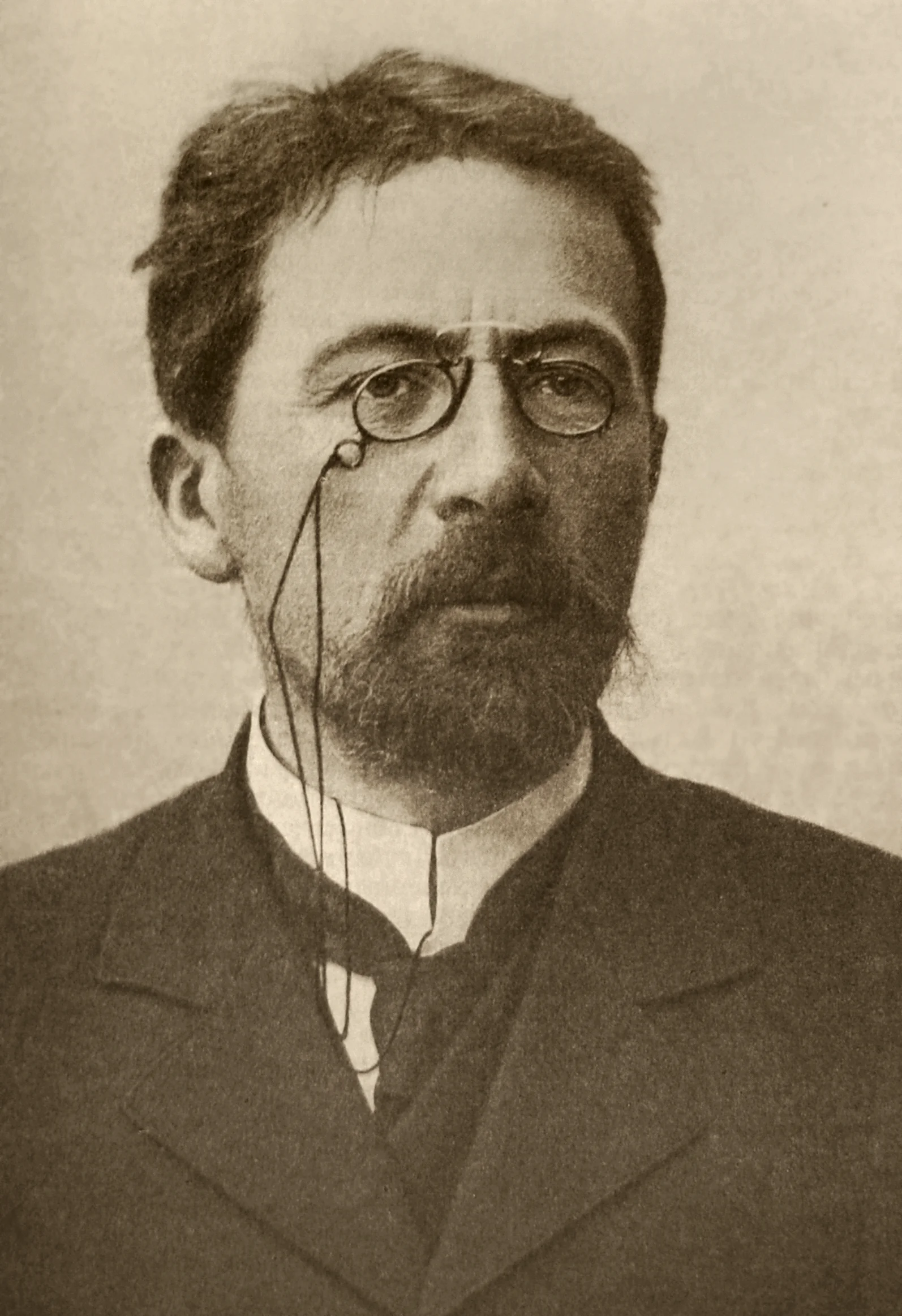
Image from Wikipedia
Image from Wikipedia
Anton Pavlovich Chekhov – A Modern Dramatist, Master of the Short Story, Chronicler of Human Nuances
A Life for the Stage and Literature: Why Chekhov Resonates Even Today
Anton Pavlovich Chekhov shaped modern drama like few others through his artistic development. Born on January 29, 1860, in Taganrog, raised in humble circumstances, and trained as a doctor, he combined experiences from the musical careers of his contemporaries, theatrical practices, and provincial life with a unique literary sensitivity. His stage presence as a dramatist unfolds not through grand gestures, but through fine composition, subtle arrangement, and psychologically precise character portrayals. Between 1880 and 1903, he published hundreds of literary works and created plays such as "The Seagull," "Three Sisters," "Uncle Vanya," and "The Cherry Orchard," which have continued to define theater history to this day.
Chekhov died on July 15, 1904, in Badenweiler, but his works live on in countless productions, translations, and adaptations. In theater and journalism, he is regarded as a key figure of modernity: an author who dramatizes the everyday without embellishment. His literary genre shifts between tragicomedy and psychological realism; his productions display an economy of means that has influenced world literature. Those who wish to understand the present can hear it in Chekhov's dialogues.
Early Years: From Anecdote Writer to Chronicler of the Soul
In the early 1880s, Chekhov began writing short prose for humorous magazines. This phase of work honed his timing for punchlines and subtext—a foundation on which his later theater compositions rested. While completing his medical studies in 1884, he wrote with increasing productivity and technical ambition. His understanding of diagnosis and symptom also transferred to dramaturgy: in his plays, he illuminates states of the soul by precisely arranging everyday situations.
With "Ivanov" (1887/89), Chekhov gained recognition as a dramatist. His short stories demonstrated that his expertise in the brief format produced its own aesthetics: concise forms, ambiguous signals, and a realism that prefers open questions. This artistic breakthrough led in the 1890s to a stylistic condensation that rebalanced the relationship between dialogue and silence.
The Path to the Major Works: "The Seagull," "Uncle Vanya," "Three Sisters," "The Cherry Orchard"
"The Seagull" (1895/96) marks the fully developed Chekhovian poetics: the composition relies on ensemble drama, nested longings, and underlying conflicts. The characters grapple not only with art but also with the mechanics of feelings. "Uncle Vanya" deepens this structure: latent frustrations, postponed life plans, a choreography of gestures and pauses. In "Three Sisters," chains of motifs—work, love, province—condense into a sound image of modernity. "The Cherry Orchard" (1904), often read as straddling comedy and tragedy, serves as a conclusion: a panorama of society in upheaval, composed of subtle changes that operate in a subcutaneous rhythm.
Crucial for theater history is Chekhov's collaboration with the Moscow Art Theatre: the practice of psychological realism that places the ensemble at the center mirrored his text architecture. This synergy shaped a playing tradition where tempo, subtext, and pauses are as significant as the spoken lines.
Poetics and Style: Psychology in Whispered Tones
Chekhov's drama avoids the grand aria and seeks truth in nuances. His scenes are precisely arranged: sounds, glances, and subplots form a woven sound picture. This arrangement replaces the plot as the motor: instead of turning points, there are waves of intensity. The language is economical; the characters often talk past one another—and therein lies their inner world. The subtext becomes the actual composition, the score of glances replaces the melody of monologues.
His understanding of genre expands tragicomedy with a modern skepticism. Chekhov "records" life like a music setter who sees pauses not as emptiness but as carriers of meaning. From this stance arises a stage presence that compels directors and actors to interpretative vigilance. Thus, his plays are considered a touchstone for ensemble work.
Discography? Catalog of Works!—On Short Prose, One-Acts, and Long Dramas
Those who only know Chekhov as a dramatist overlook the master of the short story. His catalog includes hundreds of tales, ironic vignettes, and psychological studies that prepare the ground for his theatrical work. Alongside these stand one-act plays like "The Bear"—comedic experimental setups in which Chekhov measures the scenic pulse. The long dramas, on the other hand, unfold through spacious ensembles, fluid transitions, and precisely set motifs. Instead of a classical "discography," Chekhov offers a canon of dramas and novellas whose reception is embedded in stage and study cultures worldwide.
The most important "stages" of this canon are continuously reinterpreted. Each generation hears a different resonance of art, love, and authorship in "The Seagull"; each society sees new upheavals in "The Cherry Orchard." This openness explains Chekhov's impact in theater, film, and literary studies.
Critical Reception and Cultural Historical Context
Chekhov was early recognized as a master of understated realism. Critics emphasized his ability to make social shifts audible without a moral finger-wag. The reception also underscores that his short prose matches the innovative power of his dramas. In theater historiography, he is considered a hinge figure: he connects naturalistic observation with symbolic suggestion—a combination that inspired later generations of directors to read the subtext as a directorial score.
His cultural influence is also evident in waves of adaptations: translations, adaptations, intermedial appropriations. Universities, municipal theaters, and independent scenes use Chekhov to address contemporary aesthetic questions—from work environments to gender roles. This long-term impact is the hallmark of his authority in the international theater discourse.
Theatrical Practice in the 20th and 21st Centuries: From Moscow Realism to Global Diversity
Since the legendary Moscow productions, the style of performance has diversified: text-faithful interpretations stand alongside radical adaptations that deconstruct, rearrange, and situate the compositions in current contexts. International festivals regularly dedicate programs to Chekhov, showcasing both fidelity to the text and reinvention. This range demonstrates the resilience of his dramatic structure—it withstands modernizations without losing its core.
The contemporary theater landscape offers a vibrant archive of Chekhov experiences: repertoire houses, off-theater, university stages, and independent collectives draw on his plays to illuminate themes such as artistic self-search, social transformation, and intimate relationship networks. Thus, Chekhov remains both a classic and a contemporary.
Current Adaptations, Premieres, and Festivals (2024–2026)
Even in the years 2024 to 2026, Chekhov's work experiences remarkable reinterpretations. Productions and festivals surrounding "The Seagull," "The Cherry Orchard," "Uncle Vanya," and "Three Sisters" demonstrate how adaptable his dramaturgy remains—from off-Broadway solo formats to international tours and major municipal theater productions. Such events emphasize that Chekhov's artistic development continues to resonate today and that his canon operates as a living stage, not a museum display.
Particularly noticeable is the combination of new translations and respectful fidelity to the work: directing teams emphasize that text clarity, subtext, and ensemble balance determine the dramatic pulse. This is Chekhov at his best: modern, precise, and human-centered.
Performance and Reading Practice: How Chekhov Wants to be Read and Played
Chekhov demands interpretative precision. For actors and directors, this means: hearing the subtext, rhythmizing pauses, and thinking musically. His dialogues are like finely tuned scores; each pause shifts the harmony of the scene. In rehearsal work, this leads to an intense engagement with tempo, counterpoint, and ensemble sound. Dramaturgically, the composition of space remains important: everyday places accumulate significance, props become resonant bodies, and minor activities create under-melodies.
For readers, a quiet drama unfolds that becomes denser with every paragraph. Those who read Chekhov train their perception. Those who perform him learn to stage economy and empathy—a school of theater that has international significance.
Legacy: Why Chekhov Will Endure
Chekhov's authority is rooted in trust in the intelligence of the audience. Instead of theses, he presents constellations. Instead of clarity, he offers ambivalence. His plays gather characters who talk past each other, thereby generating a poetics of the unspoken. In this lies his social relevance: those who hear the subtexts of his dramas recognize the subtle fractures in their own everyday lives. This makes his works indispensable for the present.
His influence extends beyond the stage into film, prose, theater education, and the art of translation. Each new production writes itself into a global tradition—and proves that Chekhov's art, like a well-composed score, flourishes in ever-new interpretations.
Conclusion: A Classic That Breathes
Anton Pavlovich Chekhov fascinates because he masters the drama of quiet tones. His plays demand artistic development within the ensemble, strengthen an acting craft of nuances, and teach directing teams the art of omission. Those who experience Chekhov live feel how careful observation transforms into great emotion. Seek out the next production near you—and let yourself be surprised by the quiet intensity of this author.
Official Channels of Anton Pavlovich Chekhov:
- Instagram: No official profile found
- Facebook: No official profile found
- YouTube: No official profile found
- Spotify: No official profile found
- TikTok: No official profile found
Sources:
- Encyclopaedia Britannica – Anton Chekhov: Biography, Plays, Short Stories, & Facts
- Wikipedia (EN) – The Seagull
- Wikipedia (EN) – The Cherry Orchard
- Wikipedia (EN) – Ivanov
- Wikipedia (EN) – The Bear (play)
- Playbill – Chekhov adaptation The Gull (Off-Broadway), March 3, 2025
- Theatre-News – The Seagull at Barbican Theatre (London), Announcement 2024/25
- Encore Spotlight – Berkeley Rep: Uncle Vanya (2025) Announcement
- The Moscow Times – New York’s Hottest Playwright? Anton Chekhov (April 21, 2025)
- Anton Chekhov Museum-Reserve "Melikhovo" – XXV International Theatre Festival "Melikhovo Spring" (2025)
- Forbes – Revivals of Classic Weill and Chekhov Plays in Brooklyn (April 4, 2025)
- China Daily – Moscow Art Theatre: The Seagull Tour (August 14, 2025)
- Wikipedia: Image and Text Source – Anton Pavlovich Chekhov