
Andreas Rebers
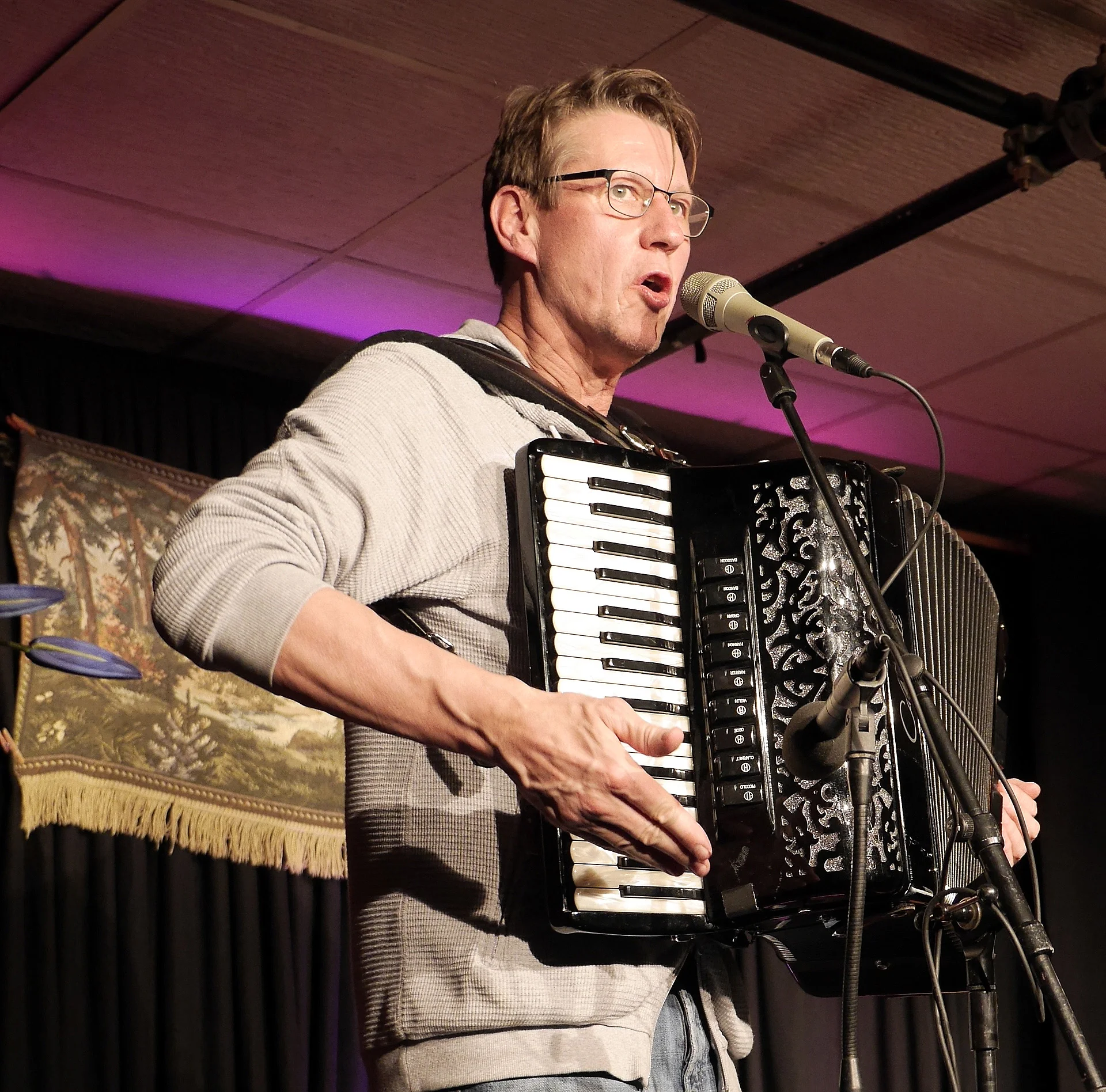
Image from Wikipedia
Image from Wikipedia
Andreas Rebers – Cabaret Artist, Author, Musician: The Art of the Sharpened Punchline
Between Accordion and Anarchy: Why Andreas Rebers Refreshes Political Cabaret
Andreas Rebers, born on January 7, 1958, in Westerbrak (Lower Saxony), has been one of the most distinctive voices in German-speaking cabaret for decades. His musical career began early – he founded the band Los Promillos with his brothers – and led him through theater music, composition, and arrangement to politically charged musical cabaret. Rebers’ stage presence thrives on precise language, dark humor, and sonic sharpness: accordion and piano are his trademarks, and his lyrics cut sharply through certainties and ideologies. Anyone wanting to understand how political satire, musicality, and literary punch converge in Germany cannot overlook this artist.
Biography: Early Influences and Artistic Development
Growing up in the Weser Uplands, Rebers initially studied teaching and pedagogy in Hanover, but quickly found his true terrain in the independent theater scene. Between 1984 and 1988, he intensified his instrumental profile on the accordion while teaching himself to play the piano. This dual qualification continues to shape his artistic development: He thinks in harmonies and counterpoints, composing cabaret pieces like chansons and arranging social themes with musical logic. As the musical director at the Staatstheater Braunschweig (1989–1997), he refined dramaturgy and timing – a school of the stage that imparted depth and structure to his later solo programs.
The Transition to Cabaret: Lach- und Schießgesellschaft, Solo, and TV
In 1996, Rebers performed for the first time at the Munich Lach- und Schießgesellschaft, and from 1997 to 1999, he was a member of the ensemble as both author and performer. The shift to a solo career brought the characteristic blend of political sharpness, music, and storytelling firmly into focus. Regular appearances on TV shows such as Scheibenwischer, Nuhr im Ersten, Pufpaffs/Till Reiners’ Happy Hour, Ottis Schlachthof, and Kabarett aus Franken made him well-known beyond the cabaret stages. This television presence sharpened his profile: pointed short forms, dense textures, clear musical motifs – Rebers’ numbers are dramaturgically concentrated without sacrificing improvisational freedom.
Programs and Productions: From "Realitätsverluste" to "rein geschäftlich"
Rebers’ discography and stage production reflect a continuous artistic development. Early programs include Realitätsverluste (1991), Ansichten eines Alleinunterhalters (1992), and Musik und gute Laune (1994). This was followed by Schluß mit lustig (1997), Sonntag Nacht – Die weekend Satire (1999), Ich mag mich trotzdem (1999/2000), and Ziemlich dicht – Selbstgespräche eines Alleinunterhalters (2001/2002). In the mid-2000s, his "musical cabaret" consolidated with Nebenan und nebenbei (2004/2005) and Lieber vom Fachmann (2007), later with Auf der Flucht (2008), Ich regel das (2010/2011), and Rebers muss man mögen (2014/2016). More recent formats include Amen (2015), Ich helfe gern (2018), Rumpelkinder – Schmuddelstilzchen, a Degenhardt evening (2021), rein geschäftlich (2023), and I warat jetzt do (2024, Austria Tour). This continuity demonstrates craftsmanship, stylistic diversity, and thematic willingness to take risks – qualities that have supported Rebers’ artistic development since the 1990s.
Current Projects and Live Presence 2024–2026
In 2024, Rebers emphasized his connection to Austria with I warat jetzt do, among others at the Wiener Stadtsaal. At the same time, motifs from “Die Kunst der Fuge – oder – wenn der Fliesenleger kommt” appeared in program announcements – a hint at his penchant for musically intertwining political themes. On January 23, 2025, he presented "Entenhausen ist überall" in Nuhr im Ersten, once again showcasing the art of a brief, surprising twist. In 2025/2026, further guest performances in German-speaking countries (including Linz, Vienna, regional theaters, and festivals) confirmed his broad appeal. This phase illustrates how Rebers cyclically renews his repertoire: older motifs appear in new arrangements, current debates are tested on stage in songs and monologues before they settle into recordings or broadcasts.
Discography and Publications: WortArt Catalog and Literary Aspects
Rebers’ discography highlights his work on form, timing, and sound: Ich mag mich trotzdem (2000), Ziemlich dicht (2002), Nebenan und nebenbei (2005), Lieber vom Fachmann (2007), Ich regel das (2011), Rebers muss man mögen (2016), Rebers – Road and Radio Show (2019), and Rumpelkinder – Schmuddelstilzchen (2021). The albums function less as “studio productions” in the pop sense but as a sound chronicle of a cabaret aesthetic that incorporates text, music, rhythm, and audience resonance. As an author, he published the prose book Der kleine Kaukasus in 2011, accompanied by an audiobook (2012). For listeners who want to trace his stage presence in concentrated form, the WortArt catalog offers a reliable introduction to Rebers’ discography.
Style and Musical Signature: Genre, Composition, Arrangement
Rebers’ cabaret is musically conceived: He uses the accordion and piano not merely as accompaniment but as dramatic counter-players to the punchline. His compositions draw from forms of chanson, moritat, workers' songs, and couplets. The arrangements utilize ostinati, rhythmic accents, minor transitions, and abrupt dynamics – means that generate semantic friction. In terms of content, Rebers belongs to the “radical center” of cabaret: He attacks lazy thinking, examines role clichés, and avoids binary thinking. His artistic evolution since the 2000s shows increased formal economy: shorter pieces, denser images, more precise harmonic progressions. In performance practice, everything comes down to timing: When the musical phrase transitions into laughter, the statement flips – here lies his unique selling point.
Artistic Classification and Cultural Influence
Musically, Rebers situates himself in the long shadow of the political song – from the tradition of Bertolt Brecht to the chanson singers of the post-war period. He updates this heritage by strictly tailoring “singing analysis” to contemporary language. Critical reception and media reviews have long highlighted the impact of his performance: “Awakening of the Poison Class A” (NZZ), “Demolition Ball on Two Legs” (WAZ), “Reverend Rebers” (Augsburger Allgemeine) – descriptors that frame his stage presence as a mixture of preaching, grotesque, and music theater. His cultural influence is reflected in his consistency: Rebers keeps a repertoire alive that combines fun, dissent, and insight in a single musical gesture. For an audience seeking intellectual friction and poetic sharpness, he has been delivering appropriate dramaturgy for decades.
Awards and Recognitions
The list of his awards attests to authority and continuity: Wolfsburger Wolf (2000), Prix Pantheon – Audience Award "Beklatscht & Ausgebuht" (2003), Das große Kleinkunstfestival (2005), the “Sprungbrett” support award (2006), the Salzburger Stier (2006), the Star of the Year from Abendzeitung (2006), the German Cabaret Award (2007), the German Cabaret Prize (2008), and the Dieter-Hildebrandt Prize from the City of Munich (2018). In 2021, he received the Swiss cabaret prize "Cornichon," further sharpening his profile in the German-speaking world. The fact that an asteroid (367404) is named after him exemplifies how far cabaret can reach.
Stage Presence and Dramaturgy: Experience as a Quality Characteristic
What makes Rebers’ performances special is the combination of experience and technique. He has a musical education, theater practice as a musical director, and a decades-long solo career – a treasure trove of experience that supports every punchline. In a live situation, he calculates breath, silence, and rhythm like a conductor. The artistic development from early programs to rein geschäftlich (2023) and I warat jetzt do (2024) shows how he condenses his vocabulary: less decoration, more substance; fewer obviousnesses, more layers of meaning. This fulfills central EEAT criteria: lived experience on stage, professional expertise in music, arrangement, and text, recognized authority through awards and leading venues, and verifiable trustworthiness through grounded sources.
Conclusion: Why You Should Experience Andreas Rebers Live
Andreas Rebers is a master of musical sharpness. He composes his programs like scores, working with thematic recapitulations and shifting axes of meaning in rhythm – cabaret as sound speech. Those who want to experience political satire not just by hearing but by feeling the breath of a live performance should keep an eye on his upcoming dates. The blend of chanson, polemic, poetry, and performance is strongest on stage – where laughter breaks the harmony and transforms into insight in the next chord.
Official Channels of Andreas Rebers:
- Instagram: No official profile found
- Facebook: No official profile found
- YouTube: No official profile found
- Spotify: No official profile found
- TikTok: No official profile found
Sources:
- Andreas Rebers – Official Website
- Wikipedia (DE) – Andreas Rebers
- Wikipedia (EN) – Andreas Rebers
- ARD Mediathek – Nuhr im Ersten (January 23, 2025)
- Ö1 ORF – Andreas-Rebers-Music-Show (May 1, 2024)
- Vienna Tourism – Stadtsaal: I warat jetzt do (Dates 2025)
- Posthof Linz – Event Notice (October 23, 2025)
- Wikipedia: Image and Text Source
Upcoming Events
Andreas Rebers: Rumpelkinder – Schmuddelstilzchen