Discover Poetry Slams & Word Art in Ansbach
Poetry Slams & Word Art in Ansbach: When Words Become a Stage
6 min readLaura Müller
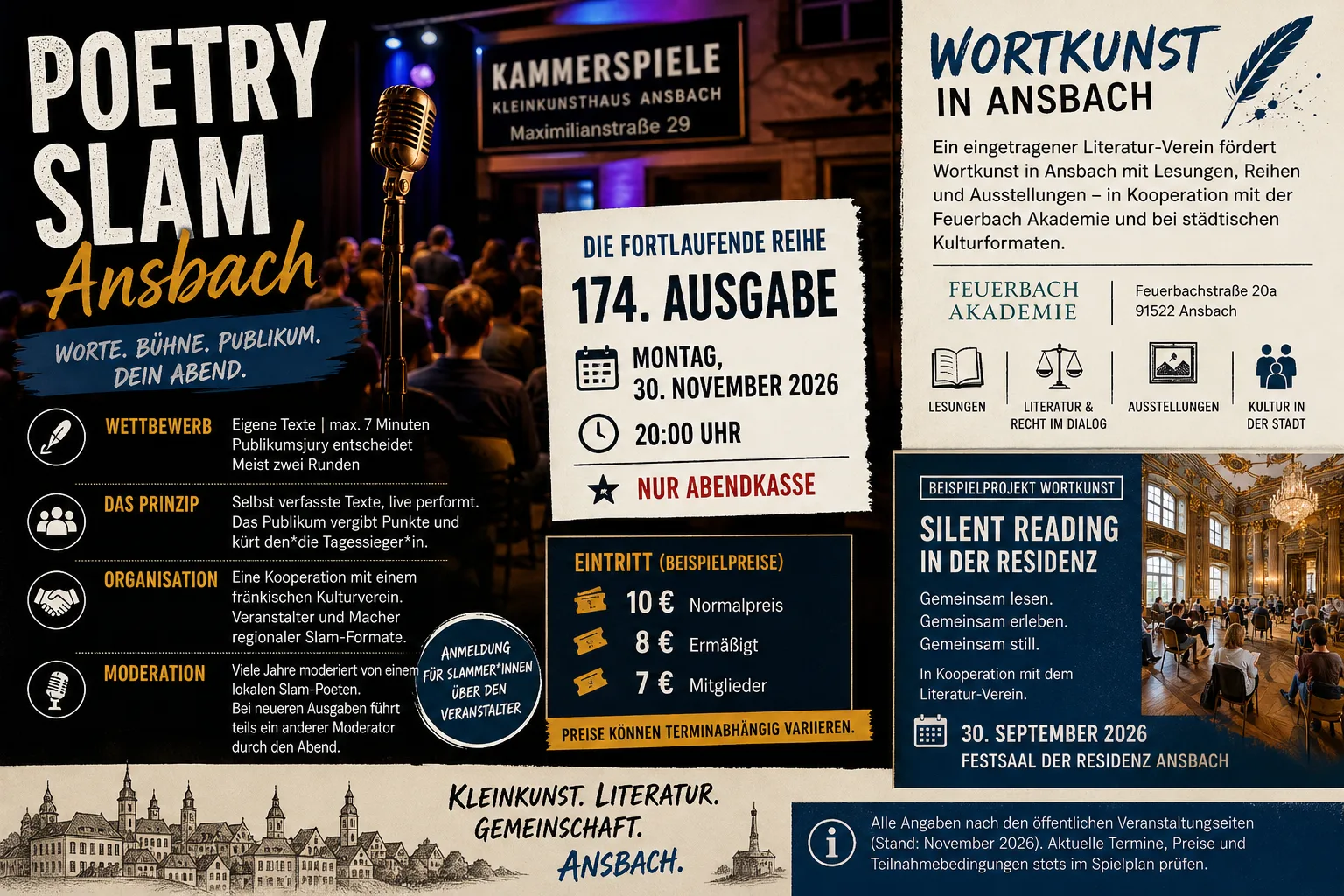
Can a single voice change an entire hall? In Ansbach, this can be experienced particularly well at upcoming poetry slam evenings and literary formats: a few minutes, a text, a microphone – and suddenly everyday life becomes a shared experience.
This article explains how poetry slams (and related word art formats) typically work in Ansbach, which venues are relevant, and how you can participate in the future as an audience member or with your own text.
Poetry Slam in Ansbach: What Makes the Local Scene Special
In Ansbach, word art activities are often bundled in recurring series and collaborations between cultural venues and dedicated initiatives. For visitors, this means: those who regularly check event announcements will usually find several opportunities throughout the year to experience poetry slam live – from classic competition evenings to readings and more experimental formats.
Important for expectations: A poetry slam is not a "lecture evening" in the traditional sense. The focus is on self-written texts that are performed – sometimes funny, sometimes political, sometimes poetic, sometimes very personal. This very range makes the evenings accessible to a mixed audience.
This Is How a Poetry Slam Evening Typically Runs
The specific process varies depending on the event, but often follows a similar pattern. If you are coming for the first time, you can generally expect these components:
- Admission & Arrival: Depending on the date, there is advance ticket sales, box office, or both. It pays to arrive early if there is open seating.
- Welcome & Rules: The host briefly explains the slam rules (self-written texts, time limit, no elaborate props) and introduces the voting method.
- Round 1: Several poets each perform one text. Stylistically, anything is possible: short prose, poetry, rap-like spoken word performances, comedy-heavy texts, or quiet, dense observations.
- Break & Exchange: Many use the break to chat – this is precisely what often makes local slam evenings so communal.
- Final Round: The highest-rated contributions from round 1 perform again; the finale intensifies the evening dramatically.
- Victory & Conclusion: The winner is the one whose performance most convinces the audience. Often, upcoming dates and participation opportunities are also announced at the end.
The Most Important Rules (Short & Understandable)
- Own Texts: It is common that only self-written texts are allowed.
- Time Limit: Many slams work with a fixed limit (often around a few minutes); this forces clarity and punchiness.
- The Audience Decides: Judging is usually done by audience vote or a spontaneously selected audience jury.
- Performance Counts Too: Not only the text, but also delivery, timing, and stage presence shape the impact.
Venues for Word Art in Ansbach: Stage, Reading, Silent Reading
Word art needs spaces – and Ansbach offers different settings for this. Depending on the format, the atmosphere changes significantly:
- Kleinkunsthaus (Maximilianstraße): A typical setting for slam evenings is a cabaret setting: up close, direct reactions, an audience that visibly "goes along".
- Literary Collaborations & Club Work: Literary initiatives can curate readings, discussion series, or themed evenings that open word art to social questions (e.g. language and democracy, literature and law, identity, city-country perspectives).
- Feuerbach Academy (Feuerbachstraße 20a): For workshops, smaller readings, or exhibitions, academy- or seminar-like rooms are often suitable, where exchange and learning are the focus.
- Residenz / Ballroom – for Special Formats: For upcoming cultural programs, quieter, more communal formats are also conceivable, such as a "Silent Reading": everyone reads silently at the same time, followed by a moderated discussion about passages, moods, and discoveries.
For all venues: Please check the current information on admission, start time, accessibility, and ticketing on the official event pages of the organizers before your visit.
Participate: How to Become Part of Ansbach's Word Art Scene
The entry barrier is usually lower than many think. These ways are particularly practical for upcoming events:
1) As Audience
If you are going for the first time, simple preparation helps: come open-minded, without a "prior knowledge requirement." A notebook or phone notes can be useful if you want to jot down text ideas or strong lines.
2) With Your Own Text (First Slam Participation)
If you want to perform, most slams work via registration with the organizer. For content, the following has proven effective for beginners:
- A Clear Core: a scene, a thought, a punchline, or a feeling that really interests you.
- An Audible Structure: Keep introductions short, transitions clear, and set the ending deliberately.
- Practice Out Loud: Poetry slam is text for the ear. Reading aloud immediately shows whether rhythm and length fit.
3) Through Workshops & Writing Groups
Workshops (e.g. in cooperation with cultural venues or educational actors) are a good way to get feedback and build stage confidence. Formats that practice not only writing but also performance, breathing, tempo, and microphone work are particularly useful.
Why Word Art Remains Important for Ansbach (Culturally & Locally)
Word art events are more than entertainment: they create encounters. Those who attend share language, humor, reflection, and sometimes even disagreement for an evening – all in a setting where different perspectives have space.
For visitors to the city, a slam or reading evening can also complement the classic sightseeing program: architecture and parks during the day, contemporary voices, topics, and debates in the evening. In addition, downtown spaces often benefit indirectly, as people use dining options before or after the event.
Outlook: Which Developments Are Realistic for Upcoming Formats
- Digital Additions: Short clips, photos, or recordings (where permitted) can help reach new target groups without replacing the live dynamic.
- Support for Young Talent: More open stages, beginner slots, or slam coaching can make it easier to take the step onto the stage.
- Interdisciplinary Evenings: Combinations with music, exhibitions, or discussion formats expand the audience and open up new forms of word art.
- More Accessible Access: Clearly visible information on accessibility, language (e.g. simple language in moderation), and clear ticket information can become part of a stronger welcoming culture.
Which of these ideas are actually implemented depends on programs, resources, and partnerships. The most reliable are the official announcements of the respective organizers and cultural venues.